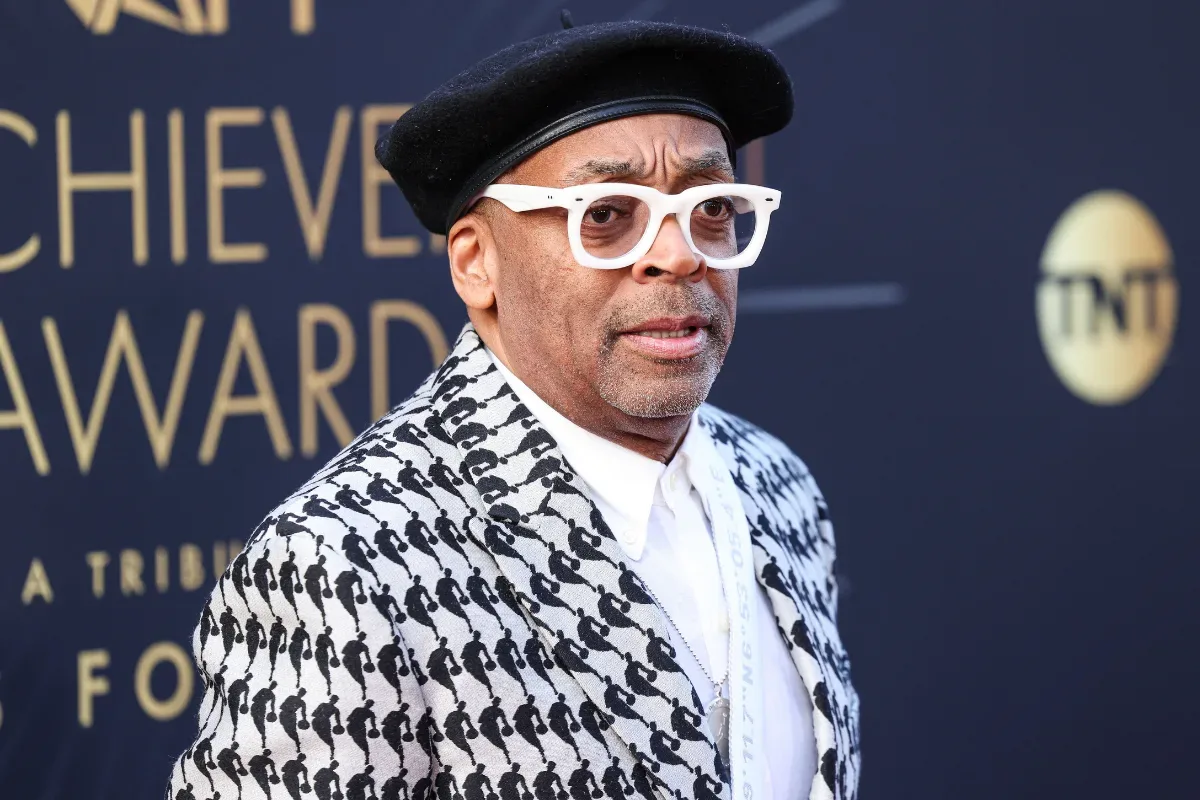
Spike Lee has added his voice to the unresolved question of whether the New York Knicks will make a White House visit following the team’s NBA championship. The filmmaker and longtime courtside presence said he hopes the team declines a trip with President Donald Trump, even though Knicks owner James Dolan had already accepted an invitation on the organization’s behalf.
“He can’t force them!” Lee said in an interview. “It’s been years since the last NBA team has gone. They’re not going. I hope they don’t go!”
Lee’s position is clear, but the practical status of the visit is less clear. Dolan said in June that he was proud to bring the team to the White House and described Trump as a friend he had known for 30 years. Yet acceptance by an owner is not the same thing as a public commitment by every player, coach, and staff member to attend. Details still needed to be arranged when Dolan announced the acceptance, and the Knicks had not reached a final decision as of Lee’s interview.
An invitation accepted, but attendance unresolved
Dolan revealed the White House invitation acceptance during a June 17 appearance on WFAN, shortly after the Knicks won the NBA title. His comments made the Knicks the first NBA champions to accept a White House trip during Trump’s current term.
The owner framed the potential visit in personal terms. He said he was proud to bring the club to the White House and pointed to his longstanding friendship with Trump. That relationship had also been visible during the Finals, when Dolan invited Trump to Game 3 at Madison Square Garden. Trump attended and praised both Dolan and the Knicks.
But a team visit involves more than an owner’s invitation response. The central unanswered issue has been whether the full roster would participate. No public collective position from Knicks players was established at the time of Dolan’s June comments. By September 29, the team still had not decided whether to go. Coach Mike Brown said in September that the matter was being discussed internally.
That distinction matters. A White House invitation is extended to a championship team, but attendance can be individual. Players and coaches may share the same locker room without sharing the same political views, comfort level, schedule, or desire to take part in a ceremonial appearance. The available information does not establish what any individual Knicks player intends to do.
A separate claim raised in sports media suggested Dolan was unhappy because players did not want to attend. However, the person who raised it also said they did not know whether it was true. It should therefore be treated as unverified commentary, not as confirmation of a disagreement inside the franchise.
Related coverage includes Spike Lee Hopes Knicks Decline Trump White House Visit.
Why White House visits are no longer an automatic championship ritual
For decades, a visit to the White House functioned as a familiar post-title sports tradition: champions appeared with the president, posed for photographs, received recognition, and marked the season’s achievement in a nationally visible setting. In recent NBA history, though, the custom has become uneven. A championship invitation can carry political meaning as well as ceremonial value, particularly when athletes, team leadership, and the president hold opposing views.
The Knicks are not navigating this question in isolation. Multiple NBA champions did not make White House trips during Trump’s first term. Golden State did not visit after winning championships in 2017 and 2018, amid a public dispute involving Stephen Curry and Trump. Toronto also did not make a trip after its 2019 title.
The Boston Celtics were the last NBA team to visit the White House, doing so in 2024. Oklahoma City did not go after its 2025 championship, citing timing and scheduling issues. Those examples show that there is no longer a simple assumption that an NBA title produces a uniform, fully attended presidential visit.
That recent pattern supplies context for Lee’s comment that it had been years since the last NBA team made such a trip. His argument is not simply about a one-off Knicks event; it rests on the broader reality that the tradition has been interrupted, disputed, and sometimes bypassed.
What Lee’s intervention represents
Lee is not a Knicks employee, player, or decision-maker. His comments do not determine whether the team travels to Washington. But he is among the franchise’s most visible supporters, and his courtside association with the Knicks gives his opinion cultural weight beyond that of an ordinary spectator.
His intervention also puts a spotlight on an important separation of roles. Dolan can speak for the club in accepting an invitation. Players, meanwhile, retain agency over their own participation. Lee’s statement centers that point directly: an owner’s preference does not settle the personal decision for every member of a roster.
There is a useful difference here between organizational acceptance and individual attendance. Organizational acceptance means the franchise indicates that it intends to engage with the invitation. Individual attendance means a particular player, coach, or staff member elects to appear. Those outcomes can align, but they do not have to. A team might go with a partial group, postpone a visit, decline it altogether, or continue discussing logistics and participation without a public resolution.
None of those possibilities should be mistaken for the Knicks’ announced plan. The confirmed position remains narrower: Dolan accepted the invitation in June, the team had not made a final decision by late September, Brown said internal talks were ongoing, and Lee has publicly urged the team not to go.
Championship celebrations, civic symbolism, and personal choice
The tension around a White House trip reflects how championship celebrations can move beyond sports. The honor recognizes a team achievement, but it takes place in a political setting and alongside a sitting president. That means participants can view the same event through very different lenses: as tradition, public service, a ceremonial photo opportunity, a professional obligation, or a political statement they would rather avoid.
This is why the unresolved Knicks decision has drawn attention despite the lack of a final announcement. The club’s championship gives the potential visit an unusually high profile. Dolan’s friendship with Trump adds another public dimension. Lee’s opposition brings the question into the cultural conversation surrounding the team. Yet the people whose attendance would define the visit—the players and coaching staff—have not publicly laid out a collective answer in the information available.
It is also worth resisting an easy assumption that silence proves agreement or conflict. Internal discussion, as described by Brown, may concern politics, but it may also concern travel, calendar demands, group participation, and how the team wishes to handle a major public event. Oklahoma City’s decision after its 2025 title illustrates that scheduling and timing can be cited as reasons not to visit, even when White House trips naturally attract political interpretation.
The wider conversation around sports, public figures, and civic engagement continues well beyond this one decision. For another recent example of entertainment figures discussing participation around elections, see this look at Plies reflecting on poll volunteers and a midterm voting experience.
What to watch next
The next meaningful development would be a direct update from the Knicks on whether the organization intends to schedule the visit and who, if anyone, plans to attend. Until then, several points should remain separate.
- Dolan said he accepted a White House invitation for the Knicks in June.
- He described Trump as a personal friend and said he was proud to bring the team.
- Lee has publicly said he hopes the Knicks do not go.
- The team had not reached a final decision by the latest update in the supplied reporting.
- Brown said the issue was under internal discussion.
- Reports about player opposition and Dolan’s reaction have not been independently confirmed in the material available.
The result is a story about process as much as outcome. A championship invitation may begin with an owner’s acceptance, but the significance of the event depends on the people asked to take part. For the Knicks, that final answer had not yet arrived when Lee made his position known.