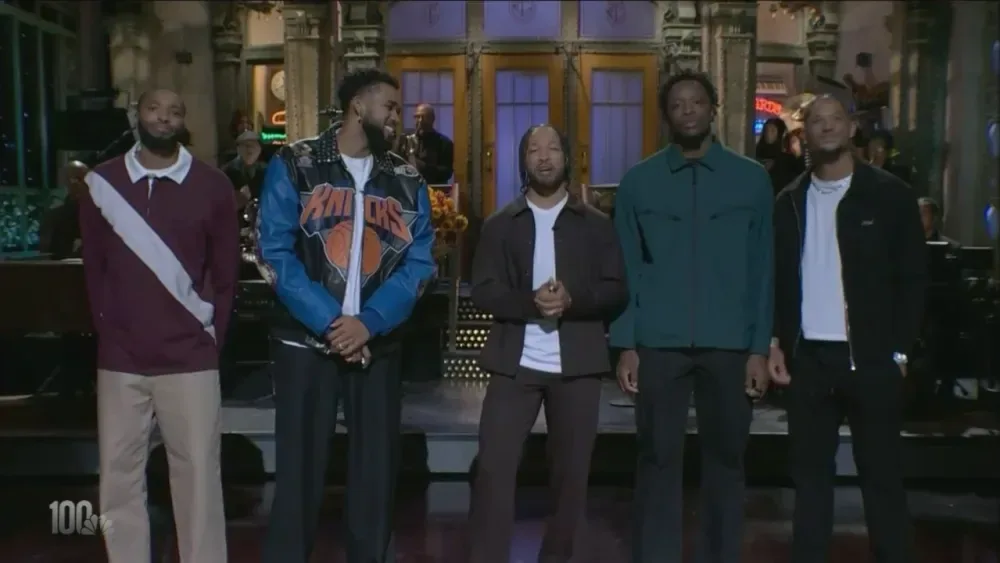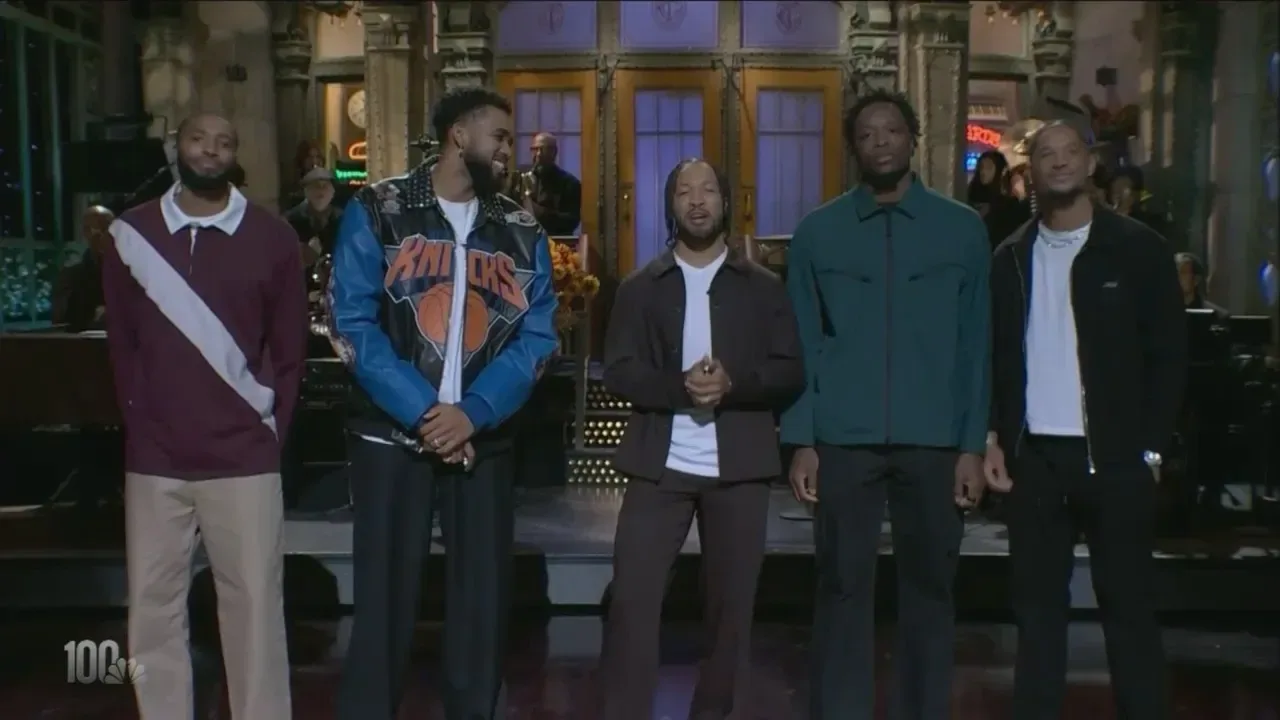
Jalen Brunson’s opening monologue for Saturday Night Live Season 52 did not stay a conventional athlete-host introduction for long. It became a team bit, with the rest of the New York Knicks’ starting five arriving to aim jokes at their captain.
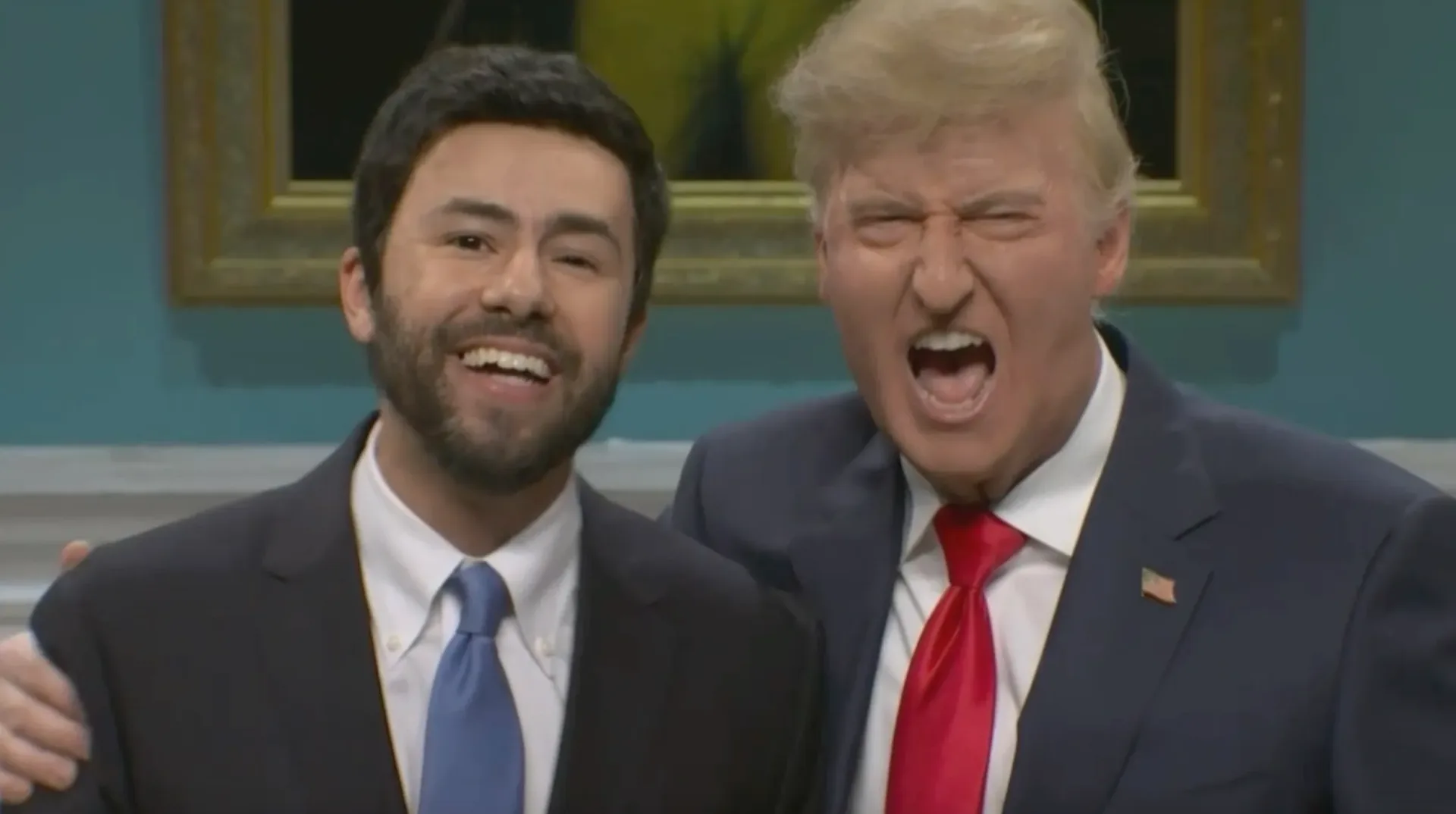
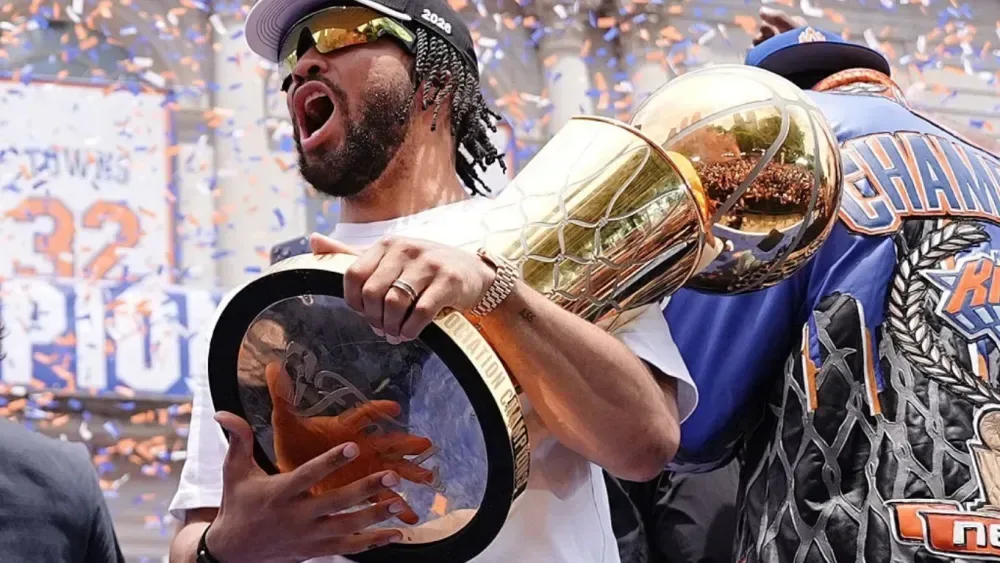
Before Karl-Anthony Towns, Josh Hart, Mikal Bridges and OG Anunoby entered the routine, Kenan Thompson appeared as ESPN personality Stephen A. Smith. The character’s premise was an overlong admission of error: he said he had not believed Brunson was the answer when the Knicks signed him, or that Brunson could lead the club to its first championship since 1973.
That setup gave Brunson an immediate comic problem to solve. Rather than waiting patiently through the praise-with-a-detour, he interrupted to ask how long it would last. Thompson’s Smith answered: another seven minutes. Brunson then removed his supposed detractor from the stage and shifted to audience questions.
That is where the monologue’s real premise landed. The audience members were not random questioners. They were Brunson’s teammates, each with a basketball-specific reason to make the host squirm.
From monologue to a Knicks group roast
A monologue is generally the host’s first chance to establish their persona: a quick story, a few jokes and a clear reason that person belongs in the spotlight that week. Brunson’s segment used that familiar structure but deliberately ceded some of the spotlight to the Knicks. The result was less a stand-alone speech than a compact ensemble sketch staged in the monologue slot.
Towns opened the teammate questioning with a joke about fouling out of SNL, asking whether he could remain there for the whole show. The gag refers to his dismissal from Game 5 against the Spurs. It works as a sports in-joke, but its wording also translates the basketball rule into the show’s setting: in basketball, a player is removed after reaching the foul limit; here, Towns imagines that the penalty might conveniently turn into an all-night television appearance.
Bridges and Anunoby then joined the ribbing before Hart raised the monologue’s most specific financial punch line. Hart asked Brunson if it was true that he took a $113 million pay cut to re-sign with the Knicks. Brunson confirmed that it was, leading Hart to ask whether the money was still available to claim.
The exchange uses an intentionally simple comic engine. Brunson’s decision is framed as consequential and team-oriented; Hart immediately treats it as though an unclaimed pool of cash might be waiting for the taking. The joke does not ask viewers to understand contract mechanics. It asks them to understand a teammate spotting an opening and refusing to let it pass.
Related coverage includes Jalen Brunson Gets Roasted by Knicks Teammates in ‘SNL’ Monologue.
Why the teammates are essential to the joke
There is a big difference between a scripted celebrity roast and players teasing the teammate who is hosting. Brunson’s colleagues give the monologue a built-in sense of shared history, even though the segment keeps the references accessible. Viewers who follow the Knicks can recognize the allusions to basketball moments and Brunson’s contract decision. Viewers who do not can still follow the simple hierarchy reversal: the guest of honor is supposed to receive applause, and his friends instead turn the event into an opportunity to embarrass him.
That reversal also makes Brunson’s role unusually flexible. He begins as the host, becomes the target, and ultimately welcomes his teammates onstage. He is not asked to win a battle against the group or deliver a lengthy explanation. His reactions and willingness to be teased are part of the bit’s appeal.
Thompson’s opening appearance performs a different task. His version of Smith offers a recognizable television-sports format: emphatic opinion, a long-winded setup and a debate-like certainty. Brunson’s interruption cuts through that format, moving the piece away from commentary and toward direct teammate banter. The transition is efficient because both halves focus on the same idea—other people having a lot to say about Brunson.
The early Season 52 coverage also included a separate political cold open, explored in this look at the season premiere’s opening sketch. Brunson’s monologue supplied a distinctly different kind of live-show energy: not a character-driven political spoof, but a sports team using its public familiarity to build a shared comedy routine.
Basketball references, explained
The segment relies on a few concepts that may be second nature to NBA viewers but are worth separating from the comedy around them.
- Starting five: The five players who begin a basketball game for a team. In this case, the phrase matters because Brunson, Towns, Hart, Bridges and Anunoby form the group used in the monologue.
- Team captain: A leadership role within the team. The monologue’s humor comes partly from teammates treating that status as a reason to tease Brunson, rather than a reason for formality.
- Fouling out: Being disqualified from a game after accumulating the maximum permitted number of personal fouls. Towns’ question reimagines it as a route to staying at a television show rather than a removal from a basketball game.
- Pay cut: A player accepting less compensation than they might otherwise have received. Hart turns Brunson’s reported $113 million sacrifice into an absurdly literal question about whether someone else can collect it.
These references are not presented as a recap of Knicks basketball. They are punch lines with a clear target. Towns uses an on-court dismissal as self-deprecation. Hart uses the scale of Brunson’s contract decision to create a deliberately opportunistic question. The others contribute to the group pressure on a host who cannot exactly walk away from his own monologue.
A season opener built around a current team identity
Brunson opened the 52nd season of Saturday Night Live, with Katseye as the musical guest. The booking gave the episode a sports connection, but the teammates’ appearance pushed it further: instead of presenting Brunson solely as an NBA star making a television-host appearance, the monologue foregrounded the Knicks as a unit.
That is particularly useful for a live comedy format. A host can appear alone and talk about their career, but a group entrance creates instant movement, competing comic voices and a clear escalation. First comes the pundit impression; then comes the host’s dismissal of the interruption; then the supposedly ordinary audience questions become increasingly personal. By the time the players are welcomed onto the stage, the segment has completed its shift from monologue to team appearance.
It is also a format that avoids needing a deep catalogue of scripted sketches to explain Brunson. The material establishes who he is through the people around him: a captain whose teammates are comfortable calling him out, a player associated with a major financial decision, and a public figure capable of taking the joke in front of a live audience.
The Knicks’ first regular-season game is scheduled for Oct. 20. The timing makes the appearance a prominent pre-season cultural moment, though the monologue itself keeps its focus on comedy rather than offering predictions or a detailed preview of the campaign ahead.
What the monologue says about the appeal of athlete-host episodes
Athlete-hosted comedy shows often face a straightforward challenge: athletic accomplishment does not automatically translate to a comic persona. This monologue finds a workable answer by not requiring Brunson to carry every line. The guest is central, but the structure gives him strong scene partners with a natural license to make fun of him.
The material is specific without becoming exclusionary. A Game 5 reference and a contract figure reward the people who know the context. Yet each gag retains a plain-English version: a player jokes about getting kicked out, and another player jokes about money. That balance is useful for live television, where the audience includes devoted sports fans and people who may only know the host from the episode’s promotion.
Most importantly, the routine makes the Knicks’ chemistry the star of the monologue. Brunson begins in control of the stage, but Towns, Hart, Bridges and Anunoby transform that authority into the night’s central target. The final onstage welcome turns the ambush into a group celebration—and gives the Season 52 opener a basketball-flavored start before the Knicks return to the court on Oct. 20.