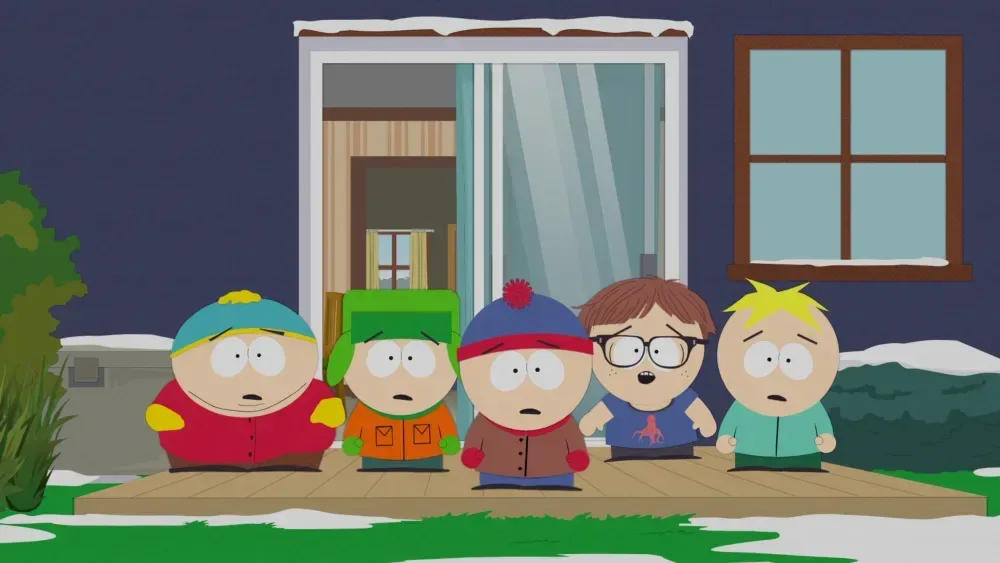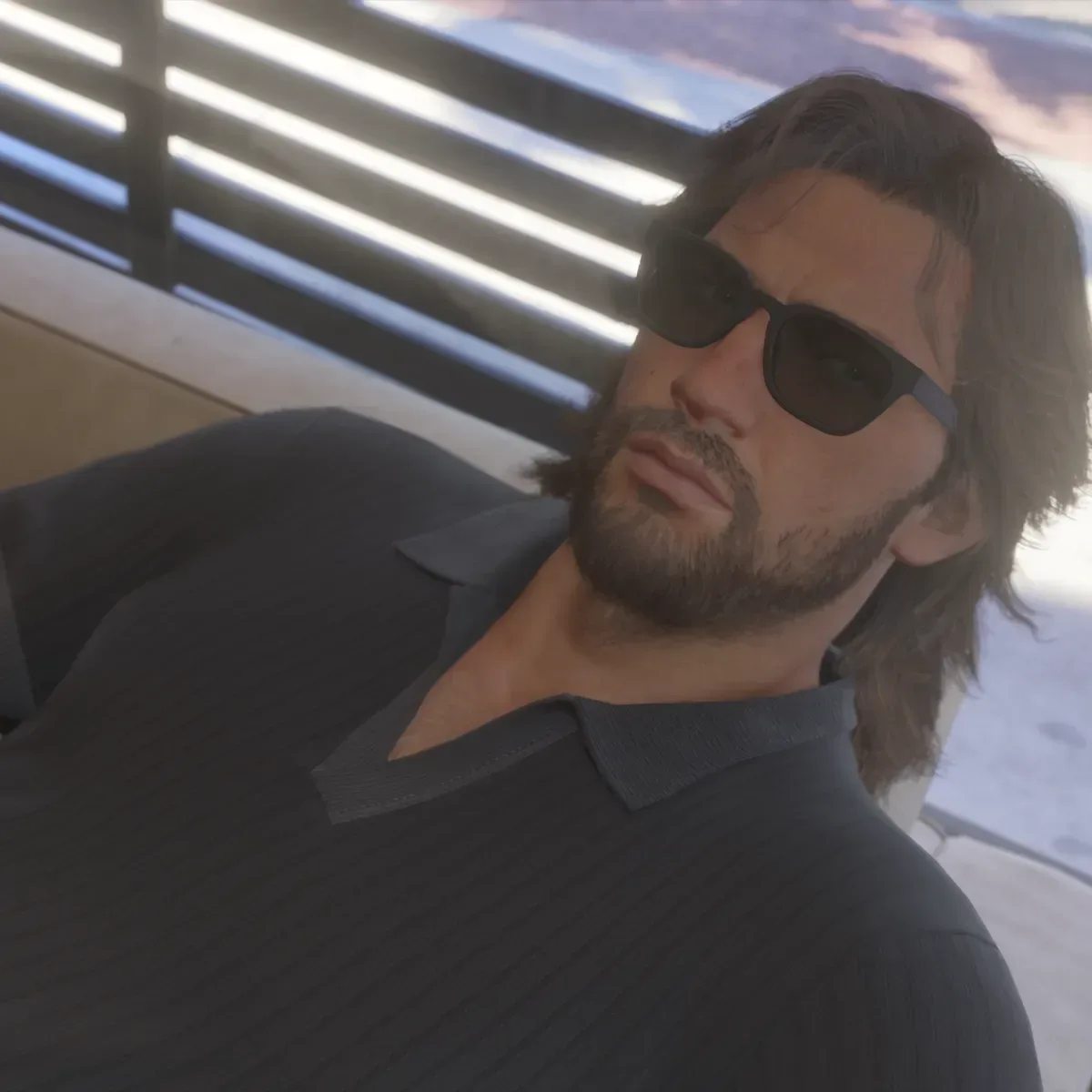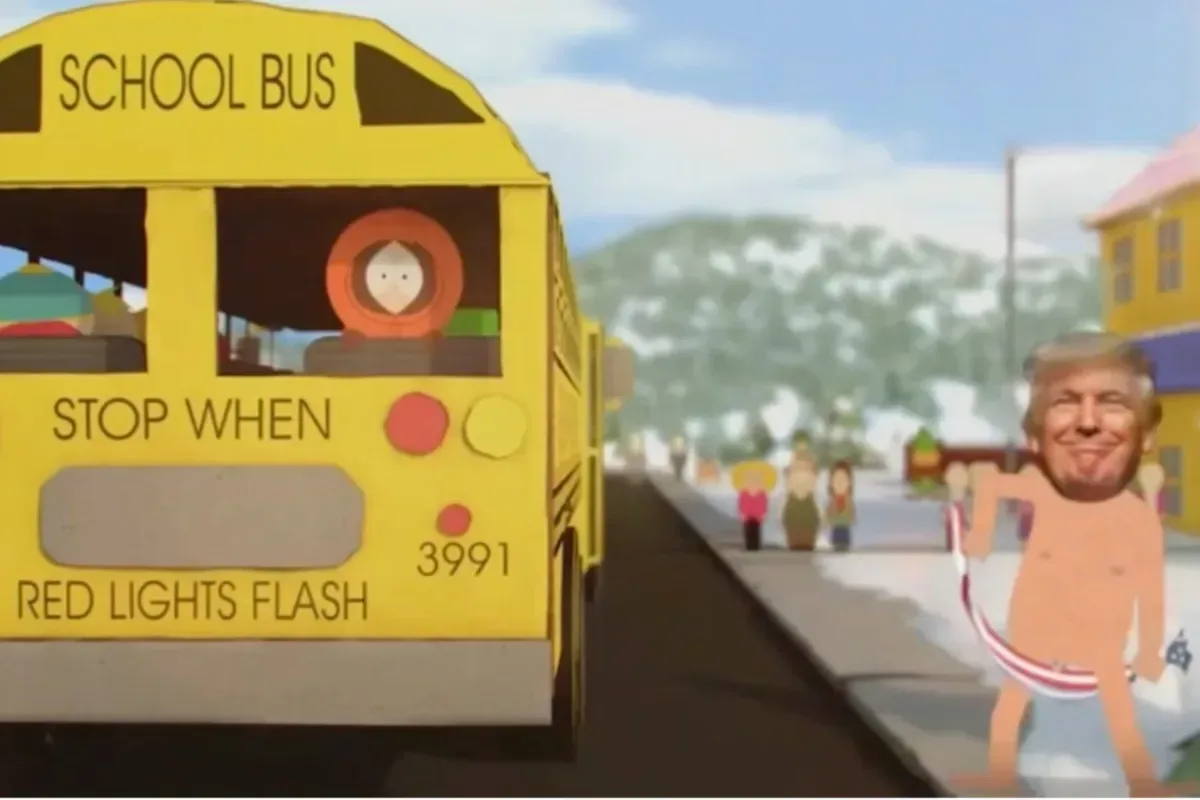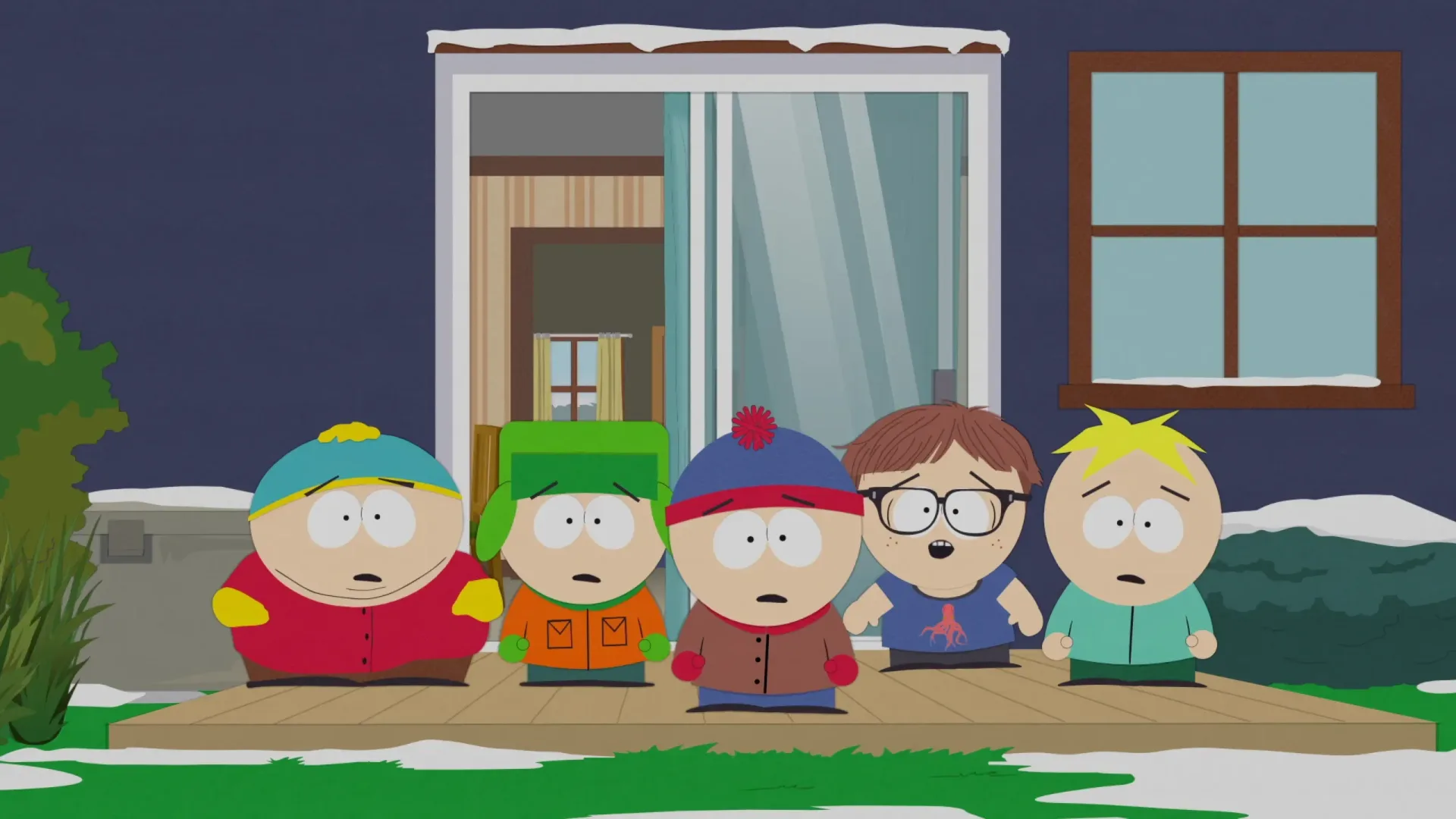
South Park closes Season 29 by treating a long-awaited game launch as the least negotiable item in a civic emergency. In the sixth and final episode, the town now called South America suffers another major power outage just as Grand Theft Auto VI has arrived. Xbox and PlayStation owners are furious, convinced that lost electricity could mean losing game progress mid-save or mid-mission. It is an intentionally outsized gamer panic, but it becomes the fuse for the finale’s broader story about who controls a town’s power—and who gets blamed when that power disappears.
The immediate answer is not a console issue, a faulty grid, or a heroic cyber-defense mission. The episode reveals that local officials made an arrangement with the recurring “billionaire weenies,” allowing them to consume the town’s energy for data centers. That setup turns the GTA 6 joke into a plot device: the game is what finally makes the population demand an explanation, while the show’s actual target is the agreement hiding behind the outage.
GTA 6 is the finale’s pressure point
The episode’s opening frustration is easy to parse even beneath the absurdity. Residents believe they have waited more than a decade for the new Grand Theft Auto, and they do not want a blackout to interrupt it. The fear voiced in the episode is particularly old-school in spirit: if the system dies while a game is saving or during a mission, everything might be lost.
That detail works because game progress is more than a number on a menu. It represents time, difficult objectives, detours, collectibles, experimental play and the momentum of a session. The finale does not attempt to explain GTA 6’s saving systems or make a technical claim about how they work. Instead, it uses the anxiety around interrupted progress as a deliberately melodramatic way to make an infrastructure dispute suddenly feel personal.
There is also a clear contrast in scale. A giant open-world release is usually associated with freedom: a player can wander, experiment and ignore the main path for hours. Here, residents cannot even reach that freedom because their hardware has no power. The show makes the loss of leisure feel world-ending, then reveals a more consequential reason for the outage. GTA 6 is the event everyone can see; the power deal is the decision they were not meant to see.
For more discussion of the game’s place in current culture, see how GTA 6 is sending Spotify streams soaring.
What the data-center gag is actually doing
A data center is, in basic terms, a facility that houses large amounts of computing equipment and the supporting systems needed to keep it running. In the episode, “data centers” are not explored as a specific technology story. They are the political explanation for why the town’s electricity is being diverted and why the local government is trapped by its own deal.
That distinction matters. The finale is not simply saying that residents resent technology. The characters want their games back, so they are hardly rejecting digital life. The satire comes from the competition between different uses of limited power, and from officials who treated the town’s resources as something to exchange behind closed doors. The wealthy group’s childish nickname makes the class critique blunt on purpose, but the plot’s underlying complaint is about accountability: an arrangement affecting everyone was made without meaningful public candor.
Related coverage includes ‘South Park’ Ends Season 29 With GTA 6 and a Power Shortage.
South America’s politicians initially have no useful response to the anger. When townspeople arrive at City Hall claiming the blackouts must be Chinese cyberattacks, the officials seize the opportunity. Rather than correct an unsupported assumption, they encourage it and let the town hunt for a supposed Chinese spy.
That is the episode’s most pointed structural joke. The public receives a simple external enemy; the people in power receive a distraction from their own bargain. The show connects that false explanation to the bigger pattern of evasion around the town’s new identity. It is not an accident that a question about electricity quickly becomes a story about nationalism, fear and a conveniently misplaced investigation.
Butters, Kenny and the kids follow the real cause
Butters is the character who has understood the billionaires’ role from the start. He brings Stan, Kyle and Cartman into the secret, while Kenny appears in zombified form after being blown up by an e-bike in the season premiere. Kenny’s spirit cannot move on until the group exposes the corruption in South America, giving the finale a knowingly ridiculous supernatural mission attached to a municipal scandal.
The kids’ trip to City Hall moves the story away from the crowd’s false cyberattack theory and back toward the actual power agreement. Officials admit that the trouble began with “those damn e-bikes,” while worrying that the children will expose the deal with the billionaires. The e-bike reference is important less as a literal cause than as a thread connecting the finale to the season’s earlier chaos. It becomes another object in a chain of excuses, diversions and escalating consequences.
The episode keeps its usual instinct to make nobody entirely clean. The corrupt deal is not framed as the work of one isolated villain whose removal restores civic health. Randy—still shrunken—interrupts with a wider accusation. He says Kenny was not simply killed by an e-bike; everyone shares responsibility because the town allowed itself to be changed. In Randy’s account, people used force, accepted bribes and looked the other way after the town’s name changed from South Park to South America.
That is a notable turn for a finale built around a blackout. The electrical failure has a straightforward practical cause in the plot, but Randy argues that the moral failure is collective. People may have tolerated the conditions that let a hidden bargain flourish. The claim is not subtle, and it is not supposed to be. South Park turns a familiar civic lesson—corruption depends on more than one decision—into a speech delivered by a miniature Randy during a town crisis about video games.
An apology that immediately qualifies itself
The mayor eventually addresses the town and admits to taking bribes, looking away and striking a deal with billionaires after the rename. Yet the apology is compromised almost as soon as it begins. She also insists data centers must be built because of a purported Chinese threat in an AI arms race, even while saying the town cannot let that requirement change who it is.
An “AI arms race,” as used here, means competitive pressure to build and deploy artificial-intelligence capability at speed, often framed as a struggle between powerful states or institutions. The episode uses that language as a rhetorical escape hatch. It transforms a local decision—and the admitted misconduct surrounding it—into something presented as unavoidable because of a bigger geopolitical emergency.
The contradiction is the joke. The mayor confesses but also supplies a grand justification. She condemns what happened without fully relinquishing the logic that allowed it. By placing the apology beside a revived external threat, the finale suggests that official remorse can become another form of damage control when it does not include a clear break from the behavior being confessed.
The town’s reaction does not produce a careful reform process. Instead, the billionaire group assists with an action described as something South America should have done long ago: Mr. Kim is launched into space and out of town. It is a characteristically extreme resolution, one that gives the season a physical expulsion rather than a tidy policy fix.
Why the finale’s gaming joke has more bite than it first appears
On its face, the episode’s GTA 6 premise is a straightforward exaggeration of launch-day impatience. Players wanting uninterrupted access to a huge new game is fertile comic material, particularly when the show treats a blackout as an assault on an entire town’s leisure plans. But the joke earns its place by making the residents’ self-interest the thing that forces buried politics into the open.
They do not begin with a principled campaign about energy allocation or corruption. They begin because they want to play. That is a more cynical and arguably sharper setup than giving the town a nobler motivation. A community may ignore opaque decisions until those decisions interrupt something it values immediately. In this case, the desired service is not abstract public infrastructure; it is access to a blockbuster game.
The finale also refuses to turn its gamers into the sole target. Their outrage is selfish and comically disproportionate, but their central suspicion—that something is wrong with the power situation—is ultimately justified. The politicians are the people knowingly misdirecting them. The show gets comedy from the gap between a very petty initial grievance and a genuinely serious hidden cause.
Season 29 therefore ends without pretending that a single confession fixes South America. The mayor’s half-apology preserves the town’s habit of rationalization, Randy spreads culpability across the population, and the closing solution is too wild to count as stable governance. GTA 6, data centers, AI competition, e-bikes and zombies all occupy the same finale because the show is using collision as its argument: when a town is willing to accept excuses, every crisis can be reframed until the real cause is almost impossible to find.
In the end, the season’s first run under the South America name closes on a fittingly unresolved gag. The town gets an explosive gesture of change, while the structures and excuses that produced the blackout remain much harder to launch into space.