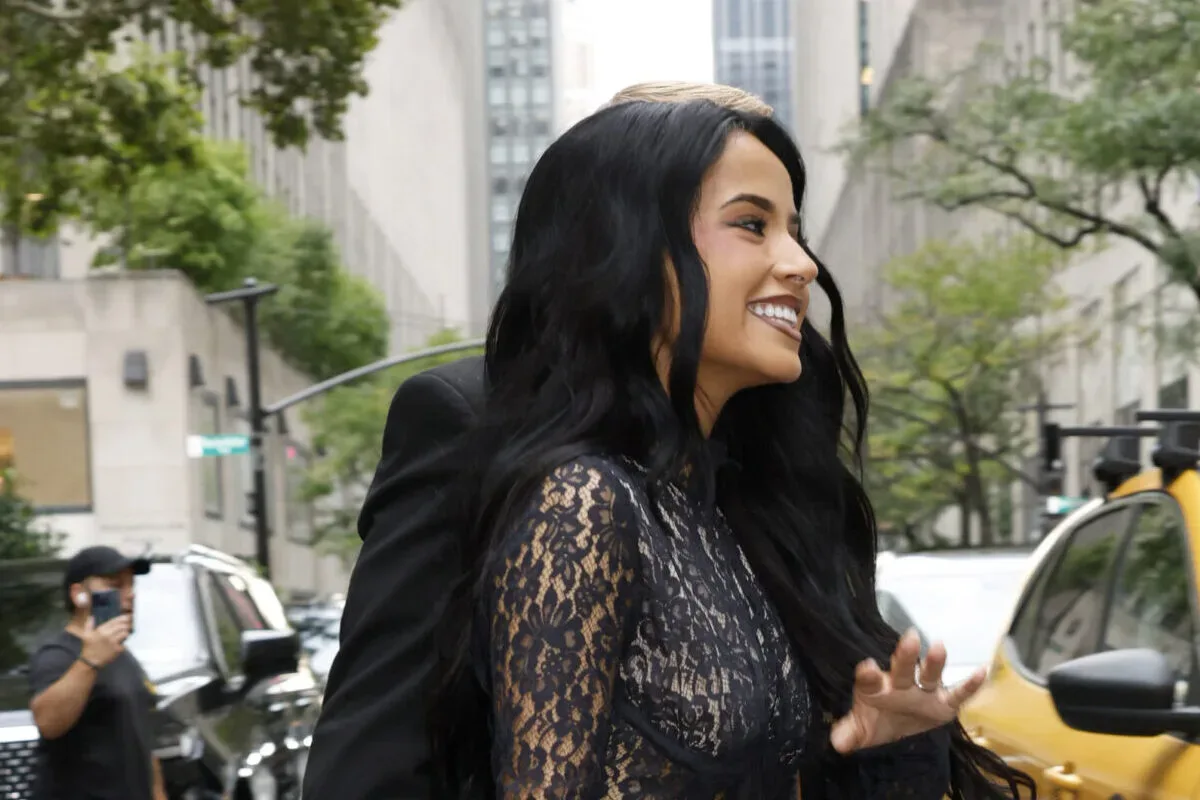
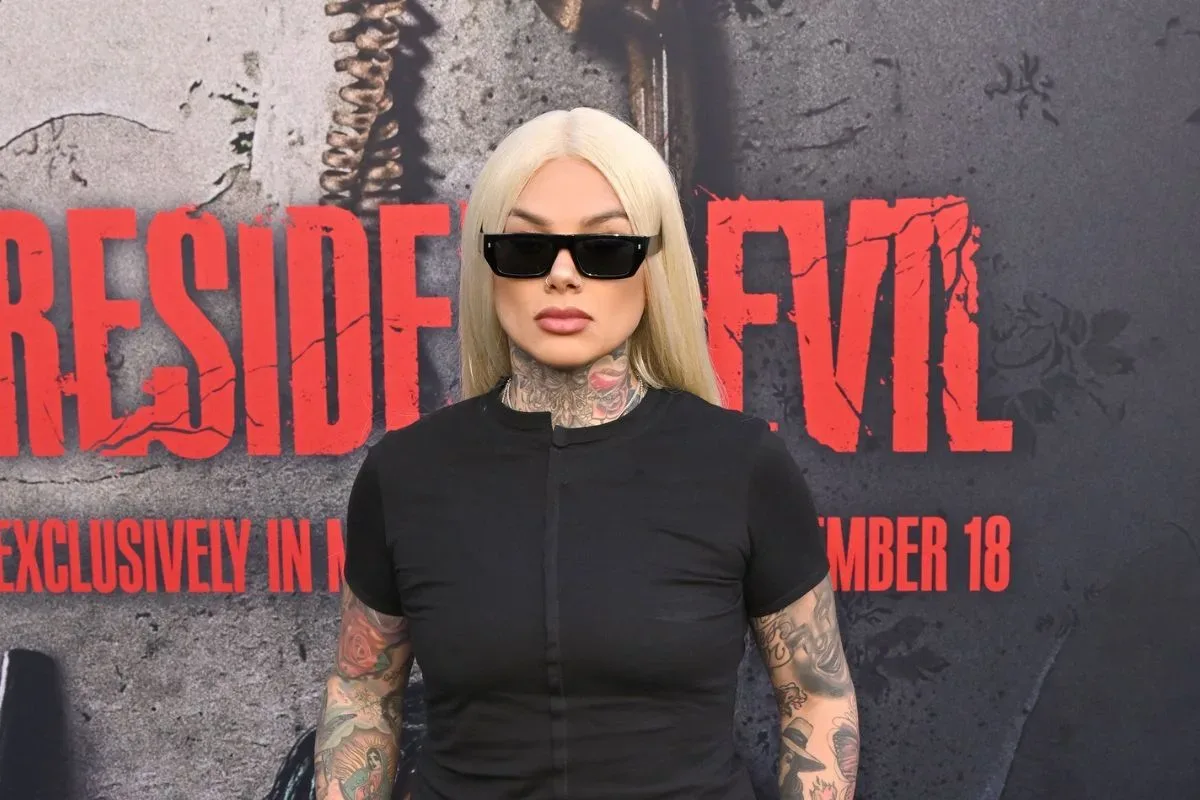
Snow Tha Product is framing her new project, Next Time, Believe Me, around more than a release schedule. The artist has spoken about defending women, Latino communities and queer people even when doing so can create professional complications, while also describing the practical challenge of working independently in a music business still shaped by larger companies.
That tension matters to the story of Next Time, Believe Me. The 17-song, roughly 40-minute project received a full digital release on November 6. Its recording copyright line lists Snow Tha Product, Inc., while Universal Music Latino handles distribution. The arrangement places an artist-owned company and a major music-company distribution channel in the same release framework—an important distinction when conversations about “independence” can otherwise flatten very different business relationships into one label.
A case for speaking when it is inconvenient
In a November 9 interview, Snow Tha Product connected her public stance to everyday concerns rather than to a desire for industry approval. “I wish, you know, having clean water didn’t become political,” she said.
Her broader position is not presented as a generic call to be controversial. It is about who gets defended, whose needs are treated as debatable, and what can happen when an artist is expected to stay quiet to avoid making others uncomfortable. The conversation included her experience as a first-generation Latina, the doubts imposed on her, and the message she hopes younger women take from her work: trust themselves rather than accept the limits others place on them.
“They benefit from our silence. Just remember that.”
That remark sits especially close to the project’s opening song, “Should’ve Been Worse.” A title alone cannot establish a song’s full subject or meaning, but its placement at the beginning of the sequence makes it a clear entry point for an album arriving alongside Snow Tha Product’s comments on silence and self-determination.
Another statement from the interview grounds the stakes in personal security instead of career optics. “I just wanna be able to one day live happily ever after in my home and not feel like people are gonna come to attack us,” she said. It is a reminder that public advocacy is not only an abstract branding choice for artists who speak on social issues. It can be tied to fears about the safety and peace of their private lives.
What the release credits say—and what they do not
The credits around Next Time, Believe Me offer useful context, but they should not be overstated. A recording copyright line identifies the party listed in connection with the sound recording’s copyright notice. Distribution, meanwhile, concerns getting music delivered to digital services and other channels. The supplied release information identifies Snow Tha Product, Inc. on the recording copyright line and Universal Music Latino as distributor.
Those details support a straightforward reading: Snow Tha Product is releasing this project through a company bearing her name while working with Universal Music Latino on distribution. They do not, by themselves, disclose the complete commercial terms of the relationship, ownership arrangements beyond the stated copyright line, marketing commitments, royalty structures or decision-making rights. None of those details should be inferred from the credits alone.
Still, the structure helps explain why the artist’s comments about independence have nuance. Running a business with family members on her team does not mean that major companies disappear from the process. Snow Tha Product has said that she still has to operate around their power. Independence in this context is therefore better understood as a working position—not a claim that the broader industry has no influence.
For listeners, that can be a useful way to read artist-business language generally. “Independent” can describe an artist’s own company, creative control, release approach or organizational team. It does not automatically reveal every service provider or commercial partner involved. Likewise, distribution by a larger company does not, on its own, reveal the entire ownership or control picture. The specific credit language is more useful than assumptions.
From a major-label chapter to a current company-led release
The business questions around Snow Tha Product’s career are not new. She signed with Atlantic Records in 2012 after building attention through her own releases. At that point, she discussed trying to preserve the brands and identity she had already developed while weighing what a major-label opportunity could provide. The agreement’s terms were kept private.
That history makes the current release setup more meaningful without requiring a simplistic “major versus independent” storyline. A career can include self-built momentum, a major-label signing, private contractual negotiations and later work released through an artist-named company with outside distribution. Each stage can involve different goals and different limits.
The practical implication is that music-industry power is rarely confined to one contract or one career label. Visibility, distribution, marketing access, corporate scale and artist identity can all pull in different directions. Snow Tha Product’s recent comments recognize that reality directly: operating independently can create room to act, but it does not erase the structures an artist must navigate.
Her approach also puts family-run operations in focus. Family participation can be part of an artist’s support system and day-to-day business structure, but the supplied information does not specify individual roles or responsibilities. What is clear is that Snow Tha Product discussed running her business with relatives on the team while continuing to confront the reach of larger industry players.
The tracklist moves between solo records and collaborations
Next Time, Believe Me uses English and Spanish across its track titles. Among the solo songs named in the release information are “QUE TE DUELA,” “BESTIE” and “Come For Me.” The multilingual presentation is consistent with the artist’s place in a career conversation that includes her identity as a first-generation Latina, though titles alone should not be treated as a full description of the songs’ lyrics, themes or language.
Several guests appear across the 17-track sequence:
- Zhavia appears on “Blame It On Me.”
- Toni Romiti appears on “Was It Something?”
- Gera MX, Chuzzington and AJ Hernz also appear on the project.
- Tech N9ne features on the closing title track, “Next Time, Believe Me,” which runs two minutes and three seconds.
The sequence includes a middle stretch of collaborative records among Snow Tha Product’s solo tracks. That makes the guest list part of the project’s pacing rather than simply a collection of isolated feature credits. At the same time, the named solo cuts make clear that the project is not built solely around guests.
Tech N9ne’s placement on the final title track is one of the project’s most concrete structural details: the album ends with its namesake song rather than opening with it. With a reported runtime of two minutes and three seconds, it is a brief closer by album standards. Beyond that placement and length, the available information does not establish the track’s sound, lyrical perspective or how the two performers divide their roles.
Why the context around the album matters
Snow Tha Product’s comments turn an ordinary set of release facts—track count, guests, copyright notice and distributor—into a larger question about agency. The important point is not that a business structure settles whether an artist is free. It is that the artist is openly describing the limits that can remain even when she is running an operation tied to her own name.
That candor is also tied to the advocacy she has chosen not to avoid. Her stated concerns encompass women, Latino communities and queer people. Her clean-water comment rejects the idea that basic needs should automatically become a partisan test. Her message for younger women pushes back on inherited doubt. Together, those points establish the social context in which Next Time, Believe Me has arrived.
For a wider view of how music releases can also become objects of physical-media discussion, see Joking Joystick’s coverage of the tape-conscious vinyl reissue of Beastie Boys’ Licensed to Ill. Snow Tha Product’s current release, however, is specifically described here as a full digital release, and no physical edition information is provided.
The result is a project whose available details point in several directions at once: an artist-owned company name on the recording copyright line, outside distribution through Universal Music Latino, collaborators across its tracklist, and an artist refusing to separate business choices from the people and issues she says deserve support. It is not a story of industry power vanishing. It is a story of continuing to speak and work within its presence.