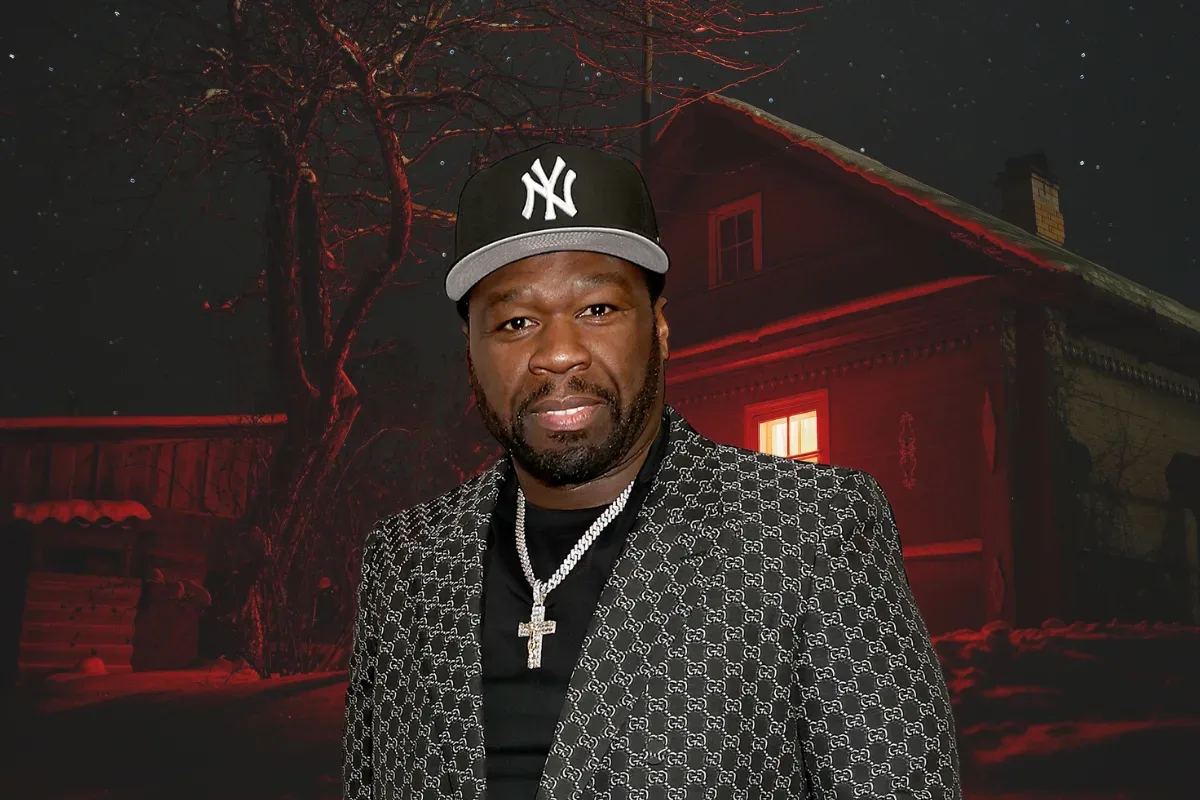
Shreveport’s relationship with Curtis “50 Cent” Jackson has reached a more public and pointed stage. Mayor Tom Arceneaux has pushed back on Jackson’s suggestion that City Hall has not supported his ambitions in the Louisiana city, saying the administration has accommodated him and is now waiting for delivery on the promised work.
The disagreement matters because several ideas are being discussed under the broad umbrella of Jackson’s Shreveport presence, and they are not all at the same stage. The central studio and production plan, a separate proposal involving the city-owned Red River District, existing leases, state-backed support and a new accountability structure each have distinct roles. Treating them as one deal risks obscuring what has actually been agreed, what still needs work and where the apparent impasse lies.
The mayor’s challenge and 50 Cent’s concerns
Arceneaux said he had tried to reach Jackson months earlier and had not received a return call. He also made clear that no contract has been signed for the Red River District proposal. In the mayor’s view, the city has already been cooperative; the next step is for Jackson and his team to fulfill their end of the larger commitment.
Jackson, speaking on The Crew Has It, had raised a different concern: whether it makes sense to invest more in Shreveport if municipal support is not present. He nevertheless said he still intended to complete the work he had promised. His remarks also pointed to a broader trust problem. Previous unfulfilled promises, he said, have made people in the city skeptical when new plans arrive.
Those statements do not necessarily describe the same issue. Arceneaux is emphasizing communication, signed agreements and performance. Jackson is emphasizing the need for support and a confidence gap created by past disappointments. The tension is therefore not simply about whether an entertainment project exists. It is about what each side believes the other must do before further commitments can move ahead.
Why the Red River District should not be confused with the studio plan
The Red River District is a city-owned entertainment area located beneath the Texas Street Bridge. It is a separate proposal from the broader studio development plan associated with G-Unit. That distinction is the essential fact in the current dispute.
Inspections found that the district needs significant repairs. G-Unit’s position has been that the work needs to be addressed before its proposal can progress. Arceneaux, meanwhile, says there is no executed contract for that proposal. Put plainly, the Red River concept is not a completed transaction waiting to be activated; it remains an unresolved piece of a wider conversation.
That does not erase the potential importance of the district. A city-owned entertainment area could logically connect to live programming, events and other creative activity. But the available details establish two practical limits: the site requires repairs, and the parties have not signed a contract governing the proposal. Any assessment of the project needs to keep those limits front and center.
Related coverage includes Shreveport Mayor Presses 50 Cent on Studio Commitments.
What an unsigned proposal means
An unsigned proposal is not the same thing as a finalized development obligation. It can reflect negotiations, required repairs, unanswered questions about responsibilities or a lack of consensus on terms. Here, the evidence supports a narrow reading: Red River remains separate from the studio investment package and has not reached the contract stage.
That is important for residents trying to gauge progress. It would be inaccurate to treat the mayor’s criticism as proof that every G-Unit-linked initiative has stalled. It would be equally inaccurate to treat the pre-existing studio arrangements as proof that the Red River District agreement is settled. Both conditions can be true at once: there can be active studio commitments and an unresolved riverfront entertainment proposal.
The larger plan spans three sites
The more substantial development plan covers three locations and was outlined by Louisiana Economic Development on January 12. It describes more than $124 million in planned investment across Stageworks, Millennium Studios and a proposed downtown immersive venue and park.
- Stageworks: planned renovation for live events and production activity.
- Millennium Studios: planned modernization of the studio facility.
- Downtown venue and park: a proposed dome-style immersive venue alongside a park.
The January 13 City Hall statement placed the projected Millennium Studios investment at $78 million and the Stageworks investment at $24 million. The two properties were described as leased to G-Unit. Those figures account for $102 million of the more-than-$124-million overall plan, while the announcement also includes the new downtown venue and park.
“Immersive” in this context refers to a venue designed around enveloping, experience-focused presentation rather than a conventional studio building alone. The supplied project description does not specify its technology, programming or construction timetable, so those details should not be assumed. What is known is that it is part of the proposed downtown component, distinct from the renovations planned at Stageworks and Millennium Studios.
The multiple-site approach also explains why the current argument cannot be reduced to a single building or one entertainment district. Stageworks is tied to live events and production, Millennium is a studio modernization project, and the planned dome and park represent a downtown addition. Red River is a separate city-owned area with its own repair needs and unsigned proposal.
Existing Stageworks lease provides a concrete starting point
One arrangement is already on the books. The city and 50 Cent signed a Stageworks lease on June 6, 2025, covering productions, events and multimedia work. That lease predates the January announcements around the wider investment plan.
The lease matters because it establishes an actual contractual relationship at one of the named properties. It also undercuts any simplistic claim that every aspect of the relationship is merely aspirational. At the same time, it does not answer the unanswered Red River questions, nor does it by itself demonstrate that every planned renovation or downtown development has been completed.
For the public, the useful distinction is between an existing lease and future capital work. A lease gives a party rights and responsibilities related to use of a property. Renovation and modernization are improvement commitments that require execution. The January plan describes intended investment, while the state’s support structure adds conditions tied to measurable outcomes.
State support is performance-based, not an unrestricted blank check
Louisiana agreed to provide up to $50 million for eligible infrastructure and modernization work. The wording is consequential: “up to” establishes a ceiling rather than a guaranteed payout, while “eligible” means not every expense automatically qualifies.
The assistance is also performance-based. It is tied to economic impact, local business participation and delivery of improvements. Performance-based support generally means funding depends on meeting defined conditions rather than being released solely because a plan was announced. In this case, the stated conditions place focus on whether the proposed work produces the required impact, includes local business involvement and results in the promised physical upgrades.
City Hall said the state-backed plan would require no additional municipal money. That does not mean the city has no role. The city is tied to the leases and the Red River District is city-owned. Rather, the statement draws a financial boundary around the particular state-supported plan: it is not framed as a request for further city funding.
The project also has an oversight mechanism. The Shreveport Film & Entertainment Economic Development Corporation was formed to work alongside the state economic development agency on accountability for the project and its funding. Oversight, here, means a formal structure intended to monitor whether commitments and spending align with the project’s requirements.
What happens next depends on execution and communication
There is enough structure in place for the Shreveport plans to be more than a vague celebrity-business discussion: an existing Stageworks lease, defined investment estimates, state support capped at $50 million, performance conditions and a designated oversight body. But there are also plainly unresolved matters: the mayor says communication has broken down, Red River needs major repairs, and no Red River contract has been signed.
Arceneaux’s public message places the immediate emphasis on performance and direct contact. Jackson’s comments place it on support, recognition as a business owner and the need to overcome local skepticism. The practical test will be whether those positions can turn into clear milestones: which improvements qualify, who handles outstanding repairs, how local business participation is measured and what gets signed for the separate district proposal.
For now, the clearest reading is neither a total collapse nor a finished development success. Shreveport has an active, multi-part production and entertainment agenda attached to G-Unit, alongside a visible disagreement over a separate site and the pace of delivery. In creative-industry projects, the difference between an announced vision and a functioning operation is often found in contracts, construction work, oversight and responsiveness. Those are precisely the areas now drawing attention in Shreveport.
The story also sits within a wider pop-culture news cycle in which celebrity-facing claims and business disputes can move quickly; for another recent example of competing public accounts, see Blueface and Chrisean Rock’s separate-stream dispute.