
Scarlett Johansson has described a blunt test she applies when major studio offers come her way: does the movie appear to have a real audience, and is there a compelling reason for it to exist? The actor says some proposals fail that test so clearly that she feels moved to question the project itself rather than simply turn down the part.
“Am I making something that other people want to see? Is there an audience for this movie? I’m not making a movie just for me,” Johansson said while discussing how she selects roles. She added that she has sometimes responded to studio projects by saying, “I don’t think you should make this. I don’t know who you’re making this for. It seems irresponsible to make this.”
It is an unusually direct framing of a familiar Hollywood decision. An actor can reject a script for personal reasons: the character may not fit, the schedule may be wrong, or the material may not be creatively appealing. Johansson’s comments raise a wider question, though. She is also considering whether a prospective film has a clear relationship with viewers at all.
More than a question of whether a role is good
Johansson did not identify the studio projects she had in mind, so there is no basis for attaching her criticism to any particular franchise, filmmaker or company. Her point was broader: a movie can arrive with the resources and scale associated with a studio production while still leaving an actor unconvinced that anyone is asking for it.
That distinction matters. A tentpole is generally a large-scale studio release designed to be a major part of a release calendar, often supported by a recognizable property, extensive marketing or both. The term does not inherently describe quality. It describes industrial importance and commercial ambition. Johansson’s concern instead goes to a movie’s purpose: who it is intended to reach, why that audience would choose it, and whether the creative idea justifies the effort behind it.
Her remarks should not be read as a claim that every film must be built around the broadest possible market. Johansson’s own current slate shows a willingness to work across different scales and sensibilities. The relevant question is not simply “Will this be huge?” It is whether the people making it understand what they are making and for whom.
A career that moves between studio scale and independent drama
Johansson’s recent screen career supplies useful context for that perspective. Her studio work has been heavily associated with Natasha Romanoff, better known as Black Widow, in the Marvel Cinematic Universe. Her most recent Hollywood tentpole was 2025’s Jurassic World Rebirth.
At the same time, her latest release, Paper Tiger, is an independent drama. The film was acquired by Neon shortly before its world premiere at the Cannes Film Festival earlier this year. “Independent” here refers to a production operating outside the conventional major-studio framework; it does not automatically signal a particular genre, budget or artistic value. In practical terms, it often means a project is assembled and financed differently from a major studio release, and may find distribution through an acquisition rather than beginning with a studio commitment.
Related coverage includes Scarlett Johansson Says Some Studio Offers Raise Questions About Their Audience.
The contrast between a Cannes-premiering drama and the machinery of blockbuster filmmaking is not a contradiction in Johansson’s choices. It is closer to a working pattern. She has long alternated high-profile studio films with projects that have sharper or less conventional creative identities. For audiences, that means the films on her schedule should not be treated as one uniform lane, even when they share the same star.
For more film coverage focused on the particular strengths and flaws of a drama rather than its franchise footprint, read our review of The Mosquito Bowl.
What Johansson has lined up
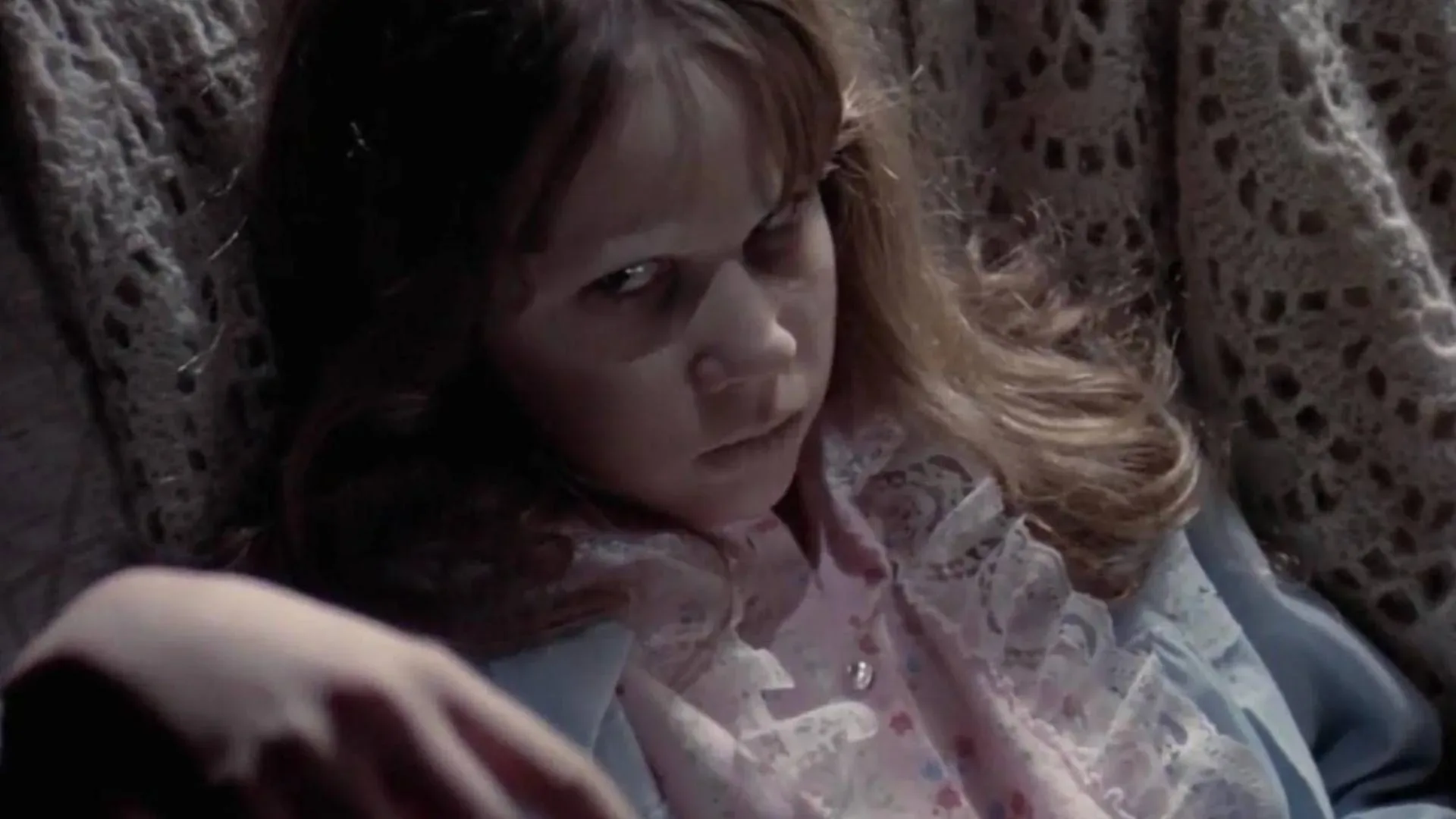
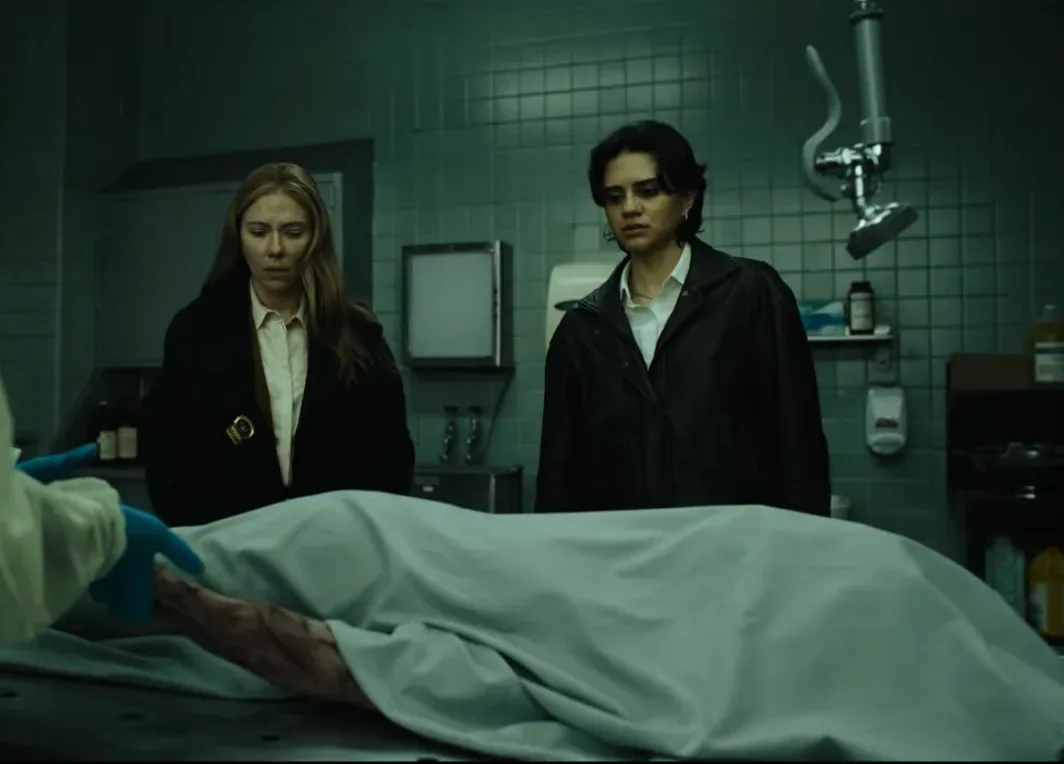
Johansson spent much of this year making two studio tentpoles back to back. The Exorcist: Martyrs is scheduled for theaters on March 12, 2027, followed by The Batman 2 on February 18, 2028. Her role in the Warner Bros.-backed superhero sequel has not been revealed.
She has said the part in The Batman 2 was difficult to solve. “It was very hard to figure out,” Johansson said earlier this month. “I don’t know why, whether it was just the role or it was just where I am in my life, but it was just hard to crack it. And that’s all I can say about it.”
That answer offers little in the way of plot information, but it does establish an important limit: any claims about whom she plays, where the character fits into Gotham, or whether the part connects to a familiar comic-book figure would be speculation. The confirmed facts are that Johansson is in the film, the role remains undisclosed, and she found the work of understanding it challenging.
Her next production is Scapegoat, a film from Ari Aster, the filmmaker behind Midsommar and Eddington. The A24-backed project co-stars Jude Law. Johansson has been equally guarded about its story, saying she does not yet know how to define it. What she does know is that the screenplay made a strong immediate impression.
“The script is just so intense. It has this immediacy to it that is really different. I’ve never read anything like it before.”
In this context, immediacy means a script’s ability to create a pressing, in-the-moment feeling for its reader. It is not a genre label and it does not reveal the film’s plot. Johansson’s description suggests she was responding to the writing’s momentum and force rather than offering a tidy explanation of what kind of movie Scapegoat will be.
Rejections and missed parts shaped the same outlook
Johansson’s willingness to decline projects sits alongside earlier experiences of wanting parts and not getting them. She previously spoke about losing two roles that she badly wanted: a role in Alfonso Cuarón’s Gravity, which went to Sandra Bullock, and Black Widow in Iron Man 2, a role originally secured by Emily Blunt before Blunt exited because of scheduling conflicts.
Johansson eventually became closely identified with Black Widow, but the route was not a simple case of a performer selecting a ready-made franchise destiny. She has described the period around those missed opportunities as a professional crisis. “I got turned down for two roles — the first was Iron Man 2 and then the other one was Gravity,” she said. “I had wanted that role so much.”
She recalled feeling frustrated and hopeless, questioning whether she was in the right profession as the work coming to her felt creatively unfulfilling. Johansson also said she was repeatedly offered scripts connected to Marilyn Monroe, a run of similar proposals that made her wonder whether her creative options were narrowing.
The practical implication is that role selection is not a straight line from “wanted” to “made.” Actors can pass on projects they find ill-defined, yet still contend with periods when the available choices do not feel satisfying. They can miss a part they consider meaningful, then later inhabit a different role so successfully that it becomes one of the central associations of their career. Johansson’s Black Widow history is a particularly clear example of how quickly the public story around casting can differ from the uncertainty of the process itself.
Audience awareness is not a demand for safe choices
Johansson’s comments about questionable studio offers could be flattened into a complaint about films that may not sell. That would miss the tension in the rest of her schedule. Paper Tiger, The Exorcist: Martyrs, The Batman 2 and Scapegoat point toward very different kinds of moviegoing propositions: independent drama, studio horror, superhero spectacle and an A24 project led by Aster.
Rather than separating “commercial” work from “creative” work in absolute terms, Johansson appears to be describing an actor’s need to locate a project’s reason for being. A film can have a famous brand and still leave that purpose unclear. Conversely, a smaller film can have a strongly defined audience or an intense script that makes its creative intent feel obvious.
Nothing in Johansson’s remarks reveals which offers she rejected, and they do not predict how her upcoming movies will be received. They do, however, set out the standard she says she brings to a decision: the work must connect to more than the fact that it can be made. For a performer moving between long-running franchises, studio tentpoles and independent filmmaking, that is a useful reminder that the biggest question may not be whether a movie can open, but whether anybody can explain why it should.