
 Nicholas GalitzineJohn McLaughry
 Bill SkarsgårdBob Bauman
 Ray NicholsonTony Butkovich
 Tom FrancisDave Schreiner
 Brent ComerGeorge Murphy
 Ella NewtonJane
 Peter BergGeneral Buckner
 Dominic BogartWilkes
 Stacy ClausenAvery
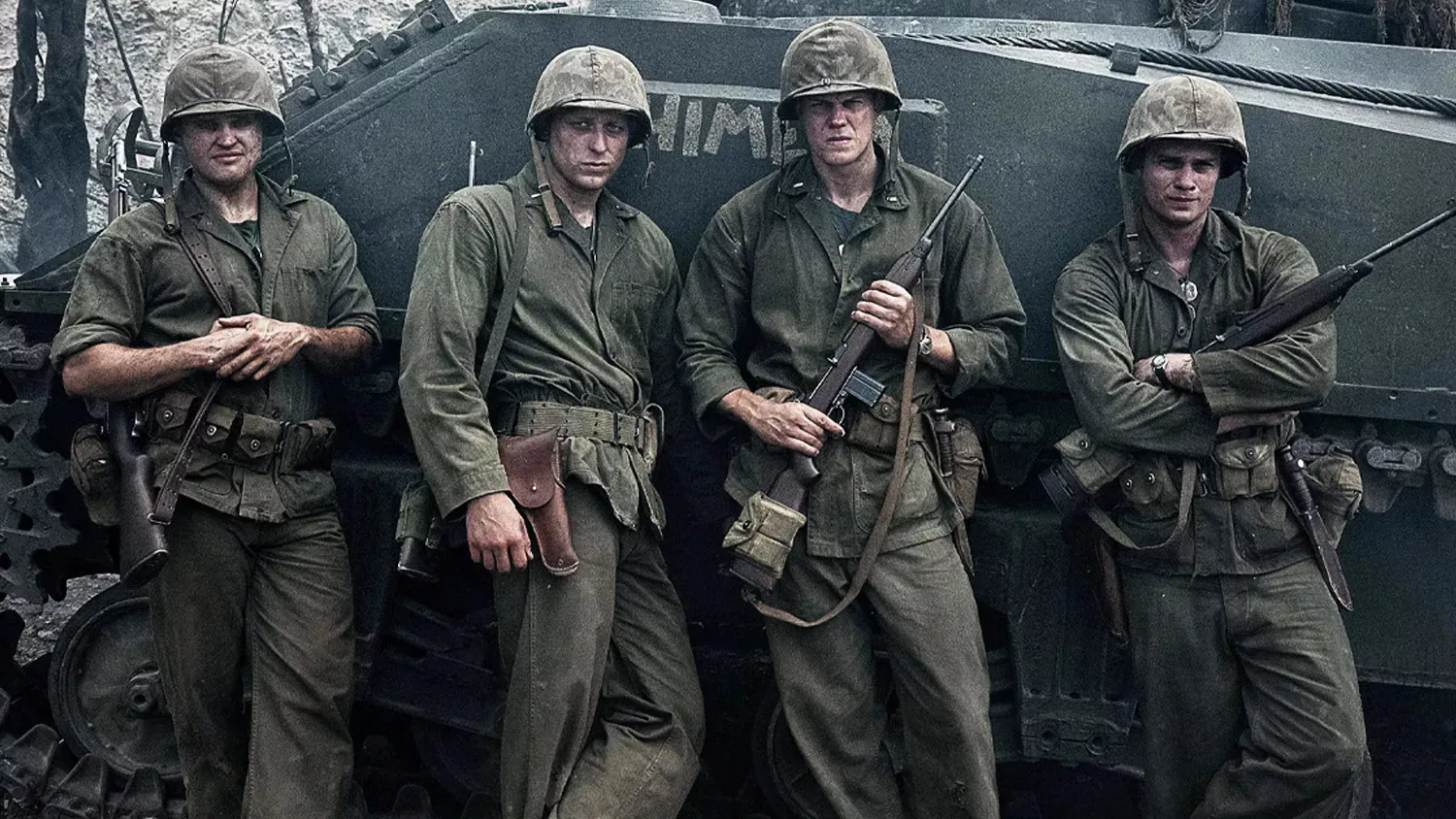
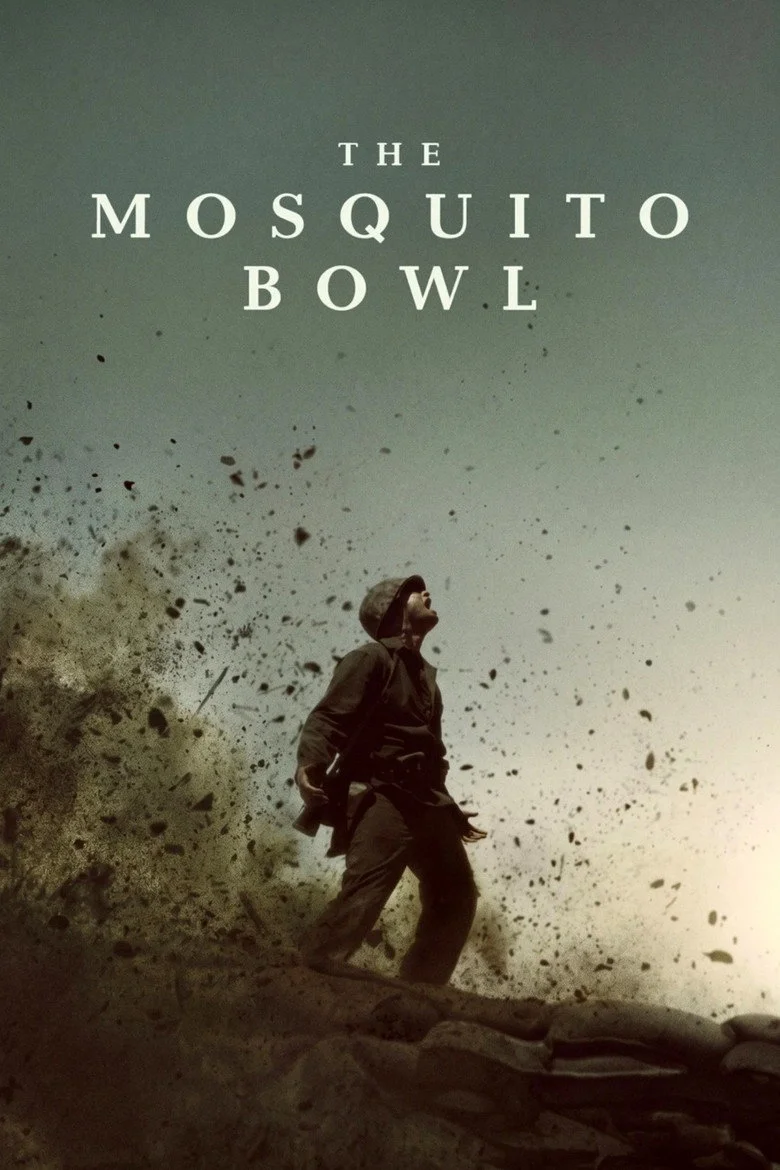
The Mosquito Bowl takes a premise built for Peter Berg’s muscular, high-pressure filmmaking and presses it into the service of an explicitly anti-war story. Adapted from Buzz Bissinger’s historical non-fiction book, the film follows four college football players—played by Nicholas Galitzine, Bill Skarsgård, Ray Nicholson and Tom Francis—who enlist and are sent towards the Pacific conflict. Their path runs through punishing training, a first battle they barely survive, and ultimately the organisation of a Christmas Eve 1944 football game at Guadalcanal.
That outline contains two kinds of spectacle: war as devastation and football as ritual. Berg appears determined to make both feel consequential, but not interchangeable. The battlefield material is designed to strip away any romance around youthful courage. The football game, by contrast, becomes a brief space for connection and shared purpose amid a setting dedicated to destruction. The contrast is simple, but it is potent: the same young men who are treated as expendable in combat find, on a makeshift pitch, a chance to recognise one another as teammates again.
A war film with little interest in glory
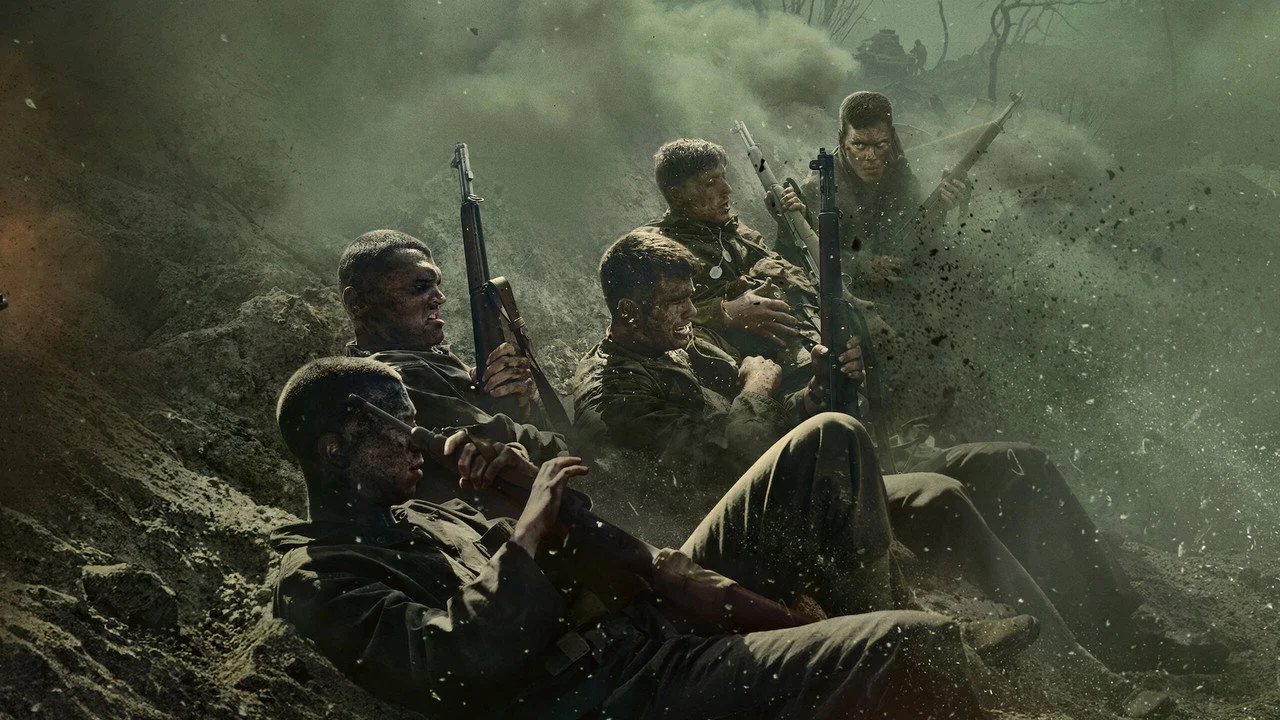
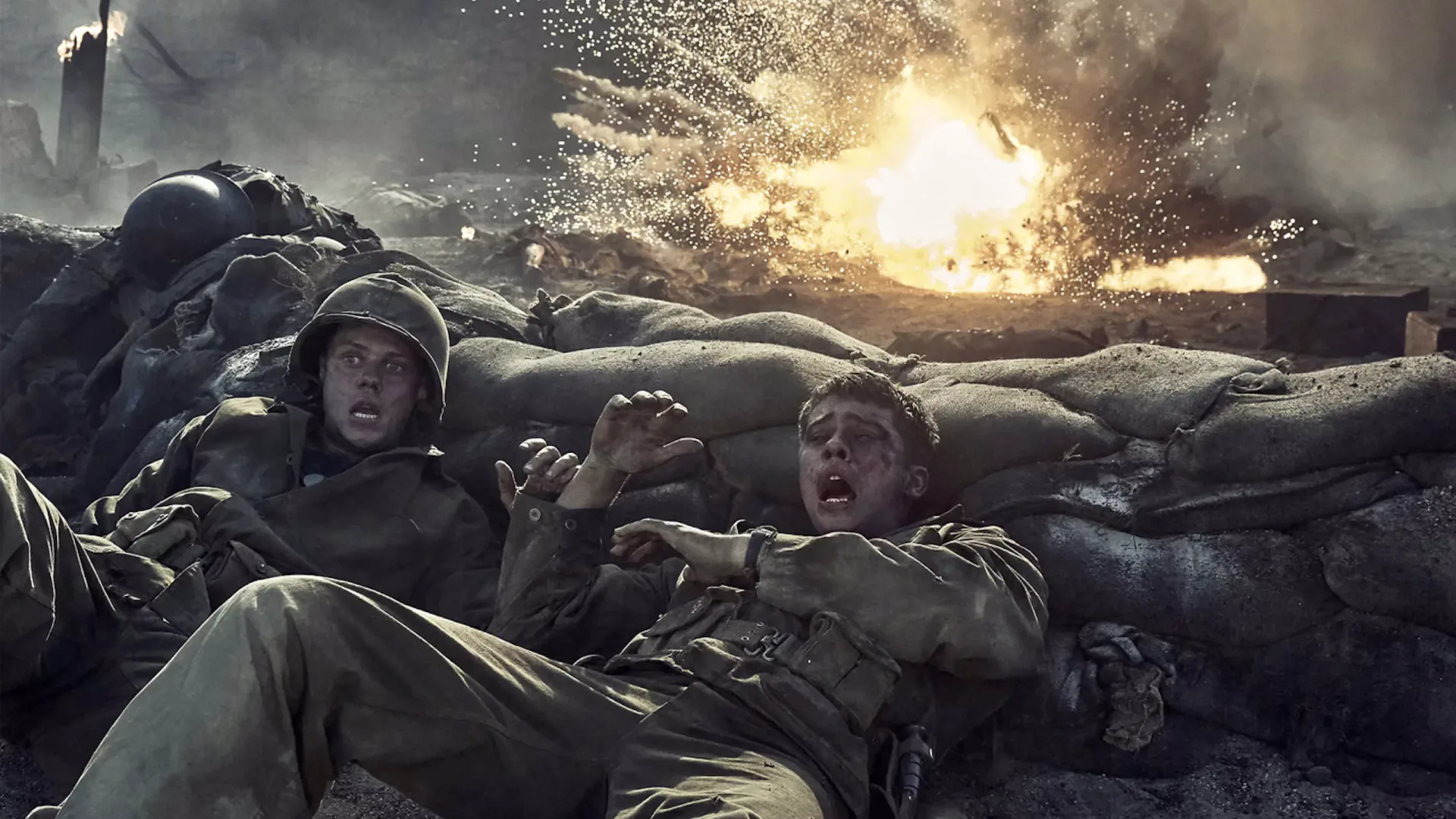
The film announces its perspective early with a Herbert Hoover quotation about older men declaring wars while young people fight and die. That framing matters because the subsequent action reportedly does not soften its consequences. Explosions fling bodies through the air, men are swept up in violent water, and one especially grisly moment brings death abruptly into the quartet’s immediate view. These are not battle scenes shaped as clean tactical victories. They establish a world in which survival feels precarious and, crucially, arbitrary.
Jacques Jouffret’s large-scale cinematography gives this ordeal a scorched, monumental quality. The combat spaces are presented as intricately arranged landscapes of wreckage and threat, with the central men moving cautiously through them rather than commanding them. That visual approach supports the film’s central idea that luck, not valour or physical prowess, is often the dividing line between life and death. It also makes the violence difficult to ignore, which is clearly part of the film’s intention.
There is a tension, however, between forcefulness and feeling. The material is described as relentless enough to risk emotional numbness. When a film continually escalates cruelty and shock, viewers can become spectators of punishment rather than participants in the characters’ grief or fear. The Mosquito Bowl seems especially vulnerable to that problem in its handling of the wider ensemble: some supporting figures function more as casualties-in-waiting than as fully developed people. The anti-war conviction remains clear, but clarity alone does not guarantee complexity.
The film does make room for the politics on the ground. Its depiction of American treatment of Japanese soldiers is unflinching, suggesting that its critique extends beyond combat’s physical toll to questions of conduct and dehumanisation. Yet the dominant dramatic method is still blunt impact. For viewers who value war stories that refuse sanitisation, that severity may be a strength. For those looking for more reflective space around its horrors, the approach may feel insistently punishing.
Four performances carrying the emotional load
The quartet at the centre is the film’s most persuasive asset. Galitzine plays John with a sombre seriousness that charts the character’s shattering response to war. The role calls for a visible loss of certainty rather than a conventional heroic ascent, and Galitzine’s presence gives that deterioration emotional weight. His performance helps ground a film whose images can otherwise speak at maximum volume.
Nicholson brings charisma to the group, an important counterbalance in a narrative so steeped in trauma. Charisma here is not merely decorative; it helps make the fellowship believable before and during the strain of combat. Francis, making his film debut, holds his own alongside the more established members of the ensemble. Skarsgård gives the group a different kind of vulnerability as a farm-raised young man whose hands shake after his first encounter with death. That detail sharply punctures assumptions about toughness. A background associated with hard physical work does not prepare someone emotionally for killing, terror or survival.
Collectively, the actors supply the tenderness that the film’s broadest gestures can lack. Their camaraderie registers in both trenches and on the field, with expressive faces doing much of the work when dialogue or plot machinery cannot. This is an ensemble film in the most useful sense: the emotional argument depends on the men’s mutual regard, and the cast makes that regard credible. The result is not simply a collection of individual breakdowns, but a portrait of brotherhood under conditions that repeatedly threaten to erase it.
Football as reprieve, not escape
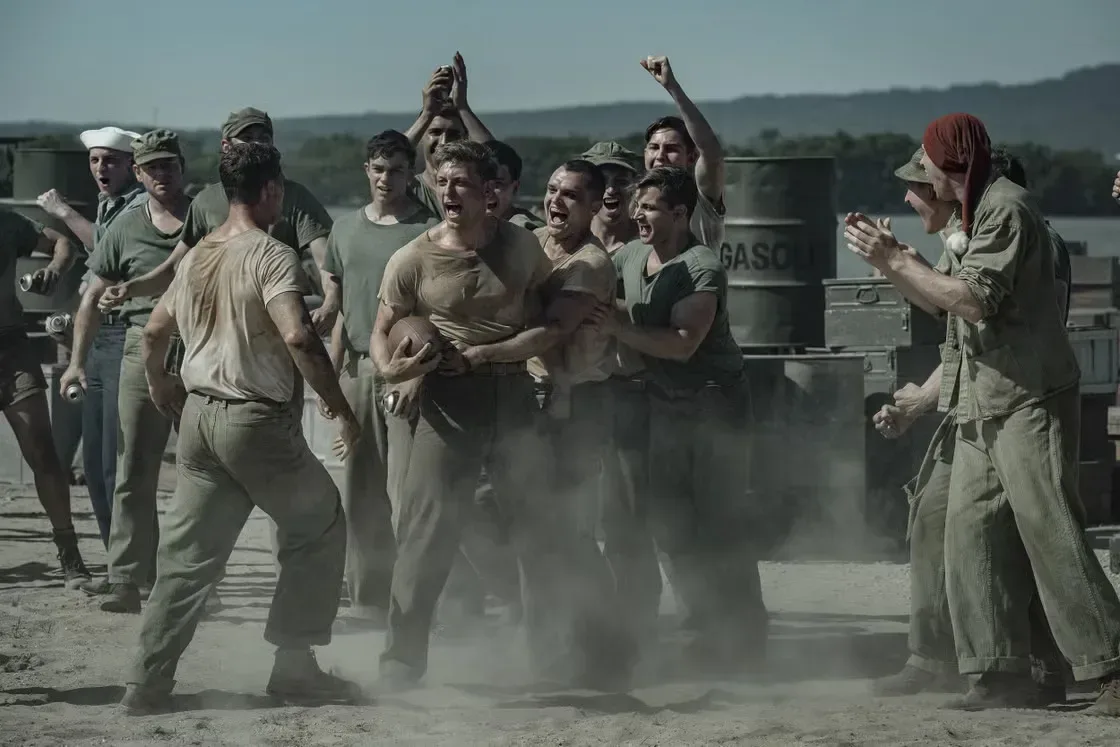
The Mosquito Bowl itself is the film’s defining counter-image to the carnage. Berg reportedly stages the game with both scale and naturalism, while keeping it accessible even to viewers unfamiliar with American football. That accessibility is significant. The match does not require specialist knowledge to fulfil its dramatic purpose because its real value is emotional and communal. It is a morale-boosting event, but the film treats it as more than an institutional distraction: the game offers the men a temporary return to rules, teamwork and a version of identity that predates the battlefield.
In interpretation, that makes the football sequences the film’s most revealing expression of its anti-war stance. War reduces young people to bodies in danger; the game lets them be players, friends and rivals again. The contrast does not erase what has happened, and the relief is meaningful precisely because it is temporary. Berg’s ability to make the game feel at once monumental and lived-in prevents the sporting material from becoming a simple inspirational detour.
That said, the very effectiveness of this reprieve may underline the limitation elsewhere. When the film finds a more natural emotional rhythm on the pitch than in some of its battlefield shock tactics, it suggests that the quieter human dimensions could have been granted more room throughout. The film’s strongest passages appear to be those that let its cast communicate the cost of war rather than merely illustrating that cost through another atrocity.
Who should see it
The Mosquito Bowl is best suited to viewers prepared for graphic, sustained wartime violence and a film that favours immediacy over understatement. Its rewards lie in its imposing visual scale, committed central performances and the affecting bond among its four leads. Berg’s filmmaking gives the story urgency, while the football game supplies a deeply needed pulse of fellowship within the devastation.
The reservations are real rather than incidental. Supporting characters may not receive enough space to become more than targets of the film’s grim machinery, and the determination to shock can diminish rather than deepen an audience’s emotional response. Still, the core ensemble keeps the drama connected to people rather than pageantry. The film’s most durable impression is of youth, friendship and ordinary rituals trying to survive in a world that has made survival feel like chance.