Pressure finds high drama in an unlikely battlefield: an Allied military headquarters where wind speed, cloud cover and visibility may decide whether Operation Overlord can proceed. Set in the run-up to D-Day and adapted from David Haig’s 2014 play, Anthony Maras’ film makes meteorology feel less like homework and more like a fuse burning toward a history-altering decision.
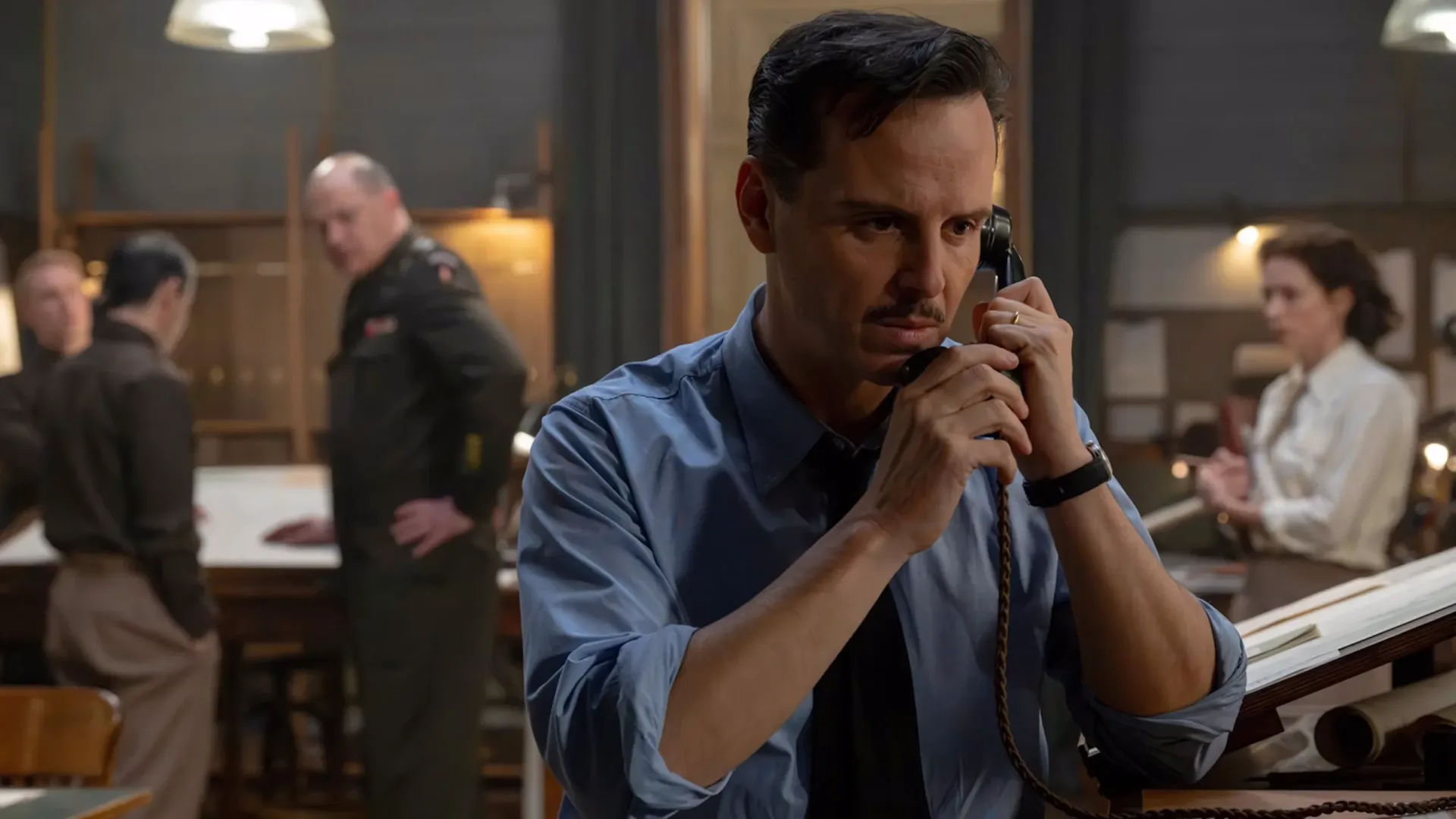
Andrew Scott leads as James Stagg, the Scottish weather expert charged with judging whether conditions will allow the invasion to launch. The role is not softened into an easy heroic portrait. Stagg is severe, intensely controlled and often difficult, but Scott gives that reserve a compelling moral weight. His conviction comes from a commitment to current data and scientific judgement, not from a need to win the room, which makes the mounting institutional resistance feel particularly sharp.
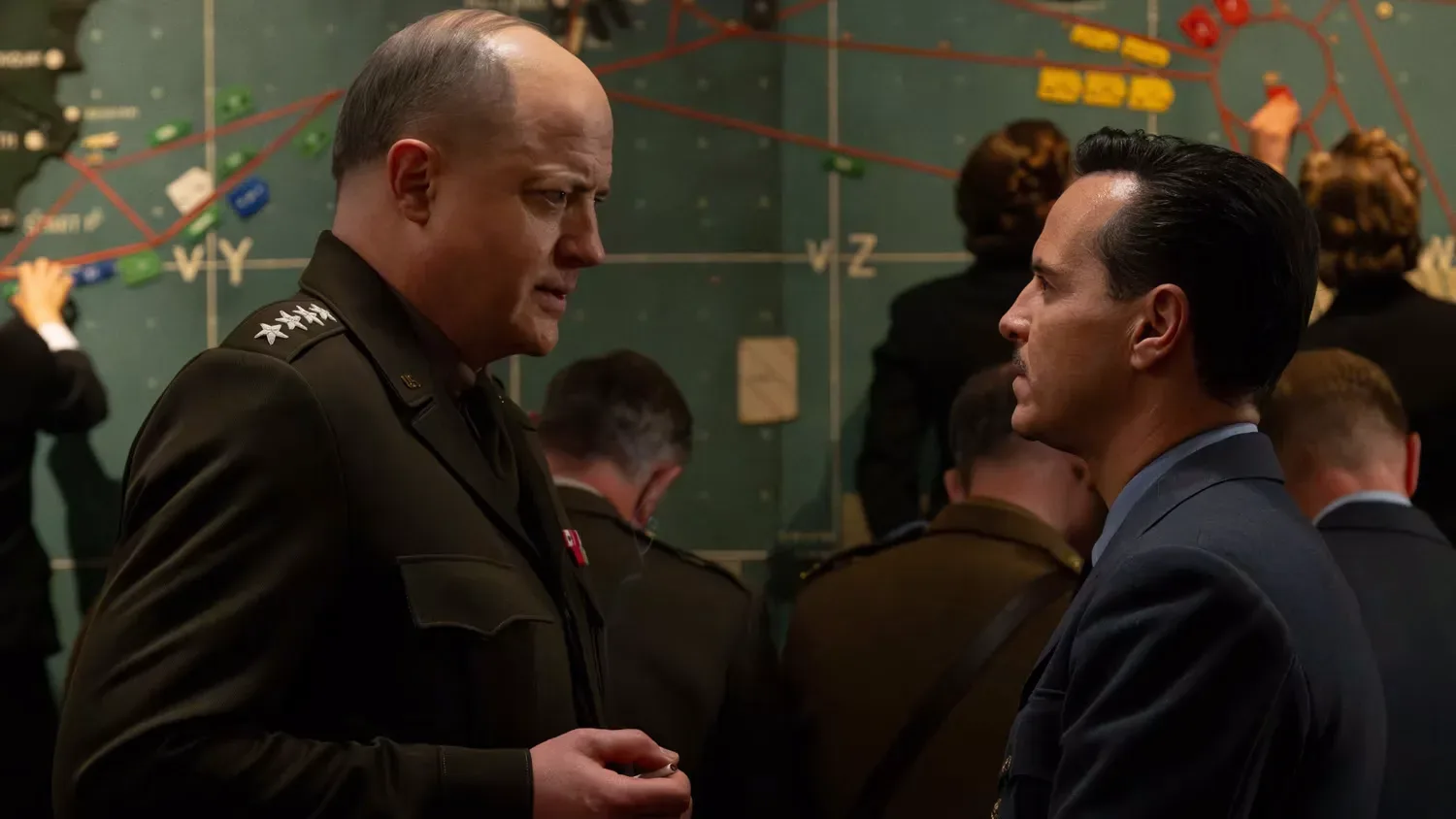
Most of the action is contained within the headquarters, where Stagg’s assessment clashes with the confidence of Chris Messina’s American meteorologist Irving Krick. Their professional conflict supplies the film’s engine: Krick trusts historical patterns, while Stagg argues for reading the immediate evidence. That opposition turns technical disagreement into clean, suspenseful drama, with the question of who gets heard becoming as important as the forecast itself.
Brendan Fraser’s Eisenhower is a more outwardly expansive presence than Scott’s tightly wound Stagg. The contrast can make their performances feel as though they are calibrated to slightly different scales, yet Fraser still locates the commander’s uncertainty beneath the authority. Kerry Condon, as Eisenhower’s secretary, brings welcome emotional clarity and common sense to an environment dominated by military certainty and professional ego. Damian Lewis also appears as Field Marshal Montgomery among the officials pressing against Stagg’s warning.
Maras keeps the film moving with the polish of an old-fashioned pot-boiler, including a literal ticking-clock element. The emphasis is cerebral rather than combat-driven: this is a story about people assessing evidence, challenging assumptions and making an irreversible call under extraordinary pressure. When D-Day arrives, staged action is blended with restored archival footage, giving the climax a broader sense of scale without abandoning the headquarters-bound tension that defines the film.
The main limitation is also part of the proposition. Viewers seeking a sustained front-line war spectacle may find that Pressure spends most of its energy in meetings, arguments and weather reports. For audiences open to a contained procedural, though, that focus is the feature rather than the forecast: a brisk, gripping thriller about expertise colliding with power when the margin for error is effectively zero.