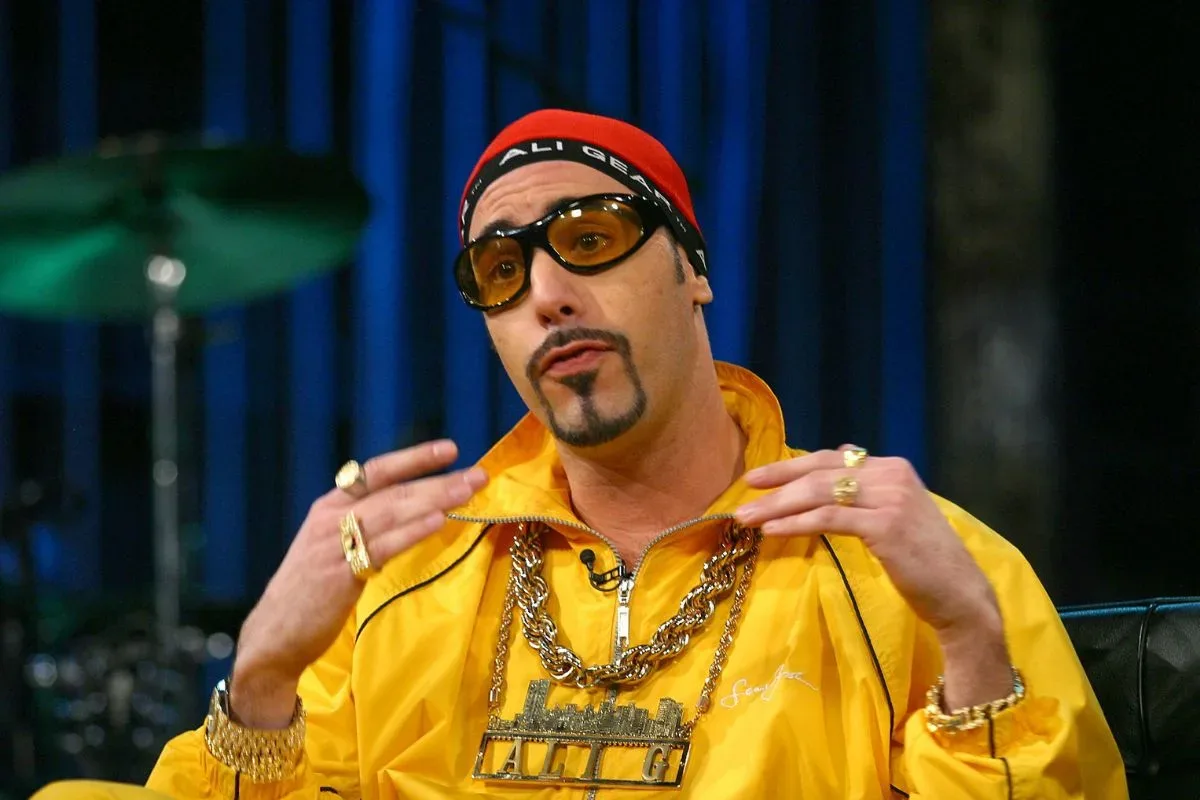
Sacha Baron Cohen’s return to Ali G comes with a reminder that the character was never merely a tracksuit, a catchphrase and an awkward interview style. Ali G was built to expose the assumptions people bring into a room: who appears important, who is worth taking seriously, and how quickly confidence can become comedy when a conversation stops following familiar rules.
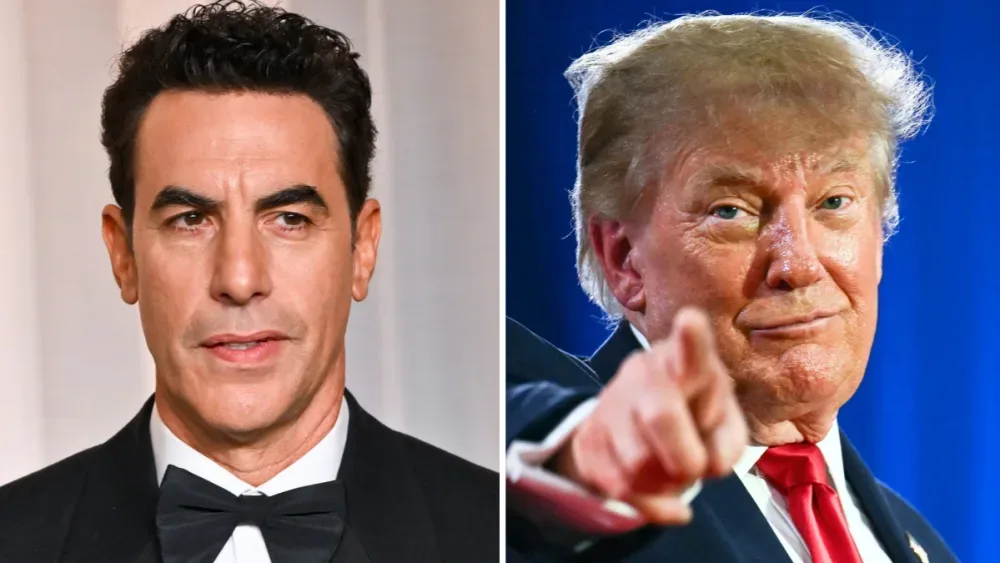
That history is central to Baron Cohen’s recollections of Ali G’s 2003 interview with Donald Trump. Speaking during a live New York event, Baron Cohen said Trump was the lone late arrival among the powerful figures he had interviewed as the character, keeping the production waiting roughly 40 minutes. He also described arriving at Trump Tower with director James Bobin, feeling intimidated, and hearing Trump angrily speaking to Rudy Giuliani by phone.
Those details are part of a larger story about performance, status and miscalculation. Baron Cohen said he later understood the episode as a kind of power move. Trump, he recalled, initially appeared interested in meeting Bobin, whom he described as a handsome, blond, Oxford-educated Englishman. Once Trump understood that the interview would be with Ali G, Baron Cohen said, the mood changed immediately.
The comedian said he subsequently heard Trump had been furious after the encounter and noted that Trump publicly criticized him on more than one occasion. Baron Cohen’s response was distinctly in keeping with the Ali G method: the criticisms became useful promotional material for another show.
Ali G returns after a long absence
Baron Cohen has now revived the character for Ali G: Who Iz I?, which is playing in theaters ahead of an Amazon Prime arrival on October 30. The return lands 20 years after Baron Cohen retired Ali G, the persona he brought to a broader audience through Da Ali G Show.
In that series, Ali G’s interviews regularly placed a deliberately ill-informed character opposite people accustomed to authority and conventional media settings. The joke did not depend only on a guest failing to recognize the premise. It also rested on the collision between institutional seriousness and a host who seemed unable—or unwilling—to accept the standard language of expertise.
That distinction matters. A satirical persona is a fictional character designed to reveal something through exaggeration, imitation or deliberate misunderstanding. Ali G’s apparent lack of knowledge gave guests room to over-explain, patronize, evade, correct, or attempt to remain composed. The comic pressure came from the fact that each response could say something about the interviewee’s instincts as much as it said something about the host.
Baron Cohen’s account of the Trump encounter shows why the format could be so volatile. An interview is normally a controlled exchange: one party brings the public profile, another brings the questions, and both understand the rules. Ali G scrambled those rules. The encounter could begin with a recognizable media ritual, then turn into a situation where dignity and control were harder to protect.
Related coverage includes Sacha Baron Cohen Revisits Ali G, Trump Interview and Comedy’s Political Reach.
What Baron Cohen meant by “elements of brilliance”
Looking back on Trump’s political career, Baron Cohen did not offer a simple endorsement or condemnation. He said people had underestimated Trump and argued that there are “elements of brilliance” to him, otherwise he could not explain Trump’s continuing appeal and his second term in the White House. Baron Cohen declined to characterize the country’s transformation as either positive or negative.
It is important to keep the scope of that observation clear. Baron Cohen was discussing political effectiveness and public appeal, not declaring agreement with Trump’s policies or rendering a moral verdict on his presidency. His point was that dismissal can be analytically weak. Treating a successful political figure as nothing more than foolish may prevent critics from recognizing the communication choices, audience connections and instincts that make the figure durable.
That is a useful distinction beyond this one example. Calling someone a “nincompoop,” as Baron Cohen put it, is a judgment of ridicule. Explaining why that person attracts support is a separate task. The first may feel satisfying; the second asks harder questions about messaging, identity, media and the public’s appetite for conflict or spectacle.
Baron Cohen raised a related point in a separate discussion, describing Trump as amusing and arguing that there is substantial comedy in the way he speaks. He said the humor is intentional and suggested that sarcasm and comedy can be used on the far right as an engaging means of brushing aside criticism.
Comedy is not automatically harmless
The relevant term here is rhetoric: the way language is used to persuade, frame an issue, establish identity or affect an audience. Comedy can be rhetoric when a joke does more than entertain. A punchline can make an opponent seem ridiculous, turn an accusation into a shared laugh, signal membership in a group, or change the emotional temperature of a tense subject.
That does not mean every funny remark is a calculated political tactic. Nor does it mean humor belongs to one ideology. Baron Cohen’s narrower observation is that sarcasm can help dismiss criticism before that criticism receives sustained consideration. If an objection is recast as humorless, absurd or proof that the critic cannot take a joke, the argument may be redirected away from its substance.
Ali G has always operated in adjacent territory, although from a different direction. The character uses comedy to unsettle high-status people who may expect deference. Political figures can use comedy to build affinity with supporters or diminish opponents. In both cases, humor is not simply decorative. It shifts the power dynamic of the conversation.
There is also an irony in Baron Cohen’s present-day assessment. He is best known for constructing characters that invite people to underestimate the person in front of them. Ali G appears naïve, unserious and unthreatening, which can encourage others to reveal more than they intended. Baron Cohen’s warning against underestimating Trump applies the inverse lesson: the public can make its own mistake when it mistakes a comic or unpolished style for a lack of strategy.
The old interview has a new context
When the Ali G interview aired in 2003, Trump was known principally as a New York real-estate mogul and had not yet gone on to host NBC’s The Apprentice. Revisiting that footage now changes the frame around it. What was once an encounter between a prank-interviewer character and a business celebrity is also viewed through the later political prominence of its guest.
That does not rewrite what happened in the room, but it explains why Baron Cohen’s reflection has attracted attention. The lasting value of archival comedy is often contextual: audiences bring new knowledge to an old clip, and the meaning expands. A moment that originally played as social discomfort or celebrity satire can later become part of a much larger conversation about media literacy and public persona.
For viewers approaching Ali G: Who Iz I?, the key question may not be whether Ali G’s brand of provocation feels unchanged after two decades. It may be whether the character’s basic mechanism still works in an environment where public figures, audiences and online culture are already fluent in irony, confrontation and performative outrage.
That environment is crowded with entertainment designed to create immediate reactions. Even promotional stunts can invite audiences to play along with a fictional premise, as seen in a recent horror-themed audience campaign. Ali G’s approach is more confrontational because its central device is interpersonal: a guest must decide, in real time, what sort of exchange they are participating in.
Provocation, ambiguity and the point of the bit
Baron Cohen ended his reflection with a broader thought drawn from his experience making provocative characters: the world becomes more complicated outside black-and-white thinking. That sentiment fits both sides of the story. A satirist can find material in a politician without offering a simple political judgment. A public figure can be funny without being harmless. And a joke can reveal a genuine social dynamic without functioning as a complete explanation of it.
For Ali G, ambiguity is not a side effect; it is the engine. The guest is never entirely sure whether to correct the character, indulge him, exploit the platform, walk away or insist on seriousness. The audience is similarly asked to watch multiple performances at once: Ali G’s deliberate act, the guest’s response, and the social hierarchy each person believes governs the room.
Baron Cohen’s Trump recollection therefore has value beyond a celebrity anecdote. It underlines the extent to which public life runs on competing performances of confidence, grievance, intelligence, humor and power. His own conclusion is not that those performances are easy to classify. It is that easy classification can be the first mistake.