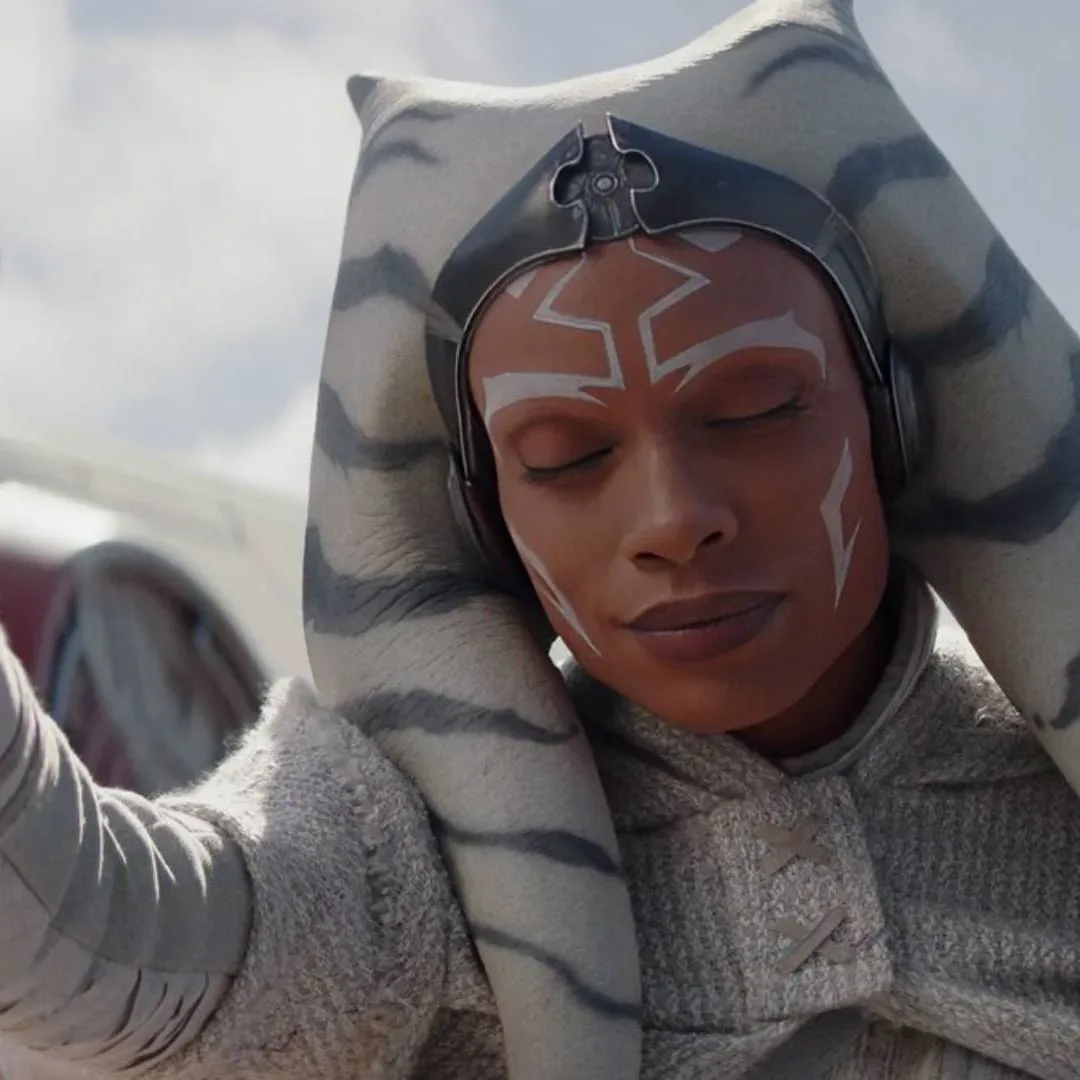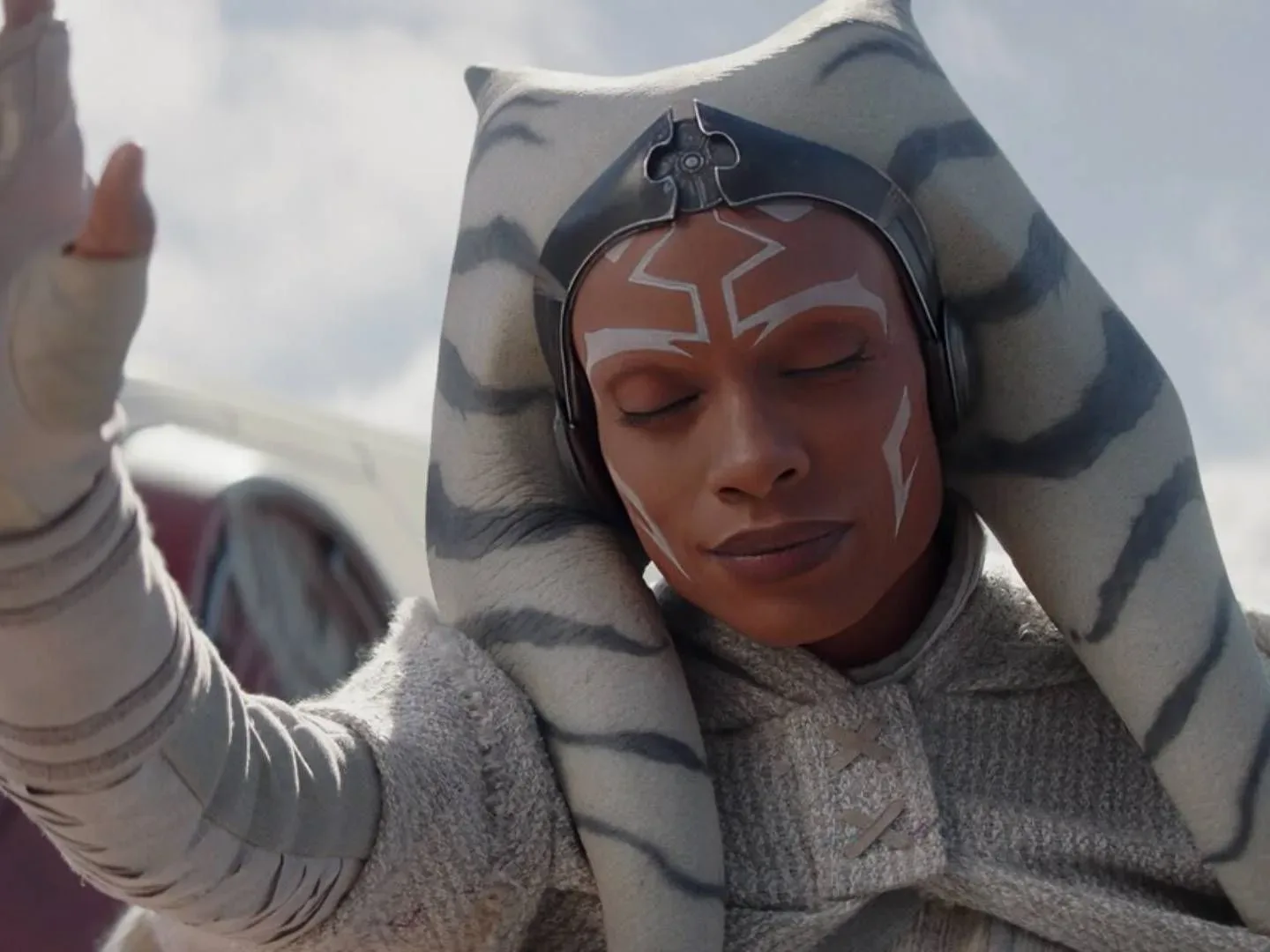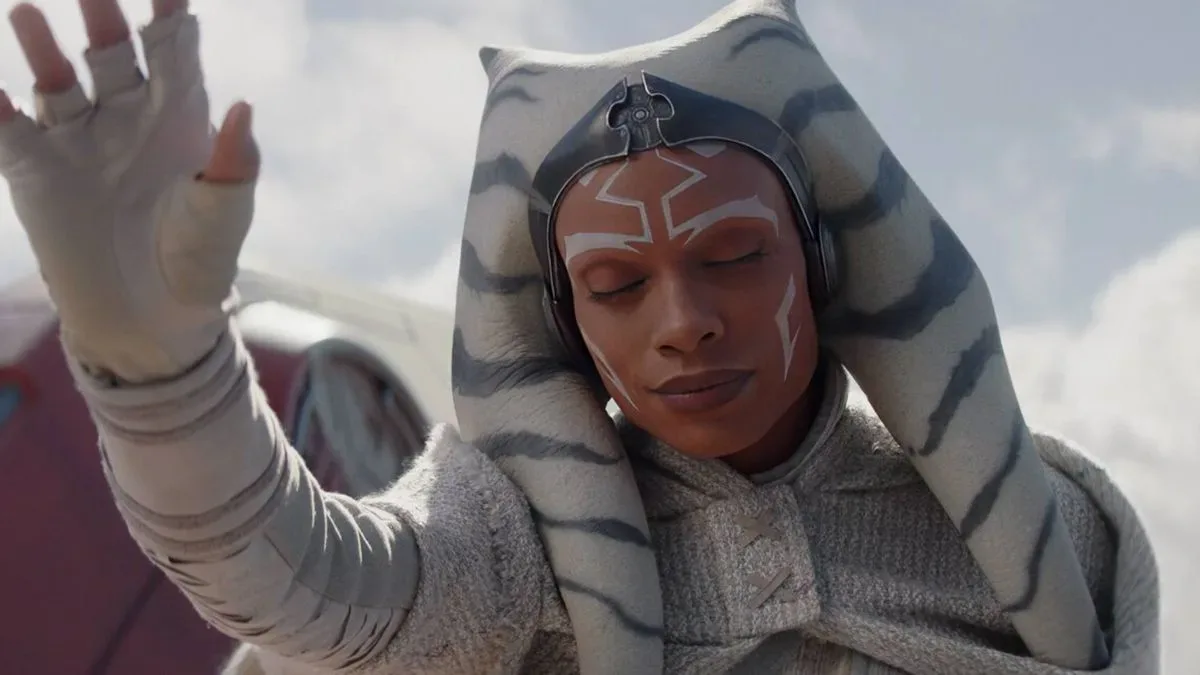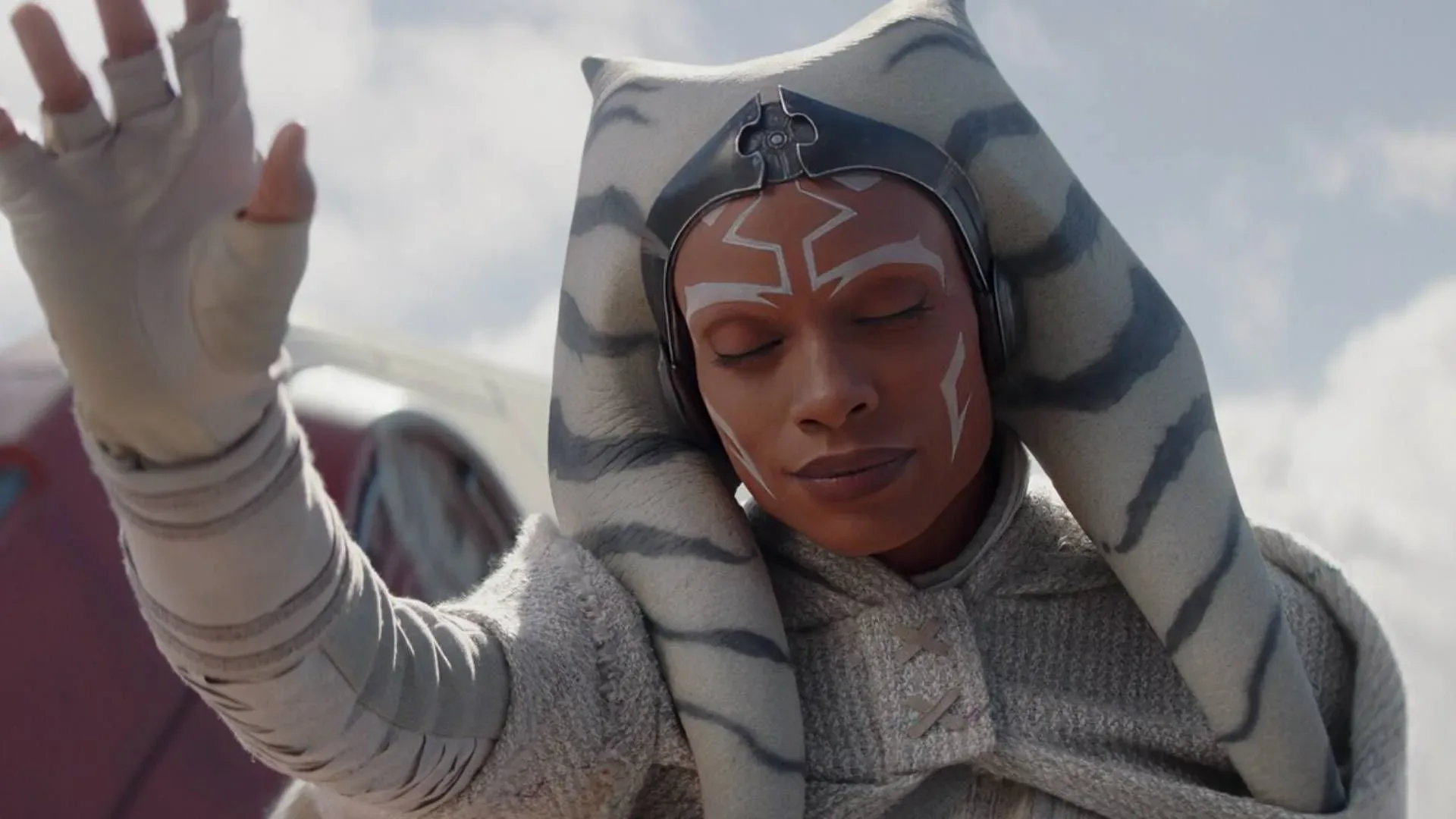
Ahsoka season 2 is being framed as more than a return trip for its stranded title character. Rosario Dawson has indicated that the direction of the new season will leave audiences with “really interesting questions and ideas” about where Star Wars goes next. That is deliberately broad, but the known setup gives the comment real weight: Ahsoka Tano remains in a distant galaxy while Grand Admiral Thrawn has made it back to the core Star Wars setting.
That split places two major threads on very different sides of an enormous divide. Ahsoka, once Anakin Skywalker’s Padawan, faces a dangerous situation away from the main galaxy. Thrawn, her adversary, is positioned to operate in the familiar heart of the franchise’s universe. Season 2 therefore has a basic dramatic job before it can answer any larger questions: show what Ahsoka’s isolation means, what Thrawn’s return changes, and whether those paths can intersect again.
Dawson discussed the season during a convention panel alongside Natasha Liu Bordizzo and Eman Esfandi. Her wording does not confirm a specific crossover, film connection, or final destination for the story. It does, however, suggest that the season’s endpoint and overall direction are designed to invite bigger questions instead of merely closing the book on Ahsoka’s immediate predicament.
A story built around separation
The most important established piece of the season 2 board is geographic separation. Ahsoka is trapped far from the core Star Wars galaxy, while Thrawn has returned to it. In practical storytelling terms, that creates two simultaneous pressures.
First, Ahsoka’s side of the story has to deal with distance, limited options, and the urgency of getting home. A character being trapped is not simply a travel problem; it changes who can help, which information is available, and how quickly any threat can be confronted. Second, Thrawn’s return allows danger to advance somewhere Ahsoka is not. That means the series can make her absence matter as much as her presence.
The phrase core Star Wars universe here is useful as a narrative distinction, not a technical franchise label. It refers to the galaxy in which the central conflict is unfolding, as opposed to the far-away location where Ahsoka is stuck. The stakes arise from the fact that the protagonist and the antagonist are no longer sharing the same immediate arena.
This also clarifies why talk of “the future” is meaningful without being a promise of a particular project. If Thrawn’s return alters the status quo in the main galaxy, and Ahsoka’s fate remains unresolved elsewhere, the season could leave several questions active at once: what happens in Ahsoka’s absence, how she responds if she returns, and what the galaxy looks like after both threads move forward.
The Anakin connection remains part of the picture
The first season 2 trailer has already pointed toward Hayden Christensen’s return as Anakin Skywalker in flashbacks set in the Clone Wars era. That detail matters because Ahsoka’s identity is inseparable from her former master. The series has always had access to a character history that reaches across different corners of Star Wars, and Clone Wars-era material gives the new season another route into that relationship.
A flashback is a scene set before the main present-day action. It can provide context for a character decision, deepen an emotional conflict, or reframe an event audiences already understand differently. Importantly, the trailer tease only establishes that Clone Wars-era flashbacks are involved; it does not tell viewers exactly what those sequences will reveal or how many there will be.
For Ahsoka, memories of Anakin are unlikely to be incidental decoration. She was his Padawan, so bringing him back into the season’s texture can illuminate the choices she makes while separated from the wider galaxy. Still, audiences should distinguish the confirmed presence of the flashbacks from speculation about their plot function. The trailer signals a return; the season itself will define the significance.
More action, but not action without purpose
Esfandi, who plays Ezra Bridger, has described season 2 as faster-paced and more action-heavy. His tease includes more lightsaber combat, space battles, witches, swords, and explosions. That is a long list, yet it maps cleanly onto the show’s existing ingredients: Force users with lightsabers, travel and conflict across space, and the mystical elements surrounding the distant-galaxy storyline.
Lightsaber action is the clearest shorthand in the tease. It means the series is expected to feature more confrontations involving the franchise’s signature energy blades. Space battles point to conflict between ships beyond a planet’s surface, while the mention of witches indicates that the show’s supernatural or mystical strand remains in play. Taken together, those elements suggest that season 2 aims to be more kinetic without abandoning the plot threads that distinguish it from a straightforward military campaign.
There is a useful caution in reading promotional language, though. “More” does not identify which characters clash, when a battle occurs, or how any specific event ends. It establishes emphasis, not an episode-by-episode roadmap. For viewers, the concrete takeaway is simpler: the next season is expected to increase the frequency and scale of overt action alongside its character and galaxy-spanning stakes.
Could Ahsoka become a wider Star Wars crossroads?
The possibility of a broader connection hangs over the season, but it remains a possibility rather than a confirmed outcome. A Dave Filoni-directed movie tied to the interconnected “Mando-verse” was announced years ago and later put on the backburner. That history makes it sensible to view Ahsoka season 2 as potentially important to a larger continuity, while avoiding the assumption that it must directly launch a particular film.
The term Mando-verse is informal shorthand for the linked area of Star Wars storytelling associated with The Mandalorian and related series. In this context, it matters because Ahsoka’s plot includes characters and conflicts that can affect a wider shared setting. But shared-universe storytelling is not a guarantee that every dangling thread is immediately resolved in another title. Dawson’s comments leave room for substantial consequences without defining their format.
That uncertainty is arguably the intriguing part. The season is positioned between an immediate survival-and-return dilemma for Ahsoka and a larger strategic threat represented by Thrawn. If it asks questions about the future, those questions can be character-based as well as franchise-wide: what does Ahsoka do with her past, what responsibilities does she accept in the present, and what changes when a threat reaches the galaxy before she can?
It is also worth keeping the scale of this news in perspective. No new plot details, crossover confirmations, or movie plans were attached to Dawson’s remarks. The comments are a directional tease. They support the idea of a consequential season, not a fully mapped set of answers. That is the appropriate line between evidence and expectation.
What is confirmed for the Disney Plus return
- Release date: Ahsoka season 2 arrives on Disney Plus on January 20.
- Ahsoka’s situation: She remains trapped in a far-away galaxy.
- Thrawn’s situation: Grand Admiral Thrawn has returned to the core Star Wars universe.
- Anakin’s return: Hayden Christensen is set to appear as Anakin Skywalker in Clone Wars-era flashbacks.
- Action focus: Esfandi has teased additional lightsabers, space action, witches, swords, and explosions.
- Bigger-picture tease: Dawson says the season’s direction raises interesting questions about what lies ahead for Star Wars.
For now, that is a compellingly uneven battlefield: the hero is stranded, the nemesis is free to act, old history is returning through flashbacks, and the show is promising a bigger action footprint. The answers to Dawson’s future-facing questions will have to wait until the season begins, but the questions themselves are already doing their job. They make Ahsoka season 2 feel like an event with consequences beyond simply reuniting familiar characters.
Star Wars is hardly alone in building anticipation around interconnected blockbuster stories; other major franchise movie news shows how closely audiences track the relationship between individual entries and larger shared narratives. In Ahsoka’s case, however, the immediate focus is clear: Ahsoka must confront a crisis far from home while Thrawn’s return threatens a galaxy she cannot currently reach.