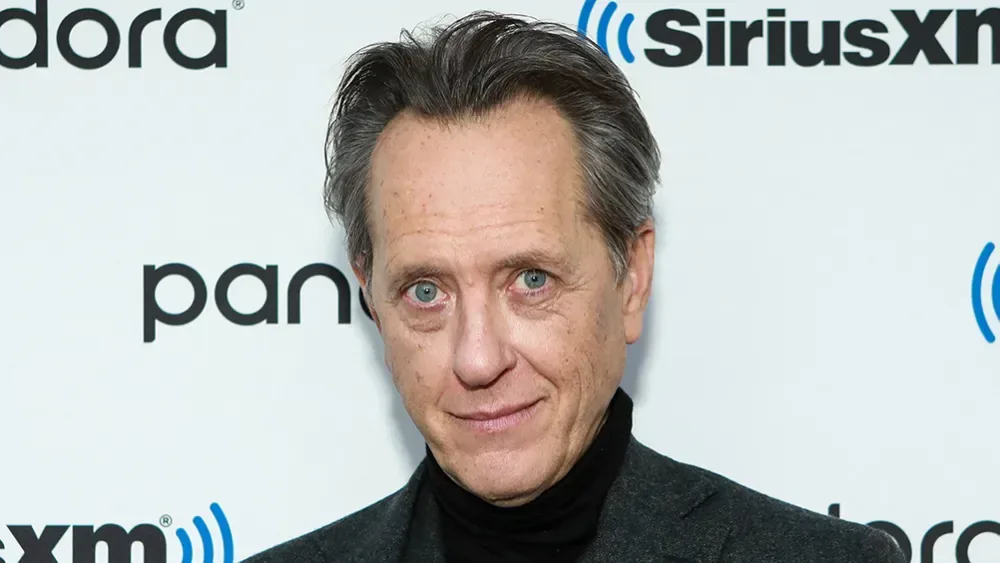
Richard E. Grant entered Celebrity Traitors hoping for the game’s most powerful secret assignment. Then, almost as soon as he received it, he told a room of fellow contestants exactly what he was.
Grant was selected as one of the first two Traitors alongside Maya Jama in the opening episode of the U.K. reality competition. The role is supposed to provide covert influence: Traitors work in secret while the larger group attempts to identify and remove them. But Grant blurted out that he was a Traitor when questioned about his status, leaving the room visibly surprised and turning a concealed-role game into a crisis-management exercise before its opening episode had finished.
“What’s the point in being in the game if you’re not?” Grant said in the moment. He later recognized the scale of the misstep, describing it as perhaps the biggest mistake of his life and explaining that excitement at being selected had overtaken his judgment.
A secret-role game built on information control
The central mechanic of Celebrity Traitors is asymmetric information: different players know different things. Faithful contestants do not know who has been made a Traitor, while the Traitors know one another and can coordinate decisions. The Faithful are trying to read behavior, interrogate inconsistencies and build enough agreement to identify hidden opponents. The Traitors, by contrast, need to look like ordinary members of the group while steering attention away from themselves.
That is why Grant’s statement matters beyond its immediate comic shock. A Traitor generally benefits from being one possible suspect among many. An apparent admission puts an enormous amount of attention on one person at precisely the stage when uncertainty should be most useful. Even if the group thinks he was joking, every subsequent conversation can be interpreted through the possibility that the joke was actually a confession.
In game terms, Grant has created a signal problem. A signal is a piece of behavior that others use to infer hidden information. Declaring oneself a Traitor is certainly memorable, but it is not automatically conclusive in a format where contestants can lie, joke, act unpredictably or deliberately bait a reaction. Its value will depend on whether players view it as an accidental truth, a deliberate fake-out, or the sort of eccentric outburst that says nothing reliable about his role.
That ambiguity may be the narrow opening Grant needs. Yet ambiguity is not the same thing as safety. A player can survive a suspicious moment and still find that it becomes the reference point for every later vote, alliance and accusation.
Jama’s quiet approach versus Grant’s instant heat
Before the Traitor selection, Jama said her ideal approach would be to appear unassuming, warm and misleading. Grant, meanwhile, said he would be ruthless and feel no guilt if he were given the assignment. He also said being a Traitor would be a dream outcome because it offers the game’s only real power.
Related coverage includes Richard E. Grant’s Traitor Reveal Shakes Celebrity Traitors Premiere.
Those comments establish two notably different public frames for the pair. Jama described a low-profile social strategy, one based on appearing trustworthy while quietly misdirecting the group. Grant spoke openly about wanting the high-agency role, then immediately became the center of the episode’s biggest suspicion. Neither pre-game statement proves anything by itself, but hidden-role games turn even loose remarks into potential evidence once players begin hunting patterns.
The contrast also makes their partnership strategically awkward. Jama’s best route appears to involve minimizing visibility and maintaining social credibility. Grant now needs to reduce the heat around his name. Those goals can overlap, but they may require different choices. Overtly defending Grant could attract scrutiny to Jama; abandoning him too quickly could make their partnership harder to sustain. The program’s pressure comes from exactly this collision between private teamwork and public self-preservation.
Joe Lycett spots the only immediate escape route
Comedian Joe Lycett quickly urged Grant to reframe the remark as a joke and reassure everyone that he was Faithful. Lycett called it a bold strategy and suggested Grant might have done something unprecedented within the game.
The suggestion was not a clean fix, but it identified the practical problem: Grant needed to give the room a believable alternative explanation before the statement hardened into consensus. In social-deduction games, players frequently have to assess not only what was said, but whether a person had a reason to say it. A joke explanation can work if the group concludes that the speaker likes mischief, enjoys attention or has simply become swept up in a strange moment. It fails if the explanation sounds improvised only after someone realizes they have revealed too much.
Grant’s situation is further complicated by his own reaction. In a private address to the camera, he said he was convinced he would be going home and that he needed to defuse the attention aimed at him. That response is understandable, but it also describes the difficult balance he faces: visible panic can make a player look guilty, while too much composure after a supposed joke could look calculated.
Jerry Hall offers a different reading of Grant’s behavior
Jerry Hall was unconvinced by Grant’s declaration. Having known him for more than three decades, she said he says and does eccentric things, and she believed he was acting out because he had not been selected.
Hall’s response demonstrates why prior relationships can be unusually valuable in a celebrity edition. She is not merely judging a single sentence; she is comparing it with her personal sense of Grant’s normal behavior. Her interpretation gives him a possible shield: if other contestants accept that an impulsive, theatrical remark is in character, the statement may be treated as noise rather than proof.
There is a twist, though. Familiarity can protect a player only until it becomes a reason to doubt them. A contestant who is known for being eccentric may get more latitude at first, but unusual behavior also gives other players plenty of material to revisit when they need a suspect. Grant’s character defense is therefore helpful, not decisive.
The cliffhanger raises the stakes immediately
Grant remained in the game through the end of the episode. He and Jama were then told they could both recruit another contestant and kill a contestant at the same time, an option that increases their choices but also their risk.
The pair selected comedian James Acaster and University Challenge presenter Amol Rajan, who each met with Grant and Jama to argue their case. Both said they could help redirect scrutiny after Grant’s accidental reveal. The episode ends before Grant makes the decision.
Recruitment is a major strategic pivot because it changes the shape of the secret alliance. A recruit could add a valuable social connection, a fresh perspective or someone better positioned to counter growing suspicion. But recruiting also gives another person access to the Traitors’ secret, expanding the number of people who must maintain the deception. It is a potential rescue move for Grant, but no automatic reset.
The paired ability to recruit and kill at once adds a further layer. The Traitors are not simply deciding whom they want beside them; they must also consider what absence would change the group’s suspicions. With Grant already attracting notice, the identity of the contestant removed could be read as evidence by a cast primed to search for patterns.
A cast built for competing reads of the room
Grant and Jama are joined by Bella Ramsey, James Blunt, Julie Hesmondhalgh, King Kenny, Leigh-Anne Pinnock, Michael Sheen, Myha’la, Hannah Fry, Ross Kemp, Sebastian Croft, Sharon Rooney, Joanne McNally, Miranda Hart, Rob Beckett and Romesh Ranganathan. James Acaster and Amol Rajan are also central to the premiere’s unresolved recruitment choice.
That range of performers, presenters, comedians, musicians and creators means the group will bring different public personas and interpersonal histories to a format that depends on interpretation. The game does not reward a perfect lie in isolation. It rewards a lie that survives group discussion, changing alliances and the pressure of being watched by people who may understand performance very differently.
The contestants are competing at Ardross Castle in the Highlands for a £100,000 prize to be donated to a charity chosen by the winner or winners. The first season of The Celebrity Traitors aired in October 2025 and subsequently streamed in the United States on Peacock.
For Grant, the immediate question is much smaller and much more urgent than the overall prize: can he turn a direct declaration of guilt into an anecdote the group dismisses? The premiere has made him the season’s first obvious case study in how quickly a hidden-role advantage can become a liability. Whether Jama and a possible recruit can help redistribute that attention is the cliffhanger now hanging over the castle.
For more on how entertainment companies are considering games and interactive audiences, see Netflix’s view of a post-console gaming future.