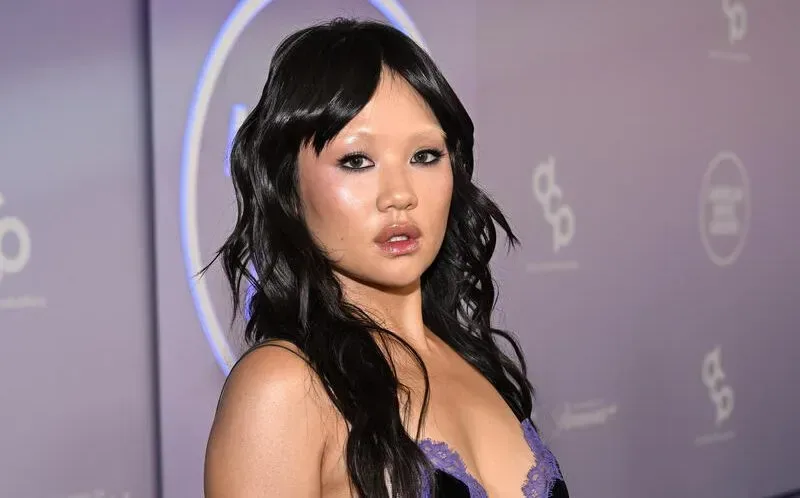
Rei Ami will host Who’s In the Band?, an upcoming music competition designed around a particularly unforgiving premise: five contestants will sing the same song at the same time, while judges decide whom to keep by isolating each vocal at individual mixing desks. The series is scheduled for a summer 2027 debut on ABC, with next-day domestic streaming on Disney+ and Hulu. Disney+ will carry it internationally.
Ami is known as the singing voice of Zoey in KPop Demon Hunters, and the hosting role arrives as she is also planning further music releases in 2027. Her recent solo single, “2 Loud,” is described as a brassy, dance-floor-minded pop track. That combination of vocal performance and a newly expanded audience makes Ami a natural fit for a show centered on the difficult, often hidden work of building a pop group.
A competition built around instant vocal choices
The basic format is less about a contestant taking a solitary turn at a microphone and more about separating individual voices from a crowded performance. Five hopefuls will sing one song simultaneously from brightly colored, soundproof tubes. Judges will work at their own mixing desks, where they can isolate a singer’s vocal and eliminate contestants in real time.
In music-production terms, isolating a vocal means listening to one singer’s contribution apart from the rest of the performance. That matters because a voice can sound convincing in a group blend yet reveal very different strengths—or limitations—when heard alone. Tone, pitch control, rhythm, diction and the ability to sit comfortably in a song’s arrangement can all become more apparent once competing voices are removed.
The soundproof tubes are therefore more than a colorful staging device. They are part of the concept’s promise that each performer can be evaluated separately, even while the singers are performing together. The show’s pressure point is obvious: contestants will not be able to wait for a later solo round to make their case. Their singing has to be clear enough for decision-makers to identify quickly, in the middle of a shared song.
That setup also changes the meaning of elimination. Rather than solely asking who delivered the biggest individual moment, the format appears geared toward a pop-group question: whose voice belongs in a particular combination? A singer can be technically capable and still not be the right fit for a lineup, while another performer may stand out because their vocal character fills a gap among the others. The series is positioned as a look inside how music-industry professionals assemble contemporary pop groups.
What the show is trying to reveal about group-making
Pop groups rely on more than selecting the loudest or most immediately recognizable vocalist. A finished lineup needs members whose performances can work together. In a competition with simultaneous singing, judges may be listening for contrast as well as polish: a voice that supports a chorus, a tone that gives a track another texture, or an artist who can hold their own when the performance is deliberately crowded.
Who’s In the Band? has not yet named its judges, so the precise standards and on-screen process remain unknown. Still, the mixing-desk element suggests that the decision-making will be audibly demonstrated rather than reduced to a conventional panel reaction. Viewers should be able to hear why a particular voice is being considered, at least within the confines of the show’s edited competition format.
There is an important distinction here between vocal blend and simple vocal similarity. Blend describes how voices combine into a unified sound. That does not necessarily require every singer to sound alike. A group can benefit from distinct tones, provided they complement one another and can be balanced within an arrangement. Because the contestants begin by singing the same material at once, the series has a built-in way to put that question at the center of each performance.
The premise also puts a spotlight on the people who shape recorded pop music away from the stage. A mixing desk is the control surface used to manage elements of an audio performance or recording, including levels and individual tracks. Here, it becomes a storytelling tool: the judges’ ability to focus on one vocal makes their choices more immediate, and potentially more exacting, than decisions based only on a full ensemble sound.
Two groups, one live-vote finish
The competition is set to culminate in a live finale featuring one girl band and one boy band. Those groups will face a live vote, though further details on how that vote will operate have not been announced. The dual-group endpoint signals that the series is not simply selecting a single winner from a field of singers; it is attempting to form two finished acts with separate identities.
The winning acts will record an album executive produced by songwriter and producer Savan Kotecha. An executive producer on an album generally has a high-level creative and organizational role in guiding the project. The exact musical direction, participating writers and producers, release plans, and timelines for the winning albums have not been detailed.
Kotecha is also a producer on the television series alongside Richard Bacon and Simon Cowell. Bacon’s Yes Yes Media is producing the project with backing from SISTER Group, in co-production with Syco Entertainment, Savan Kotecha and Publicis Media Content Innovation. Walt Disney Television Alternative is associated with the production. Elisabeth Murdoch is an executive producer, while Matt Banks and Ashley Edens will serve as showrunners and executive producers.
For viewers, those credits indicate that the series has a substantial production structure behind it, but the names do not answer every format question. There is no announced judge lineup yet, and it remains unclear how many stages the contestants will face before the finale, whether the bands will be created gradually or at a defined point in the season, or what role audience voting will play before the last episode. Those details will be central to understanding whether the series functions primarily as a vocal contest, a lineup-building exercise, or a blend of both.
Why Rei Ami’s role fits the format
Ami’s casting ties the show to a performer whose profile reaches across pop music and screen entertainment. Her work as Zoey’s singing voice in KPop Demon Hunters introduced her to a broad audience, while “2 Loud” establishes a current solo release alongside the television role. Hosting a show about constructing new bands will require something different from competing: guiding the pace, communicating the stakes of technical decisions and helping contestants remain legible as people, not just isolated audio channels.
That last task may be especially important in a format predicated on rapid judgments. The appeal of snap decisions is their immediacy, but a television competition still has to explain what is at stake for performers who are being evaluated in seconds. Ami will be the principal on-screen connection between the technical premise, the judges and the people trying to earn places in the bands.
Music competitions frequently use the language of discovery, but this one is framing discovery as selection within a group. That is a meaningful difference. A soloist can build an entire performance around a singular style; a group member needs an individual identity while contributing to a bigger sound. The soundproof-tube setup turns that tension into the show’s central visual: performers are physically separated even as they sing together.
For a broader entertainment audience, the arrival of Who’s In the Band? also continues a run of programming that places music figures in formats beyond conventional performance releases. Elsewhere, live music is adjusting its audience rules in different ways, including a Los Angeles show planned with locked phone pouches, as covered in this look at Kid Cudi’s Rager event. The connection is not format-based, but both examples show how music experiences are being shaped as distinct events with their own rules and points of focus.
Production timeline and what remains to be announced
Pre-production on Who’s In the Band? is underway, with filming scheduled to begin in the United States in January 2027. The planned summer 2027 launch will place the show on ABC before it streams the following day on Disney+ and Hulu in the U.S. International viewers will be able to watch through Disney+.
The announced structure provides a clear starting picture: five singers at once, individualized listening through judges’ mixing desks, live eliminations, the eventual formation of a girl band and a boy band, and a live-vote finale. It also establishes a tangible reward beyond the television season, with the winners set to record albums under Kotecha’s executive production.
What has not been revealed is just as worth keeping separate from the confirmed plan. No judges have been named. No contestants have been announced. The series has not specified its episode count, its selection process, the mechanics of the live vote, or the release schedule for the winners’ music. As the January 2027 filming start approaches, those are the details most likely to determine how the high-speed premise translates into a full season.
For now, the show’s clearest selling point is a simple but pointed question: when five people are singing at once, can the right voice—and the right combination of voices—be found fast enough to build a band? In summer 2027, Rei Ami will be the host guiding viewers through the answer.