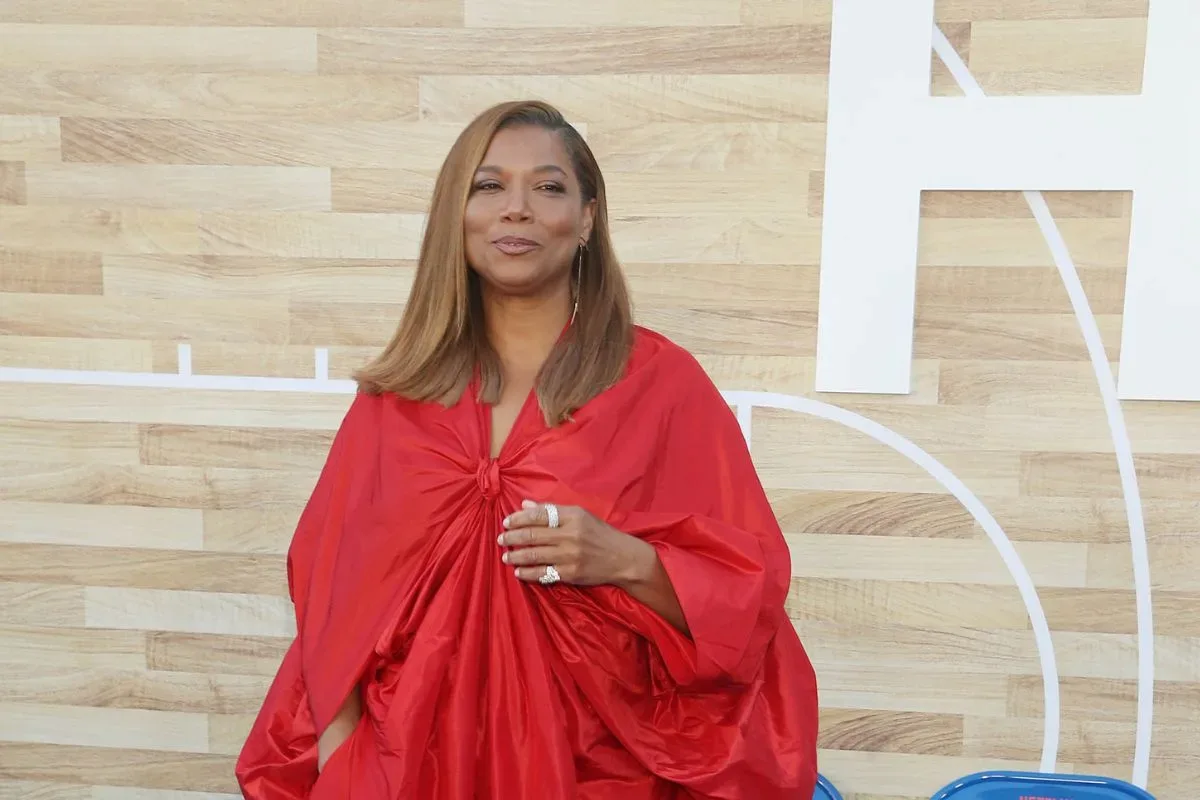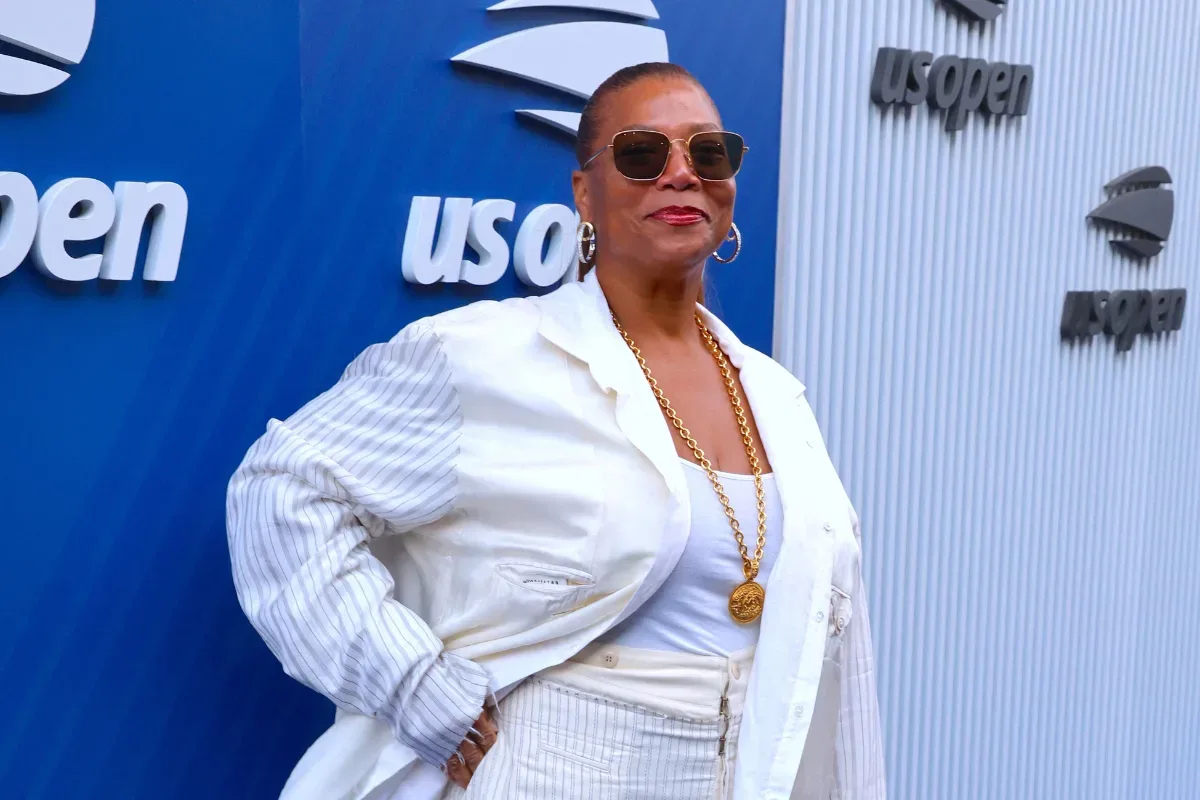
Queen Latifah’s first season in the red coach’s chair has apparently come with an unexpected equipment bill: jewelry repair.
After Mia Knight and Sophia Liano performed “Never Enough” from The Greatest Showman during a Battle round of The Voice, Latifah said the force of the performance had cracked the stone in her ring. She said she had to take the ring off during the moment, then jokingly suggested that one of the singers winning the competition could help cover the damage.
It is a characteristically playful reaction, but it also gives a clear sense of the task in front of Latifah. The two contestants were both members of her team, meaning the performance ended not with uncomplicated praise, but with the difficult decision of choosing which singer would remain in the competition.
Knight won the Battle and advanced to Cut Week, the next test on her run in the season.
A big song for a high-pressure decision
“Never Enough” is built to make an impact. As a song from The Greatest Showman, it asks a vocalist to sustain drama, carry emotional intensity and make the largest moments feel controlled rather than simply loud. In the setting of a Battle, those demands are compounded by the format itself: each artist has to deliver their own interpretation while sharing both the stage and the song with a direct competitor.
That is why Latifah’s reaction to the performance matters beyond the ring joke. A Battle is not only a question of who can reach the boldest note. A coach must decide which performer seems best equipped to navigate the show’s next stages and the increasingly exposed pressure that comes with them.
Latifah praised both Knight and Liano, but her explanation for selecting Knight centered on performance fundamentals. She pointed to Knight’s handling of the microphone and her ability to own the stage. Those details distinguish a singer who can deliver a vocal moment from an artist who can communicate with an audience while doing it.
What “claiming the stage” means here
In television competition language, “claiming the stage” can sound vague. In practical terms, it refers to presence: whether a singer appears confident in the physical space, makes purposeful choices and keeps the audience’s attention as the performance develops. It does not require elaborate movement. It can come through focus, timing, posture and a convincing relationship with the lyric.
Similarly, microphone technique is more than a prop-management detail. A performer’s microphone use affects consistency, dynamics and the way a vocal lands. Latifah identifying it as part of her decision suggests she was looking at Knight’s complete performance package, not treating the Battle as a single-note showdown.
That approach fits the reality of the competition. As the rounds progress, singers need more than an impressive isolated moment. They need to make choices that read clearly under studio lights, in front of coaches and for viewers at home.
Latifah’s early investment in Mia Knight
Knight’s advancement also extends a story that began at the season premiere on September 21. She performed Sienna Spiro’s “You Stole The Show,” prompting Latifah to turn first. Riley Green and Clarkson also turned their chairs, while Adam Levine did not.
Latifah did more than signal interest. She used the season’s new First In button on Knight.
The First In button gave the first coach to turn for an artist the ability to claim that artist immediately, rather than waiting for the singer to choose a team. Every coach could use the button once. By pressing it for Knight, Latifah ended the recruiting contest for the New Jersey singer and made an unmistakable statement about whom she wanted to mentor.
That context makes the Battle result more significant. Latifah had committed a limited, one-time tool to Knight at the start of the season. When Knight faced Liano in the Battle, the coach’s decision confirmed that the confidence behind that original move remains intact.
Latifah’s ring-crack joke was the headline-grabbing response, but the selection itself was grounded in Knight’s command of the microphone and the stage.
Why the First In button changes the opening round
The usual appeal of the opening coach-selection format is the uncertainty after multiple chairs turn. Artists can hear pitches, weigh their options and choose where they think they fit. The First In button changes that dynamic for a single use per coach.
For the coach, it is a strategic commitment. Using it means deciding that one particular artist is worth giving up the possibility of using that advantage later. For the performer, it removes the decision between teams, but it also provides a direct and unusually emphatic endorsement.
Latifah’s choice to spend her First In on Knight framed the singer as an artist she believed was worth pursuing immediately. The Battle win now moves that bet forward into Cut Week.
It is also a reminder that the mechanics of a competition series can shape its emotional stakes. The episode may be remembered for a sharp one-liner about a damaged ring, yet there is a longer competitive arc beneath it: a coach claimed an artist early, paired her in a challenging vocal Battle, and then chose to keep building with her.
A personal point of connection
Latifah drew a connection between Knight’s age and her own beginnings in music. Knight is 16, and Latifah noted that she released her first record at 17. For Latifah, Knight’s age was not presented as a reason to hold back. It was part of the argument that the young singer was prepared to continue.
The comparison does not mean the two careers can be treated as identical; the circumstances and paths of artists are individual. But it explains why Latifah saw readiness in Knight at this stage. A coach with a long music career can assess the immediate performance while also considering the confidence and development an artist may show after being given a bigger opportunity.
That perspective lends added weight to the decision. In the Battle round, a coach is balancing the evidence onstage with potential. Knight earned the win through the performance Latifah saw in the room, while Latifah’s comments indicate she also sees room for the 16-year-old to keep growing.
What comes next for Knight
With the Battle behind her, Knight moves to Cut Week in November. The advance does not erase the challenge that got her there. Instead, it places greater emphasis on the qualities Latifah highlighted: steady vocal execution, thoughtful microphone work and the ability to take control of a stage.
For viewers, the clearest takeaway is that Knight has the active backing of a coach who made an early, limited-use commitment to her and then chose her in a direct matchup. For Knight, the next round is an opportunity to turn that belief into another performance that speaks for itself—ideally without inflicting further damage on Latifah’s jewelry.
Latifah is part of a music-and-entertainment conversation that regularly overlaps across major performers and television personalities; for another recent story in that wider space, see this report on 50 Cent’s response to a protective order involving his son Sire and Tia Kemp.