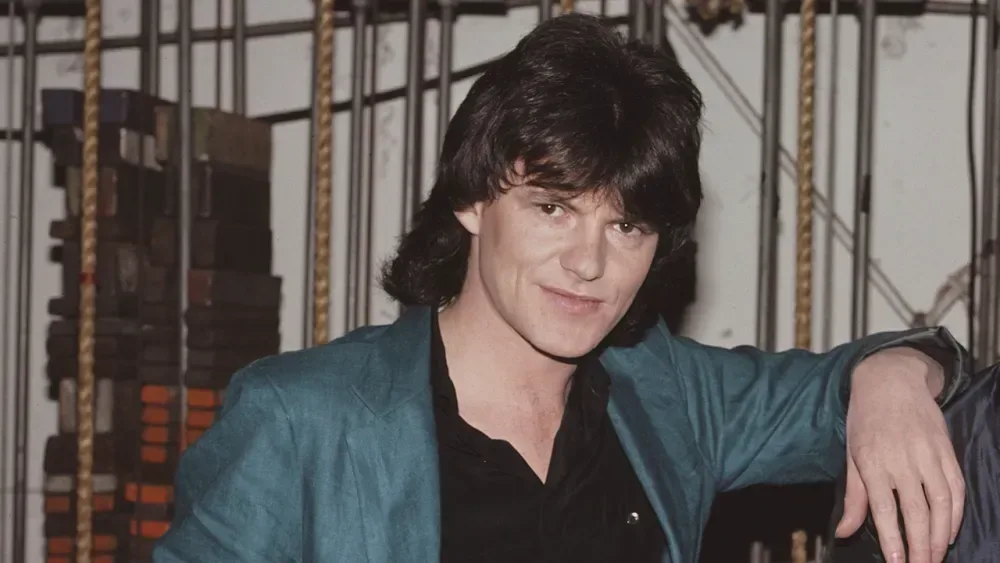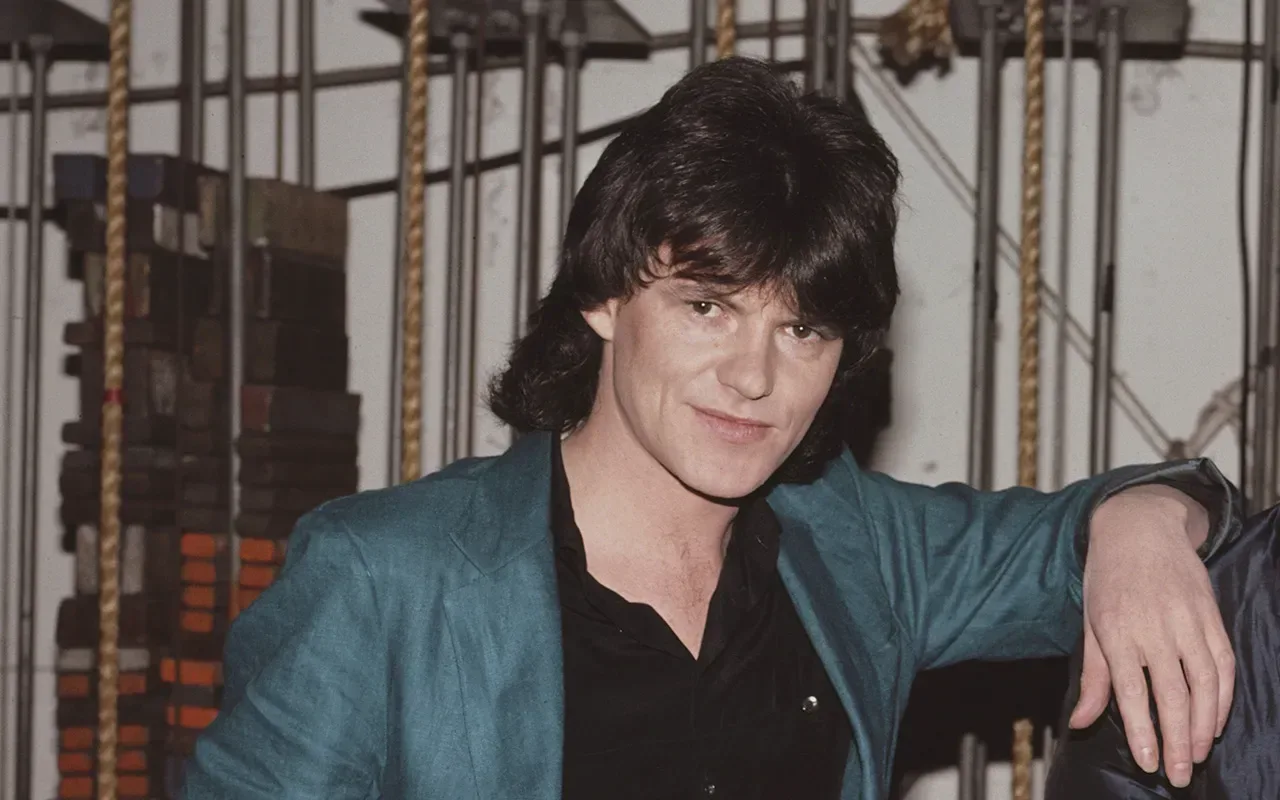
Pete Byrne, the vocalist and co-founder of British new wave duo Naked Eyes, has died at 74. Byrne died in Los Angeles on September 14 after a brief illness.
For many listeners, Byrne’s voice is inseparable from Naked Eyes’ 1980s run of polished, synth-driven pop. With college friend Rob Fisher, he formed the duo in 1982, and the pair quickly delivered a sequence of U.S. chart successes that included their version of Burt Bacharach’s “Always Something There to Remind Me,” plus “Promises, Promises,” “When the Lights Go Out” and “(What) In the Name of Love.”
The immediate commercial footprint was substantial. Naked Eyes’ debut album, Burning Bridges, reached No. 32 on the Billboard 200, while the duo placed four songs in the Billboard Hot 100’s top 40 across its two studio albums released in 1983 and 1984. In chart terms, a top-40 placing marks a song as one of the most widely consumed singles in the U.S. in a given period; four such placements from a two-album original run underlines how strongly the group’s sound connected.
A defining voice in Naked Eyes
New wave is a broad label, but it is useful here: it commonly describes pop and rock that embraced electronic instruments, studio construction and a modern, often sleek sonic identity. Naked Eyes were a particularly clear example of the keyboard-led side of that movement. Fisher’s musical partnership with Byrne gave the material its foundation, while Byrne’s lead vocal supplied the human focal point amid the electronic textures.
“Always Something There to Remind Me” also illustrates an important part of the duo’s legacy. The song was written by Bacharach and was not a Naked Eyes original, but a cover is not simply a duplicate of an earlier recording. A successful reinterpretation can move a composition into a new musical setting and introduce it to a different audience. Naked Eyes’ version became one of the group’s best-known recordings and remains central to how the act is remembered.
The first iteration of Naked Eyes was brief and, unusually for a group with its chart profile, never toured. The duo split after its second album. That fact makes the recordings even more significant: the band’s public legacy was built chiefly through released music rather than the normal cycle of albums, concerts and repeat touring.
Beyond the original duo
Byrne’s work extended beyond the Naked Eyes catalog. He contributed backing vocals to Stevie Wonder’s 1985 hit “Part-Time Lover,” a role distinct from being an artist’s featured lead performer but still an essential element of many studio recordings. Backing vocals can reinforce a chorus, add contrast to a lead line or help establish a song’s broader vocal arrangement.
He also wrote for film and television, and for the Olsen twins. The supplied record does not identify individual projects or songs, so the scope of that work should not be overstated. Still, it points to a career that continued across formats rather than ending with the initial Naked Eyes period.
Related coverage includes Pete Byrne, Naked Eyes Vocalist, Dies at 74.
After Fisher died in 1999, Byrne continued to write, record and tour in the United States and internationally. He issued the solo album The Real Illusion in 2001. In 2005, he re-formed Naked Eyes in a new configuration, bringing the name and songs back into active circulation.
That later chapter produced Fumbling with the Covers in 2007 and Disguise the Limit in 2021. A remaster of the original self-titled Naked Eyes album followed in 2025. A remaster is a new mastering pass made from existing recordings, generally intended to prepare music for contemporary formats or present the original material with revised sound treatment; it is not the same thing as a newly recorded album.
From North London bands to an enduring catalog
Born in Islington, North London, Byrne had been active in bands for years before Naked Eyes. He performed in a duo with Jeff Starrs from 1976 to 1977, then joined Studio from 1977 to 1979 with Clive Wright, Stash Huchrack and Richard Fenton.
From 1979 until 1982, Byrne was part of Neon, a group that also included Fisher. Neon’s lineup connected Byrne and Fisher with Neil Taylor, Manny Elias, Curt Smith and Roland Orzabal, who would later be associated with Tears for Fears. The detail is a reminder of the collaborative networks that can exist before a band becomes widely known: musicians often move among early projects, build creative relationships and develop the experience that informs later work.
For Byrne, that path led to the partnership with Fisher and to Naked Eyes. Although the original duo’s lifespan was short, its songs retained enough resonance for Byrne to carry the project forward decades later. His post-1999 work also meant that Naked Eyes did not exist solely as a fixed artifact of the early 1980s. It became a continuing musical identity shaped by Byrne’s writing, recording and touring.
Why the songs lasted
The supplied facts establish the group’s chart performance, but they do not prescribe a single reason its music endured. It is fair, however, to distinguish a measurable legacy from a critical judgment. The measurable part is clear: a No. 32 album, four Hot 100 top-40 singles, a solo album, later Naked Eyes releases and a 2025 remaster. The broader interpretation is that Byrne’s career preserved a connection between the original new wave moment and listeners who continued to find the songs afterward.
That kind of musical afterlife is especially notable for a group that did not tour in its first incarnation. Recordings do the long-term work. They can be revisited independently of the moment in which they first charted, whether through a familiar single, a remastered album or a newer version of a legacy act performing the material.
Music culture also regularly overlaps with screen culture, from songwriting for film and television to the role of established songs in audiences’ memories of an era. Readers following that wider pop-culture conversation can also see the latest International Emmy nominations coverage.
Byrne is survived by his siblings Eileen, Sandy, Carol and Steve; his children Merlin, Dylan and Chloe; and his ex-wife, Elena.
His career encompassed formative London groups, a defining new wave duo, work as a backing vocalist and songwriter, a solo release, and a sustained return to Naked Eyes. Most of all, it leaves a set of recordings whose commercial impact was concentrated but lasting.