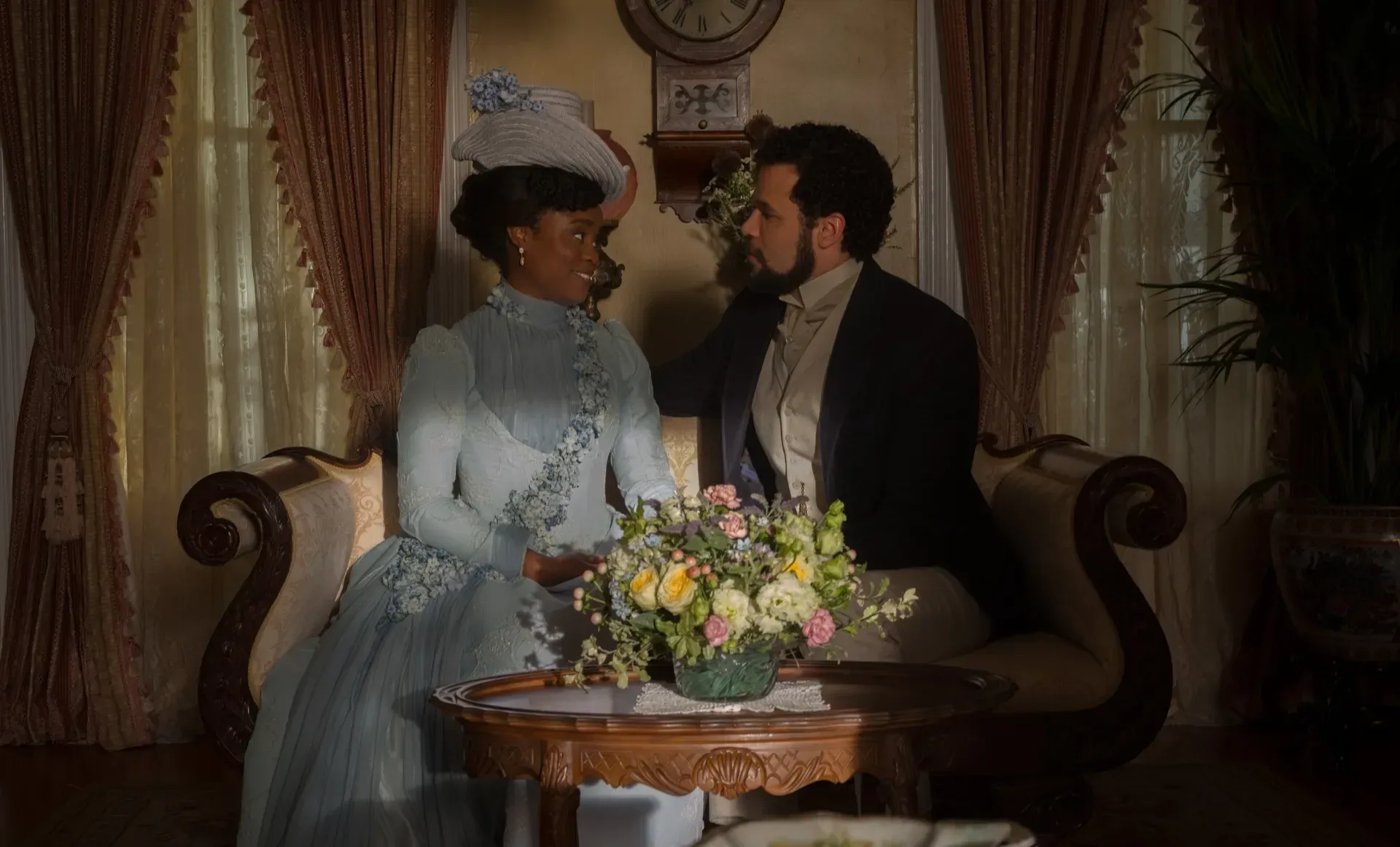
Spoilers follow for “Ain’t That Good News,” Season 4, Episode 3 of The Gilded Age.
For all its ballrooms, inherited fortunes and theatrical courtships, The Gilded Age has not always distributed fantasy evenly. Peggy Scott has long been one of the drama’s most ambitious characters: a secretary who became a journalist and then a novelist, navigating serious professional and personal pressures in a world built to limit her options. Season 4’s third episode gives her something equally essential to the show’s heightened universe: a grand romantic payoff.
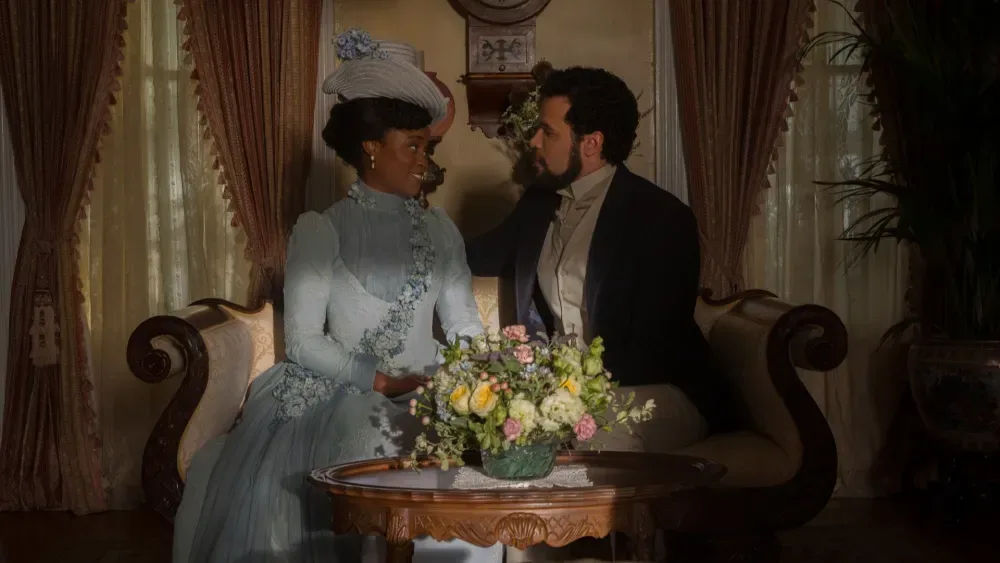
Peggy and Dr. William Kirkland marry in “Ain’t That Good News,” turning the relationship that began with their meet-cute last season into a wedding episode rich in character, history and visual scale. Denée Benton, who plays Peggy, has described pursuing precisely this kind of fuller arc for the character: not a retreat from Peggy’s accomplishments or difficult storylines, but the chance for her to participate in the same sweeping romance afforded to the series’ wealthiest white heroines.
That distinction is the heart of why the wedding lands as more than a plot milestone. Peggy is not presented as an observer of other people’s opulence, nor is her marriage a quick narrative checkpoint. The episode makes room for her choices, her family, her cultural inheritance and her friction with William’s mother, Elizabeth Kirkland. It insists that a Black heroine can carry both the emotional gravity and escapist glamour of a period-drama wedding.
A love match, not merely a marriage plot
William, played by Jordan Donica, is an unusually direct expression of what Peggy wants: a partner who sees her and a relationship grounded in mutual feeling. That makes their union notably different from the arrangement surrounding Gladys Russell and the duke in the prior season. Gladys’s marriage was a major storyline, but it was arranged rather than a love match.
Peggy and William’s ceremony therefore has a simple but meaningful narrative function. It places Peggy at the center of a genre tradition usually reserved for the social elite who dominate the series: the romantic lead’s formal arrival at her happily-ever-after. Benton’s point that the wedding “legitimizes” Peggy as a romantic lead is less about whether audiences already cared about her and more about the storytelling resources devoted to her. A marriage plot can be restrictive when it crowds out a woman’s interior life. Here, Peggy’s career remains part of who she is. The wedding expands her story instead of replacing it.
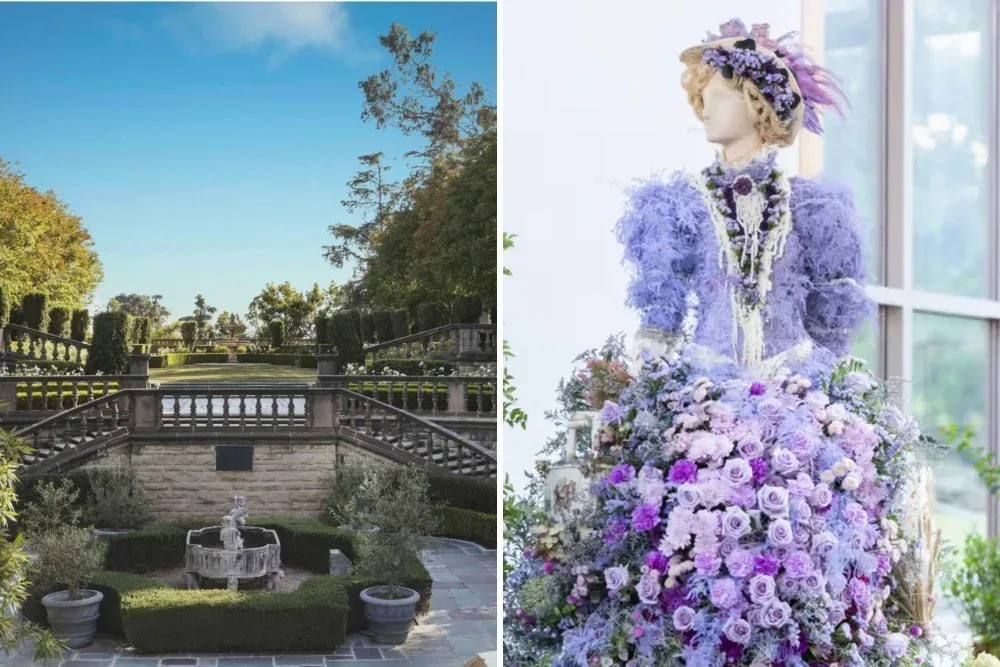
That is also why the episode’s attention to staging matters. Production designer Bob Shaw, costume designer Kasia Walicka-Maimone and producing director Salli Richardson Whitfield are credited by Benton as crucial collaborators in bringing the procession to the screen. The ceremony was filmed in a period church with stained Tiffany glass, creating the warm glow Benton highlighted. These are the tactile components viewers expect from a show about luxury and social display: architecture, costume, light and a room filled with guests. Peggy gets that visual language in full.
The history carried by the ceremony
The episode does not treat historical specificity as decorative trim. Peggy and William are a Black couple building a family only a few decades after the Civil War, and Peggy’s parents were formerly enslaved. Those facts bring weight to an event that would otherwise be easy to read solely as sumptuous television romance.
Related coverage includes Peggy Scott’s Wedding Gives ‘The Gilded Age’ a Defining Romantic Moment.
Adrienne Warren appears as Peggy’s cousin Ava and performs as part of the Jubilee Singers. The group is identified as a real-life a cappella ensemble that sang spirituals developed under slavery for post-emancipation audiences. Its inclusion connects the ceremony’s music to a historical tradition rather than using the past only as a costume backdrop.
The broom-jumping ritual is the episode’s most deliberate historical image. Peggy and William jump over a broom after Elizabeth objects to its inclusion. The practice is presented as a holdover from a period in which slavery prevented Black couples from holding more elaborate marriage celebrations. In the episode, that context makes the ritual both an expression of continuity and an assertion of agency: the couple chooses to honor a practice formed under conditions designed to deny them legal and social recognition.
The show reportedly gives the moment room to breathe, presenting the jump in slow motion rather than burying it in a wedding montage. That framing is important. A montage can communicate that something happened; sustained screen time tells viewers that it matters. The scene is not claiming that the ritual is newly invented or newly meaningful. Its value comes from placing something with deep historical resonance at the center of an expensive, mainstream period-drama spectacle.
Elizabeth Kirkland is not just an obstacle
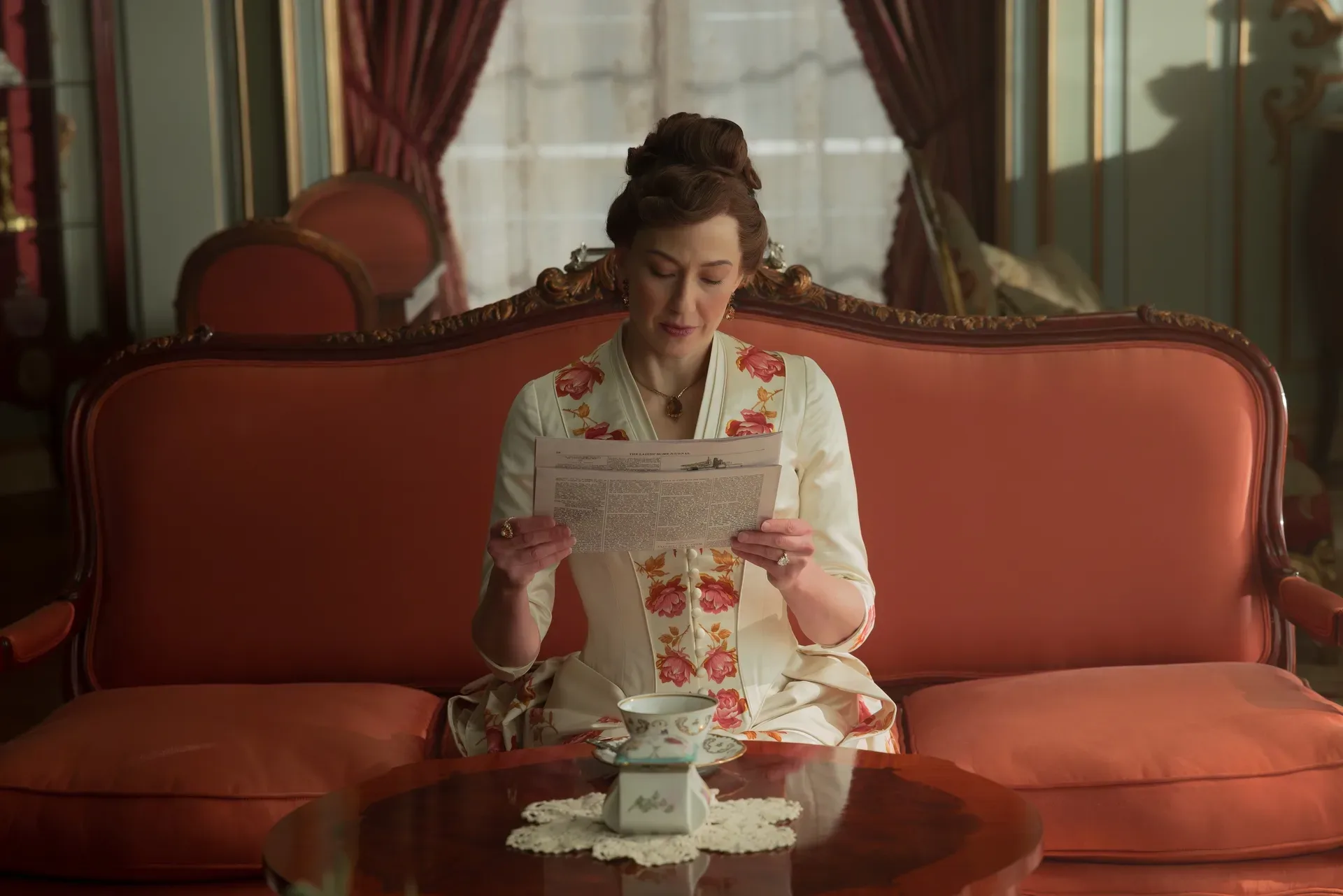
The wedding’s other major dramatic engine is Peggy’s confrontation with Elizabeth, played by Phylicia Rashad. Elizabeth comes from Newport’s historical Black elite and disdains Peggy’s parents because of their humbler beginnings. Her resistance to the broom ritual makes the disagreement about more than wedding planning. It exposes class tension within a community that is too often flattened into a single social experience in historical fiction.
Peggy’s response shows a side of her that the series can sometimes keep understated. She is principled and considerate, but she is not passive. When Elizabeth attempts to veto the broom, Peggy sets a boundary and makes clear that the relationship will proceed on terms that acknowledge her own family and heritage. Benton has characterized the exchange as “elite shade”: civil language carrying a firm message that the decision has already been made.
That is an apt description of what makes the scene satisfying. Peggy does not need to abandon composure to claim authority. Nor does she simply win an argument over a ceremonial detail. She establishes that marriage to William does not require assimilation into Elizabeth’s idea of class respectability. If the wedding is a public declaration of partnership, this exchange protects Peggy’s identity within that partnership.
Why this feels like Peggy’s season
Benton has suggested that Season 4 feels even more centered on Peggy than Season 3. The wedding provides the clearest evidence available in this episode. Peggy has professional success, a creative life and family bonds; now the series is visibly investing in her emotional fulfillment, too. The goal is not to portray joy as a reward that erases hardship. Instead, it allows a character who has carried substantial dramatic weight to receive beauty, tenderness and celebration without qualification.
That fuller framing comes from a group of creative voices. Benton has credited executive producer Sonja Warfield, producing director Richardson Whitfield, historian and co-executive producer Dr. Erica Dunbar, and executive producer Davita Scarlett, who joined the writing team in Season 4, among those shaping Peggy’s arc. Julian Fellowes and Warfield share season script credit. The collaboration is visible in the episode’s balance: a lush wedding sequence, a precise class conflict and historical details that are integral to character rather than detached lessons.
There is a broader cultural point in seeing a Black woman’s ambition, romance and family life treated as central rather than supplemental. That conversation extends beyond one series and one ceremony, as reflected in other celebrations of Black artists and cultural legacy, including the Black Music & Entertainment Walk of Fame’s upcoming honors.
For The Gilded Age, though, the immediate achievement is more intimate. Peggy and William’s wedding delivers the romance viewers have watched develop while refusing to separate it from the history that informs the couple’s choices. The church, the music, the broom and Peggy’s refusal to yield each deepen the same idea: she is not being folded into someone else’s fantasy. At last, the fantasy has made meaningful space for her.