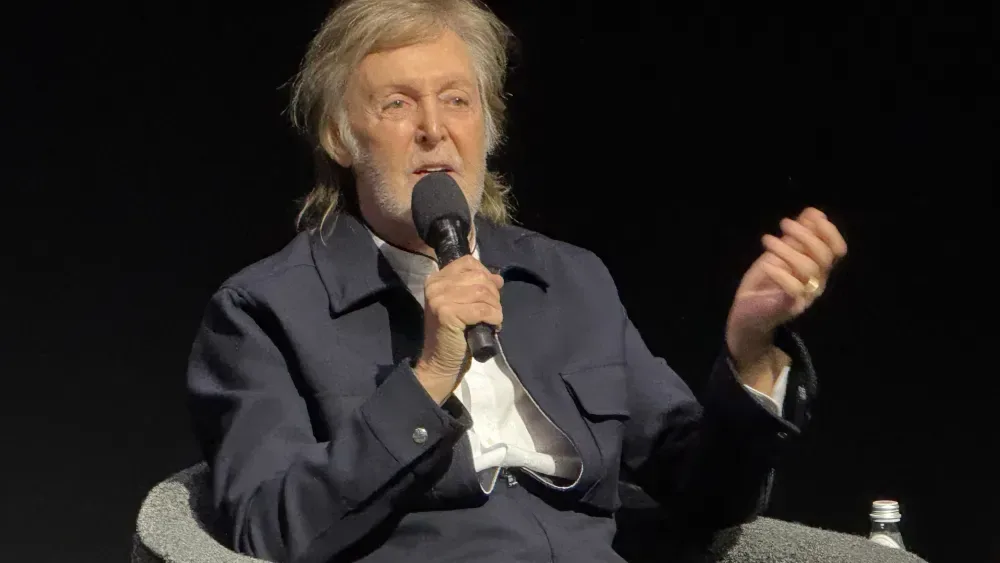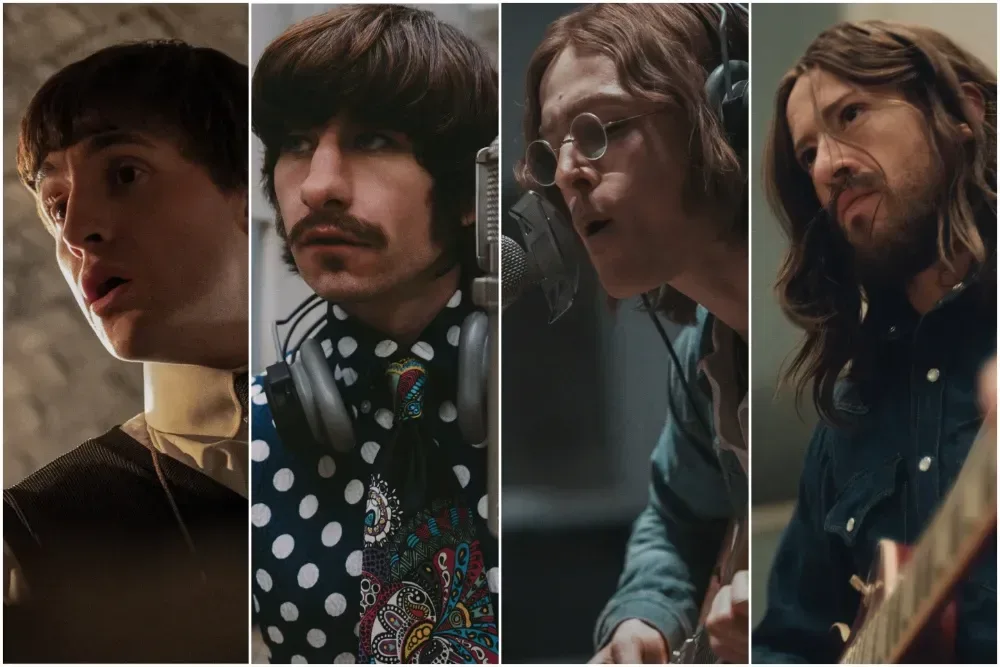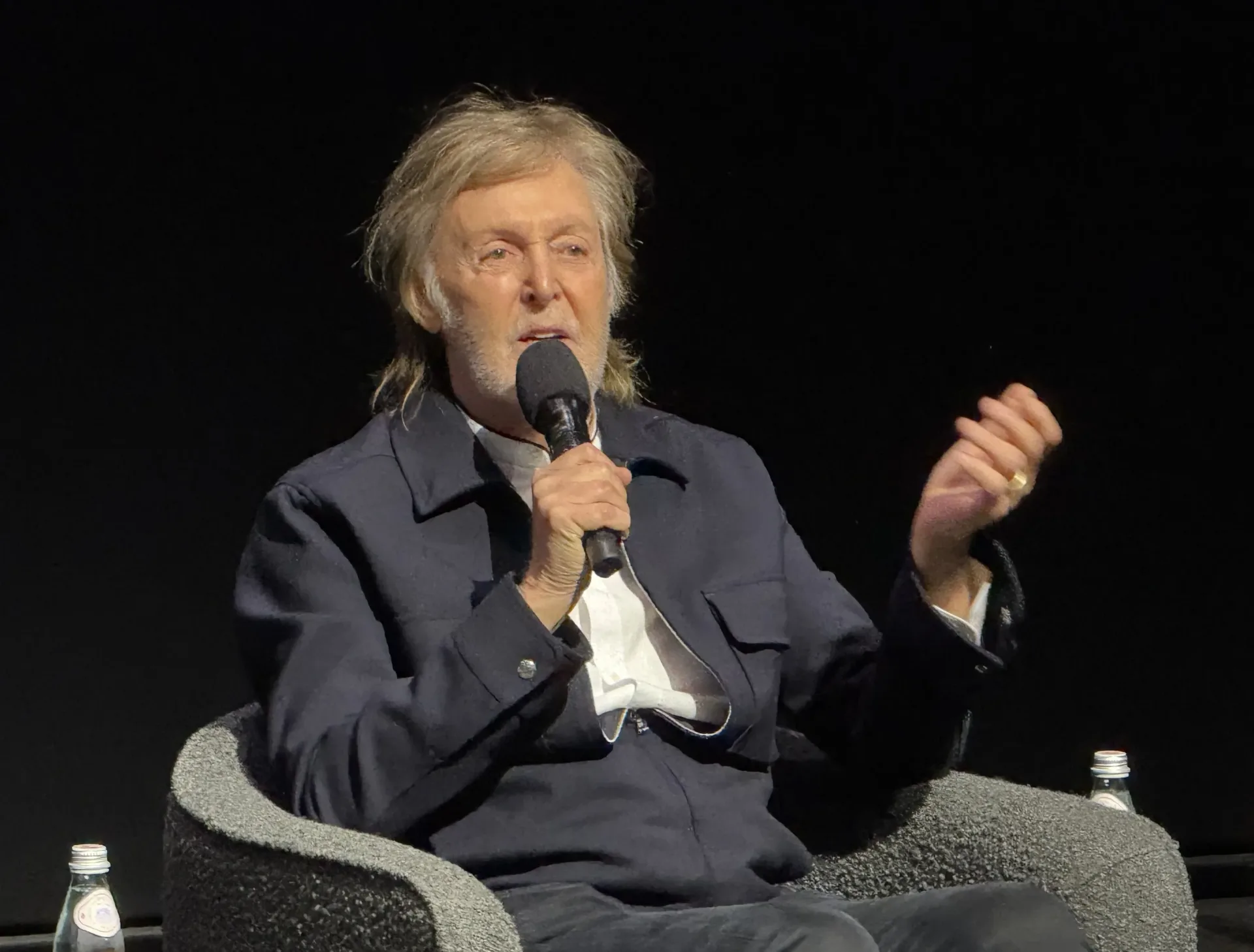
Paul McCartney’s post-Beatles years are often compressed into a simple comeback story: the Beatles ended, Wings began, and familiar songs followed. But McCartney’s conversation with Judd Apatow after a Los Angeles screening of Man on the Run gave that period a messier, more human shape. Joined by documentary director Morgan Neville, McCartney described the 1970s not as a neat reinvention but as an uncertain stretch of learning what to do after the only job he had ever known disappeared.
The result was a 45-minute exchange that moved freely between jokes, frustration, family, songwriting, old criticism and the hard reality of leading another band after being in the Beatles. Apatow’s irreverent questions helped keep the tone loose, while McCartney was notably direct about the anxieties and contradictions behind Wings. The band was an attempt to start again, but it was also an admission that starting again was frightening.
Wings was not a Beatles replacement
McCartney said his central challenge after the Beatles was avoiding an imitation of what had come before. He considered the prospect of continuing in a recognizably Beatles-like mode, but rejected the idea of becoming, in effect, a Beatles cover act. Promoters wanted familiar material, including “Yesterday,” yet McCartney said he did not want to build the next phase around performing Beatles songs.
That distinction matters to the story told by Man on the Run, which covers the 1970-to-1980 period and its accompanying book. The documentary’s title suggests forward motion, but McCartney’s comments make clear that the movement was not always confident. He characterized the period as “madcap,” a word that covers both the creative freedom of the records and the lack of a fully mapped-out path.
He acknowledged that being alone after such a defining group was scary. McCartney had been accustomed to what he called the “union” of the band: a creative structure in which ideas could be tested, resisted, reshaped or accepted by other people with comparable standing. Going solo, then working as a duo with Linda McCartney and ultimately forming Wings, required a new structure as well as new songs.
McCartney also spoke candidly about drinking during his early period in Scotland with his young family. He described it as enjoyable until it was no longer enjoyable, and credited having children and Linda’s steady judgment with helping him change course. These remarks were not presented as a comprehensive account of his mental health or substance use; they were personal reflections on a difficult adjustment after a colossal professional breakup.
Apatow described the documentary as resembling a “slight nervous breakdown movie,” a deliberately comic framing that McCartney partly accepted. The conversation’s larger point was more serious: success does not necessarily make a career transition easier. Losing a role that has defined someone’s identity can leave a vacuum, even when that person remains immensely talented, famous and financially successful.
The problem of building a new band around a Beatle
McCartney traced the spark for Wings to watching Johnny Cash on television with Carl Perkins and other musicians. Seeing Cash assemble a band gave him an idea: he asked Linda whether she wanted to start one. Her answer was yes.
He said neither of them had formal musical education, and framed that as something closer to a beginning than a disqualification. The Beatles, in his telling, had also learned as they went, beginning with a few chords and building from there. For McCartney and Linda, the point was to climb those steps together.
That did not stop the backlash. Linda McCartney received considerable criticism for joining Wings, and McCartney recalled receiving criticism himself for including his wife. His response in the conversation was emphatic: the fact that she was his partner should not have been treated as a creative defect.
Apatow connected that decision to his own experience of working with family, arguing that close creative relationships can bring a particular kind of intimacy to the work. The observation also identifies an important tension in Wings’ story. Linda was not added to recreate the Beatles’ internal chemistry. She was part of the new life McCartney was building after it.
McCartney was similarly plainspoken about the leadership issue at the heart of Wings. He wanted the group to operate more equally, but said that did not work when he held back his own view of what a song or arrangement needed. The result, he felt, was that the work could lose momentum. His blunt explanation was that he had to be the boss because he was “a Beatle, and they weren’t.”
It is an unusually useful explanation of the difference between collaboration and equal authority. Collaboration means multiple people contribute to a result; it does not always mean each participant has the same responsibility for deciding the result. McCartney’s recollection suggests that Wings needed room for other musicians while still depending on him to make final creative calls as writer, producer and bandleader.
He compared that realization with his position in the Beatles. Although the group was substantially democratic, he said there were times when the other members wanted to remain at home and he pushed for making a record. McCartney recalled briefly trying to stop being so assertive, only for the session to falter before Ringo Starr urged him to take charge again. In Wings, he came to believe he should write, produce and provide the direction that would make the music work.
‘Ram,’ comic-book songs and the value of being strange
The Q&A also addressed how differently McCartney’s post-Beatles music was received at the time compared with how it is often discussed now. Apatow brought up Ram, the Paul-and-Linda McCartney album whose oddball tone and songs once attracted heavy criticism. McCartney said that criticism hurt: he believed the album was special, then absorbed the negative reaction enough that he spent years thinking it was not very good.
A nephew later told him that Ram was his favorite McCartney album. That prompted McCartney to revisit it and enjoy it again. The anecdote is a compact lesson in how reception can change. Initial reviews are one kind of response, but not the last word on an album’s meaning or durability. Listeners who encounter a record outside its original moment may hear its playfulness, weirdness or warmth without carrying the expectations that surrounded its release.
McCartney’s own description of the Wings years leaned into that freedom. He said he wished he could still write songs that were as silly as some of those songs were. “Magneto and Titanium Man,” for example, began with a comic book and became a story simply because he loved the title and followed the spark. That is a useful reminder that not every songwriting idea needs to arrive wearing a serious face. A comic-book reference, a surreal phrase or a deliberately daft premise can be the engine of a real song.
For players and collectors of pop-culture history, it is also a neat crossover point: the comic-book imagery in “Magneto and Titanium Man” was not an elaborate corporate exercise. McCartney described a far simpler inspiration—he saw the characters while reading and made up a narrative around them.
John Lennon, public conflict and enduring affection
Apatow raised the period’s public friction between McCartney and John Lennon, including the question of whether “Too Many People” preceded Lennon’s recorded reply, “How Do You Sleep.” McCartney initially disputed the order, while Neville said “Too Many People” came first; the discussion settled around the idea that Lennon had voiced criticisms in interviews before releasing his song.
McCartney did not claim to know precisely what motivated Lennon’s criticism. He suggested Lennon may have expected something else from him and stressed that he was not privy to Lennon’s thinking. But he also made his feelings unmistakable: he said he loved Lennon and always would, despite describing him as capable of being a “complete idiot” about certain things.
His explanation of that contradiction was compassionate rather than revisionist. McCartney remembered admiring Lennon’s wit and coolness as a teenager, and pointed to the painful experiences in Lennon’s life as part of why he carried so much anguish. McCartney mentioned Lennon’s absent father and the death of his mother, Julia, while contrasting that turbulence with his own relatively secure extended family upbringing, until his mother died when he was about 14.
There is no attempt here to turn old arguments into a tidy story of permanent harmony. Instead, McCartney’s comments recognize that a person can be beloved, brilliant, funny and deeply difficult at once. That complexity is more revealing than treating their conflict as mere celebrity gossip or as a scorecard of who struck first.
Lost photos, missing demos and the archival limits of a music documentary
Man on the Run includes previously unseen material, including a self-shot clip of Paul and Linda McCartney with Denny Laine singing “You Are My Sunshine.” Yet McCartney and Neville also discussed a major gap in the visual record. There is very little film footage from the Band on the Run era, and photographs Linda took during that time were stolen in a knife-point robbery in Nigeria along with a cache of McCartney demos.
McCartney said nothing had emerged in roughly 50 years, and imagined that the tapes may simply have been recorded over. It is a sobering detail for anyone who thinks archival storytelling is only a matter of locating the right box, reel or hard drive. An archive is shaped by what survives, what was preserved, what was lost and what was never filmed in the first place. Missing material can change the kind of story a documentary is able to tell.
Neville’s response to that challenge was stylistic as well as practical. The film does not place McCartney and other participants on screen in conventional present-day interview setups. Instead, their voices play over period footage. Neville said this was designed to keep the film in a present-tense experience: viewers are carried through events rather than repeatedly pulled out of them to watch someone recall them decades later.
McCartney strongly approved of that choice. He joked about disliking the visual whiplash of cutting from a young artist in vintage footage to an older interview subject behind a desk. The technique is often called a talking-head interview: a documentary format in which a speaker is shown directly addressing the camera or interviewer. It can provide clarity and authority, but it can also interrupt the atmosphere of archival material. In this case, the filmmakers opted to let the older voice guide the younger images without constantly drawing attention to the passage of time.
That formal decision makes particular sense for a decade as unsettled as the one McCartney describes. The documentary is not only looking back at a finished legend. It is following an artist who, at the time, did not yet know how the next chapter would resolve. For a wider look at the film’s Wings-and-Lennon focus, readers can also see this related overview.
A story still open after 1980
The film ends in 1980, shortly after McCartney spent nearly a week in a Japanese jail when Wings arrived for a planned tour. He said the experience initially frightened him, but that he gradually adapted and even joined fellow inmates for a communal bath after being offered private arrangements. Apatow, unsurprisingly, found the material ripe for comic sequel pitches; McCartney suggested the title Man in a Tub.
Behind the joke is a more consequential point. The documentary presents the time in jail as a period in which McCartney had space to consider whether Wings should continue. The band did not resume, though its ending was gradual rather than a single clean final moment. Neville noted that there are many later stories still to tell.
McCartney’s reflections explain why the Wings era remains more than an intermission between Beatles milestones. It was a volatile, experimental attempt to make work on new terms: with family involved, with criticism arriving loudly, with leadership responsibilities he could not entirely escape, and with songs that sometimes followed the logic of a comic book instead of a grand statement. The Q&A’s comic tone did not erase that weight. If anything, it showed how McCartney can now look back on an unstable period with humor, affection and a clearer sense of what it took to keep moving.
The documentary conversation also lands amid broader discussions about who shapes film culture and how makers are recognized, including recent changes within a filmmaker leadership council. In McCartney and Neville’s case, the central creative choice was less about polishing a legacy than placing audiences inside an unfinished-feeling past—and letting the music, the surviving images and the voiceover do the work.