Gabriel Martins’ On Behalf of My Son begins with the promise of a disaster drama built from many intersecting lives. Set in Belo Horizonte and performed in Portuguese, the Brazilian film introduces a cross-section of bus passengers during an ordinary commute, allowing routine gestures and quiet distractions to suggest private worlds just beyond the frame. At the center is Wesley, the middle-aged driver played by Renato Novaes, whose distracted demeanor adds unease before the inevitable catastrophe arrives.
The crash is the film’s defining early rupture. Its force comes not simply from surprise, since the setup plainly signals what is coming, but from how quickly normal city movement is transformed into horror. Martins establishes a feeling that any number of passengers might become the focus of the story afterward. That possibility gives the opening an unusually expansive energy: a transit route becomes a fragile network, and a single incident appears capable of exposing grief, anger, poverty, intimacy and the stories people never knew about one another.
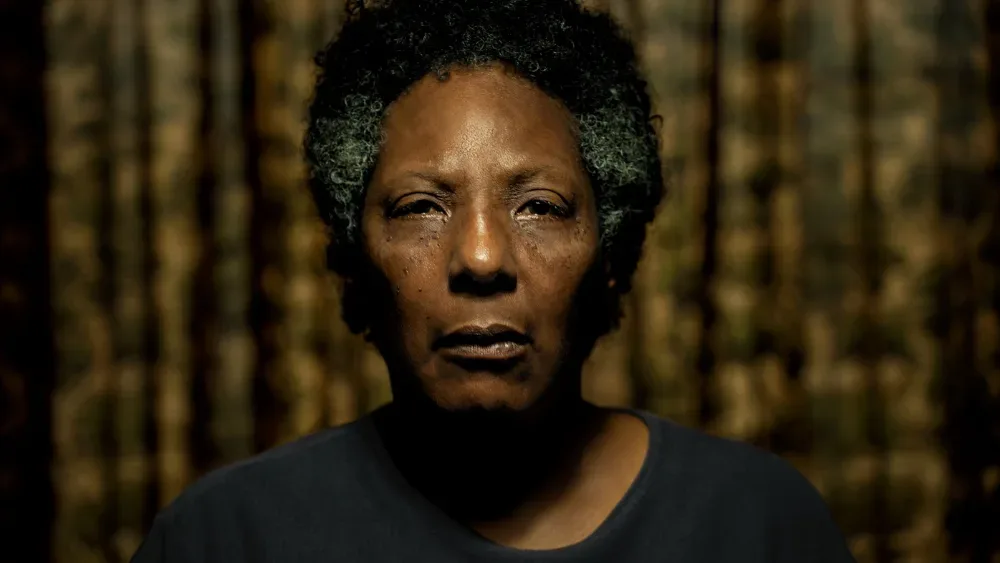
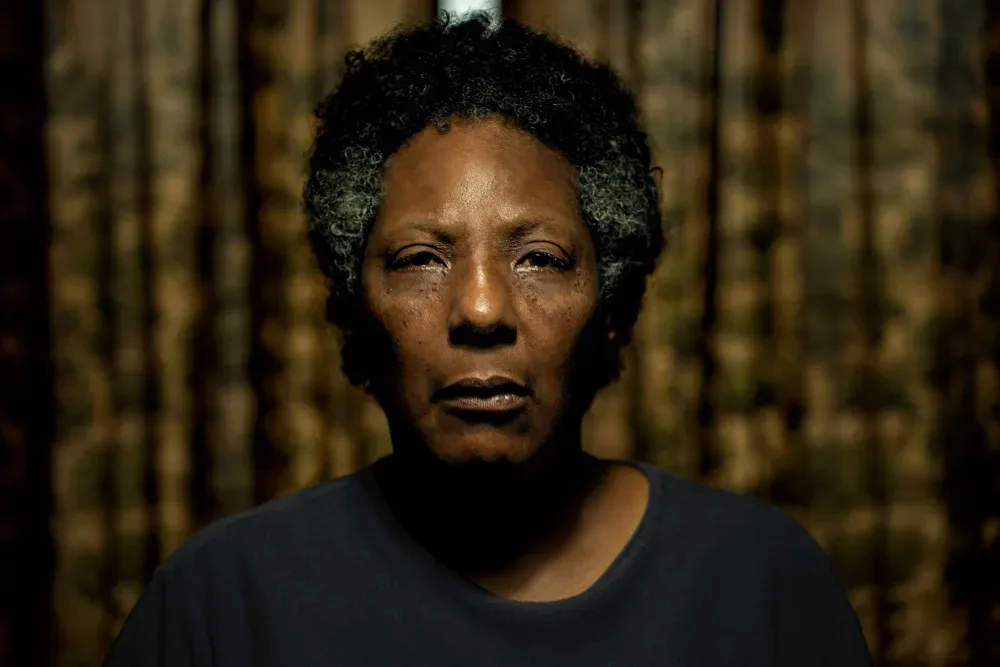
Instead, the film largely narrows its perspective to Vicentina, Wesley’s mother, played by Rejane Faria. The choice is understandable and potentially potent. Vicentina did not drive the bus, yet the consequences of her son’s actions—along with uncertainty over what may have been in his mind—reach her immediately. What does responsibility look like for a parent after an adult child is blamed for an irreversible tragedy? And how can an apology carry meaning when the person offering it cannot undo the loss or fully explain the person at its center?
Vicentina’s grief becomes an apology tour
Before Vicentina receives the news, she is shown moving through household routines while using a crutch. Those early details give her a lived-in presence rather than presenting her as a symbol of maternal suffering from the outset. A curtailed phone call and her detached manner create a sense that she has concerns of her own, though the film does not need to spell them out. The character feels recognizable in the way she inhabits domestic space: busy, guarded and somewhat remote from the larger drama the audience already anticipates.
Her younger neighbor Joana, played by Maíra Azevedo, tells her about the crash. From there, Vicentina must contend with questioning and the grim task of identifying Wesley’s remains. Novaes also appears as Wesley’s twin brother, an encounter that turns the family home into an eerie reminder of the dead man’s physical presence. Television coverage compounds the distress, circulating speculation around Wesley’s possible intent and state of mind. That public suspicion makes Vicentina’s mourning inseparable from doubt.
Her response is to seek out relatives and loved ones of those killed and apologize in Wesley’s place. It is a compelling dramatic mechanism because it positions her between private bereavement and public accountability. Vicentina is not merely looking for forgiveness. She is trying to locate her son inside the conflicting stories left behind by the crash, while confronting people for whom his name may be inseparable from devastation.
Yet the film’s structure repeatedly returns to a similar pattern: Vicentina travels to another neighborhood, enters another home or meeting place, delivers a prepared expression of regret, and faces someone carrying a distinct form of loss. At 145 minutes, that repetition becomes a major challenge. The journeys convey the physical effort behind her mission, and the camera’s shifts between observational distance and close-up give the visits a consistent visual grammar. But the emotional encounters do not always develop with enough variation, escalation or consequence to sustain the running time.
A rich ensemble often passes through too quickly
The limitation is especially noticeable because the people Vicentina visits frequently seem to contain films of their own. One of the strongest supporting turns comes from Fábio Leal as a battered, grieving lover wrestling with complicated feelings after the death of his fiancé. His presence points to the contradictions the premise can hold: affection can coexist with resentment, and a victim’s loved one may reject easy categories of closure. But these lives often recede soon after they are introduced, while the narrative returns to Vicentina’s continuing search.
Related coverage includes ‘On Behalf of My Son’ Review: Grief Drama Stretches a Powerful Premise.
That emphasis places considerable weight on Faria. She has the difficult task of carrying a character whose grief is tied to a repeated, almost ritualized statement of apology. The performance can summon palpable despair, particularly in moments when Vicentina is confronted by the machinery of death and accusation. Across scene after scene, however, the character’s emotional expression can feel held in a similar register. The result is that moments meant to flare into uncomfortable volatility sometimes seem restrained by the film’s own recurrence.
The issue is not that Vicentina should be transformed by every visit or granted a neat redemptive arc. A story about culpability after mass death should resist easy emotional accounting. Rather, the problem is that several of the most provocative responses to her presence arrive comparatively late, after the central routine has already been established at length. People who might challenge her motives, refuse her contrition or complicate her understanding of Wesley could deepen the drama earlier and more persistently.
Wesley remains a mystery even to those closest to him
One especially important avenue opens through Fred, a friend of Wesley’s played by Giovanni Venturini. Fred is a death-metal frontman with dwarfism, and his scenes offer a heartbreaking glimpse at a part of Wesley’s life that Vicentina did not fully know. His appearance matters because it challenges the mother’s limited portrait of her son. Wesley begins to emerge not just as the driver at the center of a terrible event, but as someone with interests, relationships and frustrations that do not fit a single family narrative.
This is where On Behalf of My Son seems closest to finding its most difficult questions. Can Vicentina mourn someone whose inner life she did not understand? Can she represent him to others when evidence and memory offer only fragments? The film raises those questions without forcing definitive answers, but it does not always remain with them long enough for their emotional aftershocks to accumulate. Like stories that aim to make a central relationship feel earned rather than merely declared—an issue also relevant to character-driven storytelling built around emotional bonds—the challenge is not introducing hidden dimensions, but allowing them to change what viewers believe they know.
Martins nevertheless brings considerable strength to the film’s environments. Belo Horizonte is not treated as an interchangeable backdrop. The movement between neighborhoods, modest interiors and worn urban textures creates a vivid sense of geography and material pressure. The movie’s attention to poor and Black Brazilian lives suggests a broader social canvas, one that can communicate class, community and hardship through setting as much as dialogue. Leonardo Feliciano’s camera helps make these places feel observed rather than simply used as dramatic scenery.
Atmosphere and premise outpace the film’s momentum
That eye for place gives the work a pull even when its dramatic shape becomes laborious. The texture of a room, the length of a difficult trip and the uneasy formality of an apology can say something crucial about Vicentina’s burden. Tiganá Santana’s music and the editing by Martins and Thiago Ricarte belong to a production that clearly values mood and lived-in detail. The film is produced by Thiago Macêdo Correia, with Lara Lima serving as executive producer, under Filmes de Plástico, in a Netflix presentation.
Still, the gap between the film’s arresting premise and its sustained execution remains hard to ignore. The opening bus sequence establishes an ensemble tragedy with numerous emotional paths. Vicentina’s mission then narrows that field, sometimes turning other mourners into brief encounters rather than fully consequential forces within her story. When the movie returns to the question of how she can continue living after the crash, it has accumulated atmosphere and sorrow, but not always the shifting dramatic pressure that its subject demands.
On Behalf of My Son played in the Platform program at the Toronto Film Festival on September 13, 2026. Its cast also includes Giovanna Heliodoro. For viewers drawn to Brazilian dramas centered on family, communal trauma and the uncertain boundaries of blame, the film offers an affecting foundation and memorable supporting fragments. Its strongest qualities lie in the terror of its opening, the specificity of its Belo Horizonte world, and its refusal to make grief clean. Its difficulty is that the same solemn journey must carry nearly two and a half hours, and the film does not always find enough new terrain along the way.