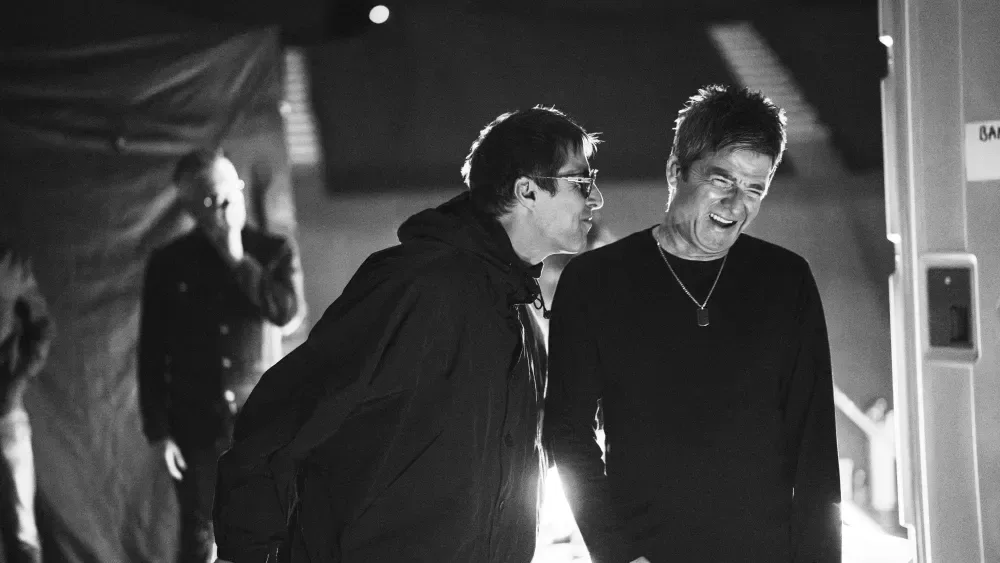
For Oasis, the reunion itself carries a narrative so oversized that it can seem ready-made for the biggest possible concert film. Liam and Noel Gallagher had been estranged since the band’s 2009 split, and the prospect of them returning to a rehearsal room together in summer 2025 after so many years naturally supplies suspense. Oasis: Don’t Look Back in Anger, which premiered in the Venice Open program at the 2026 Venice Film Festival, understands that anticipation immediately. Its opening invokes the failed Rock en Seine appearance, where the brothers did not even reach the stage, then moves into six weeks of reunion rehearsals.
That setup promises a close view of a famously combustible partnership facing its defining test. Directors Dylan Southern and Will Lovelace instead make a different kind of film: a large-scale, emotionally affirmative record of Oasis returning to stadium-sized public adoration. It is a polished, often stirring document of a band once again sharing songs with an audience that knows every word. But its instincts are remarkably careful. The movie spends much more time affirming the meaning of reconciliation than examining what reconciliation actually required.
At 122 minutes, the R-rated English-language documentary has room for both the band and the scale of the response around it. Yet the Gallaghers’ interviews offer limited access to their inner experience of the reunion. Liam and Noel remain recognizably direct personalities, but their contributions feel guarded and professional rather than volatile or revelatory. One band member characterizes Liam as unusually businesslike during rehearsals, a description that also applies to the film’s own approach. It shows a major operation being handled with concentration, but not many moments where the operation threatens to fall apart.
A reunion story with the sharp edges sanded down
The absence of open conflict is not automatically a flaw. A real reunion does not need to manufacture arguments for a camera crew, and discretion could be part of why the musicians were able to work together. The problem is that Don’t Look Back in Anger presents the old fracture as essential dramatic material, then rarely develops it. The editing effectively raises the possibility of a clash in the early rehearsal footage. After that, the film chiefly turns toward reassurance.
For a group whose mythology has long included public insults, outrageous confidence and fraternal hostility, that tonal choice can be surprisingly sedate. Oasis were not simply a band with a backstory about two brothers making peace. Their appeal has always involved grand songs delivered with a mix of vulnerability, bravado and an almost confrontational certainty. A film about them can certainly be sentimental, but sentiment needs some counterweight. Here, the warm treatment sometimes makes the subject feel more generic than it should.
Southern and Lovelace are seasoned music-documentary directors; their 2010 Blur film No Distance Left to Run was Grammy-nominated. Their experience shows in the concert material, where the scale, rhythm and crowd reaction are brought into vivid focus. Haris Zambarloukos is credited as camera operator, George Cragg edits, and the sound work from Tarn Willers and James Mather gives the live performances considerable force. When the film lets a song breathe, the audiovisual presentation is its clearest argument for the importance of this reunion.
The issue is not a shortage of spectacle. It is that the film frequently steps away from that spectacle for familiar brotherly observations or brief fan stories that do not always deepen the overall portrait. The result can feel like a commemoration that does not entirely trust the raw power of Oasis onstage.
The fans deliver the documentary’s most persuasive moments
If Liam and Noel appear somewhat protected by the film’s framing, the audience is not. Fans sing, cry, embrace friends and relatives, and give themselves over to the songs with a level of intensity that makes the reunion legible even to viewers who missed it. Many of those shown are younger than 30, undercutting the lazy idea that a 1990s legacy act is necessarily playing only to people who were there the first time. The concert crowds come across as fully participatory rather than passive spectators.
The movie also reaches back briefly to Oasis at Knebworth in 1996, placing the 2025 response in the context of a long-established form of fervor. Before the first reunion concert, a police briefing compares the expected crowd behavior to football supporters. That comparison helps identify the communal force of the performances: these are not merely audiences consuming a well-known catalog, but groups treating songs as shared rituals.
That is why the strongest passages have little need for elaborate explanation. The crowd footage supports Liam’s basic idea that people want an escape. The film includes a montage of contemporary political figures, technological absurdities and broader cultural unease before connecting the reunion to that impulse. It is a worthwhile observation, but it arrives too briefly. A fuller account of why Oasis became such a defining live event in the United Kingdom in 2025 could have explored the pull of 1990s nostalgia, years of political and social upheaval, and the peculiar optimism that can gather around a collective occasion.
Instead, those possible themes appear as sketches. Newspaper headlines, album-sale references and broad reminders of Oasis’ stature cannot substitute for a sustained argument about why these particular songs and these particular brothers still resonate. The fan response demonstrates the phenomenon; the documentary is less successful at interpreting it.
Earnestness meets a band built for mischief
Screenwriter Steven Knight brings an openly earnest framework to the reunion. At one point, the film includes a sermon that treats the concerts almost as a pilgrimage and invokes forgiveness between brothers. The intention is clear enough: Oasis’ return becomes a story of connection and renewal rather than simply a lucrative pop-cultural event. Still, the reverential mood sits awkwardly beside the band’s identity. It is difficult not to imagine the Gallaghers puncturing such solemnity with a joke, a boast or an insult.
Several international fan vignettes similarly aim for universality. A Brazilian fan has named her dog after Paul “Bonehead” Arthurs, while two divers in South Korea discuss their friendship through “Acquiesce.” These moments demonstrate the music’s reach, though they can feel detached from the concert narrative rather than organically woven into it.
The most delicate example involves a survivor of the 2017 Manchester Arena attack during an Ariana Grande concert. She recounts finding comfort in “Don’t Look Back in Anger” at a vigil and is later shown at a reunion show. Her connection to the song is plainly meaningful, but the sequence bears a great deal of emotional weight in a film whose central figures remain comparatively noncommittal about their own feelings. The juxtaposition risks making a deeply personal testimony feel like an instrument of the movie’s broader sentimentality.
That tension extends to the film’s repeated emphasis on Oasis’ working-class origins. The history is real, but invoking it in a celebration of an enormous modern concert enterprise can sound hollow when ticket affordability is an unavoidable part of the contemporary live-music conversation. Liam’s apparent aside about there being no cheap seats is more revealing than the film may intend. It acknowledges the contradiction with the sort of blunt humor that feels closer to Oasis than much of the documentary’s polished uplift.
A valuable concert record, rather than a definitive Oasis film
Oasis: Don’t Look Back in Anger will still hold clear appeal for fans who were unable to attend the 2025 reunion dates, as well as those who want to revisit the communal rush of hearing the band live again. Its performance footage and powerful sound give that audience a substantial reason to watch. Liam Gallagher, Noel Gallagher, Bonehead, Gem Archer, Andy Bell, Joey Waronker and Christian Madden are all part of a film that understands the visual and sonic scale of Oasis as a live institution.
But it is less definitive as a record of what made this reunion unusually momentous. The remarkable fact is not only that the band got back onstage, or that fans filled venues. It is that a group defined by both massive singalongs and messy human friction could return after such a long estrangement. The movie acknowledges both elements, yet overwhelmingly favors the singalong.
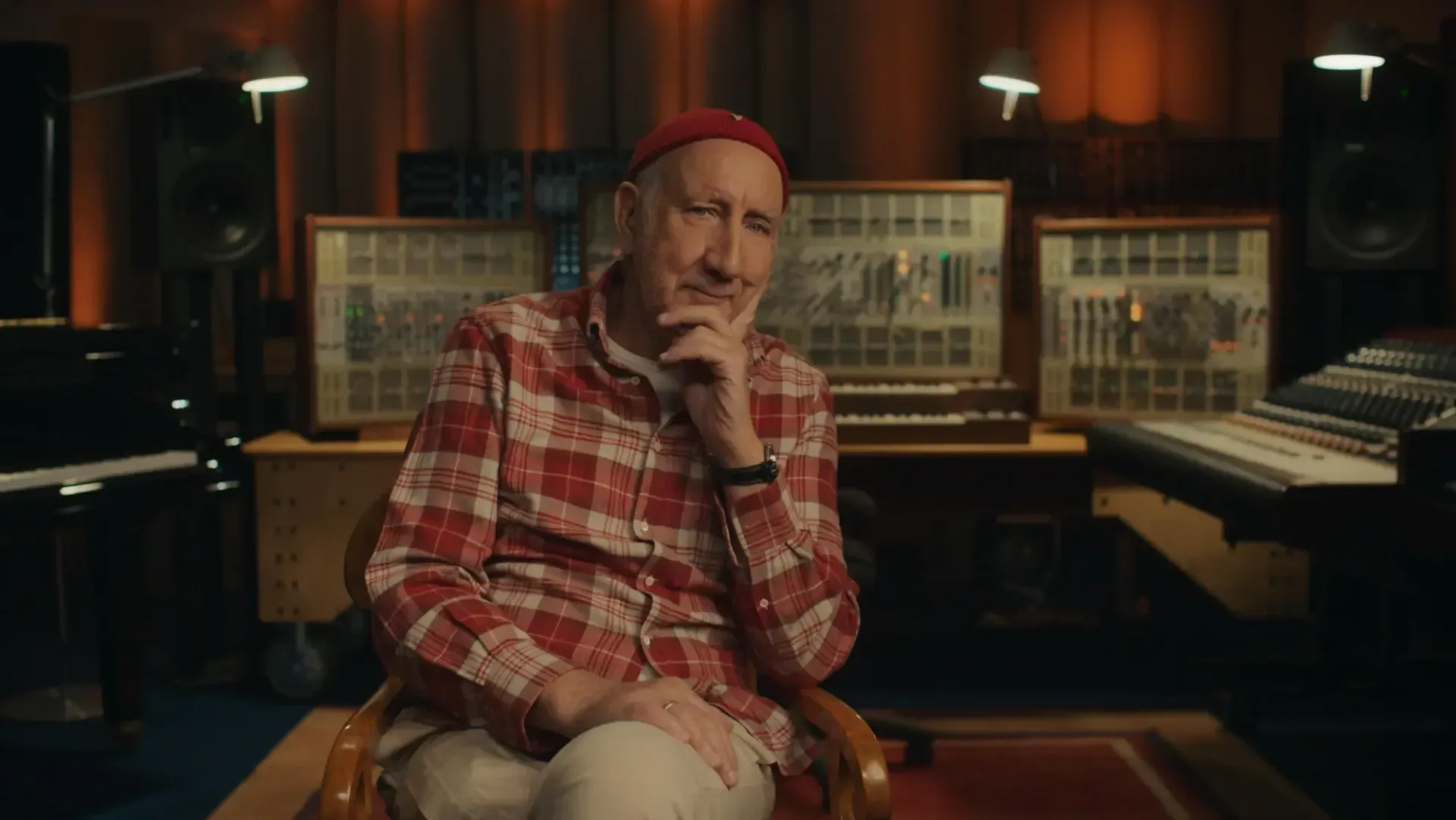
For another music-documentary example of archival value paired with an incomplete personal portrait, see this look at Pete Townshend: Behind Blue Eyes. In Oasis’ case, the missed opportunity is especially noticeable because the two central characters are so hard to separate from the chaos they once generated.
This concert film preserves genuine emotion and some thrilling musical scale. What it does not quite preserve is the unruly specificity of Oasis: the sense that beneath every anthem, boast and reconciliatory gesture there might still be a cutting remark waiting to land.