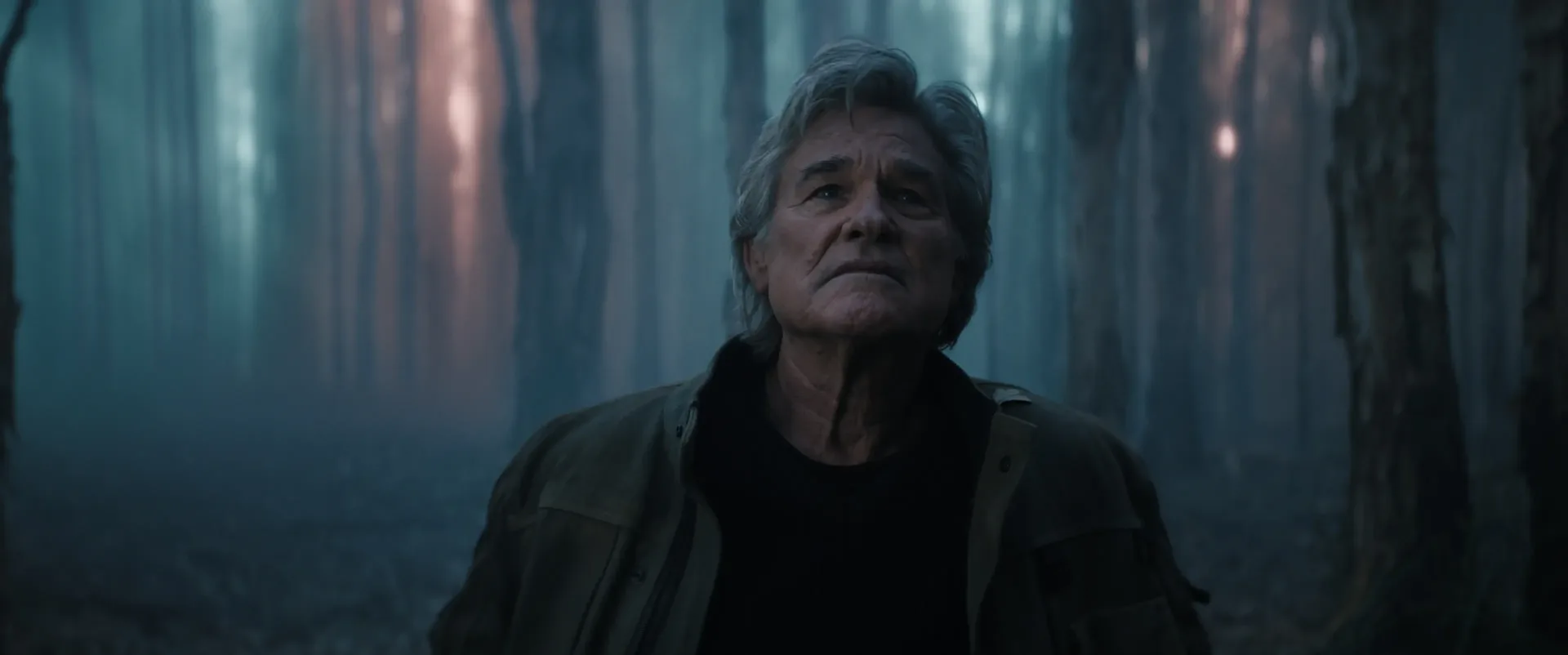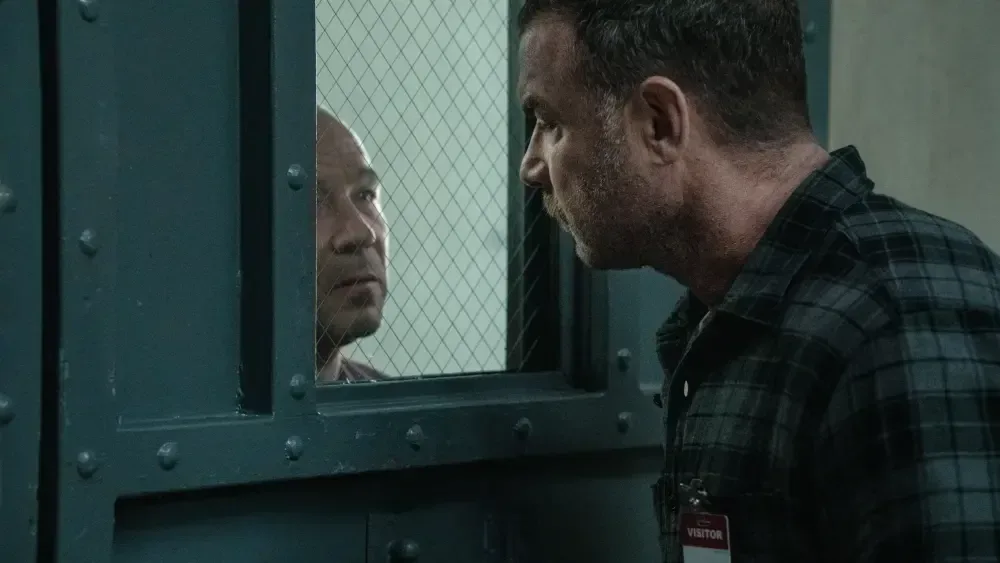
Apple TV’s Nocturne arrives as a 10-episode serial-killer thriller built around an unnerving premise: the person blamed for a community’s nightmare is in a locked psychiatric hospital, yet his influence may not be contained there. Created by Rowan Joffé and adapted from Lars Kepler’s novels Lazarus and The Sandman, the series follows the fallout from an apparent impossibility. A boy presumed to be among the victims of killer Jurek Walter has returned after three years, reopening an investigation that Fairhaven, Pennsylvania, has scarcely survived.
It is a setup with an intentionally heavy shadow. Jurek, played by Stephen Graham, is not treated simply as a past case file for the police to revisit. He is an active menace from inside Riverside Psychiatric Hospital, a character whose ability to identify and exploit weakness remains dangerous even behind extreme physical confinement. That makes the central question more troubling than a standard hunt for a missing person: if Jurek’s crimes were never truly over, how many of the assumptions surrounding his capture were wrong?
The first two episodes debut October 30 on Apple TV, and the remaining episodes are scheduled to arrive weekly on Fridays.
A returned child turns old certainty into a new case
Liev Schreiber plays Jonah Lynn, a former homicide detective who has withdrawn from the world after the deaths of his wife and daughter. Jonah was among the investigators convinced that Michael Frost and his sister Felicia were victims of Jurek Walter. When Michael, played by Landon Valentin, is found three years after both children vanished, that conclusion collapses.
The development is devastating for Fairhaven Chief of Police Dave Ellison, played by Bill Camp. The town has been left with missing people, deaths and the wider damage caused by Jurek’s terror. Michael’s return does not offer uncomplicated relief. It raises the possibility that Felicia, played by Abigail Donaghy, may still be alive, while also suggesting that Jurek may have had help beyond the walls of Riverside.
Jonah comes back into the investigation despite no longer being on the police force. He joins a task force led by Special Agent in Charge Alexandra Quinn, portrayed by Poorna Jagannathan. The group also includes Saga Bauer, Jonah’s goddaughter and an FBI special agent with undercover expertise, played by Zazie Beetz; and detective Nathan, played by Gary Carr. Their immediate mission is to find Felicia and identify whoever may be assisting Jurek.
That team structure gives Nocturne several routes into the mystery. Jonah has the old case and personal grief to contend with. Saga is prepared to place herself in danger in pursuit of an answer. Ellison carries the responsibility of a community already wrecked by violence. Quinn and Nathan expand the inquiry beyond Jonah’s personal drive. The series keeps viewers close to what this group can establish at any given time, rather than freely supplying a complete view of the crime.
Jurek Walter’s real weapon is manipulation
The show opens at Riverside Psychiatric Hospital, where Jurek is kept in profound isolation: below concrete floors, alone with minimal furnishings. The imagery makes a clear promise that he is considered exceptionally dangerous. But Nocturne quickly establishes that confinement is not the same thing as powerlessness.
Related coverage includes Nocturne Review: Stephen Graham Drives a Chilling Serial-Killer Thriller.
Jurek coerces the patient in a neighboring cell into killing himself, then shifts his attention toward Karl, a new nurse played by Rory Culkin. Karl is quiet and reserved, characteristics Jurek appears able to read almost immediately. The relationship he begins to cultivate is not one of mutual trust. It is an exercise in control, shaped entirely around Jurek’s needs.
That distinction matters to the series’ tension. A manipulator, in this context, is not merely someone who lies. Jurek studies vulnerability and pressures other people into choices that benefit him, allowing him to extend influence without directly leaving his cell. The show’s hospital story therefore operates as more than a parallel plot. It provides a possible mechanism for Jurek’s reach and makes every lapse in procedure feel consequential.
Karl repeatedly bypasses Riverside protocol without alerting security in an effort to please Jurek. Those decisions can demand a generous suspension of disbelief, as can Jonah’s hands-on involvement in an investigation despite not being employed by the police. Yet these contrivances serve the show’s chosen pressure-cooker design: the horrifying possibility that systems intended to keep people safe can become vulnerable because an individual inside them has been expertly manipulated.
Grief is the show’s emotional entry point
Nocturne is not content to make Jonah a detached investigator with a troubled past. His wife and daughter’s deaths have turned him into a recluse, and returning to the Jurek case means stepping back into a life he had abandoned. The search for Felicia is therefore tied to a more private compulsion: Jonah needs answers, and he is prepared to pursue them by any means he sees fit.
That grief provides an important human scale amid a plot involving a notorious killer, an institutional setting and a widening FBI operation. The premise can be grand and occasionally far-fetched, but Jonah’s loss gives the mystery a grounded emotional consequence. The series also gives Saga a personal dimension through her own fractured family history. Her willingness to take risks is not presented as generic action-hero bravado; it emerges from a character who has been affected by damage closer to home.
This focus is a useful reminder of why thrillers often land harder when their elaborate plotting has a personal anchor. Larger stories do not become intimate simply because the stakes are high. They need characters whose choices expose what the stakes cost. That same principle has informed a broader look at how major genre stories work best with a clear human center. In Nocturne, Jonah’s grief and Saga’s family history help keep the investigation from becoming only a chain of clues.
Information is deliberately limited
A major part of the show’s method is restricted perspective. The audience generally knows what Jonah and the task force know, which is often very little. Rather than explaining the full shape of Jurek’s crimes early, the narrative releases information as the investigators uncover it. Leads connect, then shift the inquiry somewhere more alarming.
This is a familiar mystery technique, but it has a specific effect here. Jurek’s threat gains scale because viewers are not permitted to measure it cleanly. The uncertainty turns routine questions into more unsettling ones. Was Michael’s return an escape, a rescue or something more complicated? Is there an accomplice? How much can Jurek direct from Riverside? The show does not offer an easy map before asking the audience to follow it.
The series also moves between past and present and across Pennsylvania locations. These shifts keep the story unstable in a productive way: a scene can reframe what seemed settled, while a new place can reveal another layer of the case. The approach has the potential downside of disorientation, but it supports the broader feeling that neither Jonah nor the viewer has the full picture.
Episode 3 pushes the dread outward
The third episode, “Eyes on the Inside,” is positioned as an especially severe installment. It begins with a family on the run and ends with a disturbing call to the FBI. Between those points, the show places fear and panic at the center of the viewing experience rather than treating them as quick bridges between plot developments.
The hospital setting is also used to show Riverside as overwhelmed and poorly run. Patients with varied conditions and disorders endure abuse, adding an institutional failure dimension to the thriller. That material is not simply background texture for Jurek’s menace. It establishes an environment where patients are vulnerable and safeguards are inadequate, making Karl’s failures and Jurek’s access to others more disturbing.
Importantly, the hospital’s problems do not make every patient suspect, nor does the premise reduce mental illness to villainy. Jurek’s cruelty is located in his behavior: coercion, exploitation and violence. The wider depiction of abused patients instead underlines how people dependent on an institution can be harmed when it is overwhelmed or badly managed.
A cast designed around different kinds of pressure
Graham’s Jurek is the series’ defining source of unease. The character’s menace comes less from constant physical action than from the calculated attention he gives to other people’s insecurities. A smile after orchestrating a death, or a seemingly tentative connection with Karl, can carry as much weight as a conventional chase sequence. Graham makes the role chilling because Jurek’s cruelty appears patient, observant and purposeful.
Schreiber has the difficult task of making Jonah’s recklessness legible without allowing the character’s grief to become a shortcut. Jonah is damaged, but he remains the investigator trying to assemble what has happened. Beetz brings urgency to Saga, whose undercover specialization and personal history place her in a different relationship to risk. Camp’s Ellison embodies the exhaustion of a local official facing evidence that a nightmare believed to be over may have continued. Jagannathan, Carr and Culkin each serve different parts of the story’s institutional and investigative machinery.
Chrissy Metz plays Ida Frost, Michael and Felicia’s mother, a role that centers the cost of the case on a family that has lived with absence for years. Her presence reinforces the fact that Michael’s reappearance is not just a narrative twist. It is an event that changes what a mother may dare to hope and fear.
What to expect from Nocturne
Nocturne is best approached as a dark, disturbing mystery rather than a tidy procedural. It includes violent material, psychological coercion, missing children, family trauma and abusive institutional conditions. The show’s appeal lies in how it combines those elements with gradually revealed information and a formidable antagonist, not in a promise that every development will feel perfectly plausible.
For viewers willing to accept a few strained plot mechanics, the reward is a thriller that grows more absorbing as its investigation expands. Michael Frost’s return gives Jonah and the task force a reason to reopen an old horror, but Jurek Walter’s continuing capacity to control people is what gives the story its bite. The series holds back enough of its larger design to keep its menace alive, making every new answer feel capable of uncovering a worse question.