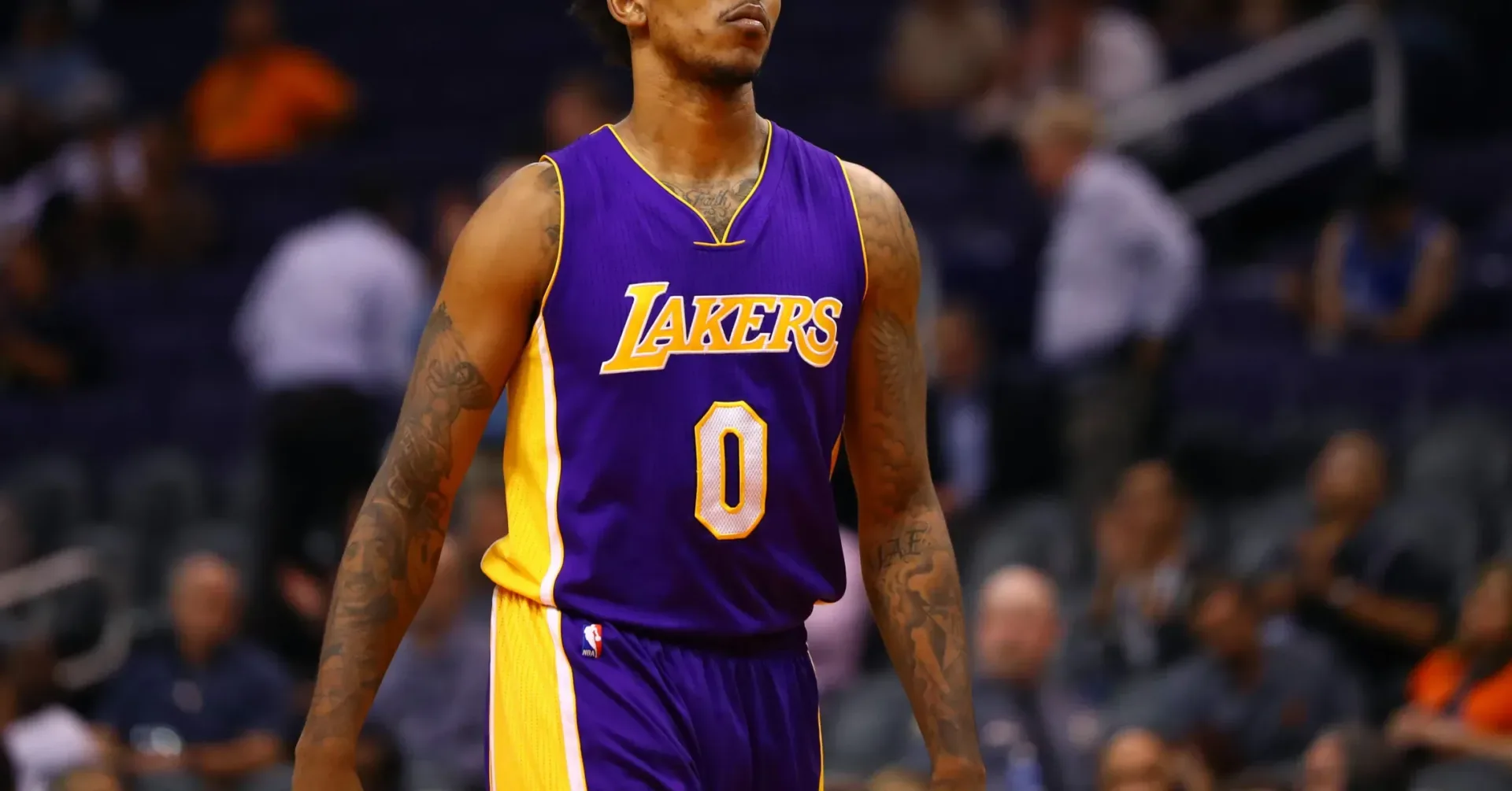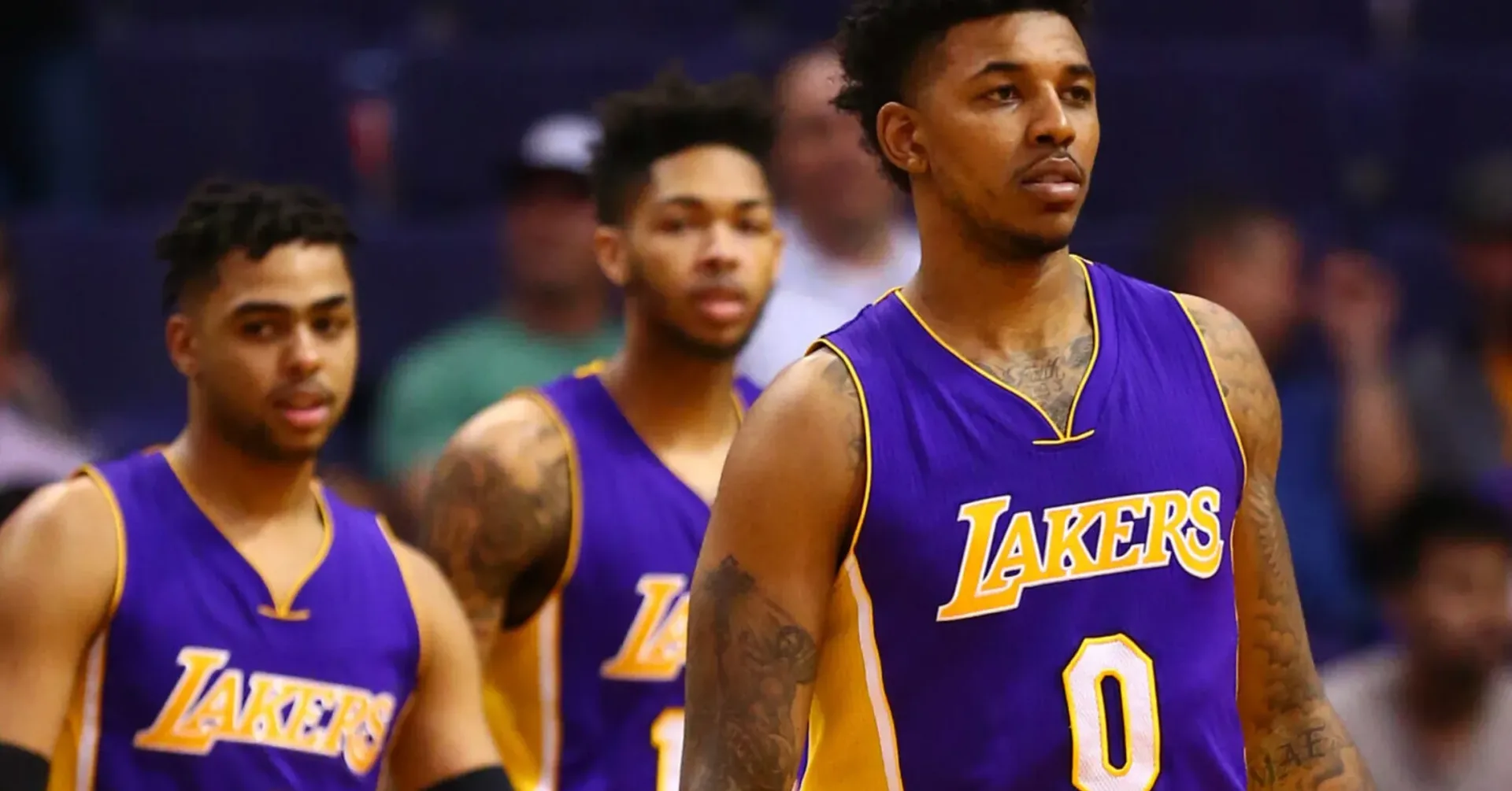
Nick Young has revisited one of the most uncomfortable NBA locker-room controversies of the 2010s, describing the anger and mistrust that followed the release of a private recording involving then-Los Angeles Lakers teammate D’Angelo Russell.
Speaking on the October 7 episode of Club Shay Shay, Young said he attempted to go to the arena to confront Russell after the video surfaced in 2016. Young’s account is a retrospective one, and his description of what he intended to do is his own. He said team security stopped him before a face-to-face confrontation could occur and instructed him to take time away from the team.
“I had the whole gang with me,” Young recalled, saying the situation was “about to go crazy.”
The recording at the center of the dispute showed Russell, then a Lakers rookie, filming Young discussing other women while Young was engaged to recording artist Iggy Azalea. Its public circulation made a private conversation into a national story, immediately putting pressure on relationships that had previously overlapped: teammate and teammate, friends and colleagues, a high-profile couple and a team operating under constant public attention.
Young’s latest comments emphasize a part of the episode that was always bigger than a single video: the loss of trust inside a professional basketball team. In sports, the term locker-room chemistry is often used loosely to describe camaraderie, communication and shared purpose. Here, it meant something more concrete. Young felt a teammate had secretly recorded him, while Russell faced intense scrutiny and separation from teammates after the clip spread.
A confrontation Young says did not happen
Young said security at the arena prevented him from getting inside to confront Russell. By his telling, the intervention kept an already volatile interpersonal dispute from becoming an in-person confrontation at a team facility.
That point matters because an arena is not simply a workplace for players. It is also a public venue containing staff, families, media and fans, and it has security procedures designed to avoid exactly this kind of escalation. Young did not say that he and Russell fought. His account is that security stopped the encounter before it began.
He also described feeling that he was expected to react, saying he feared that remaining quiet would be interpreted as weakness. At the same time, Young acknowledged Russell was around 19 years old during the controversy. The comments do not resolve the ethical questions around the original recording or its leak, but they show how quickly a breach of confidence can become tied to image, pride and public expectations.
Young characterized the recording as a teammate “snitching” on him. That framing captures why the episode was so damaging in basketball culture: private team conversations depend on a baseline assumption that players can speak candidly without being secretly documented. Whether the footage was meant to be shared or not, the fact that it became public turned that assumption upside down.
Young’s claim involving Russell’s brother needs context
Young also said that some of his friends confronted Russell’s brother in the Lakers’ family lounge while Russell was playing. He did not explain what occurred in that encounter, and no specific details were provided about its nature or consequences. That lack of detail is significant; the claim should not be read as a full account of the incident or as evidence of a particular act.
Young said he felt he needed “some type of get-back,” language that reflects the retaliatory mindset he says he had at the time. But his account also illustrates why conflicts that begin between two public figures can create risk for people who were not part of the original disagreement. Russell’s brother was not the player who made the recording, and the alleged family-lounge confrontation, as described, would have expanded the conflict beyond the two teammates.
Young’s recollection is that much more occurred around the Lakers than became public. It is impossible to establish the scope of that broader suggestion from his remarks alone. What is clear is that the public portion of the controversy was already consequential: the video created a visible rift, and Russell later publicly addressed his role in making the recording.
Russell apologized, but said he did not release the video
In March 2016, Russell apologized for recording the conversation and said he regretted putting his friendship with Young at risk. He also said he did not know how the footage became public and maintained that he had not intended it for anyone else to see.
Those are two related but separate issues. Recording is the decision to capture a conversation. Leaking is the act of distributing that material beyond its intended audience. Russell accepted responsibility for the former in his public apology, while saying he did not know who was responsible for the latter. The available account does not establish how the recording entered public circulation.
That distinction did little to ease the immediate consequences. The release strained the Lakers’ locker room, and Russell was reported at the time to have become isolated from some teammates. For a young player, that kind of isolation can affect more than friendships: professional teams rely on routine communication, mutual confidence and the ability to coexist through a demanding season.
Young’s answer when asked whether his friendship with Russell survived was direct: “It was over after that.” The statement reflects the finality he still attaches to the incident nearly a decade later.
The case also remains a reminder that phones can transform an informal moment into durable, distributable material. A private exchange may feel temporary when it happens, but a recording creates a file that can be replayed, copied and circulated. In a celebrity environment, the potential audience can grow far beyond the people physically in the room.
The impact reached Young and Azalea’s engagement
The consequences were not limited to the Lakers. Young said he returned to the home he shared with Azalea and found his belongings in the swimming pool, an image that conveyed the immediate damage to their relationship.
The couple initially remained together after the recording became public. In June 2016, however, Azalea announced that she had ended their engagement because she no longer trusted Young. She later said home-security footage had shown Young bringing women into their home while she was away.
That context is important when discussing the recording’s fallout. Young’s anger focused on the secret recording and the video becoming public, but the material within the recording concerned his own conduct while engaged. The disclosure did not create the underlying relationship issues; it exposed a conversation about them and intensified an existing breach of trust.
It is also why the story cannot be reduced to one player embarrassing another. Several forms of trust were damaged at once: trust between teammates, trust between partners and trust in the privacy of a conversation. Each relationship had different stakes, and none was repaired simply by the media cycle moving on.
Why the episode still has a cultural afterlife
The 2016 controversy has endured because it combined sports, celebrity, privacy and the social-media-era permanence of a video clip. It happened during a period when a player’s locker-room reputation could be shaped as much by a viral recording as by what happened on the court.
That crossover remains familiar in the modern NBA landscape, where courtside attention, music and celebrity culture can become part of a game’s wider conversation. For another recent example of that overlap, see this look at a courtside moment during a Dream-Liberty playoff game. Young and Russell’s situation was far more serious than a fashion headline, but it demonstrates the same reality: basketball’s public world extends well beyond final scores.
Young’s new account does not add an independently verified explanation for how the video became public, and it does not establish further details about the family-lounge claim. It does, however, add to the record of how emotionally charged the immediate aftermath was from his perspective. Security, in his telling, prevented the arena confrontation. The professional relationship did not recover, and the personal relationship at the center of the recording ultimately ended as well.
Nearly 10 years later, the lasting lesson is less about a single viral clip than about consequences. Secret recording, public distribution, locker-room fracture and personal betrayal can each be distinct events, but in this case they became one controversy with effects that outlasted the original moment.