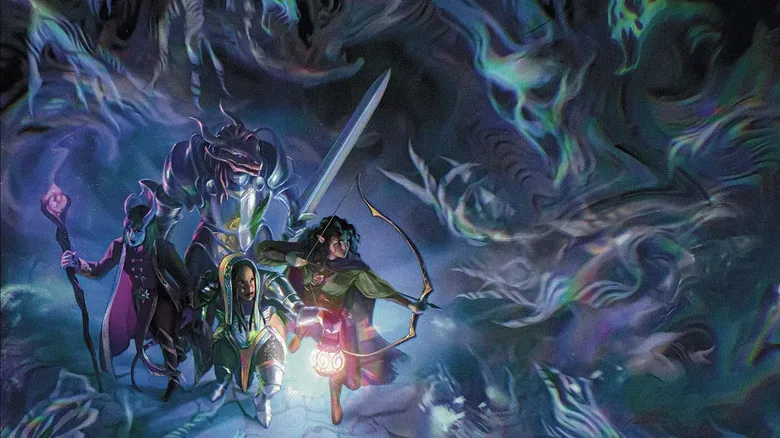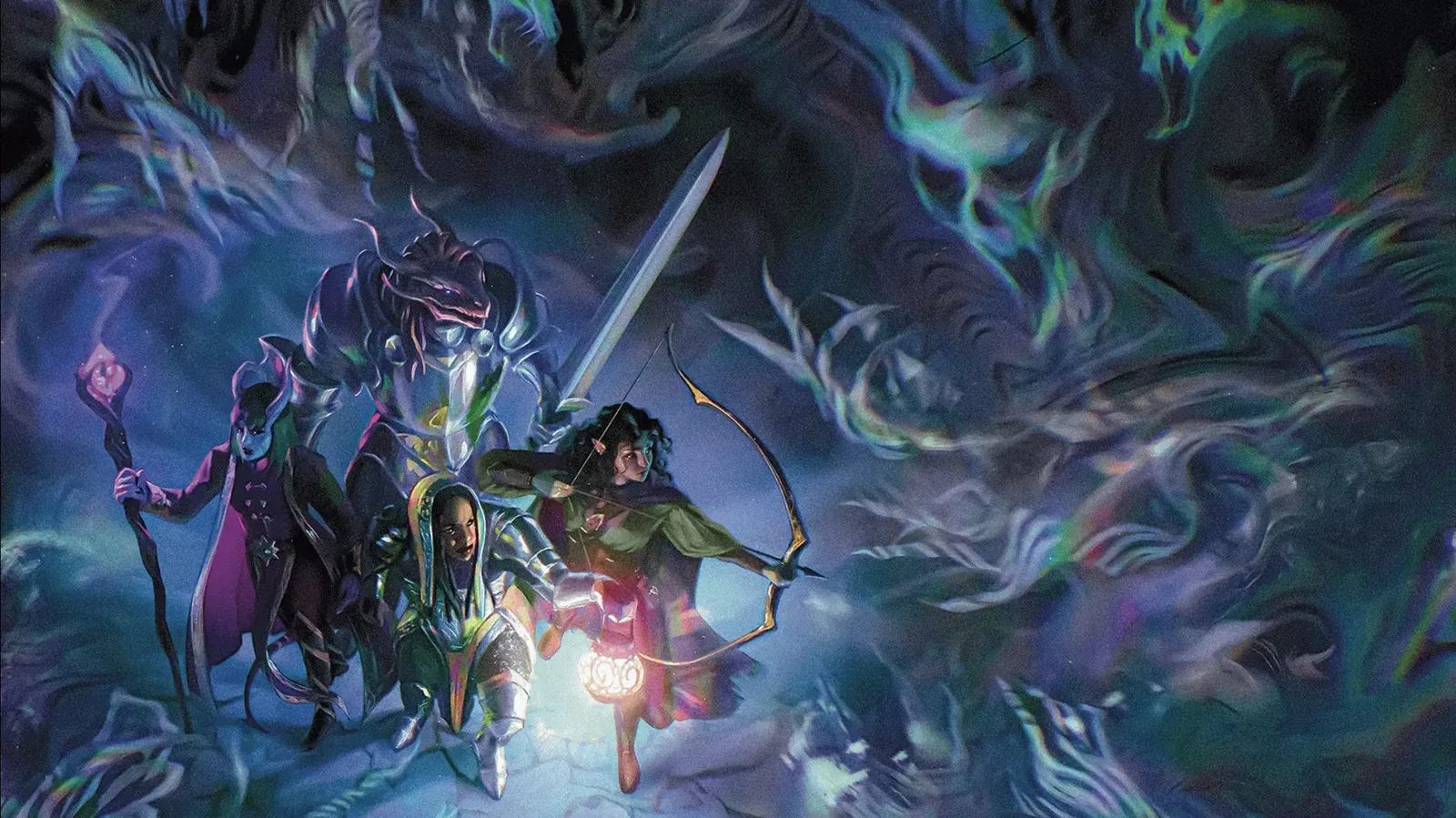
Netflix is taking a turn through one of Dungeons & Dragons’ most foreboding realms. The streamer has ordered Ravenloft, a live-action series set in the gothic-horror corner of the long-running tabletop universe. The project will focus on the backstory of Strahd von Zarovich, the vampire Darklord whose name has become inseparable from the Ravenloft setting.
Alfonso Cuarón is attached as an executive producer. John August will write the series and will also executive produce. That combination places a filmmaker known for major, visually distinctive dramas alongside a writer whose previous film work includes Tim Burton projects Big Fish and Corpse Bride—a potentially useful pairing for a property where castles, curses, family tragedy, and things with too many teeth all come with the territory.
The order is another substantial screen move for Dungeons & Dragons, a game world broad enough to contain high adventure, courtly intrigue, cosmic weirdness, dungeon crawling, and, in Ravenloft’s case, a permanent weather forecast of “ominous mist.” Crucially, this show is not simply another generic quest narrative with a dragon added at the last minute. Its announced subject points toward a more intimate and character-driven gothic fantasy story: the making and history of Strahd von Zarovich.
A return to Ravenloft’s signature brand of horror
Ravenloft occupies a special place within Dungeons & Dragons. Rather than being defined chiefly by expansive heroic travel and accumulating treasure, the setting is associated with horror storytelling and isolated domains shaped by terrible figures known as Darklords. Strahd, the vampire ruler of Barovia, is by far its most recognizable resident.
For many players, he is also among the tabletop game’s most memorable villains. The character is not presented merely as an obstacle at the end of a long hallway. His presence hangs over Barovia: its bleak villages, its wary inhabitants, its looming castle, and its sense that escape is never quite as simple as finding the road out of town. A series devoted to his origins has room to examine the person behind the legend, the choices that formed him, and the curse that defines the realm he rules.
That focus matters because the central appeal of Ravenloft is different from the appeal of a classic party-based campaign. A tabletop adventure can naturally follow a band of characters as they level up, compare equipment, make astonishingly bad plans, and somehow survive them. A Strahd-centered drama, by contrast, can organize itself around obsession, power, loss, and the consequences of refusing to let the past remain past. The vampire lord is an especially suitable pivot for television because he offers both a clear iconic figure and a setting with a powerful visual identity.
There are still significant details that have not been established publicly. No cast has been named. No release date, episode count, director, or production timetable has been provided. The announcement identifies the project as live action and establishes its creative leads, but it does not yet reveal exactly how closely the series will draw from any individual tabletop adventure or version of Ravenloft lore. Fans should therefore resist treating every familiar campaign detail as confirmed television material—however much a certain castle may already be demanding excellent set design.
Cuarón and August bring very different, potentially complementary credentials
Cuarón’s involvement is notable even with his role specified as executive producer rather than director. He previously wrote and directed Roma for Netflix in 2018. His name gives the project a prominent creative connection and suggests serious ambition for a fantasy property that could easily be reduced to capes, fog machines, and people explaining curses beside a candle.
August’s screenwriting history gives the news its own gothic resonance. His work on Big Fish and Corpse Bride connects him to stories that use heightened fantasy, fairy-tale imagery, grief, and macabre atmosphere. Those are not guarantees of a particular tone for Ravenloft, but they are relevant points of reference for a series built around a tragic vampire aristocrat and a land where happiness has historically had very poor odds.
The division of duties also deserves a straightforward reading. August is attached as writer, while Cuarón is executive producing. Nothing announced so far says that Cuarón will write or direct episodes. That distinction is important, particularly because a recognizable filmmaker’s name can cause understandable speculation to outrun the actual information. For now, the confirmed creative picture is a live-action series written by August, with Cuarón among its executive producers.
Why Strahd is a logical entry point
Choosing Strahd offers Netflix an efficient doorway into a setting that can be intimidatingly large on paper. Dungeons & Dragons has decades of material across worlds, eras, character classes, monsters, and adventures. Ravenloft narrows that enormous toolbox to a potent core: a cursed land, a legendary villain, and horror with a tragic rather than purely monstrous center.
It also creates an opportunity to tell a story that can stand apart from a conventional adaptation of a player campaign. The mythology around Strahd invites a prequel-oriented approach, which is what the announcement describes. Instead of trying to recreate the unpredictability of a table full of players—where someone will inevitably attempt to befriend, rob, or adopt the plot—the series can build a controlled dramatic arc around the man who becomes Barovia’s Darklord.
That does not mean the tabletop roots become irrelevant. The appeal of a Dungeons & Dragons adaptation is often the recognition that this world has been inhabited and reinterpreted by players for years. Ravenloft’s atmosphere, villainy, and folklore give the show a deep pool of genre material. The challenge will be translating that legacy into a television story that works for people who know every chilling corner of Barovia and viewers who only know that a guy named Strahd probably should not be invited into their home.
Dungeons & Dragons keeps expanding across screens
The new series arrives amid a broader wave of screen interest in the franchise. The 2023 film Dungeons & Dragons: Honor Among Thieves starred Chris Pine, Michelle Rodriguez, and Regé-Jean Page. Its ensemble-adventure approach occupies a very different lane from Ravenloft’s announced vampire-centered gothic fantasy.
HBO is also working on a Baldur’s Gate 3 show. That project draws attention to another major branch of the wider D&D ecosystem, one especially familiar to video-game audiences. Together, the projects show how flexible the franchise can be: an action-comedy film, a prospective series connected to a hugely influential role-playing game, and now a live-action tale centered on one of tabletop fantasy horror’s defining antagonists.
For viewers who follow games as well as their adaptations, the contrast is worth watching. Baldur’s Gate 3 is closely associated with player choice and party dynamics, while Ravenloft’s announced premise turns to a single iconic figure and the shadow he casts over an entire domain. Both originate in D&D, but they illustrate how little the brand needs to mean one fixed style of story. That breadth is one reason adaptations remain appealing—and why each has to make a strong decision about what part of the game’s gigantic cabinet of curiosities it wants to open.
There is an irony in Ravenloft’s timing that longtime players may appreciate. A game founded on collaborative improvisation is lending itself to increasingly high-profile scripted projects. Yet a Darklord origin story may be one of the cleanest bridges between the two forms. It takes a familiar piece of shared game mythology and gives it a central dramatic question: how does a man become the eternal ruler of a nightmare realm?
Until further casting and production information emerges, that is the key promise attached to Netflix’s Ravenloft: not simply a trip into Dungeons & Dragons, but a descent into Barovia through the history of its most infamous vampire. It is a premise with real dramatic weight, formidable genre potential, and exactly the kind of gloomy castle energy that makes sensible travelers turn around at the village gate. For more on how fantasy spectacles can succeed or stumble outside their original medium, read our look at a fantasy quest that loses track of its stars.