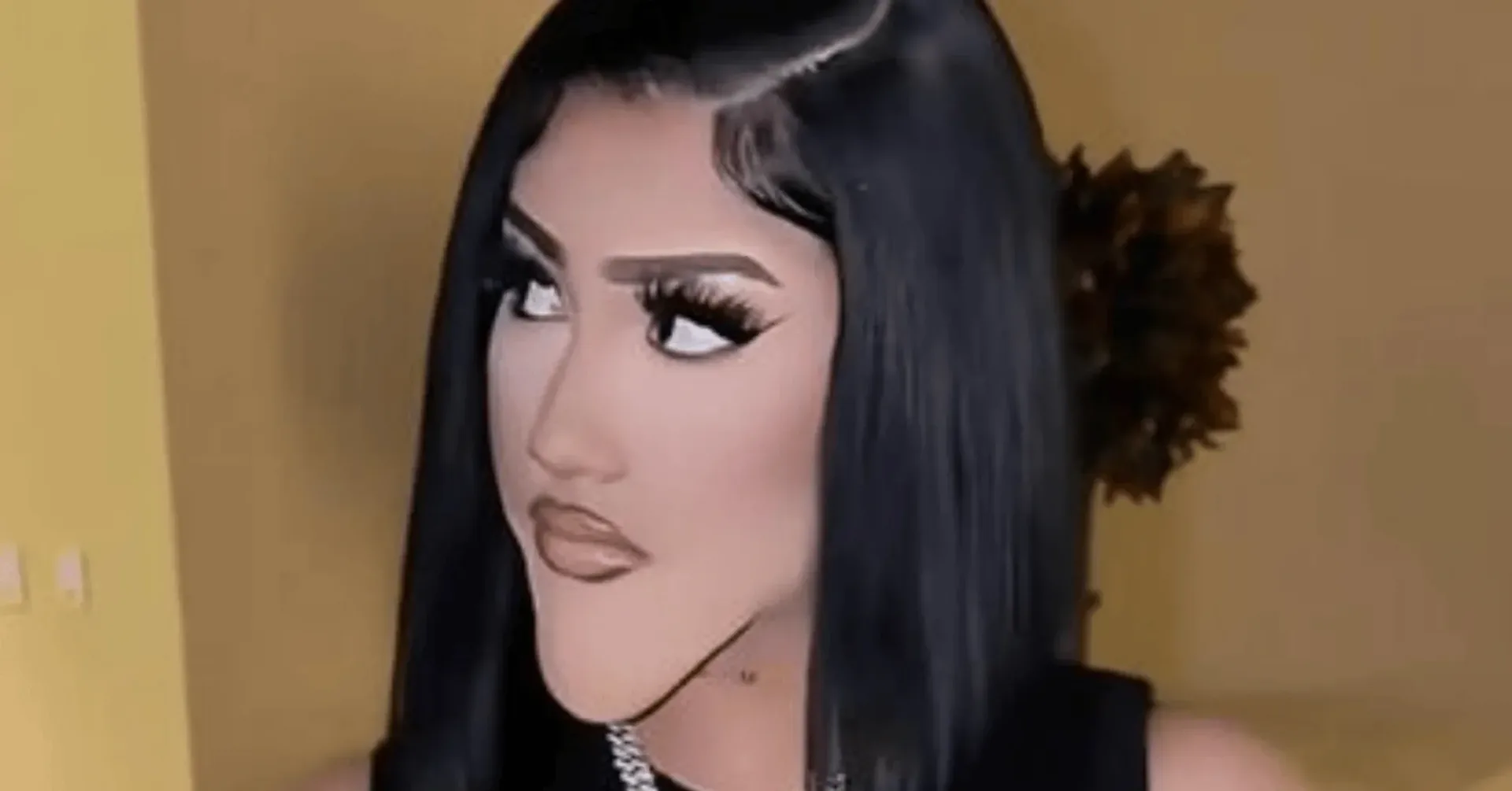
North West’s Halloween costume has become the subject of a wider online argument after she shared a look inspired by Natalie Nunn on TikTok. The outfit referenced Nunn’s public persona with a Baddies chain, a Zeus Network shirt tied to a familiar meme, and an exaggerated chin intended to make the inspiration unmistakable.
The immediate question was not simply whether the costume landed. Social-media discussion quickly moved to whether a 13-year-old should know Nunn’s work at all, and whether the impersonation could be considered mocking. That framing also drew Kim Kardashian into the conversation, with some commenters questioning whether North should have been allowed to wear the look.
Nunn’s response, however, offered a considerably less confrontational read of the moment. She reposted North’s TikTok, a public gesture that indicates she was happy to play along rather than treating the costume as an insult.
A recognizable costume built around pop-culture shorthand
Halloween costumes often depend on a few instantly readable details rather than an exact recreation of a celebrity’s wardrobe. That is particularly true when the subject is known through reality television, social clips, catchphrases, memes, and a deliberately heightened on-camera image. North’s costume used that kind of visual shorthand: the Baddies chain and Zeus Network shirt supplied direct references, while the exaggerated facial feature made the intended tribute clear.
Visual shorthand is the use of a small number of symbols, items, or exaggerated traits to communicate a larger idea quickly. In a costume, it can be an especially effective tool because viewers need to understand the reference in a photo or a short video. It can also be contentious. The same exaggerated detail that helps an audience recognize a subject may lead others to see caricature rather than tribute.
That tension sits at the heart of the reaction. The costume was specific enough to prompt immediate discussion, but specificity is not automatically a measure of malice. Nunn’s own repost matters because it is the clearest available indication of how the person being represented received it.
Nunn’s repost changes the tone, not every concern
A repost is not a detailed statement, and it does not settle every issue people raised around a young person engaging with adult-oriented reality-TV culture. It does, though, answer one of the central uncertainties surrounding the post: whether Nunn might respond negatively. Her decision to share the TikTok suggests she saw the costume as an honor or a joke worth joining.
That distinction is useful. Online conversations tend to merge several separate questions into one argument:
Related coverage includes Natalie Nunn Reposts North West’s Viral Halloween Costume.
- Was the costume intended as playful homage or ridicule?
- Was Nunn comfortable with being impersonated this way?
- What media references are appropriate for a 13-year-old?
- What responsibility do parents have when a child shares a public costume online?
Only the second question has a direct public signal here, and Nunn’s repost points toward approval. The others remain matters of personal standards and audience interpretation, which is why they are likely to keep producing disagreement rather than a clean consensus.
Why the age discussion is larger than one costume
The strongest criticism surrounding the post centers on North’s age and familiarity with Nunn. It is a familiar concern in the social-media era, where celebrity references can travel far beyond the original shows, networks, or audiences that made them famous. A meme, an edited clip, an outfit reference, or a catchphrase can reach people who have never watched the full program associated with it.
That broader circulation makes cultural knowledge difficult to sort into neat age categories. Recognition does not necessarily mean a young viewer has watched every program or understands every adult context attached to a public figure. At the same time, parents and guardians may understandably evaluate online trends, reality-TV material, and public posting differently.
Context collapse is a useful term for this type of reaction. It describes what happens when content made for, or understood by, one audience is viewed by many audiences at once. North’s TikTok could be read as a Halloween post by fans who understand the visual references, as a celebrity-family post by Kardashian followers, or as an age-appropriateness issue by viewers focused on her being 13. Those groups are not beginning from the same context, so they are unlikely to interpret the same costume identically.
The result is a debate that can appear to be about one shirt, one chain, or one exaggerated detail, while actually reflecting much broader discomfort about children, celebrity culture, and the speed at which internet references circulate.
The Kardashian family’s Halloween exchange
The costume discussion also arrived during a notably Halloween-focused stretch for the family. Kim Kardashian dressed as North West a few days earlier, creating a reciprocal costume dynamic: North took on a celebrity-inspired look, while Kim’s costume drew from her daughter.
That family context does not erase criticism of North’s Nunn costume, but it helps explain why the post was likely made in a playful, costume-first spirit. It also reflects the modern celebrity Halloween cycle, in which a look can function as both a personal joke and a piece of widely shared entertainment almost immediately after it appears online.
For readers following celebrity style moments, there is a related example in Drake’s red bedazzled cowboy boots at the Raptors’ opener, where a highly visible fashion choice similarly became part of the surrounding conversation rather than a minor background detail.
Analysis: a repost is the simplest answer to the most immediate question
There is no need to overstate what happened. North West wore and posted a Natalie Nunn-inspired Halloween costume; online users debated the reference and its appropriateness; Nunn reposted the video. But within the noise of the reaction, that final action is meaningful.
It does not establish a universal rule for celebrity impersonations, nor does it require everyone to view the costume the same way. It simply removes the predicted narrative of a public feud. Nunn’s reaction turned a potentially adversarial celebrity-response story into one of participation.
In practical terms, the episode is also a reminder that public posts involving recognizable people can invite several conversations at once: intent, consent, age, platform culture, and family oversight. A repost can clarify one person’s reaction, but it cannot make all of those questions disappear. That is why the costume remains a viral discussion point even as Nunn herself appears to have embraced the joke.