Some of hip-hop’s biggest records carry more than one history. There is the history listeners know: the album placement, the guest verse, the hit-single status and the charts. Then there is the creative chain behind it—the image, performance or earlier song that gave a later artist permission to think bigger. Nas has now drawn that second line clearly for “If I Ruled the World (Imagine That),” connecting the landmark Lauryn Hill collaboration to Kurtis Blow and his presence in Krush Groove.
In a conversation released October 31, Nas explained that seeing Blow onscreen supplied a different picture of the Bronx from the one he had often encountered in news coverage. Rather than images of burning buildings, he saw a Black man addressing an audience as large as the world. For Nas, that vision was foundational enough to inspire his own version of Blow’s “If I Ruled the World,” recorded with Hill.
“You did rule the world. So I had to do your song over with Miss Lauryn Hill,” Nas told Blow.
It is a concise acknowledgement, but it says a great deal about how artistic influence works. Nas was not describing a simple exercise in copying an earlier track. He was pointing to an idea of scale: a performer from the Bronx appearing in a movie and projecting outward, beyond the narrow framing often applied to the neighborhood. That visual ambition, paired with Blow’s earlier music, became part of the imaginative foundation for a later hit.
From an earlier vision to a defining Nas single
“If I Ruled the World (Imagine That)” appeared on It Was Written, Nas’ second album. Columbia released the record on July 2, 1996. The song, along with “Street Dreams,” became one of the album’s hit singles.
The phrase “remake” can make a song’s relationship to its predecessor sound purely mechanical, as though one recording simply replaces another. In this case, Nas’ account suggests something broader. His song is tied to Blow’s prior work by title and origin, but it is also a new statement made in a distinct context, with Lauryn Hill as a central collaborator. The resulting track joined Nas’ catalog at a moment when his career was reaching a substantially wider audience.
It Was Written followed the harder underground approach of Nas’ 1994 debut, Illmatic. Its arrival marked an expansion in both audience and musical cast. The album debuted at No. 1 on the Billboard 200 and Top R&B/Hip-Hop Albums charts, selling more than 250,000 copies in its first week.
Those figures help clarify why the record matters in this story. Nas was not merely revisiting an inspiration in a small-scale setting. He brought that source of inspiration into a commercially successful second album that placed at the top of two major charts. In practical terms, the remake introduced or reintroduced a thread from Blow’s work to a large audience in a new era.
Related coverage includes Nas Traces ‘If I Ruled the World’ Back to Kurtis Blow’s ‘Krush Groove’ Presence.
What made the album’s approach broader
Nas’ second album did not expand through one song alone. Its collaborators and songs show a project built to work across several corners of hip-hop. Dr. Dre appeared on “Nas Is Coming,” while “Affirmative Action” introduced The Firm through Nas, AZ, Cormega and Foxy Brown.
That wider cast is important context for “If I Ruled the World (Imagine That).” Lauryn Hill’s role was not an incidental footnote: Nas explicitly described making the song “with Miss Lauryn Hill.” The track belongs to an album where collaborations were a visible part of its design, from Dr. Dre’s appearance to the presentation of The Firm. Rather than treating the record as a departure that erased Nas’ earlier artistic identity, the available details indicate a release that broadened his reach while bringing multiple voices into its world.
The commercial outcome also underscores the balance involved. Moving beyond a harder underground sound can be described as an expansion, not necessarily a rejection. Nas’ account of Blow’s influence gives the shift a human dimension: broader reach began with the possibility he saw onscreen. The world-conquering image behind the title was already linked to a performer who had shown him a Black artist speaking beyond the local frame.
Why Krush Groove is central to Nas’ recollection
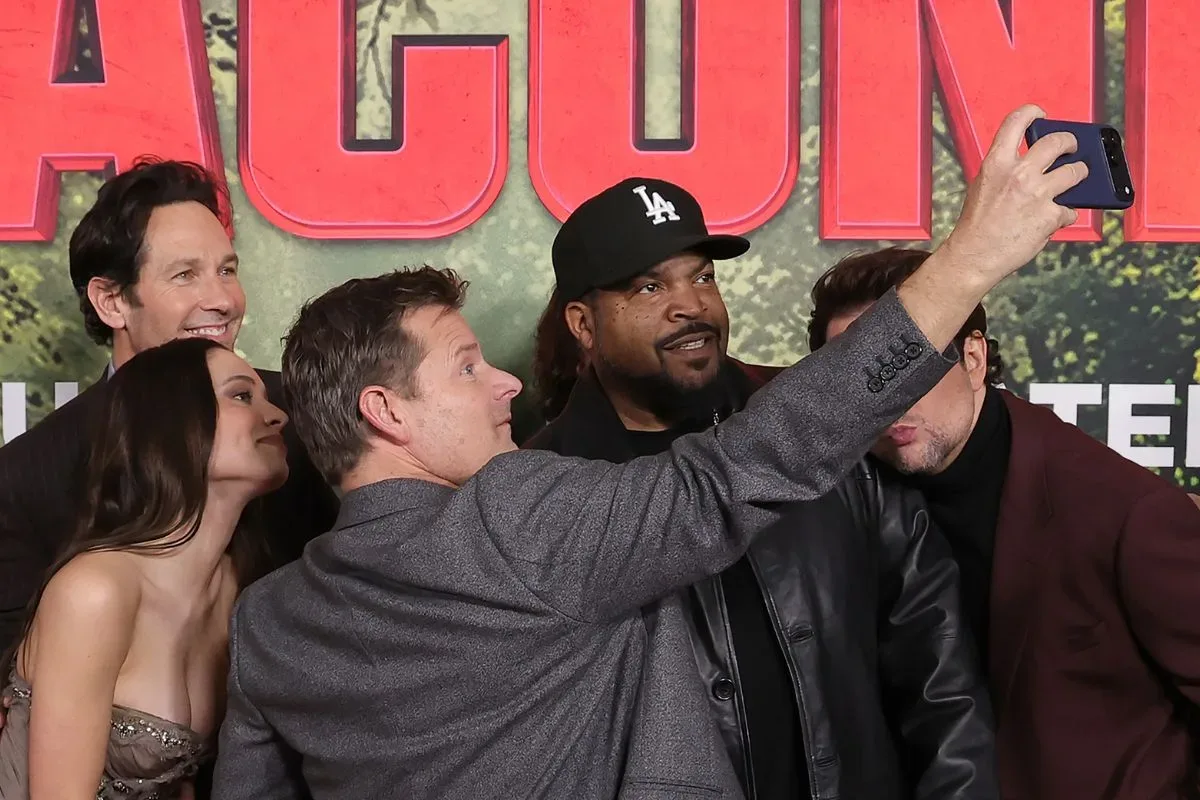
Nas did not frame the inspiration solely around hearing a song. He specifically traced it to Blow’s performance in Krush Groove. That distinction matters because movies can make artistic possibility visible in a different way than audio alone. The source material here supports a straightforward reading: Nas saw a model of public presence, aspiration and communication in Blow’s onscreen role.
His contrast with the news images he remembered is equally significant. Nas described the film as offering an image of the Bronx that exceeded a familiar negative narrative. Blow, in his recollection, represented someone from that place who could speak to everyone. That is the relevant creative lesson Nas carried forward—not a claim that the film erased difficult realities, but that it supplied a necessary counter-image of reach and agency.
For listeners, that background can sharpen the way “If I Ruled the World (Imagine That)” is understood. The title is not just a grand hypothetical. In Nas’ telling, it carries a lineage from an earlier artist whose work made global ambition feel conceivable. Hill’s participation then helped turn that inherited spark into one of the major singles from It Was Written.
Kurtis Blow’s first response: a cassette, a Nissan and two hours of replaying
Blow’s own memory of receiving Nas’ recording is strikingly specific. He recalled getting the remake on cassette, bringing it into a new Nissan equipped with new speakers, and playing it repeatedly for roughly two hours. Afterward, he called Sony to give his reaction.
“I think it is great,” Blow recalled telling the label.
He also said he told Sony that the record could sell double platinum if it received the company’s normal promotional support. That prediction reflects Blow’s confidence in the song at the time, not a sales figure established here. The distinction is worth keeping clear: Blow offered an expectation for what the recording might do with proper backing. What is firmly established in the available information is that It Was Written opened at No. 1 on two Billboard charts and moved more than 250,000 copies in its first week.
The cassette detail is more than a period artifact. It places Blow’s approval at a private listening stage before the song became part of the public story around Nas’ second album. His response also carries unusual weight because he was reacting to a remake of his own work. Nas’ later remarks show that the connection was not merely legal, professional or retrospective; he saw Blow’s work and screen presence as a genuine source of inspiration.
Recognition, influence and material support
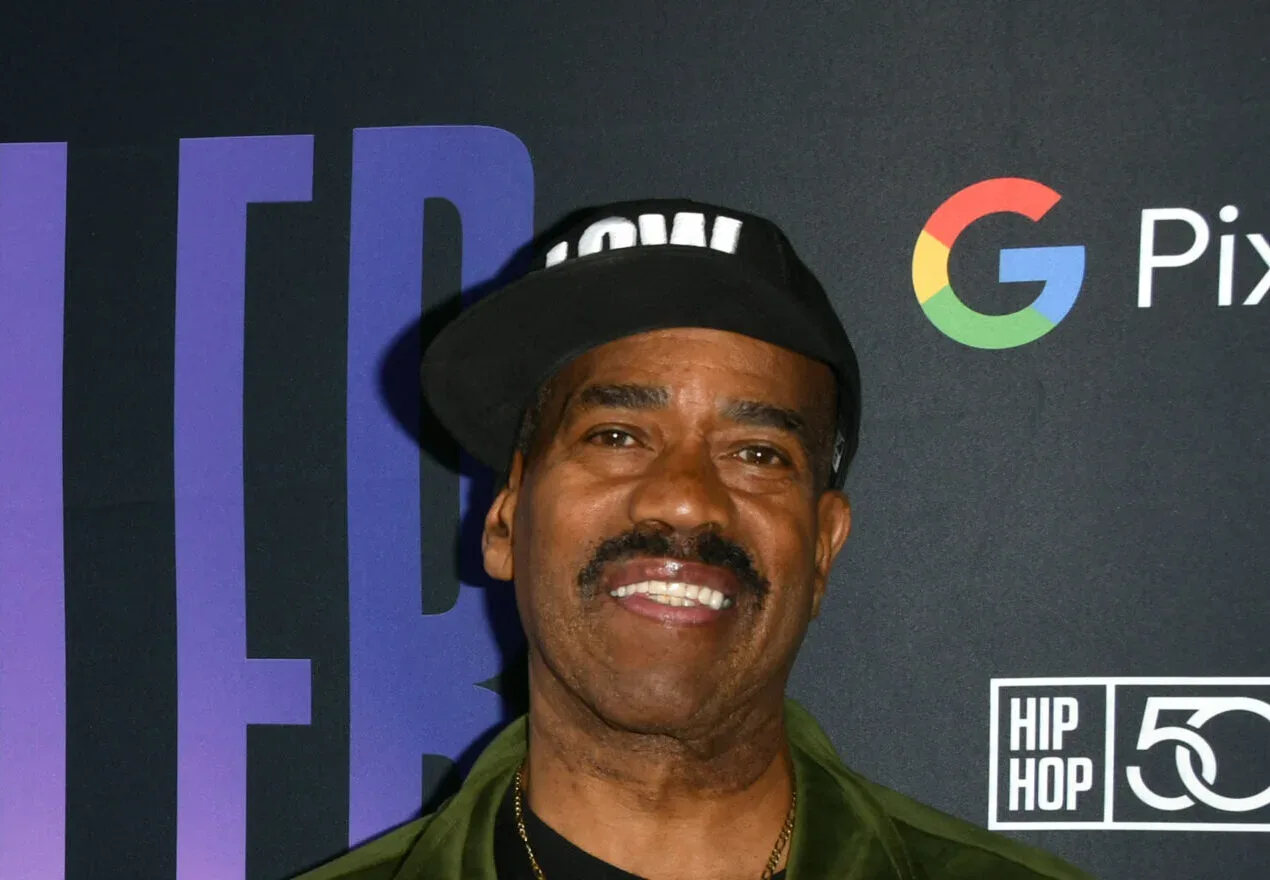
The exchange between Nas and Blow has new relevance alongside the work of the Paid In Full Foundation. Blow was announced as a 2026 Hip Hop Grandmaster honoree for the foundation’s October 24 gala at the Bellagio in Las Vegas.
The program’s purpose reaches beyond ceremonial praise. It combines public recognition with financial help for artists whose contributions have not always produced equivalent financial rewards. The foundation has said net proceeds from the gala would fund that work and help pioneers and other creatives pursue new projects.
That framework gives Nas and Blow’s conversation a practical meaning. Artistic influence can be easy to celebrate in the abstract: a later star cites an earlier pioneer, listeners revisit an older catalog, and a memorable origin story gets repeated. But the foundation’s stated approach recognizes that admiration by itself is not always enough. It pairs the public tribute with support intended to create opportunity.
Nas had previously discussed that blend of recognition and financial support with Grandmaster Caz, Steve Stoute and Ben Horowitz. Blow’s story provides a vivid example of why that emphasis exists. A song that became part of Nas’ wider commercial breakthrough began, in Nas’ account, with Blow presenting a vision of what a Black artist from the Bronx could be on a larger stage.
That is also why the credit lands differently from a routine influence citation. Nas is identifying a direct creative inheritance while Blow recalls enthusiastically receiving the finished result. The two perspectives meet at the same point: an earlier artist’s work did not remain fixed in its original moment. It traveled, changed form, reached a new audience and remained meaningful enough to be publicly acknowledged decades later.
Music-industry honors often focus on outcomes: chart peaks, hit records and cultural permanence. This story contains those outcomes—No. 1 album debuts, hit singles and a remembered collaboration—but it also preserves the route to them. Nas saw an image of possibility in Krush Groove; he transformed that inspiration into “If I Ruled the World (Imagine That)” with Lauryn Hill; Blow heard the remake and believed in it; and the foundation’s model seeks to honor the people whose earlier work helped make such moments possible.
For more current music-industry honors, see the 2026 Hitmakers Honors lineup.