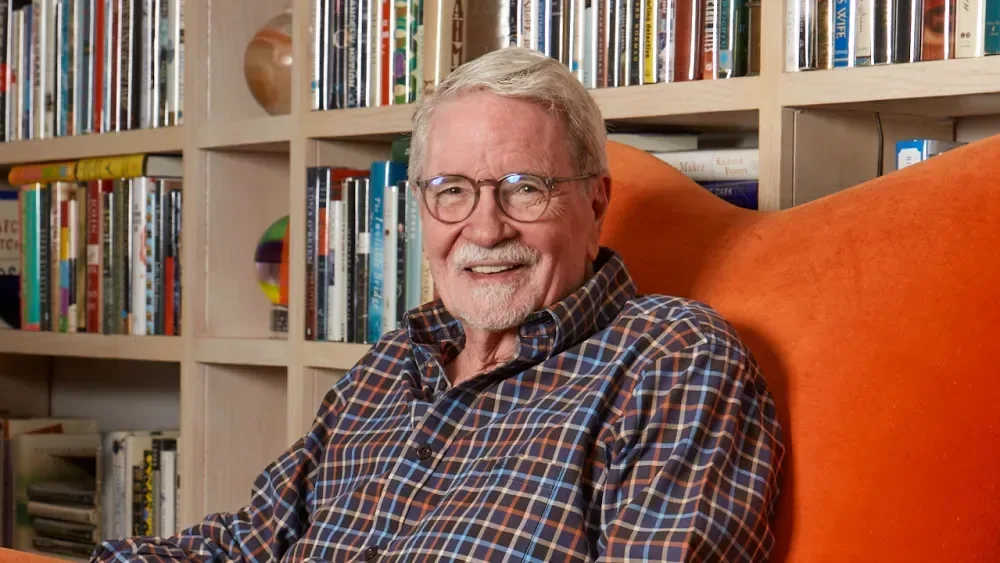
Bruce Davis, the longtime Executive Director of the Academy of Motion Picture Arts and Sciences whose work helped shape two major homes for film history, has died. Davis died September 5 in Los Angeles at age 83.
For audiences, the Academy is often most visible through the Oscars: a single televised night centered on awards, speeches, fashion, and the occasional moment that becomes instant pop-culture folklore. Davis’s legacy was rooted in the less flashy work that makes a film institution durable: public programming, organizational stewardship, research resources, archival preservation, and the physical spaces needed to protect cinema’s past.
During his years with the Academy, Davis contributed to the development of the Margaret Herrick Library and the Academy Film Archive. Those institutions matter far beyond an awards season calendar. A library preserves the documents, records, and creative evidence that help historians understand how movies were planned, made, promoted, and received. An archive safeguards moving images and related material that can otherwise deteriorate, disappear, or become inaccessible. In collector terms, it is the difference between admiring a surviving artifact and ensuring that the wider context around it survives too.
A career that moved from education to film stewardship
Davis was born in Washington, D.C., and developed an interest in movies early in life. His route into a central Hollywood institution began in academia. At Juniata College in Pennsylvania, he founded the school’s film department and chaired its theater department. He also studied filmmaking at Columbia University.
For more context, explore Playdate Season 3 Showcase Is Set for September 9, With Its Game Lineup and Release Date on Deck.
That mix of teaching, theater leadership, and filmmaking study gave Davis a background well suited to an organization with responsibilities stretching in several directions at once. The Academy is connected to artists and industry figures, but it also has an educational and historical mission. Its programs need to speak to the public, while its collections and preservation work require long-term thinking that is not always visible from outside the organization.
After his time at Juniata, Davis joined the Academy and initially oversaw public programming. In 1989, he became Executive Director. He remained in that position until retiring in 2011, a tenure spanning more than two decades.
That time frame is significant because it covers an era in which the value of organized film preservation became ever clearer. Motion pictures are not automatically permanent merely because they have been widely released. Physical formats age. Storage conditions matter. Ownership and rights can complicate access. Television studios, production materials, correspondence, photographs, posters, scripts, and other records can be scattered, discarded, or separated from the work they document. Building the institutional capacity to collect and care for those materials is slow work, but it is foundational work.
Two important institutional milestones
Davis’s Academy tenure included two notable achievements tied directly to preservation infrastructure. Working with the city of Beverly Hills and Academy president Robert Wise, he helped secure rights to a 1928 building that became the Margaret Herrick Library.
The building’s history and purpose underline an essential point about cultural preservation: the collection is only part of the task. Archives and libraries need stable spaces, skilled staff, systems for research and access, and a long-term institutional commitment. A dedicated library can turn materials that might otherwise sit unseen in private files into resources for scholars, filmmakers, writers, students, and anyone pursuing a more complete picture of movie history.
Davis also oversaw the acquisition of a 1948 Hollywood television studio that became the Academy Film Archive. The transformation of an existing studio facility into an archival center reflects a practical understanding of preservation. Film history is frequently associated with premieres and glamorous marquees, but the machinery of keeping film alive is often built around vaults, specialized environments, cataloging, restoration processes, and institutions prepared to manage them over decades.
For fans of vintage entertainment objects, that larger framework is worth remembering. A lobby card, a production still, a screenplay, a signed photograph, or a piece of set-used material has meaning partly because it is tied to a production and an era. Libraries and archives preserve the surrounding record: the documentation, imagery, correspondence, and surviving moving-image material that can establish provenance and deepen understanding. Davis’s work was therefore connected not only to cinema as art, but also to the evidence that allows its history to be studied responsibly.
Readers interested in another account of Davis’s preservation-focused legacy can find it at this report on his work with the Academy’s film-history institutions.
More than the Oscars
After his retirement in 2011, Davis wrote The Academy and the Award, a book about the origins and history of the Oscars. The title points to a subject that can look simple from a distance but is deeply intertwined with Hollywood’s evolution. The Academy Award is both a cultural symbol and an institutional tradition, one shaped by changing industries, technologies, artistic movements, public expectations, and the people who maintain the body behind it.
Davis was uniquely positioned to approach that history. He had served within the institution for decades and had been involved in areas that extended beyond the annual ceremony. His professional life connected the Academy’s visible public identity to its quieter responsibilities: programs that bring audiences into conversation with film, research collections that preserve documentation, and archives that protect works for future study.
That distinction is especially relevant now, when entertainment history is often encountered in fragments. A famous scene may circulate as a short clip. An awards speech may become a meme. A costume, prop, or celebrity autograph can become an object of collecting interest. Yet the historical record behind those fragments needs care, context, and institutions willing to preserve materials that may not have immediate commercial value. Davis’s career was a reminder that stewardship itself is part of film culture.
A remembered presence inside the Academy
Davis was also remembered for his wit and writing ability, as well as a workplace ritual known as Friday Lunch. The gathering brought together staff from different Academy departments to eat and talk.
It is an intimate detail in the account of a career defined by large institutions and historic buildings. But it also helps explain how organizations sustain their work. Archives, libraries, public programs, and awards operations do not run as abstract ideas. They depend on people across departments sharing knowledge, solving problems, and recognizing that their specialties connect. A recurring table where colleagues could converse may sound modest beside an archive acquisition, yet it reflects the kind of community-building that lets an institution maintain a coherent mission.
There is no need to turn that tradition into a grand metaphor. It is enough to note that Davis appears to have valued conversation as well as administration, and connection as well as infrastructure. That combination fits a career that began in theater and education before moving into one of the film world’s best-known organizations.
Why preservation work remains part of popular culture
Film preservation can sometimes be treated as a concern reserved for specialists, but its outcomes reach everyone who cares about movies. A restored title can bring an older film back to audiences. Properly cared-for documents can support a biography, exhibition, documentary, or research project. A preserved production record can help separate mythology from fact. An archival institution can ensure that works and materials remain available when formats, ownership structures, and commercial priorities change.
That impact also reaches the collector community. Authentication, provenance, rarity, and historical context are central to how entertainment memorabilia is understood. While archives are not the same as private collecting, both worlds benefit when records are protected and accessible. The more securely cinema’s history is documented, the better enthusiasts can understand the stories attached to the objects, images, and artifacts they value.
Davis’s contribution was institutional rather than performative. He was not known for appearing on screen or for making the annual awards show its centerpiece. Instead, his work helped support the conditions under which film culture can be remembered, researched, and passed forward. The Margaret Herrick Library and Academy Film Archive stand as especially tangible parts of that legacy.
Family and memorial donations
Davis is survived by his wife, Joann, and four daughters: Brangien Davis, who is married to Daniel Spils; Alexandra Davis; Archer Davis, who is married to Tom Brown; and Roxanne Davis.
Donations in his memory may be made to Juniata College, the Pennsylvania school where Davis founded the film department and led the theater department before beginning his long Academy career.
From early film enthusiasm in Washington, D.C., to teaching and departmental leadership at Juniata, and then to more than 20 years as the Academy’s Executive Director, Davis’s path centered on a belief in film as something worth sharing and keeping. His work on the library and archive offers a lasting example of how cultural institutions preserve not only celebrated titles, but the knowledge and materials that allow those titles to endure.