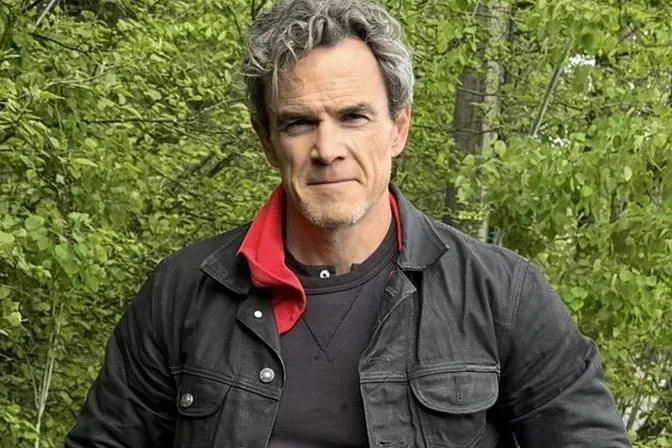
Michael John Roberts, an animator, producer and director whose work included BoJack Horseman, has died in Los Angeles from glioblastoma. He was 46.
Roberts’ career moved across the many disciplines that make animated television possible: animation, storyboarding, directing and producing. His credited work ranged from a distinctive opening sequence for BoJack Horseman to episodic direction on comedy and science-fiction series, as well as commercials and music videos. It was a body of work built not around one single format, but around the visual problem-solving that connects them.
He directed the title sequence and two episodes of Netflix’s animated series BoJack Horseman. A title sequence does more than display a program’s name: it establishes atmosphere, visual language and the emotional expectation a viewer carries into each episode. On a series with a highly recognizable identity, that assignment is a meaningful part of its screen legacy.
Roberts also directed 28 episodes of Comedy Central’s Triptank. His other directing credits included F Is for Family, Final Space, Strange Planet and MrBeast Lab. He additionally created the YouTube Red series Dallas & Robo with John Cena and Kat Dennings; the series premiered in 2018.
A career across animation’s interconnected roles
In animation, those job titles can represent separate specialties, but they also overlap in productive ways. A junior animator works within an established production process, bringing movement and performance to material that has already been planned. A storyboard artist converts scripts and ideas into a sequence of shots, clarifying staging, pacing, action and visual transitions before full animation is completed. A director guides the larger on-screen result, shaping how performances, storyboards, timing and production departments cohere.
Roberts’ path included each of those stages. Raised in Toronto, he graduated from Canada’s Sheridan College, began as a junior animator and later worked as a storyboard artist and director. That progression offers a useful way to understand the breadth behind his credits: directing animated work is often grounded in the practical ability to communicate an idea clearly enough for many artists and departments to execute it.
The range of Roberts’ projects also underlines how adaptable that expertise can be. Serialized television, a title sequence, an advertising spot and a music video demand different rhythms and creative objectives. Television episodes must serve character, continuity and a larger season. Commercials have to make an immediate impression within a compact structure. Music videos work in conversation with a song’s tempo and mood. The shared challenge is concise visual storytelling.
Alongside his television work, Roberts directed commercials for Honda, Burger King, ABC Television and Pulse Electric Scooters. His music-video credits included work for The Sadies and The Pack AD. These projects sit outside the long-form TV credits but reflect the same ability to give a piece a readable visual direction.
Related coverage includes Animator and Director Michael John Roberts Dies at 46.
Work that often lives behind the scenes
Animation directors and storyboard artists can be central to the shape of a program while remaining less visible to audiences than performers or creators. A viewer may remember an opening, a joke’s timing, an emotional scene or the way a setting is introduced without knowing who helped turn those pieces into their final screen form.
That is why a credit list can tell only part of the story. Roberts’ work touched projects with distinct tones: the adult animated comedy and drama of BoJack Horseman, the anthology format of Triptank, and shows spanning family comedy, space-set storytelling and observational humor. It is not necessary to treat those programs as identical to recognize the common production craft involved in making scenes play visually.
That craft is especially visible in storyboarding. A storyboard is a pre-production blueprint made up of drawn shots and notes. It can establish where characters stand, when the viewpoint changes, how a gag unfolds and whether an emotional moment needs stillness or motion. In animation, it provides a shared reference for work that may pass through numerous hands before audiences see the finished episode. Someone who has worked both in storyboarding and directing brings firsthand knowledge of that chain from rough idea to finished screen image.
The same collaborative pressures are part of live-action and animation alike. As a look at the collaborative demands facing television showrunners illustrates, a finished program relies on creative leadership that can coordinate many contributors without losing sight of the story. In animation, directors and storyboard artists are among the people translating that broad aim into decisions viewers can immediately understand.
Family remembers an observant artist
In a statement, Roberts’ family remembered him as a gifted artist with an ability to find value in details others might miss. They described creativity as central not only to what he drew, but also to how he examined and understood the world.
The statement characterized him as interested in character, substance and stories beneath the surface. It also remembered a quiet observer with an artist’s eye, someone capable of a thoughtful challenge or a well-timed, understated joke when he chose to join a conversation.
Those qualities offer a personal counterpart to a career in visual storytelling. Observation is a practical creative skill: directors and artists must decide what a scene should emphasize, what can be held back and where an audience should look. But the family’s remembrance is broader than a professional summary, describing curiosity and wit as parts of Roberts’ life rather than simply tools of the job.
Roberts is survived by his wife, actress Bree Williamson; his son, McGreggor; his parents; and his sister.
Remembering the work
For viewers revisiting Roberts’ credits, the clearest tribute is to recognize animation as collective art while still noting the individual artists who help define its texture. An opening sequence, an episode’s pacing or an economical visual beat can become inseparable from the experience of a favorite series, even when the audience encounters the work without knowing every person behind it.
Roberts’ career traced a route from junior animator to storyboard artist, director, producer and creator. Across BoJack Horseman, Triptank, Dallas & Robo and his many other projects, it reflected the patient, collaborative work required to put character and motion on screen.