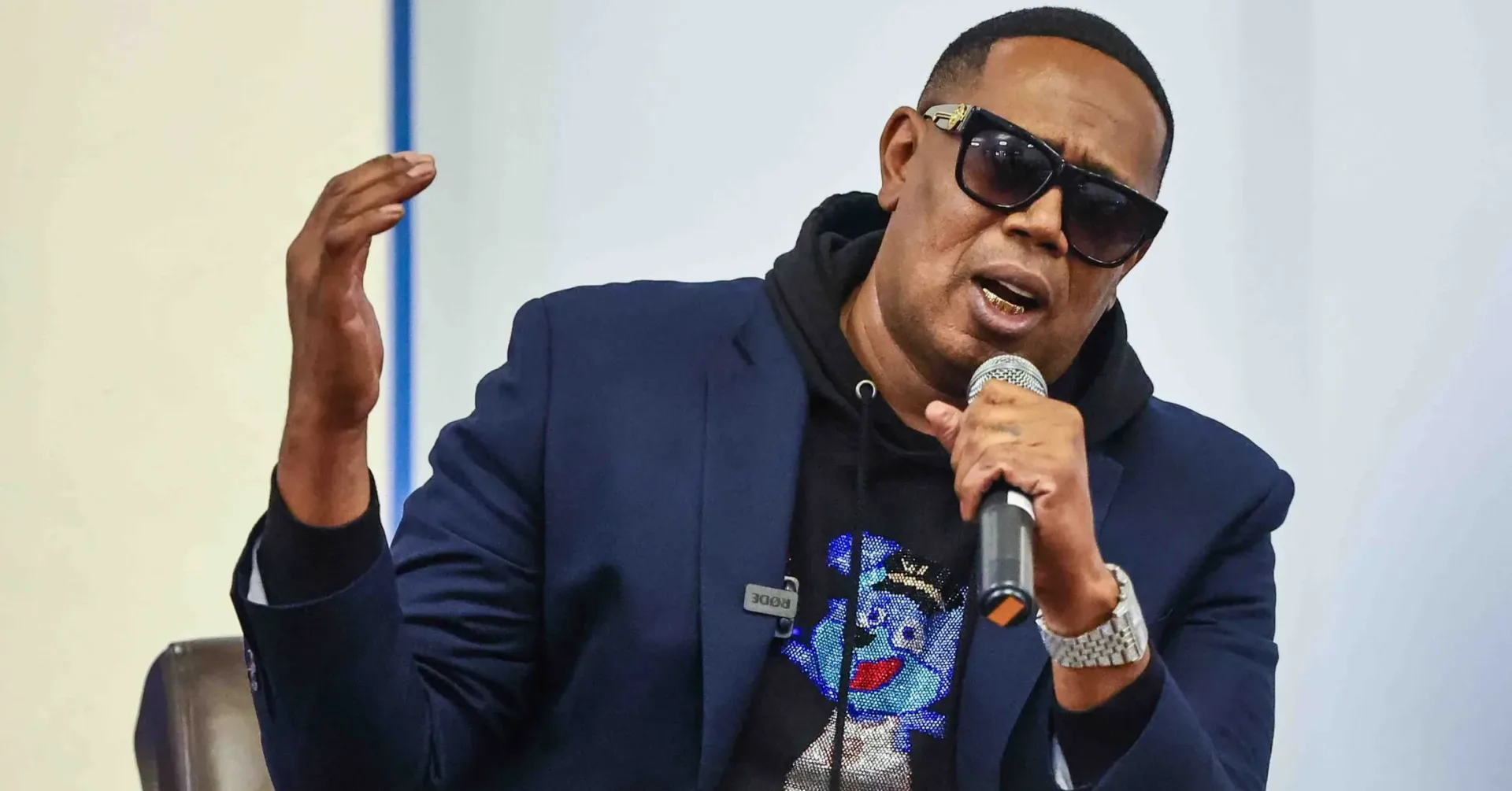
Master P has spoken about Mystikal’s recent 20-year prison sentence with two points held side by side: the former No Limit Records star’s role in the label’s history remains significant, and the consequences of his crimes are real.
During an appearance on the We In Miami podcast, Master P said he believed Mystikal needed professional help long before his latest conviction. He did not dispute that Mystikal, born Michael Lawrence Tyler, belongs in prison. Instead, he raised concerns about what he characterized as untreated mental-health struggles and substance use, while arguing that people who are struggling often try to cope without appropriate medical care.
“I don’t think he ever got the right medicine he need,” Master P said. He also described substance use as self-medication and said many people are reluctant to openly acknowledge mental-health problems.
That framing matters. It is an expression of Master P’s view of a former collaborator, not a clinical diagnosis or a legal defense. The available account does not identify a diagnosis, a treatment history, or evidence linking any particular mental-health condition to Mystikal’s offenses. Nor does an explanation for a person’s conduct erase responsibility for the harm caused.
A 20-year sentence after a guilty plea
Mystikal was sentenced to 20 years in prison in June after pleading guilty to third-degree rape in connection with a 2022 assault at his Louisiana home. The case initially involved a first-degree rape charge. Under the plea agreement, his potential sentence was capped at 20 years.
The woman told the court that Tyler physically assaulted and raped her after accusing her of taking money. She asked the court to impose the maximum term permitted by the agreement. Before sentencing, Tyler sought to withdraw his guilty plea, saying he had not fully considered its consequences; a judge denied that request.
A civil lawsuit filed by the woman in 2023 was still active after sentencing.
The conviction also followed an earlier sexual-battery case. Mystikal pleaded guilty in 2003 and subsequently served six years in prison. That prior case is central context when discussing either the new sentence or Master P’s comments: this is not a story in which an associate is simply asking audiences to separate art from a single allegation. It concerns a guilty plea, a severe sentence, and a prior conviction.
What Master P is — and is not — saying
Public discussion of criminal cases can become muddled when accountability and care are treated as mutually exclusive. Master P’s comments present them as separate matters. He said he believes Mystikal is where he needs to be, while also contending that the artist did not receive the right help earlier in life.
Accountability here means that a criminal conviction and its sentence remain in force. It does not depend on whether friends, family members, or past business partners believe a person had untreated problems.
Mental-health treatment refers broadly to professional assessment and care for psychological or psychiatric concerns. It should not be casually conflated with “medicine” alone: treatment can involve evaluation, therapy, substance-use services, medication when clinically appropriate, and ongoing support. No details in this case establish which, if any, care Mystikal received or needed.
Self-medication is a term often used when someone turns to substances or other behaviors in an attempt to manage distress rather than receiving professional treatment. Master P used the idea in a broader observation about drug use and stigma. It is not, by itself, proof of an individual’s diagnosis, motive, or legal culpability.
The distinction is especially important in coverage of sexual violence. Mental-health language can provide context for a discussion about prevention and access to care, but it cannot soften the facts of the conviction, transfer responsibility away from the offender, or reduce the seriousness of the survivor’s account.
Mystikal’s place in No Limit’s history
Master P’s connection to Mystikal is rooted in No Limit Records’ defining period. Mystikal joined the New Orleans label in 1996 and became one of its most recognizable performers. His albums Unpredictable and Ghetto Fabulous were part of the label’s successful late-1990s run.
“Mystikal has helped us build an empire,” Master P said, emphasizing the artist’s past contribution to the company. It is a statement about the label’s history rather than an attempt to challenge the sentence. Both parts of the record can be true: Mystikal was a consequential figure in No Limit’s growth, and he has been convicted of serious crimes.
Master P also mentioned that Mystikal’s son, Jimi Nu, has performed his father’s music at live shows. That detail illustrates how a performer’s catalog can outlive, and become complicated by, the actions and legal history of the person who made it. For collaborators, families, promoters, and audiences, legacy is not a clean category. Songs can carry personal, cultural, and commercial meaning while the artist’s conduct creates profound reasons for discomfort and criticism.
Hip-hop has long had public conversations about legacy, responsibility, and how artists’ personal lives intersect with their catalogues. Those debates are rarely resolved by declaring that a contribution should either be permanently celebrated or completely forgotten. In this instance, Master P has clearly chosen to acknowledge Mystikal’s importance to No Limit’s past without presenting that achievement as an excuse.
For another look at how artists publicly revisit the personal experiences behind their work, see 50 Cent’s discussion of the life experience behind a defining verse.
Why careful language matters
There are several reasons to be precise with the language surrounding this case. First, a guilty plea is a formal admission in criminal court, while a civil lawsuit is a separate legal action seeking civil remedies. The woman’s 2023 lawsuit remaining active is therefore distinct from the criminal sentence.
Second, concern about someone’s wellbeing is not the same thing as claiming knowledge of their medical history. Master P’s remarks are personal observations. Readers should resist turning them into a diagnosis or using them to infer facts not established in the account.
Third, recognizing an artist’s historical role in a label’s success does not require minimizing a conviction. The commercial or cultural influence of Unpredictable and Ghetto Fabulous belongs to the history of No Limit Records; the 20-year sentence belongs to Mystikal’s legal record. Keeping those categories distinct is more honest than collapsing either one into the other.
Master P’s comments ultimately describe the difficult territory around a former colleague’s downfall: regret over what he believes was missed help, acknowledgment of the damage done, and recognition that a major musical contribution does not cancel criminal accountability. The legal outcome remains unchanged, while the wider conversation he raised is about whether people confronting mental-health and substance-use struggles receive meaningful support before more harm occurs.