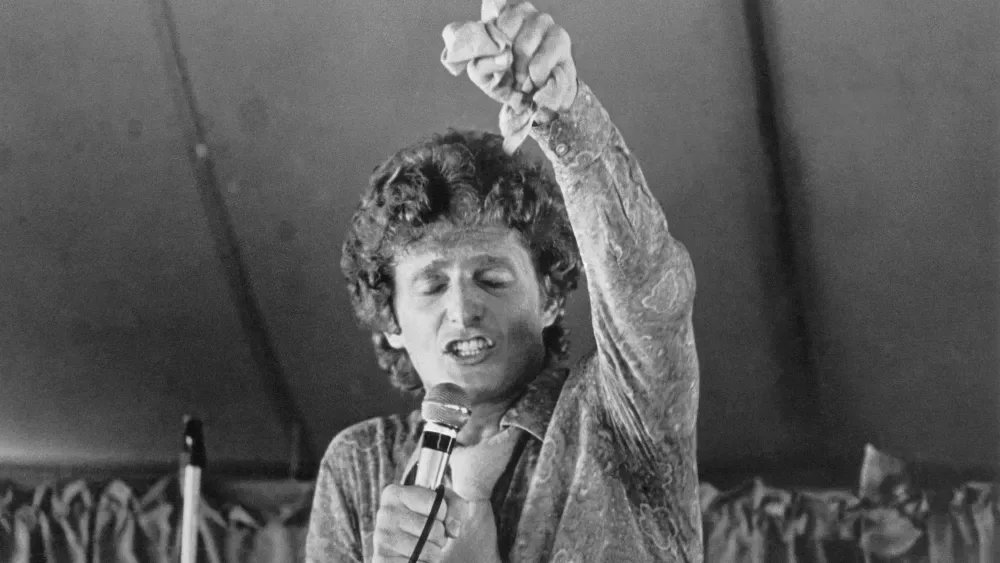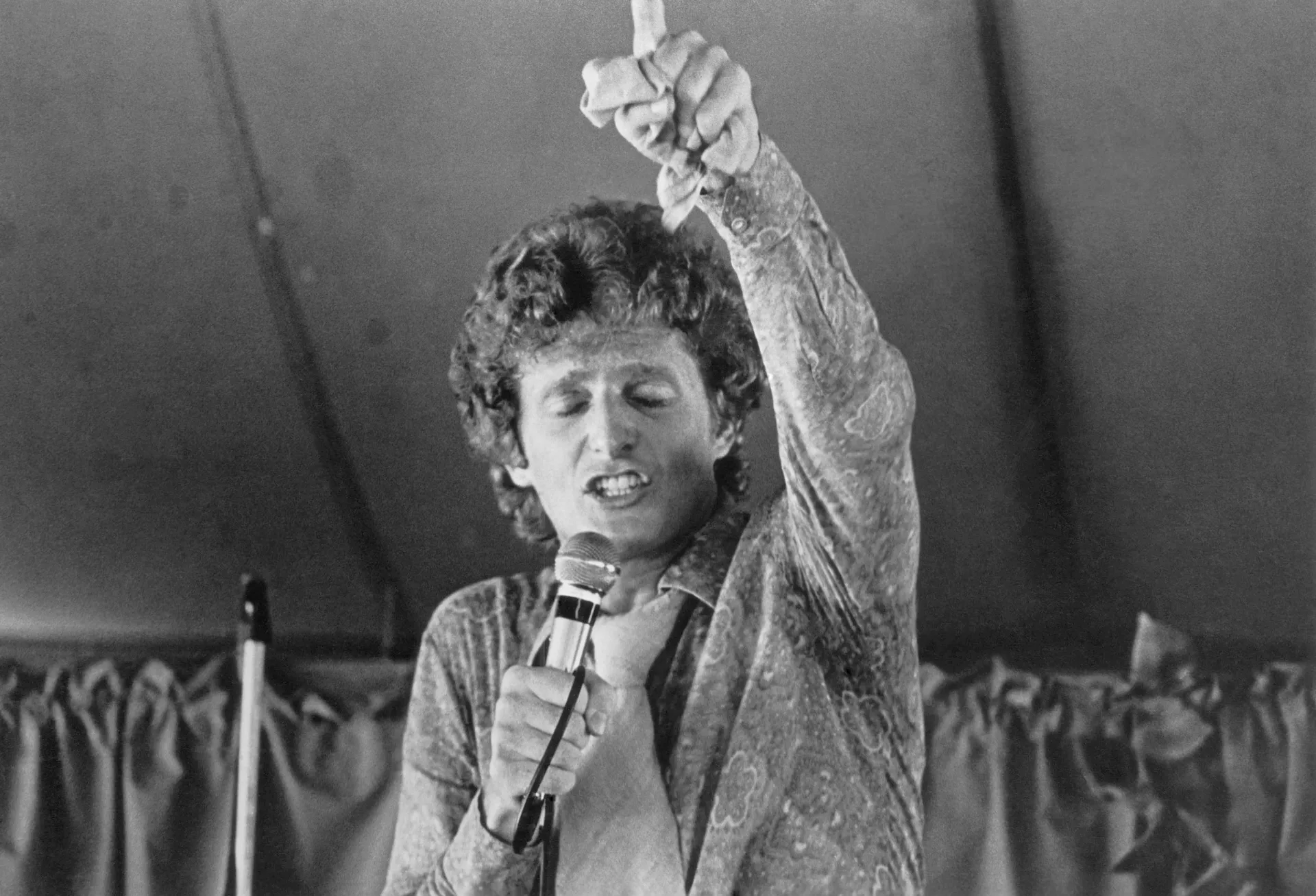
Marjoe Gortner, the former child evangelist whose complicated journey into adulthood became the subject of the Academy Award-winning documentary Marjoe, has died at 82. His wife, Susan Magestro, said he died in Santa Fe, New Mexico, after suffering for years from congestive heart failure.
Gortner’s life contained an unusual succession of public identities: child preacher, touring revival figure, documentary subject, recording artist, working actor and producer of celebrity charity sports events. The documentary bearing his name remains the central work through which many viewers encountered him, but its impact rests on more than the strangeness of its premise. It presented a person examining a life shaped in public from childhood, while also attempting to find a separate future as an actor.
Magestro’s memorial notice described Gortner as someone shaped by imagination and a rare ability to bring people together. That quality also surfaced in remembrances of the charitable sports invitationals he produced, which brought celebrities together internationally to support different causes.
From child preacher to a public reckoning
Born in Long Beach, California, Gortner came from an evangelical family. His distinctive first name combined “Mary” and “Joseph.” He was pushed into preaching as a child, and his parents arranged a press photo opportunity around a ceremony he performed when he was 4 years old.
The family traveled around the United States, preaching and seeking donations. By the time Gortner was 16, his father had left with what was reported to be $3 million in donations. The detail illustrates the financial and familial pressures surrounding an upbringing that was not merely religious, but also inseparable from performance, travel and fundraising.
In his 20s, Gortner became disillusioned with the evangelical movement and moved toward acting in New York. That transition was not a simple change of occupation. He had spent years developing the skills of a public speaker and performer in an environment where presentation carried enormous emotional weight. His later screen work often placed him in roles involving danger, volatility, deception or authority—parts that could draw on an unusually forceful onscreen presence.
Why Marjoe became such a lasting documentary
In 1971, documentarians Howard Smith and Sarah Kernochan approached Gortner about filming his final revival tour. He agreed in part because he hoped it would help promote his acting career. The resulting film, Marjoe, won the Oscar for best documentary.
The film’s importance comes from the access it gained during a defining period. A documentary is a nonfiction film built from recorded people, events and environments rather than invented characters and scripted scenes. That does not mean a documentary is free of perspective: decisions about access, editing and what is included all shape what an audience sees. In Gortner’s case, the premise gave viewers access to a performer confronting the gap between a public persona and the life he wanted to build after it.
Related coverage includes Marjoe Gortner, Oscar-Linked Documentary Subject and Actor, Dies at 82.
The documentary drew major attention on its initial release. It was later effectively unavailable for many years, before Kernochan recovered the rights after locating the owner. That history matters because films can disappear from public view even after enormous recognition. Rights—the legal control over a work’s distribution and use—can determine whether an acclaimed movie remains accessible to new audiences. The eventual recovery of Marjoe helped preserve a film whose subject is also bound up with questions of performance, belief, exploitation and self-reinvention.
Its story also fits a wider pattern of older screen works receiving renewed attention when rights, archives and distribution line up. That broader cycle of rediscovery remains visible across contemporary pop culture, including the way streaming adaptations can revive attention around earlier literary works, as with a recent return to prominence for John Steinbeck’s East of Eden. Gortner’s documentary was not a fictional adaptation, but both examples demonstrate how availability can reshape public memory.
An acting career built on memorable character work
Following the documentary, Gortner made the record Bad, but Not Evil and secured an acting role in the pilot for Kojak. His film and television career made room for a collection of vivid, often unsettling characters: drug dealers, outlaws, fraudulent psychics, preachers and other figures operating at the edge of order.
One of his best-known film roles came in 1974’s Earthquake, where he played Sgt. Jody Joad, an unstable grocery store manager who becomes a National Guardsman. The character placed Gortner within the kind of large-scale disaster picture that depends on sharply defined supporting players to give the spectacle human friction.
His credits also included Milton Katselas’ 1969 drama When You Comin’ Back, Red Ryder?, in which he played a troubled Vietnam veteran. Candy Clark co-starred in the film; she and Gortner were briefly married in the year it was released.
Other film appearances included Viva Knieval!, Bobbie Joe and the Outlaw, The Survivalist, Starcrash and Walter Hill’s Wild Bill. The range of those credits shows a career that moved through disparate kinds of genre filmmaking rather than relying on a single screen persona.
On television, Gortner appeared in series including Police Story, Airwolf, T.J. Hooker, Street Hawk, Otherworld, The A-Team, Fantasy Island and Falcon Crest. In the latter, he played a corrupt psychic. These kinds of guest roles can be especially significant in episodic television: an actor may have limited time to establish a character’s motives, menace or oddity, and Gortner’s background made him an apt fit for characters who had something to sell—or conceal.
Charity events and the ability to convene people
Gortner’s later public life included producing the Marjoe Gortner celebrity sports invitationals, which aired on CBS Saturdays for years. Actor Ian Ziering recalled that the events brought celebrities around the world together for different charities and raised millions of dollars.
That activity adds an important dimension to Gortner’s legacy. The charity invitationals were not simply celebrity appearances; they were fundraising events built around participation, visibility and the logistics of gathering public figures for a cause. The work echoed, in a markedly different context, the organizing and crowd-facing abilities that had been present in his life from a very young age.
It would be reductive to view Gortner solely through one chapter: not only the child preacher, not only the subject of an Oscar winner, and not only the actor frequently cast as an intense or unconventional character. His career moved across nonfiction film, music, studio features, television and charitable event production. The connective tissue was an instinct for performance and for reaching an audience—skills formed under difficult circumstances but repeatedly redirected in later life.
Gortner is survived by Magestro, his fifth wife. His death closes a singular career, while Marjoe remains the work most likely to ensure that his story continues to provoke discussion about public identity and the complicated line between a performed role and a private self.