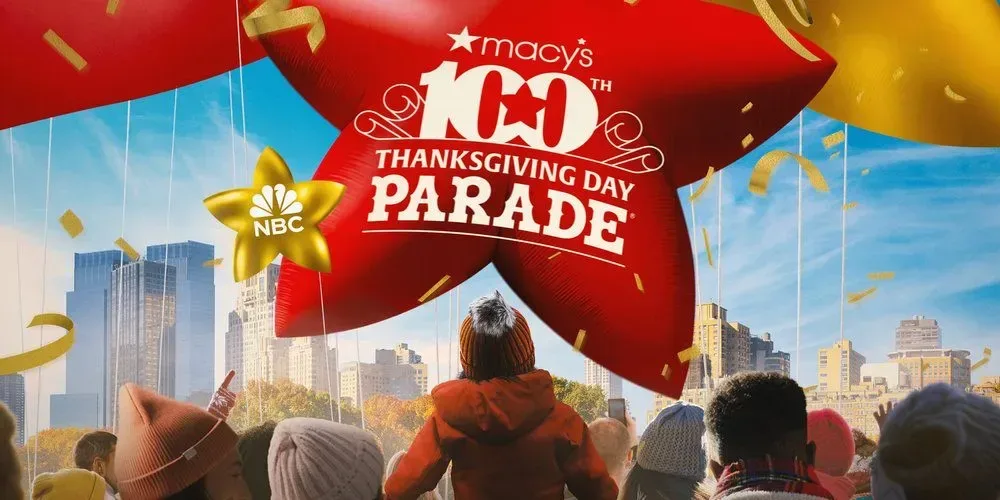
The Macy’s Thanksgiving Day Parade may look effortless from a sidewalk or a television screen: one giant balloon floats past, a float rounds a corner, a band hits its mark, and the whole city appears to have agreed to become a holiday stage for a morning. But the 100th edition, titled The Greatest Celebration, is the result of a production process that begins many months before Thanksgiving and brings design, fabrication, engineering, puppetry, costumes, licensed characters and broadcast planning into the same enormous machine.
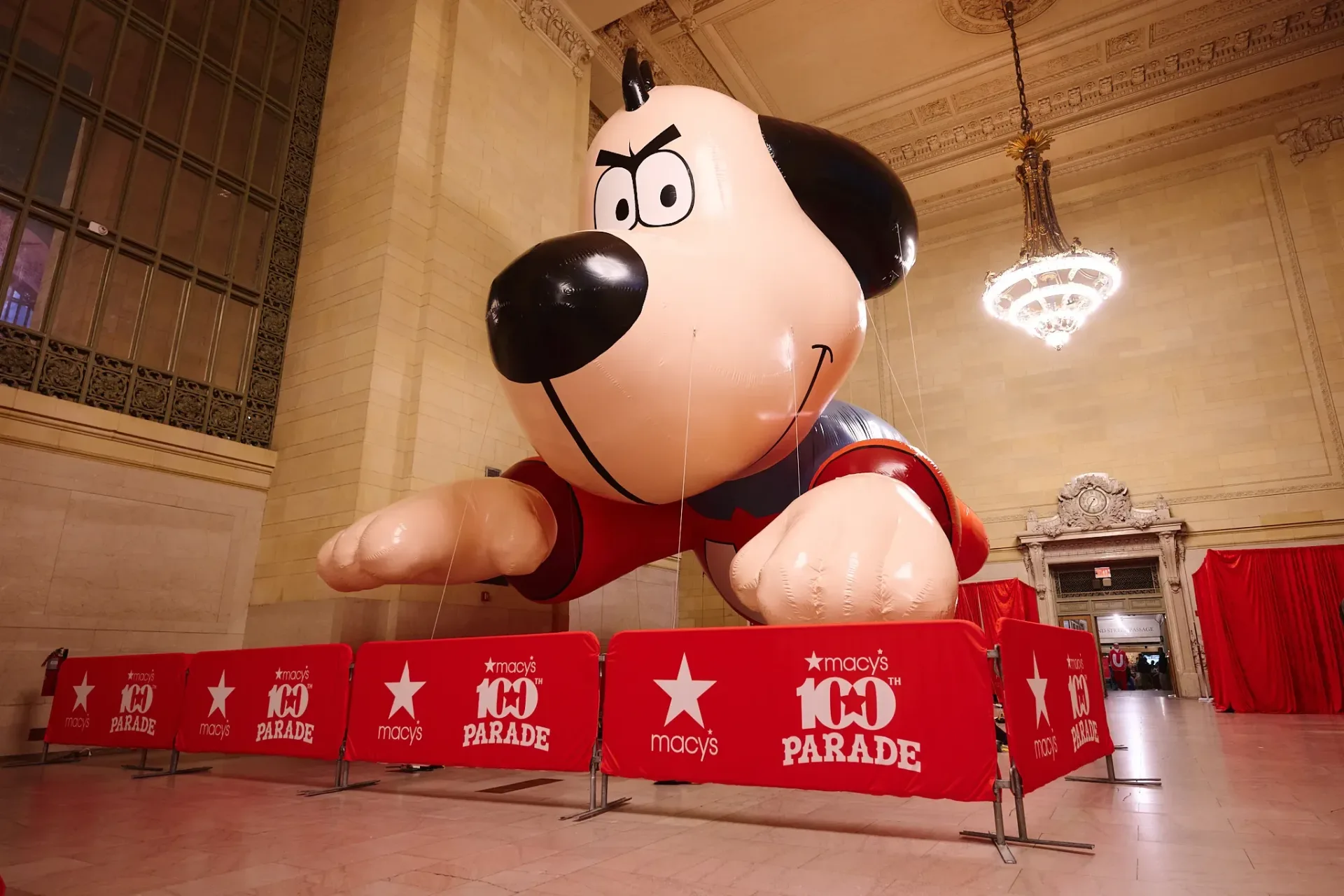
The parade debuted in 1924, and its 100th presentation is set to combine historical callbacks with new designs. The program includes returning figures such as Underdog, Sorcerer’s Apprentice Mickey and the Macy’s All-Stars Float, alongside a Tony Sarg tribute, a new Joe Cool Snoopy balloon, the return of Doodlebug, a new featured balloon named Billy Brightpaw, and several newly designed partner floats.
The underlying idea is not simply that a float should look impressive in still photos. Brendan Kennedy, director of creative production at Macy’s Studio, frames the parade’s core as storytelling. That explains why the practical details are so extensive: an image must read from street level, move safely through New York City, survive adverse weather, function for a broadcast audience and convey a recognizable scene in the brief period before it rolls out of view.
From rough sketch to parade route
The floats are built at Macy’s Studios in Moonachie, New Jersey, while costumes and balloons are also designed and made as part of the operation. In May, projects for the 2026 parade were still at notably different stages. Some were being finalized with partners; others remained concepts. That staggered timetable matters because the parade is not one object under construction, but a large group of separate productions that ultimately have to perform together on one morning.
For more context, explore Two Lands of Lore Amiga Projects Take Very Different Routes to the Same Dungeon.
PJ Portera, the parade’s concept artist and specialist, described a process that starts after a partner identifies whether it wants a balloon or float. His team develops rough sketches and explores multiple directions before engineering reviews the selected approach for feasibility. In plain terms, feasibility is the point where an appealing drawing must prove it can become a real, mobile, weather-ready structure. A concept can have visual charm and still require changes if it cannot be built, transported, operated or safely used along the route.
By July 30, Portera had completed three and a half float designs that had moved onto the studio floor at different construction stages. He had also worked on one main balloon and one smaller balloon already in production. The sequence reveals why the parade needs long lead times: ideation is only the first checkpoint. Physical build, paint, mechanical systems, costume creation, balloon testing and performance planning all follow.
For viewers, that engineering review is mostly invisible. Yet it is what stops spectacle from becoming a very colorful logistical tantrum. The 100th parade’s preparations repeatedly return to weather as a non-negotiable design factor. Float concepts must account for rain and snow. Costumes need to be washable and able to withstand rain. Balloons require outdoor flight tests. The most whimsical visual choice still has to work when the forecast declines to collaborate.
A century tribute built around Tony Sarg
One of the clearest connections between the parade’s past and present is its dedicated Tony Sarg float. Sarg, widely regarded as a foundational figure in American puppetry, designed the first six parade floats in 1927. He is also credited here as the creative force who brought giant balloons to the event. The centennial will put that history directly into the contemporary parade rather than relegating it to a program note.
The Sarg float is conceived as a marionette theater, with Sarg himself represented as a marionette. It will include cold-air inflatables, sculpted elements and puppets, with Puppet Heap collaborating to bring the stories to life. Cold-air inflatables differ in practical terms from balloons that need to be kept aloft: they are inflated decorative structures used as part of the float’s environment. Their inclusion gives the design different textures and scale while supporting its theatrical premise.
The decision to make puppetry central is fitting for a centennial parade that otherwise relies on massive forms. A giant balloon can establish an instantly readable silhouette from afar; a puppet adds visible performance and personality at close range. Kennedy’s description of the finished Sarg design emphasizes giant inflatables, a patina-style paint finish and active puppets. Patina normally refers to the aged surface character developed over time, so a patina paint finish here is a deliberate visual device: new construction made to evoke a sense of historical texture.
The costume department is echoing that same period language. Kimberly Montgomery’s team created brightly colored clown costumes inspired by Sarg’s designs and reminiscent of the 1920s. That coordination is important. A float can tell one story while its performers tell another, but the Sarg entry is being designed as a single stage picture in which the scenery, puppetry and clothing all point toward the same historical inspiration.
Legacy characters, fresh forms and an unusually large caterpillar
Not every return is a replica. Snoopy is coming back in the form of Joe Cool, Snoopy’s student persona, joined by Woodstock. It is the first time Joe Cool has appeared in the parade in that form. This is a useful example of how a familiar character can still make a new parade image: the audience already understands Snoopy, while the specific incarnation gives the creative team a different costume, pose and story hook.
Doodlebug offers another kind of revival. The legacy float appeared in the 1968 parade and is returning after a development process that Portera traced back to February 2025, before the 2025 event had even taken place. The updated Doodlebug is described as a 100-foot-long caterpillar-type float with space for someone to sit on top. Its starting point came from John Cheney, a carpenter marking his 50th parade.
Portera’s challenge was to study earlier Doodlebug versions, determine how closely the new version should align with them and then make it work under 2026 production realities. That is more demanding than simply making a throwback. Nostalgia supplies the reference, but it does not answer questions of weather resistance, scale, route logistics or engineering. The result has to recognize what viewers remember while functioning as a current parade float.
That balance between familiar and new also runs through the other additions. Billy Brightpaw is making her first appearance as a featured balloon. Kennedy characterized her as an all-new intellectual property, or IP: a character or creative property that can appear across products and experiences. In this case, Billy Brightpaw is associated with plush items, ornaments and jackets, while a puppet version is planned as an interactive Herald Square experience launching on Black Friday. The balloon is therefore one element in a broader character introduction, not an isolated parade image.
Costumes are a major production of their own
More than 5,000 costumes are planned for the parade, a number that makes clear why garments cannot be treated as a final decorative layer. Montgomery’s department must design for Macy’s employees as well as their friends and family members, accommodating a broad range of heights, weights, sizes and body shapes. Comfort matters because the outfits are not display pieces on mannequins; they are worn by people participating outdoors in a complex live event.
Weather resilience is equally direct. Montgomery recalled the rain-soaked aftermath of the 2024 parade, when costumes returning to the warehouse on the Friday after Thanksgiving were dripping wet. The response is built into the 2026 planning: materials and construction need to account for washing and rain, not merely visual appearance under controlled lighting.
The balloon handlers alone have 100 costumes requiring licensing-team involvement to ensure that designs are accurate. On parade day, Montgomery begins at 4:15 a.m., and 200 to 250 people are hired specifically to help dress participants. Each dresser works from a picture showing the intended look. That image-reference system is a simple but crucial form of quality control: with thousands of garments and many people changing in a short window, a visual guide helps keep the result consistent when there is no leisurely second take.
November is where the real world gets a vote
With fewer than 20 days left, the new balloons are flight-tested outdoors in Herald Square for the first time. This is one of the most consequential stages in the workflow, because a balloon that exists as a finished object has not necessarily proven itself in open conditions. Outdoor testing is the bridge between studio fabrication and live operation.
Meanwhile, floats receive finishing work ahead of a November 17 press preview, performers are organized, and the production coordinates with NBC on the televised presentation. Singer-songwriter EJAE and K-pop group RIIZE are among the performers named for the event, with RIIZE scheduled to perform live on the Macy’s All-Stars Float.
The later entries also show how much movement the modern parade can pack into a float. A new Purina float will use puppet dogs operated from beneath a porch. The DoorDash float, made for the delivery-service partnership, contains a mini Macy’s and a delivery-vehicle-style ride that attaches to a track and circles the float with children aboard. That mechanism is an example of a float doing more than carrying scenery; it stages action while remaining part of a moving parade unit.
Buckaroo Bob the Minion is another oversized piece of visual comedy: Bob wears a cowboy hat and rides what is described as the largest banana the parade has used. The entry references Dr. Strangelove while arriving after the box-office success of Minions and Monsters earlier in the year. The joke may be gloriously silly, but it is also structured visual storytelling—one pose, one giant prop and a character audiences can identify immediately.
Why the parade still needs all these layers
The practical implication of the 100th event is that a parade is not built around one audience. Street spectators see scale, movement and detail at different distances. Television viewers need images that register within camera framing. Participants need wearable costumes and workable staging. The people operating balloons, puppets and floats need systems that hold up under pressure and weather. Partners need their characters or brands represented accurately. Each department addresses a different part of the same public experience.
That is why the centennial’s creative choices range from Sarg-era marionette imagery to a track-mounted ride, a new character balloon and a revived caterpillar float. The common thread is less about a single visual style than about converting stories into forms that can move through the city. The parade’s grandest trick remains making that coordination look like a morning of uncomplicated fun.