Lucky Daye has framed Aloud as more than a new album: it is a deliberate shift in how he approaches the work, the people around it and the feelings he allows into the songs. The Grammy-winning singer-songwriter has begun a new chapter with Warner Records, widened his collaborator pool and taken a more central role in shaping the project. Yet the most telling part of his description is not the label change or the recognizable guest list. It is the contrast he draws between music made from pain and music made from truth.
That distinction gives Aloud its premise. Daye has described this version of himself as “Lucky 2.0”: more attentive to love, compassion and his own emotions, and more prepared to say what is on his mind. Rather than treating that sensitivity as a retreat from R&B’s emotional directness, he presents it as a new route into it. The album’s title points toward confidence and happiness, while its songs and interludes make room for candor, humor and messy thoughts that do not necessarily resolve cleanly.
A broader team, but a more personal process
There is a productive tension at the center of the album’s creation. Aloud comes with substantial outside support: Daye says Warner helped ease the workload carried by him and his management while also helping make its guest appearances possible. Leon Thomas, Pusha T and Akeem Ali are among the collaborators named for the project. But Daye does not portray that infrastructure as the artistic engine. His focus remains on what he calls the “magic” of making the music.
He had already started Aloud before joining Warner, so the label did not originate the album’s concept. Instead, the relationship appears to have expanded what could happen once the record was taking shape, particularly when it came to features. That is an important practical distinction. A feature can add another vocal color, another writing perspective or a new audience-facing point of interest, but it only works creatively when the guest serves the song’s existing identity. Daye’s comments suggest he viewed the collaborators as specific answers to specific records, not simply as names to stack on a track list.
At the same time, he says this was his most enjoyable album-making experience because he was hands-on throughout. He contrasts it with earlier records where he had someone consistently listening along and giving input. Here, he describes having to trust his own judgment more fully. Self-directed does not mean solitary: the album includes a range of contributors and he speaks warmly about a close creative ecosystem. It means the final responsibility for connecting the pieces rested more squarely with him.
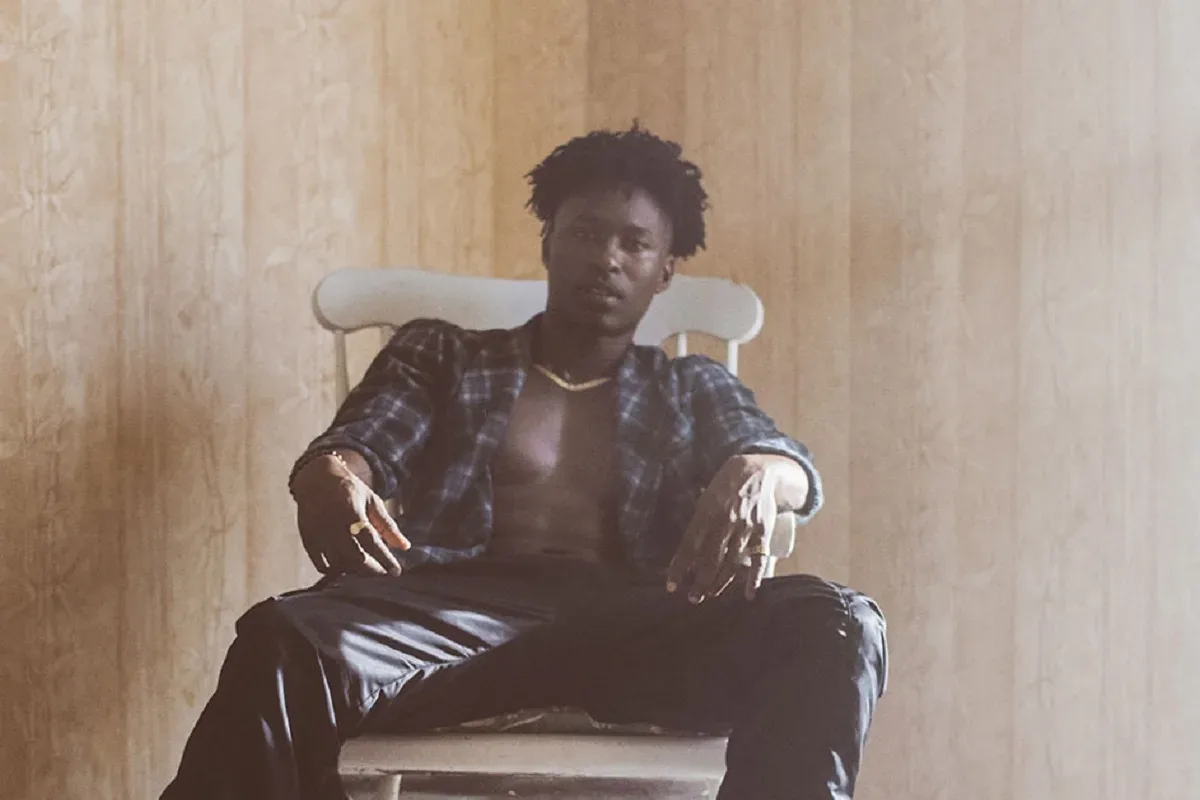
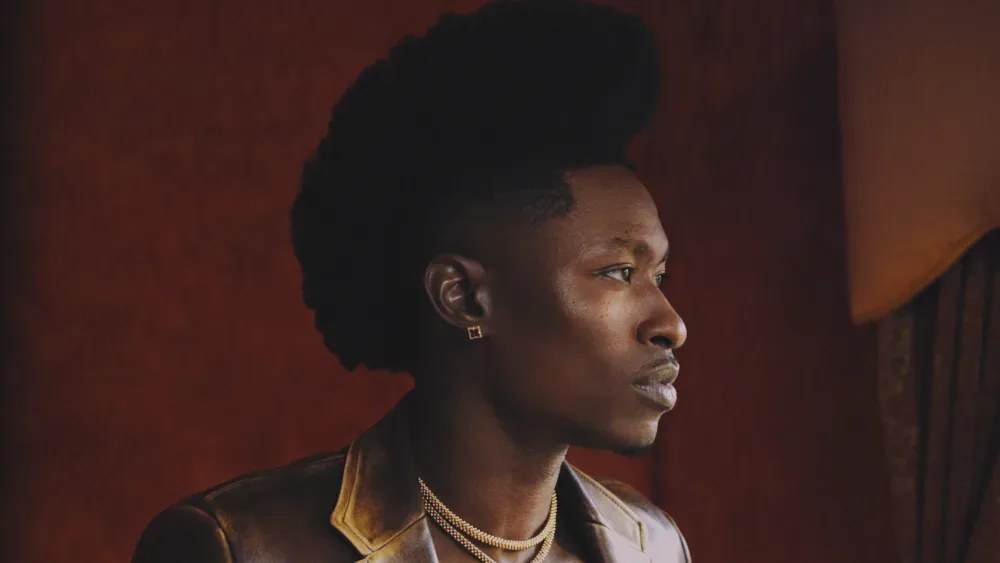
That ecosystem includes his managers, chief of staff and natural-hair artist Susan “Susy” Oludele, who has helped shape his evolving visual presentation. Daye has emphasized the sense of mutual care within a team largely made up of Black women. In this context, the frohawk associated with the album’s era is not merely a style detail. It is part of a broader signal that the presentation surrounding Aloud is changing alongside the sound and working process.
Why ‘Talk to Me’ fits the album’s mission
Daye cites “Talk to Me” as one of his favorites, highlighting a catchy hook, verse cadences, a straightforward premise, drums and punchlines. Those are useful clues to the album’s apparent musical priorities. A hook is the memorable melodic or lyrical section designed to stick with a listener, often the chorus. Cadence refers to the rhythm and contour of a vocal delivery: how phrases land against the beat, accelerate, pause or stretch out. Together, a sharp hook and distinctive cadence can make a direct idea feel immediate rather than simplistic.
Daye’s use of “punchlines” also matters. In songwriting, the term does not have to mean a joke. It can describe a concise phrase intended to land with emphasis, personality or a lyrical twist. He has said he wants to “bar things up,” a phrase that points to a denser, more rap-informed attention to lines and their impact. The result, at least in intent, is R&B that prizes feeling but does not abandon craft at the sentence level.
Related coverage includes Lucky Daye’s ‘Aloud’ Opens a More Playful, Self-Directed R&B Chapter.
His stated aim for “Talk to Me” is uncomplicated: he wants people to feel. That directness aligns with the album’s larger move toward clear concepts. Rather than positioning emotional complexity as something that must be obscured in abstraction, Daye seems interested in making the emotional entry point legible first, then letting musical phrasing and detail carry the nuance.
Interludes as intentional interruptions
Aloud also makes room for quick, quirky interludes, including “Intro to Down,” which Daye has likened to commercial breaks. His explanation is rooted in attention: people move on quickly, so the album occasionally interrupts itself to reset the listener’s expectations.
That is not the same as using skits as disposable filler. An interlude is a short piece placed between longer songs. It can establish atmosphere, provide comic relief, bridge themes or change pacing. Daye’s “commercial break” comparison suggests a structural use: brief detours designed to jolt the sequence forward and keep its world from becoming too uniform. If the title’s underlying message is to be confident and get rid of what holds you down, the playful detours are part of the delivery system rather than a contradiction of it.
Playfulness can be especially meaningful beside an album that still deals in vulnerability. Daye is not claiming that truth is painless; he says it can hurt more. The change is that he is less interested in making pain the foundation of every creative decision. Humor, eccentricity and an infectious melody can coexist with difficult admissions. In fact, their presence may make those admissions feel more human, because the record is not required to stay in one emotional register.
‘Knockin’ puts storytelling before performance
“Knockin,” featuring Muni Long and the Black punk band Paradox, is the clearest example Daye gives of putting narrative ahead of conventional vocal display. He says he began with emotion and story, placing the singing last in the process. The song draws on an imagined college-dorm setting that Daye says he did not personally experience. Its scenario turns on attraction to a friend’s appealing companion and the hesitation involved in crossing—or refusing to cross—a social line.
The premise is deliberately specific, but the method is broader. Daye misses songs that tell stories, and “Knockin” appears to be his attempt to build a scene rather than simply report an emotion. Storytelling in a song requires perspective: who is speaking, what do they want, what stops them from acting and what information does the listener receive at each point? Daye says the album is written from a man’s perspective in a way he had not explored before. That does not mean the record abandons feeling; it means the feelings are given a situation to push against.
Muni Long entered the song through proximity and timing. She was working in a nearby studio after Daye had completed a feature for her album. Daye viewed her as an obvious fit because of the force and lack of apology he associates with her voice. That makes the pairing sound less like a formal crossover exercise and more like an opportunity recognized in the moment.
Paradox’s involvement adds another notable element to “Knockin.” The supplied details identify the group as a Black punk band, but do not define its exact role in the arrangement. That uncertainty is worth preserving. What is clear is that the collaboration places a band with punk roots alongside two prominent R&B voices, reflecting the wider creative range Daye says he wanted to explore.
Leon Thomas, Pusha T and the value of the right contrast
On “Fly You Out,” Daye joins Leon Thomas, an artist he calls one of his current R&B favorites. Comparisons between the two artists have circulated, and Daye treats them as an inevitable part of public conversation rather than something to internalize. His response is notably practical: people will discuss similarities, while the artists’ job is not to let those conversations dictate their work.
The collaboration itself developed simply. Daye sent Thomas the song, Thomas returned an idea and they later met in the studio to finish it. Daye praises Thomas as self-sufficient, a quality that is easy to undervalue in a collaborative session. A self-sufficient guest can arrive with a developed instinct for what the record needs, while still remaining open to a shared final pass. That can turn a feature from an attached verse into a genuine exchange of approaches.
Daye’s explanation for choosing Thomas also situates the song in a particular vision of male R&B artistry: emotionally open, creatively ambitious and unapologetically masculine without treating sensitivity as a compromise. The two artists’ pairing is therefore not only about surface similarities. It is about testing how adjacent perspectives can amplify one another.
“Mouf Say,” meanwhile, brings Pusha T into Daye’s world. Daye describes Pusha T as a hip-hop legend with an iconic voice, connecting him to artists and figures who motivated Daye’s own ambitions. A feature from a rapper can shift the weight distribution of an R&B record. The singer may retain melodic control, but the guest verse can introduce a tougher vocal texture, a different rhythmic vocabulary or a more sharply drawn lyrical edge. Daye’s admiration for Pusha T’s distinct voice explains why that contrast appealed to him.
It also helps clarify the role of collaboration on Aloud. Thomas represents a close conversation within contemporary R&B; Muni Long brings a second perspective to an emotionally tense story; Pusha T supplies a hip-hop presence with a voice Daye sees as singular. The guests are eclectic, but the stated rationale for each is specific.
D’Mile remains part of the picture
Daye’s increased independence does not amount to a rejection of longtime collaborator D’Mile. D’Mile appears on “Nowhere Fast,” and Daye speaks about their relationship in terms of love, respect and lasting creative kinship. He says they may both wish they were working together more often, while also accepting that their paths have distinct processes.
That is a more nuanced picture than the usual “old collaborator replaced by new team” narrative. Daye says he could make an entire album with D’Mile if he chose. For Aloud, however, he felt called to look inward and become more sensitive to his own instincts. The album’s independence is therefore selective: it asks him to lead more, not to sever the creative relationships that helped shape his career.
For listeners, the practical takeaway is not to treat Aloud as a checklist of features or a label-era rebrand. The details point to an album built around a different center of gravity. It is still collaborative, but Daye presents himself as the person connecting the work’s disparate pieces: direct songs, rhythmic lyrical turns, interlude-like disruptions, imagined narratives and guests chosen for their particular voices.
That emphasis on authorship through assembly may be the most revealing aspect of the project. Daye is not presenting control as isolation, nor confidence as the absence of hurt. He is making room for a wider group while trying to hear his own creative instincts more clearly. In an entertainment landscape where collaborators often become the headline, Aloud is framed as a case for the artist at the center still being the one who decides how all those voices speak together. For another music-and-character-driven entertainment story, see Cori Broadus joining Snoop Dogg’s Doggyland as Maxine.