Love Language arrives with a premise that practically writes its own pitch: a writer unable to put her own feelings into words becomes unexpectedly successful at composing wedding vows for strangers. It is an elegant setup for a romantic comedy, because vows are both performance and confession. They ask people to package private emotion into a public speech, which is exactly the kind of pressure that can expose a character’s contradictions.
Joey Power directs and writes the 104-minute film, with Chloë Grace Moretz playing Louisa, a talented but creatively stalled writer working from home as a copywriter. Louisa is reeling from a broken engagement when a favor for her friend Tilda, played by Billie Lourd, becomes a business. Tilda needs help with her vows, and Louisa repurposes the vows from her own canceled wedding. The words land so well that guests begin seeking her out. Soon, Louisa has found a lucrative niche ghostwriting declarations of love for people preparing to marry.
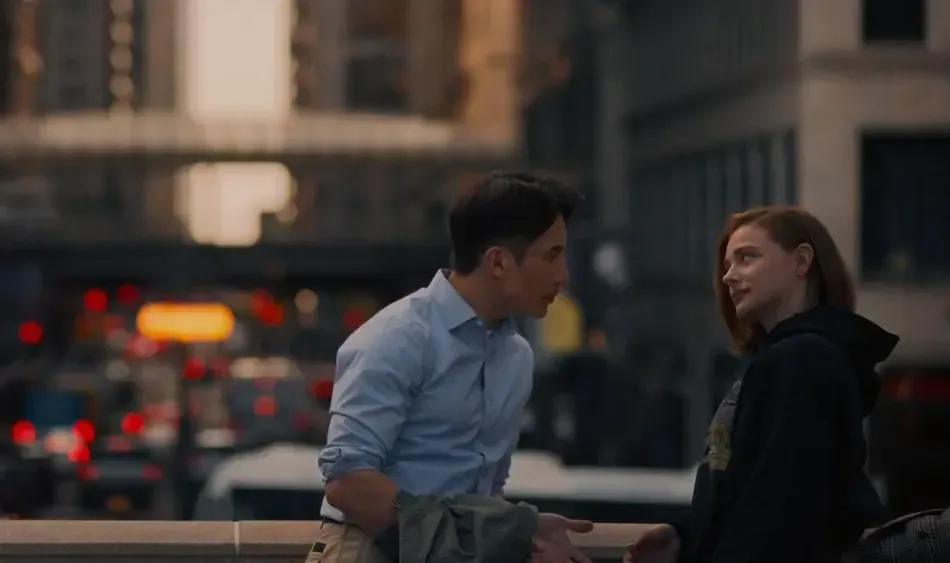
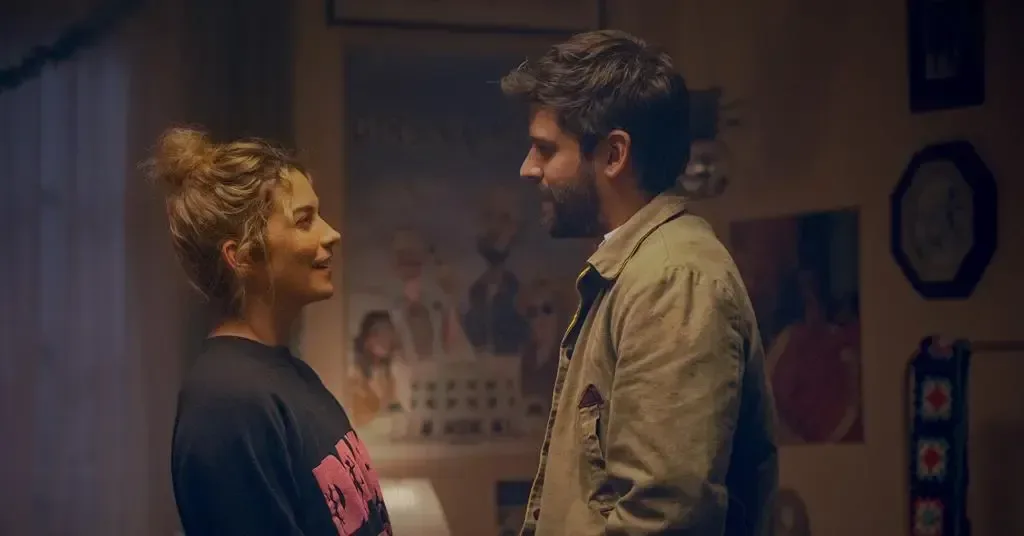
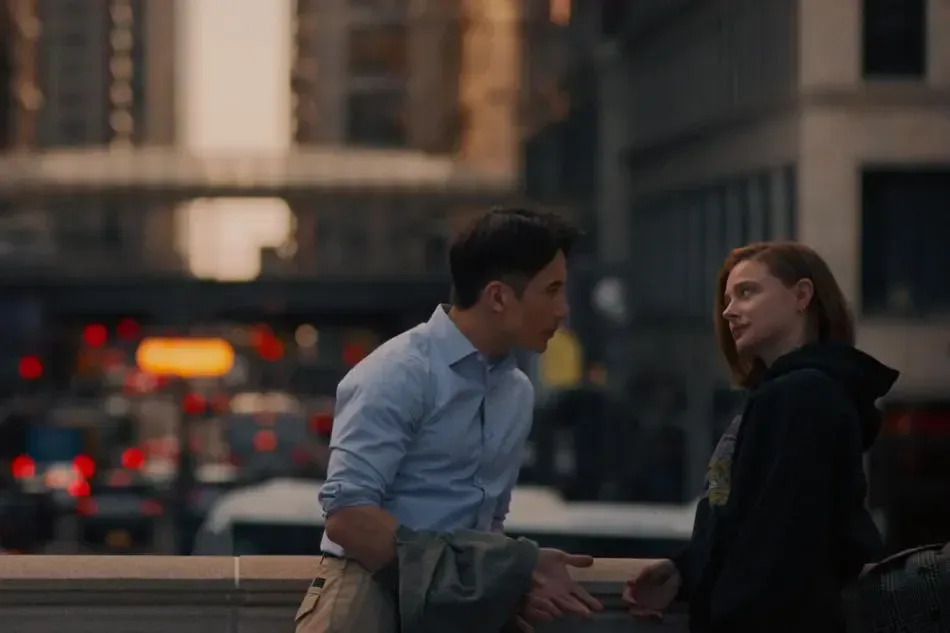
That career breakthrough comes with a cruelly appropriate hitch: Louisa’s own romantic life is a mess. At Tilda’s wedding she meets Dash, Tilda’s cousin, played by Anthony Ramos. Their connection is immediate, though Louisa is unsettled by his directness. Then a commission from Olivia, a wealthy importer played by Isabel May, pulls Louisa back toward Warren, a public defender portrayed by Manny Jacinto and an old college crush. Olivia is about to marry Warren; Louisa takes the assignment without telling her client about that history. As the wedding approaches, she cannot produce the vows.
A bright premise caught between romance and comedy
The film has the machinery of a classic romantic entanglement: a woman with unresolved hurt, a promising new match, an idealized figure from the past and a wedding deadline that makes every concealed feeling more combustible. The central problem is not whether the situation can generate complications. It plainly can. The issue is that the comic side reportedly does not get as much force as the romantic, sentimental side.
That distinction matters. A romantic comedy is not simply a romance that includes a few witty lines. Its comic structure should actively make the relationship story sharper: misunderstandings expose weaknesses, awkwardness reveals desire, and heightened situations bring the characters’ self-deceptions into focus. Louisa’s vow-writing job offers plentiful opportunities for that approach. Every assignment could force her to confront the gap between the polished love language she sells and the uncertainty she lives with. Yet the film’s appeal seems to rest more on its warmth, attractive cast and familiar genre comforts than on sustained comic escalation.
That does not make the premise ineffective. There is a certain neatness to Louisa becoming a professional supplier of “words of affirmation,” while being unable to articulate an honest answer to the people closest to her. In everyday use, words of affirmation are verbal expressions of care and appreciation. Here, they are also literally Louisa’s product. The conceit gives the title a functional double meaning: love is presented as something felt, spoken, revised, sold and sometimes withheld.
Louisa’s choices are the story’s engine — and its complication
Moretz has the tricky job of keeping Louisa watchable even when her behavior makes that difficult. The character is not merely unlucky in love. She accepts Olivia’s job while concealing her past feelings for Warren, spends time with the couple as old emotions resurface, and keeps Dash at arm’s length even as he appears more serious about a relationship than she is. The material allows Louisa to be neurotic, self-pitying and selfish rather than smoothing those qualities away.
That is potentially the most interesting route for the film. Romcom protagonists are often easier to cheer for when they are wrong in a manageable, charming way. Louisa’s situation is thornier because another woman’s wedding is at the center of her indecision. The question is not only which man she prefers; it is whether she can recognize other people as more than supporting characters in the emotional story she is telling herself.
Related coverage includes Love Language Review: Chloë Grace Moretz Leads a Warm but Familiar Chicago Romcom.
Olivia may therefore be the film’s most intriguing figure. May reportedly plays her with an appealing balance: she can seem like a princess at first glance, but also registers as more observant than people assume. That framing gives the character weight beyond simply being the obstacle between Louisa and Warren. A romantic triangle, or in this case a broader four-person tangle, becomes more resonant when each person has an interior life rather than functioning as an obstacle on someone else’s route to happiness.
The dilemma is uneven by design, or perhaps by accident
Love Language sets up what could be called a romantic quadrangle: Louisa is emotionally pulled toward Warren while dating Dash; Warren is engaged to Olivia; and Olivia has hired Louisa to help articulate her coming marriage. But the emotional scales do not appear evenly balanced. Warren may be Louisa’s long-held college crush, yet Dash is described as the more magnetic and vulnerable presence.
Ramos is especially important to the movie’s equation. Dash begins with a relatively recognizable type — a casually promiscuous man whose outlook contains an unexpected urge for commitment — but Ramos gives him a more grounded quality. His straight-shooting manner creates an appealing contrast with Louisa’s hesitation. Moretz and Ramos also appear to bring out more energy in one another, which can be decisive in a movie built around a choice between romantic futures.
That has a practical effect on the suspense. A love triangle is not automatically compelling because it has two potential partners. It needs the alternatives to represent genuinely different but believable forms of happiness, sacrifice or risk. If one person feels far more vivid and emotionally accessible, the protagonist’s continued indecision can start to feel like narrative delay rather than a meaningful struggle. The old crush may have history, but history by itself is not chemistry.
The film’s Chicago setting echoes another well-known wedding-centered romantic comedy, My Best Friend’s Wedding, and its scenario similarly brings temptation and an impending marriage together. But the comparison points to an important difference in stakes. A protagonist considering interfering with a wedding has to confront what she could damage. In Louisa’s case, the possibility of emotional harm is present, yet the romantic choice reportedly feels less evenly weighted because Dash so strongly commands attention.
Gen-Z details, durable old-school structure
The film includes contemporary markers: queer marriage, cocaine jokes, a work-from-home copywriting job and characters with a vocabulary shaped by modern pop culture. Still, its major narrative moves remain recognizably traditional. There is a meet-cute, the gay best-friend role, wedding chaos and an airport intervention. In other words, the film dresses a familiar romcom skeleton in current conversational details.
That is not necessarily a flaw. Genres survive because audiences enjoy forms they can recognize, and a comfort watch often depends on exactly that recognizability. The concern is less that Love Language uses old conventions than that its wider world sounds thinly drawn. Louisa’s apartment, friendships and day job do not seem to gather much individual texture; the film leans heavily on references to other films and cultural touchstones. The result is pleasant and easy to settle into, but not necessarily specific enough to feel like a defining portrait of contemporary young-adult romance.
For viewers, that may be a useful expectation-setting guide. This is not positioned as a radical rethink of the romcom or an especially cutting social satire. It is a warm, polished, nostalgic genre entry whose chief pleasures are its cast, romantic atmosphere and autumnal Chicago imagery. Andrew Wehde handles cinematography, Jennifer Vecchiarello edits, and Jeff Morrow provides the music. The city is photographed in an enduring fall glow, reinforcing a mood that is more cozy than chaotic.
There is a broader entertainment pattern here, too: familiar genre blueprints remain attractive even when films update their surface language. Hollywood’s enduring affection for recognizable archetypes has plenty of forms, from romantic-comedy callbacks to the fixer mythology explored in this look at Cliff Booth’s return. In Love Language, the inheritance is plainly romcom-specific: the wedding deadline, the emotionally unavailable lead, the missed chances and the sudden need to say the thing one should have said much earlier.
A capable ensemble carries the soft-focus charm
Alongside Moretz, Ramos, Jacinto, May and Lourd, the ensemble includes Lukas Gage, Chloe Fineman and Marchánt Davis. Gage plays a gay lothario whose role becomes more brooding and plot-oriented as the story develops. The cast gives the film a substantial collection of performers with the charisma to make a familiar structure feel inviting.
Power previously directed the 2018 romance After Everything, starring Jeremy Allen White and Maika Monroe. With Love Language, he again works in a relationship-driven register, though this story has the more overtly commercial apparatus of weddings, rival romantic possibilities and a protagonist whose profession is built around emotional speechmaking.
Ultimately, Love Language sounds best suited to viewers who want a soft-focus romantic complication rather than a ferociously funny reinvention of the genre. Its central irony remains strong: Louisa can manufacture eloquence for everyone else, but the closer the feelings are to her own life, the less usable language becomes. Moretz carries that contradiction, while Ramos supplies the kind of unforced charm that can make a well-worn romcom route feel worth taking — even when the GPS is clearly set to the 1990s.