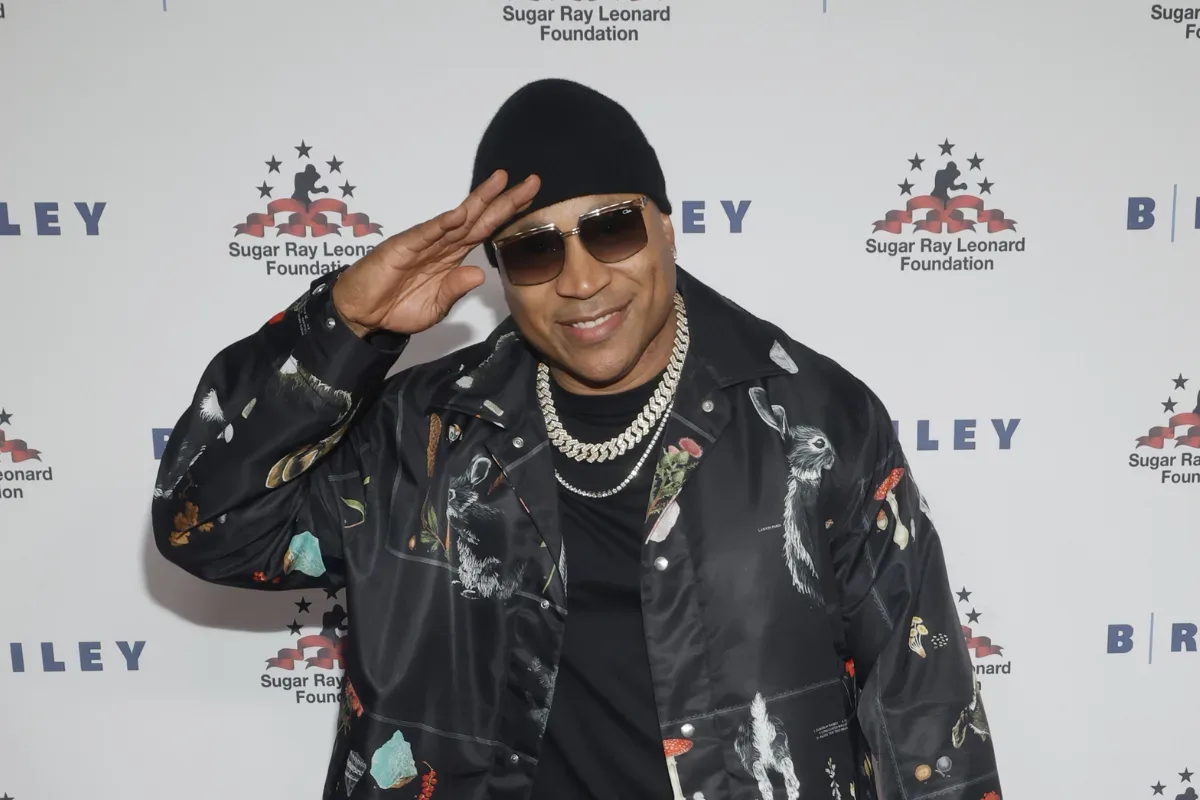
LL Cool J has identified a defining quality behind his portrayal of Sam Hanna: restraint. Reflecting on the real Navy SEALs he met while preparing for the role, the performer said their confidence was not loud or performative. They were, in his words, “extremely humble,” despite also being among the most dangerous people he had encountered.
It is an observation that helps explain why Sam Hanna has often felt different from the usual image of a television tough guy. The character’s authority is not dependent on announcing itself. Hanna can enter a dangerous situation, assess what is happening and act with purpose without turning the moment into a personal showcase. For LL Cool J, that approach grew out of watching professionals whose capabilities did not require constant display.
The point is not that real military personnel and a fictional investigator are interchangeable. They are not. Nor does a calm TV character reproduce the realities of service. But the actor’s account describes an acting principle with practical consequences: study demeanor as closely as technical details. How somebody carries responsibility, listens, waits and speaks can say as much about a character as costume, physical training or weapon handling.
Humility as part of the character’s strength
“Quiet confidence” can sound like a broad piece of promotional language, but the idea has a more specific meaning in this context. It describes confidence rooted in preparation and self-control rather than in attention-seeking. A character with that quality does not need to prove competence in every conversation because the story can show it through decisions under pressure.
That distinction matters for Sam Hanna. LL Cool J’s description of the people who informed the role stresses the gap between what they could do and how little they seemed compelled to advertise it. Translated into performance, that can mean controlled reactions, economy in movement and a refusal to treat every threat as an excuse for a speech.
It also establishes a useful counterweight for a procedural drama. Investigative series frequently involve time pressure, risk and heightened confrontations. A lead character who remains composed can focus scenes around judgment rather than volume. Calm is not passivity; it is the ability to avoid being ruled by panic, ego or the need to dominate the room.
LL Cool J’s remarks frame Hanna’s restraint as respect-driven character work rather than a generic “cool” pose. He previously described visiting Camp Pendleton in 2011, where he spent time with Marines, sailors and special-operations troops. He said these were people who put their lives on the line every day. That experience, by his account, supplied more than surface-level reference material.
Research beyond the visible details
Screen research is often discussed in physical terms: an actor learning posture, movement or how to handle equipment convincingly. Those details can matter, especially when a character’s background involves military service. Yet LL Cool J’s comments put the emphasis elsewhere. The lasting lesson appears to have been behavioral.
Related coverage includes LL Cool J Says Navy SEALs Shaped Sam Hanna’s Quiet Confidence.
That approach is significant because visible technique alone cannot define a character over years of episodes. Viewers may notice a believable stance in a single scene, but continuity comes from a consistent internal logic. Hanna’s calm needs to make sense whether he is facing immediate danger, working with colleagues or dealing with a personal problem. The actor’s stated model—high capability paired with humility—offers that logic.
It is also a reminder that the term former SEAL, as used in Hanna’s fictional backstory, is a biographical element, not a complete personality. The most effective character choices tend to avoid reducing a person to a résumé line. A military past may help explain training, discipline and experience, but it does not eliminate grief, loyalty, unfamiliarity or the difficulty of returning home.
That last element becomes particularly relevant in NCIS: New York. Hanna is returning to New York after years of covert work, and the death of a friend draws him into a case alongside a new team. The premise places a highly experienced figure in a setting that is emotionally familiar but no longer fully known.
A homecoming that is not a reset
The move from Los Angeles to New York creates a change in frame without discarding what makes Hanna recognizable. Both LL Cool J and the character have roots in New York, but the series premise does not present the city as a simple comfort zone. Hanna is coming back to a place that has changed during his absence, and he must learn it again.
That gives the new chapter a potentially useful tension. In professional terms, Hanna knows the job. He brings years of experience and the composure that comes with it. In personal terms, however, returning home can unsettle assumptions. Familiar streets and memories do not guarantee an easy sense of belonging, particularly after time away and a loss that has brought him back under difficult circumstances.
The setup therefore makes “quiet confidence” more than an action-scene trait. It can shape how Hanna handles a new team, local relationships and the emotional pressure of a friend’s death. Confidence may allow him to lead; humility may allow him to recognize that he cannot simply arrive and expect every person or situation to conform to his past.
There is a difference between expertise and certainty. Expertise is informed skill built through experience. Certainty is the belief that one already has every answer. LL Cool J’s account of humility points toward the former. That is an especially useful quality for a returning protagonist because it leaves room for the city, the case and the people around him to challenge him.
Why the performance choice fits an ensemble drama
A lead does not have to consume every scene to be central to a series. In an ensemble, a restrained character can generate space for other people to reveal themselves. Listening becomes an action. A measured response can alter the temperature of an exchange. Silence, used carefully, can communicate thoughtfulness, disappointment or resolve without needing an explanation immediately attached to it.
For Hanna, the value of that restraint is twofold. First, it supports the character’s established image as someone accustomed to high-stakes work. Second, it creates room for the new team dynamic promised by the New York setting. A leader who does not need to make every moment about himself can observe colleagues, earn trust and adapt to unfamiliar working relationships.
Of course, television drama still depends on clear stakes and decisive moments. Quiet confidence should not be confused with emotional absence. The more compelling version of calm is active: a person experiences pressure, considers the consequences and chooses not to let the pressure dictate every outward response. The death at the center of Hanna’s return gives the new series a reason to test that control rather than merely celebrate it.
LL Cool J’s observation also avoids an easy misconception about humility. Humility does not mean denying skill or minimizing danger. In the actor’s telling, the service members he met were extraordinarily capable. The point was that competence did not require spectacle. For a fictional lead, that can produce a more grounded sort of authority than nonstop bravado.
What the new setting can reveal about Hanna
Relocating a longstanding character is often most interesting when the new location changes the questions being asked. New York is not merely a backdrop for Hanna’s work; it is part of his history. The premise suggests that his return will make him confront the distance between memory and the present.
That contrast may be where the character gains new dimensions. A seasoned investigator can navigate operational risks with discipline, yet still be affected by the emotional complexity of a homecoming. He may be the steady presence in a crisis while having to reassess where he belongs outside it. That is a richer challenge than simply placing an established hero in another office.
LL Cool J remains active beyond the series, with a first Las Vegas run ahead and live performances still part of his schedule. Even so, his comments about Hanna return to the foundation of the role: observing people who do difficult work and taking seriously the way they conduct themselves.
For viewers, that context offers a clear lens for the next phase of Sam Hanna. The character’s power is not just in what he can do when a case escalates. It is in the discipline to remain present, measured and attentive when the stakes are high. In a new city, with a new team and a personal loss at the center of the story, that discipline may be tested in ways it has not been before.
For more television character discussion, read Nicolas Cage’s thoughts on keeping Spider-Noir to a one-season experiment.