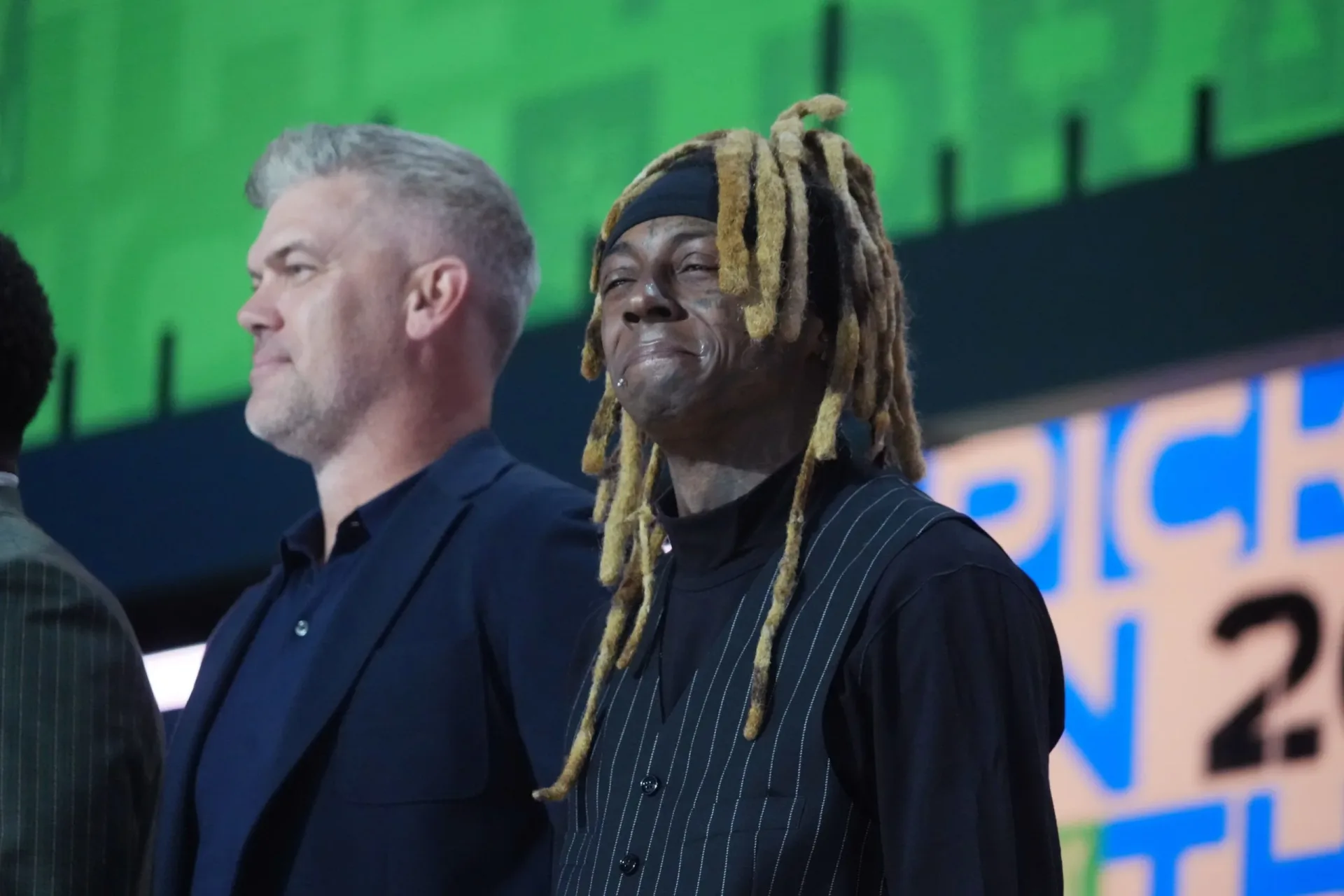
Lil Wayne’s football allegiance is not a quiet one. The rapper has long made his Green Bay Packers fandom part of his public persona, which means a rough Sunday can become a very public event. Week 1 delivered precisely that kind of event: Green Bay’s loss to NFC North rival Minnesota prompted Wayne to unload on X, directing his anger at the officiating and declaring himself finished with the NFL for the season.
The immediate backdrop was a game that moved sharply away from the Packers late. Green Bay, led by quarterback Jordan Love, had played well in the first half and held a lead. But the Vikings produced 22 points in the fourth quarter, erasing Green Bay’s advantage and its chance at a season-opening win. For a fan watching his team go from control to collapse, the result supplied the full, familiar menu of sports misery: optimism, doubt, outrage, and a sudden desire to cancel the entire enterprise.
A Week 1 loss that hit like a season finale
Football supporters know that the calendar does not always determine the emotional scale of a game. On paper, this was the opening week of a long NFL season. In practice, division games arrive carrying old tension, new expectations, and an alarming ability to make September feel like the end of civilization. Minnesota is a direct NFC North opponent, so the result was never likely to register as a forgettable early stumble for Green Bay fans.
The Packers’ first-half performance only increased the sting. A team that is behind from the beginning can at least offer its supporters the bleak comfort of emotional preparation. A team that plays well, establishes a lead, and then watches the other side pile up 22 fourth-quarter points gives its supporters something much more combustible: evidence that a different ending once seemed possible.
That distinction matters in the fan experience. The feeling after a one-sided defeat is often disappointment. The feeling after a late collapse is an investigation. Every flag, every decision, every missed opportunity, and every moment that looked slightly strange receives a second life in the mind of the person wearing the team colors. Wayne’s reaction landed squarely in that postgame territory.
Wayne’s message put the officials at the center of his frustration
In his X post, Wayne criticized the officials working the Minnesota game in explicit language, accused the refereeing of being illegitimate, and said he could not respect a game when the officials could not do their job properly. He then wrote that he was out on the NFL this year, while still wishing everyone an amazing season.
It was not a measured officiating breakdown, and it was not presented as one. It was a raw response from an invested fan after a result he hated. Wayne’s post did not identify a specific call, provide a play-by-play case, or establish that any official decision determined the game. The core fact is simpler: the Packers lost after Minnesota’s 22-point fourth quarter, and Wayne believed the officiating had made the experience impossible to accept.
That is part of why posts like this travel so quickly. Plenty of spectators have made some version of the same declaration immediately after a difficult loss. “I am done watching” is one of sports fandom’s most durable dramatic traditions. It tends to appear right beside the remote, the group chat, and the replay of the call nobody is ready to forgive.
The statement does not necessarily mean someone has carefully ended a relationship with the sport. More often, it means the relationship is extremely active. Indifference does not usually produce a public tirade. Investment does. The louder the disappointment, the clearer the attachment underneath it can be.
The strange logic of quitting football while caring deeply about football
Wayne’s declaration reflects the paradox at the heart of being a serious team supporter. Fans talk about abandoning a league, switching off games, or refusing to give the sport another minute. Then the schedule presents the next matchup, news breaks, or a divisional rival loses, and the emotional door cracks open again.
That is not hypocrisy so much as the operating system of fandom. Sports are built around outcomes viewers cannot control. Fans can wear the gear, learn the roster, defend the quarterback, argue about the coaching, and remember every brutal loss. They cannot stop a fourth-quarter swing with force of will. The lack of control is maddening, but it is also the engine of the investment. If every result could be managed, there would be much less to argue about on Monday.
Celebrity fans add another layer because they experience the same emotional snap as everybody else, only with a larger audience ready to witness it. Wayne did not need to present a polished media statement. His social post reads like the kind of exasperated message a fan fires off after watching a game slip away, except it immediately becomes part of the wider conversation around the Packers, Vikings, and NFL officiating.
The phenomenon is not unique to football. Gaming communities also understand the rapid journey from enthusiasm to outrage after a close loss, a disputed mechanic, a frustrating patch, or one decision that seems to erase an evening’s worth of progress. The social side of that experience is often as important as the complaint itself. People want to be seen reacting in real time, whether the venue is a stadium, a couch, a voice chat, or a crowded convention floor. Communities can turn shared rituals and reactions into an event bigger than any one headline, and sports supporters do much the same thing every weekend.
Green Bay’s next game provides the obvious test
The Packers are scheduled to face the New York Jets next week. That is the practical test of any immediate post-loss vow: the next game arrives before the frustration has fully faded. Wayne’s message says he is out on the NFL this year, but the schedule moves on regardless, inviting every unhappy Green Bay supporter to decide whether the anger will last through kickoff.
There is no need to treat that question as a gotcha. A fan can be sincerely furious, sincerely tired of officiating, and still sincerely interested in what happens next. Those ideas coexist all the time. The sport asks supporters to absorb losses and return for another opportunity at relief. Sometimes that return happens because of loyalty; sometimes it happens because a person wants answers; sometimes it happens because the group chat is already active again.
For the Packers, the immediate football reality is the loss to Minnesota and the work required after a fourth quarter that swung decisively toward the Vikings. For Wayne, the public reality is a sharply worded post that captured the most volcanic version of a fan’s response. His complaint was aimed at the referees, his disappointment was rooted in Green Bay’s defeat, and his stated NFL exit arrived only one week into the season.
Whether that exit survives until the Jets game is a different question. Sports history, and especially the history of fans saying they have finally had enough, suggests that the next kickoff has a remarkable talent for reopening negotiations.