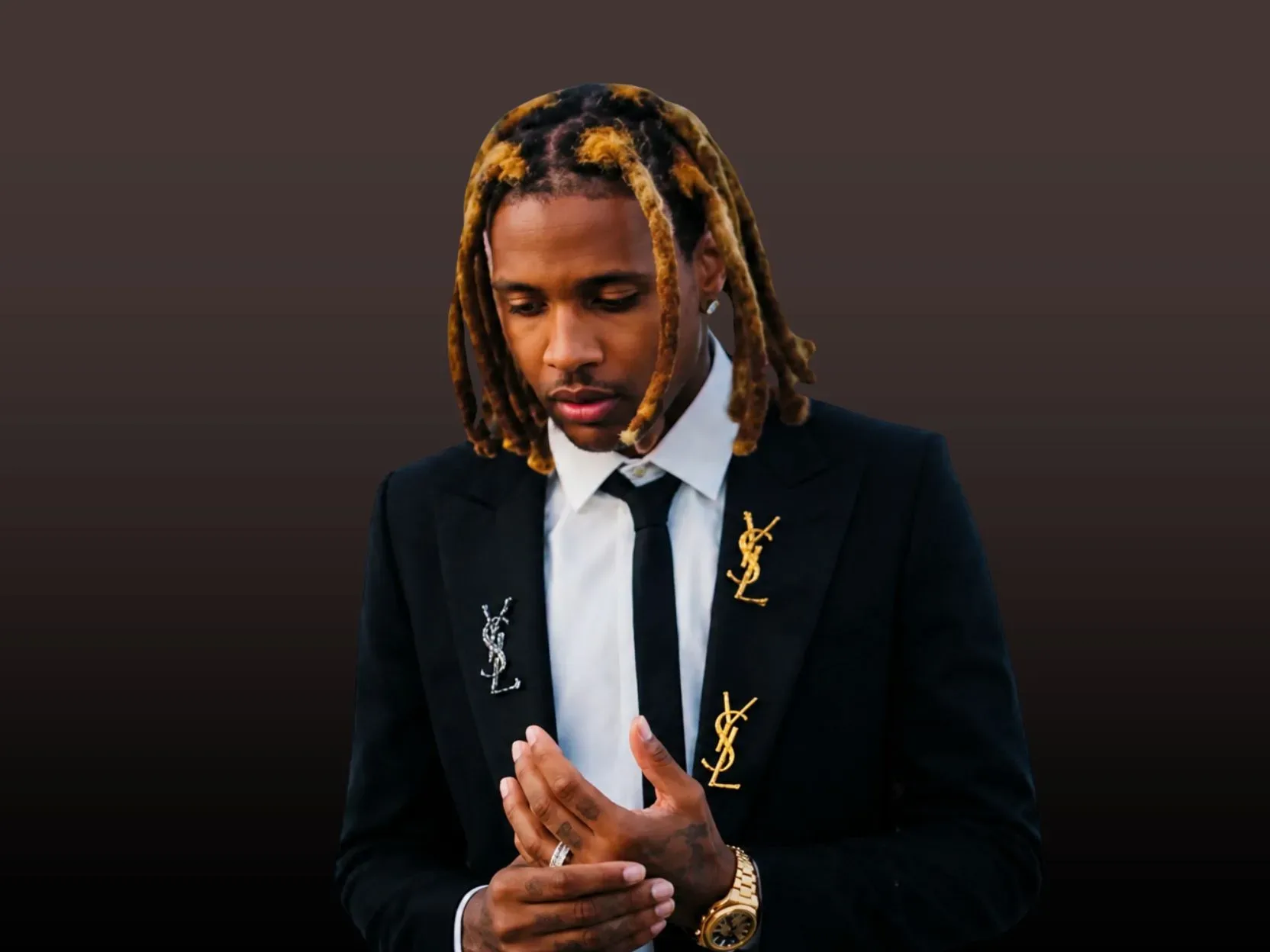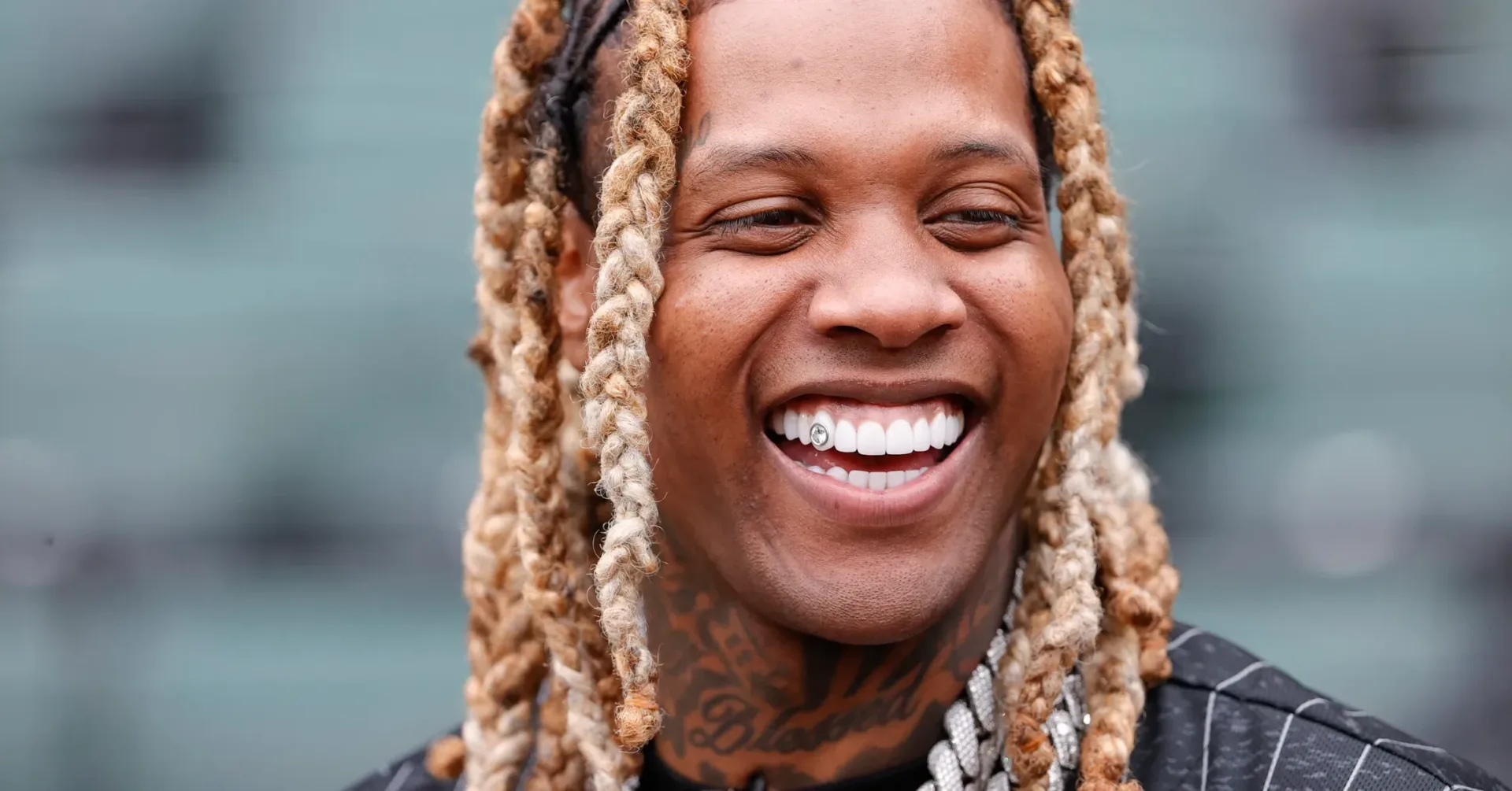
Lil Durk has issued a direct warning to anyone approached about a business opportunity, payment, or financial transaction supposedly connected to him: verify who is actually authorized before money changes hands.
In a social-media message, the Chicago rapper said that his legal team and his wife are the only people he specifically named as trusted contacts for such matters. The central point was blunt: someone relying on an unverified intermediary does so at their own risk.
“If it’s not my legal team or my wife please do not do any business or money transactions with anybody without verification or your loss,” Durk wrote.
The post does not accuse a particular person of impersonation, misrepresentation, or fraud. It also does not say whether a specific attempted deal led to the warning. That distinction matters. The available message is a preventive instruction about authorization, not a detailed allegation against an identified individual.
What Durk’s message does—and does not—establish
Durk’s wording establishes a limited but important rule for people who may receive messages, pitches, or requests invoking his name: do not treat an asserted connection to the artist as proof that a person can negotiate, collect funds, or arrange business for him.
He named two channels that he regards as legitimate: his legal team and his wife, India Royale. He did not provide a public directory, a list of agents, a transaction process, or a way to independently contact those representatives in the message described here. As a result, the practical instruction is not to assume that a social-media account, a mutual acquaintance, a claimed affiliation, or an urgent request is enough on its own.
That is especially significant because “verification” is a broader process than simply asking someone to confirm their identity in a message. In ordinary business terms, verification means establishing that the person communicating is both genuine and authorized for the specific arrangement being discussed. A person could accurately claim to know an artist and still lack authority to accept money, negotiate a contract, or speak for that artist on a particular matter.
The warning also separates personal proximity from formal authorization. Durk did not say that everybody in his wider circle is empowered to make deals. Instead, he narrowed the people he publicly identified. For prospective partners, promoters, vendors, and fans, that is the meaningful takeaway: familiarity and access are not substitutes for a confirmed representative.
A practical reading of “verify” before any transaction
The post offers no prescribed verification checklist, so it would be inaccurate to suggest Durk has endorsed a particular method. Still, the message clearly supports a cautious approach before sending funds or entering an agreement presented as being on his behalf.
- Pause before payment: An alleged deal should not become credible merely because the request is time-sensitive or comes with a recognizable name attached.
- Use an independently confirmed contact route: Rather than relying only on a phone number, email address, or account supplied by the person making the pitch, seek confirmation through a known legitimate channel.
- Confirm the scope of authority: A claimed associate may not be empowered to handle the particular booking, licensing, appearance, payment, or other transaction proposed.
- Keep a record: Written confirmations, contract materials, and clear payment documentation can help establish what was represented and by whom.
- Do not equate association with approval: Durk’s wording specifically warns against treating a claimed relationship as sufficient grounds for a financial deal.
These are general risk-reduction principles, not claims about a particular person or transaction involving Durk. His post does not identify a payment platform, a contract, a proposed appearance, or an alleged scam. It simply puts the public on notice that unverified dealings conducted in his name may not be legitimate.
Why the timing has drawn attention
The warning comes while Durk remains in federal custody during an ongoing legal process. On September 11, a Los Angeles jury acquitted him of all five charges in a murder-for-hire trial tied to allegations that he orchestrated a 2022 attack targeting Quando Rondo. Durk’s attorneys welcomed the verdict and sought his release.
That acquittal did not end his time in custody because a separate federal prosecution remains pending. Durk has denied charges of murder in aid of racketeering and a related firearms offense. A judge moved that trial to August 30, 2027, after the defense sought additional time to prepare.
He is scheduled to return to court on November 4 for a bond review hearing. A bond review concerns whether a defendant can be released from custody while a case proceeds, subject to the court’s determination and any conditions it may impose. It is not a decision on guilt or innocence in the remaining case.
That distinction is worth keeping clear because the two federal matters have different procedural outcomes. The September jury verdict concerned the five charges in the Los Angeles murder-for-hire trial. The later trial date concerns the separate remaining prosecution, which Durk contests. Reporting the acquittal accurately does not erase the pending allegations, just as the pending allegations do not change the fact of the acquittal in the earlier trial.
For a broader example of how upcoming hearings and procedural disputes can shape entertainment-industry coverage without deciding the merits of a case, see this report on a separate November hearing involving Nicki Minaj.
India Royale’s role in the public message
Durk’s warning expressly refers to his wife. The reference points to India Royale, who has publicly supported him during the federal proceedings. After the September acquittal, Royale shared a photograph of Durk with their daughter Willow and thanked God.
Durk also publicly thanked people supporting his defense. In a separate post, he shared a photograph of his attorneys and expressed gratitude to his family and supporters. Those acknowledgements offer context for why his message singled out his legal team and Royale, but they do not create a public authorization for other relatives, friends, associates, or online accounts.
In other words, the post is narrow by design. It tells the public whom Durk says to recognize in connection with business and money matters; it does not provide a blanket endorsement for anyone who says they are part of his operation.
The bigger practical implication
Celebrity names can carry commercial value even when the celebrity is not directly involved in a proposed arrangement. A request can be framed as a booking, partnership, promotion, appearance, endorsement, investment, or access opportunity. Durk’s message cautions that the name attached to a request is not the same thing as confirmed authority behind it.
For businesses, that means a deal should be evaluated on documentation and verified representation rather than social pressure or apparent personal connections. For fans, it means a request for a deposit, fee, donation, or other payment should not be assumed authentic because it references an artist. For anyone approached with an offer, Durk’s warning supports a simple standard: get confirmation before treating the transaction as official.
Nothing in the post reveals whether money was already lost, whether an alleged impersonator contacted anyone, or whether legal action is being pursued over a particular incident. The absence of those details should temper speculation. The confirmed development is the warning itself, alongside Durk’s identification of his legal team and Royale as the people he wants others to recognize for verified business dealings.