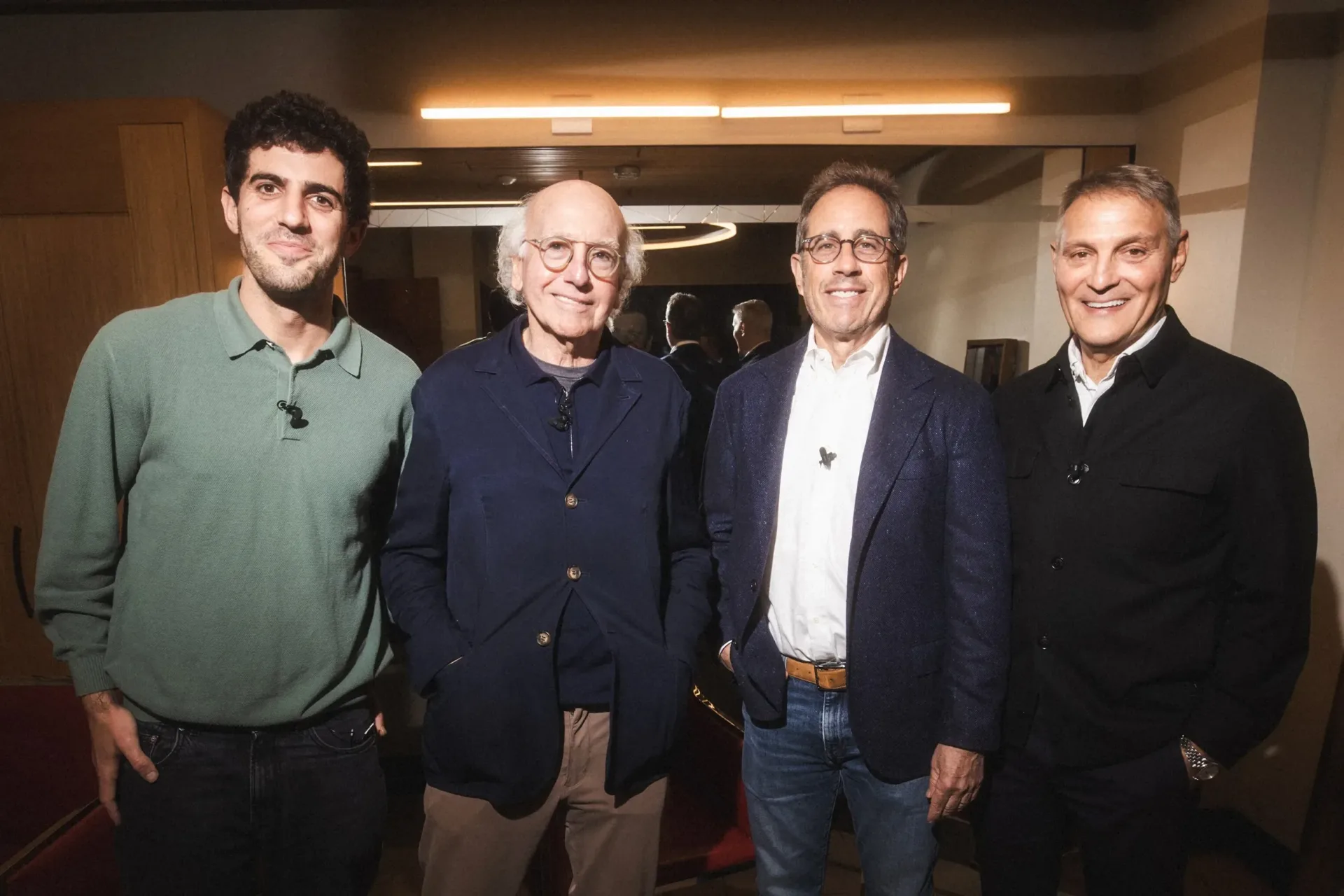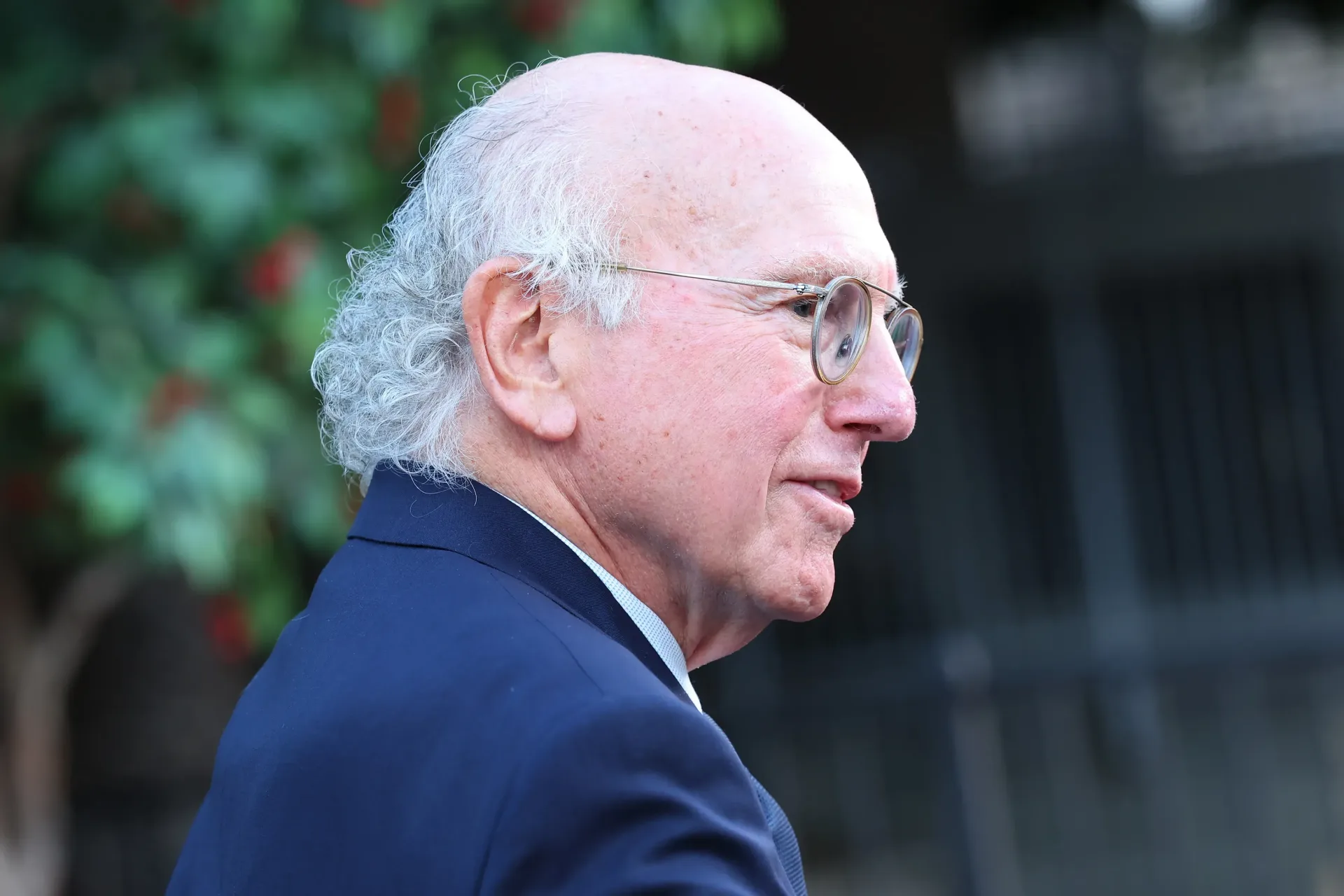
Larry David agreed to participate in an authorized biography only after Blake J. Harris reframed the project. Rather than a conventional account of a private person’s life, it would primarily follow the work: the creative path around Seinfeld and Curb Your Enthusiasm, with David at the center of a larger ensemble of friends and collaborators.
That distinction seems to have mattered. David’s first reaction to the prospect had been a thorough argument against it: he did not believe his life was especially interesting, did not expect an audience for a book about him, and suggested that the writer could spend the time on a better subject. Eventually, he sent a brief concession: “Oh Jesus. If we must.”
Six years later, Emperor of Nothing: The Making of Larry David was published on Oct. 20. The title is pointedly David-esque, but the book’s central tension is more interesting than the joke. Harris had unusually sustained access to a creator celebrated for protecting his privacy and for making a comic persona out of refusing the usual social accommodations. David participated, read the manuscript, offered notes, and still reportedly said that, if given another chance, he would not do it again.
That was not framed as criticism of Harris’ work. David clarified that the discomfort was about being known at all. For readers, that is an important line: an authorized biography means the subject cooperated; it does not mean the subject necessarily loves the outcome, controls every sentence, or wants the completed portrait to exist.
A biography built around the work, not the myth
Harris is not approaching David simply as a celebrity profile subject. He had written books about the video-game and technology industries before beginning this project, and called himself a Larry David historian. His plan required David’s participation because he believed subjects should be able to tell their own stories. Before contacting David directly, Harris spent months speaking with people in David’s close circle and professional life.
Alan Zweibel, David’s friend, made the email introduction. Harris’ unusual opening gambit was to ask for an initial conversation devoted entirely to the New York Yankees: no Seinfeld, no Curb, no standard career-interview checklist. The call went ahead on those terms.
It was a canny way into the project, but it also explains the apparent tone of the book’s process. A “work biography” does not have to be a press-release tour through credits and accolades. It can ask how a creative career developed, what collaborators contributed, what failed, what its maker still questions, and what a finished show meant in its own moment. For David, it also meant attention could be shared with the people around him rather than fixed exclusively on private life.
Harris said he and David spoke every week by phone or FaceTime for the first six months, during the COVID period. Across the following five years, the rhythm reportedly became roughly monthly calls and in-person meetings in Los Angeles about twice a year, supplemented by text messages. That kind of duration matters more than a single marquee interview. It gave Harris the chance to return to subjects, build up context, and let conversation move beyond rehearsed answers.
Related coverage includes Larry David’s Authorized Biography Arrives With His Reluctant Participation.
Archival material helped establish that trust as well. Harris described finding old advertisements connected to places David remembered, including Neptune Lanes, where David had bowled. These may sound like minor details, but they show the practical value of research in biography: an archive can turn a remembered place into a checkable piece of a lived environment, rather than treating memory as the only record.
The finale conversation and the danger of too much recap
One early exchange apparently opened a larger discussion about the divisive Seinfeld finale. Harris offered a specific theory: viewers encountered two retrospective programs in close succession. David’s finale used a court-case structure to bring back characters from the series, making it a narratively structured kind of clip show. Meanwhile, Jeff Schaffer and Alec Berg had been preparing a separate 45-minute clip show that NBC aired before the final episode.
The explanation is not presented as a definitive diagnosis of every viewer’s response. Taste is not a technical problem with one provable answer. Still, it is useful production context. A clip show is an episode built substantially around material from earlier episodes, traditionally used to recap, celebrate, or economize production. The finale’s purpose was not identical to a standard recap: it used familiar characters and moments as elements of its ending. But viewers who had just watched an extended highlights program could reasonably have felt saturated by references before the main episode began.
David reportedly had not realized that the preceding clip show had run. In Harris’ telling, the realization was therapeutic rather than merely trivia. It supplied a concrete scheduling factor that may have influenced the reception of a hugely scrutinized finale. More importantly, the conversation seems to have marked a change in David’s willingness to continue: when Harris asked to speak again, David answered that any time would work.
For anyone interested in television criticism, it is a reminder that a show is not experienced only as an isolated script. Broadcast scheduling, promotional framing, companion programming, and audience expectation can shape the way an episode lands. The same basic separation between a character and the conditions around that character also comes up in fiction more broadly, including in the ongoing conversation around David in Cyberpunk: Edgerunners Season 2.
Participation did not mean editorial control
Harris shared material with David in advance but retained final editorial say. That is a significant distinction in the language around authorized books. Authorization can provide access, interviews, corrections, and insight. It does not automatically turn the resulting work into a manuscript dictated by its subject.
David did make requests. The revealing part is what he apparently wanted removed: material that painted him as sweet. Mary Steenburgen had offered a warm assessment of David and said he would be someone she might list as an emergency contact. David marked the comment as “too nice” and embarrassing. Harris used half of it.
That anecdote makes a useful counterpoint to the public image. David is often associated with a comic worldview built on pettiness, irritation, rigid personal codes, and arguments no sensible person would escalate. Yet he reportedly was not chiefly worried about appearing foolish. He was wary of being rendered flattering. That is not necessarily a contradiction. It may be one reason the persona works: self-regard is generally a more tempting target than sentimentality.
Harris also said David objected to passages about daughters Cazzie and Romy because they were not funny. Harris kept that material, arguing that it showed David as a father and as a person rather than merely a comedy mechanism. The book reportedly does not spend much time on either of David’s marriages or his divorce, a limitation Harris openly attributes largely to his own lack of interest in those areas, alongside an awareness that David likely did not want to dwell on them.
That editorial choice has practical consequences for prospective readers. Those seeking an exhaustive account of David’s romantic history may find this book deliberately incomplete. Those seeking a record of creative development, professional relationships, and the machinery behind work associated with Seinfeld and Curb Your Enthusiasm are more likely to find the intended focus.
The real person, the screen character, and an uncomfortable line of access
Harris describes a familiar problem for performers and creators whose work is closely tied to a recognizable onscreen alter ego. David sees himself and the version of “Larry David” in Curb Your Enthusiasm as very different. People in his life, including his wife, reportedly see considerable overlap. Harris’ assessment is that the real David has more heart.
The evidence he offers is modest but meaningful. During occasional disagreements over the six-year process, one of the two would apologize. The Curb character, constructed to keep turning minor slights into a catastrophe, generally does not operate that way. After David said he regretted participating in the biography, Harris was hurt. David sensed that reaction and clarified that he thought Harris had done a good job; his regret was about exposure rather than the book’s execution.
This is not proof that the screen persona is unrelated to the man. It is a reminder that persona is an artistic construction, even when it borrows a name, habits, anxieties, and comic instincts from its creator. Onscreen Larry’s refusal to apologize is a useful engine for a scene. A real relationship, whether between a writer and subject or between friends, has to survive after the scene ends.
That boundary also explains why David’s participation remains slightly ambiguous. “I regret doing the book” can be funny precisely because it sounds like something the public expects him to say. Harris is not certain how much was a joke. The subsequent reassurance suggests sincerity and care can coexist with the impulse to make the remark in the first place. David appears to have allowed the project, helped it, and remained uneasy with its premise.
The book arrived after a different project disappeared
Harris had one major holdout among the people he hoped to interview: Larry Charles. Charles was working on what he described as a competing documentary project, later identified as The Larry David Story. It was promoted for HBO but did not air on its scheduled day.
Harris said his understanding was that David wanted the documentary pulled, and he remained nervous that a comparable reversal could somehow hit the book late in the process. He acknowledged that fear was unreasonable: David did not have comparable power over HarperCollins. Still, the story of the unseen documentary gives the biography’s publication a slightly surreal backdrop. A project about David that the subject participated in can become an object of resistance after the fact.
The book, however, was published. It has the unusual value of access paired with friction, rather than access that smooths every edge away. David did not commission it, did not want it mistaken for a vanity exercise, and did not receive final editorial control. He did read it, comment on it, and appear concerned when his own blunt reaction hurt the person who had spent six years writing it.
For a figure whose comedy has often made discomfort productive, that may be the most fitting available frame: Emperor of Nothing is not presented as the final answer to Larry David, nor as a triumph of cooperation. It is a work-focused portrait made possible by a reluctant agreement—and shadowed by the possibility that its subject still would prefer the portrait had never been drawn.