Marine Atlan’s La Gradiva places the supposedly ordinary rituals of a school trip against one of Europe’s most catastrophic landscapes. The French feature follows a group of students travelling to Pompeii during their final year, with Mount Vesuvius permanently present at the edge of their world. Its premise may sound like it arrives with a giant underlined metaphor, but the film’s reported strength is its attention to the unruly small stuff: loud music, unreturned messages, sex, posturing, petty friction, political talk at dinner and the constantly shifting social map of adolescence.
Running 145 minutes, La Gradiva is Marine Atlan’s debut as a director. Atlan wrote the screenplay with Anne Brouillet and also shares cinematography credit with Pierre Mazoyer. Guillaume Lillo edited the film. It is a French production from Les Films du Poisson, co-produced with Arte France Cinéma and Bibi Film TV; Inès Daïen Dasi is credited as producer and Angelo Barbagallo as co-producer. The dialogue spans French, Italian and English.
The film was screened at New Horizons Film Festival on July 27, 2026, and is also associated with Cannes Critics’ Week and the Toronto Film Festival. Those facts establish the film’s festival context, but they do not answer its more interesting question: how do you make a crowd of teenagers feel like individuals without turning everyone else in the class into background noise? La Gradiva appears to make that challenge its entire engine.
A school trip where every side character has a life off-camera
The opening is set aboard an Italian train. Suzanne, played by Suzanne Gerin, passes Toni (Colas Quignard) in the corridor as he sees his closest friend James (Mitia Capellier-Audat) in an awkward sexual encounter with another student. Back with the group, Toni turns up his music and earns another reprimand from Mme Mercier, their teacher, played by Antonia Buresi. She raises the issue of his unfinished work; Toni answers with the kind of reflexive excuse that may be more familiar to him than the homework itself.
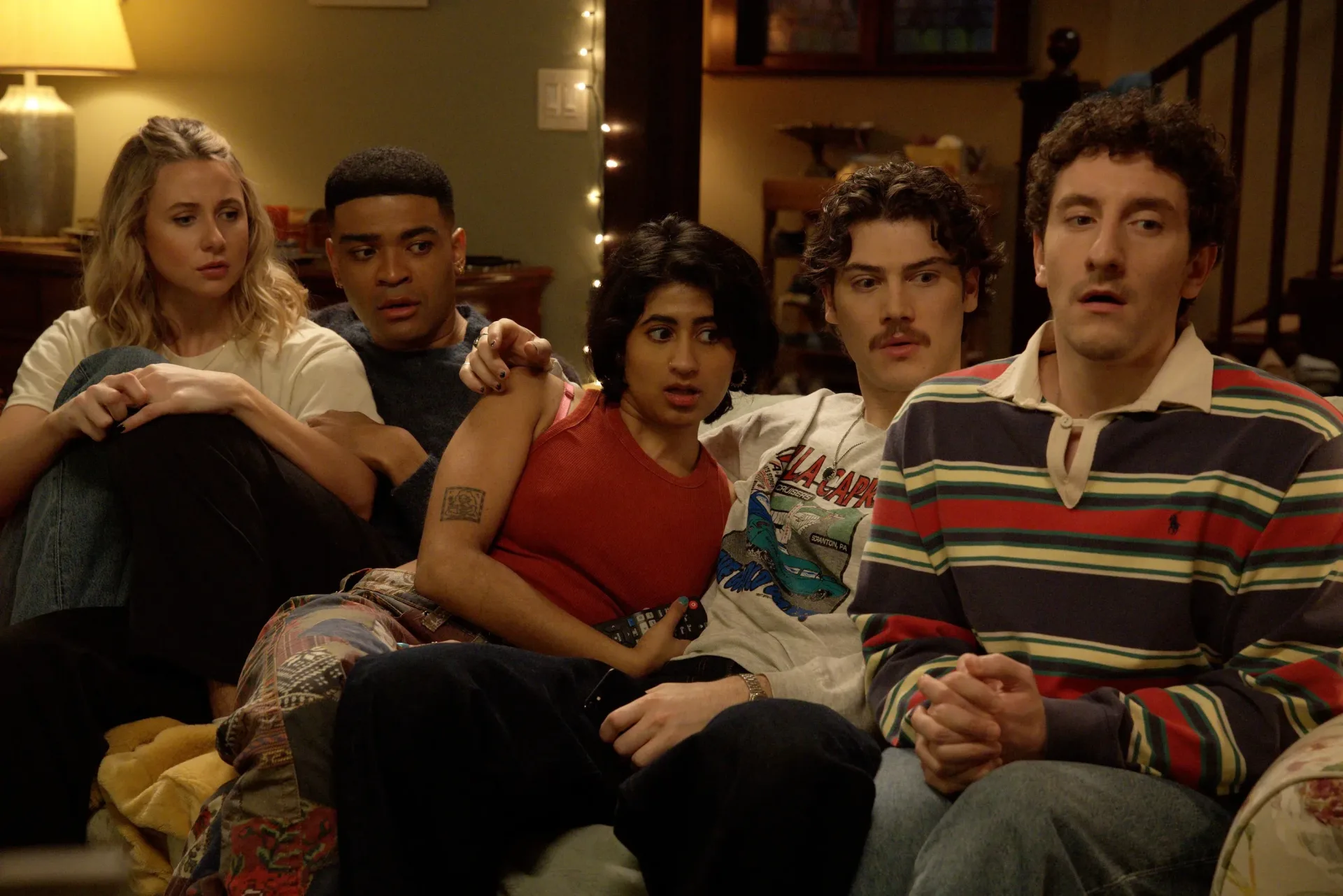
That compact train setup introduces the film’s crucial relationships. Toni is boisterous and eager to foreground his Neapolitan family connection. James is magnetic, confident and apparently insulated by privilege. Suzanne is artistic, remote and openly irritated by the boys’ disruptive energy. Yet the story does not reportedly treat those early impressions as fixed character cards. Teenagers revise themselves constantly, both in public and internally, and the classmates form, fracture and reform into new groups as the trip continues.
That density is especially important in a movie about a class rather than a single hero. A glance toward another table, a football game, a bedroom conversation or a message being decoded can all suggest a different narrative happening just beyond the present scene. The film gives particular attention to Toni, James and Suzanne, while allowing the larger young ensemble and Mercier to retain their own weight. Buresi’s Mercier is an overworked Latin teacher, but she has not entirely surrendered her attachment to the art and history she teaches. Even students who arrive disengaged can be caught, briefly and unexpectedly, by her enthusiasm.
It is a useful reminder that school stories work best when the adults are more than obstacles or joke machines. Mercier has authority, certainly, but she also represents a vanishing form of care: the adult attempting to hand on something meaningful while knowing that a busload of restless nearly-grown people may be more focused on their phones, crushes and private disasters. The generational tension is real, but it is not framed as simple contempt.
Toni, James and Suzanne resist the labels around them
Toni’s sexuality is part of the film but not its sole organizing principle. He looks through Grindr while spending time with James, and there are hints that his feelings toward his friend are not purely platonic. The group’s response to Toni being gay is presented as matter-of-fact rather than as a specially designed issue-of-the-week conflict. That decision leaves room for the messier forces shaping him: class, family mythology, longing, self-image and the need to seem more secure than he is.
His fixation on roots in Naples carries a particular ache. It may be a genuine point of connection, but it can also function as a decorative version of identity—something glamorous to hold close when other parts of life feel constrained or unpromising. James, meanwhile, moves casually through attention and intimacy, including after his encounter with Angela, played by Hadya Fofana. His coolness is not necessarily confidence; like many teenagers, he may be performing control because the alternative is admitting uncertainty.
Suzanne’s defenses take a different form. Reserved and skeptical, she voices a harsh assessment of how desirability seems to be distributed among women. Her insight is painful precisely because it comes wrapped in a certainty that cannot possibly account for her whole future. The film’s compassion seems to lie in recognizing the partial truth of these self-definitions without allowing them to become verdicts. Toni’s romantic imagination and Suzanne’s bleak self-protection both reveal young people trying to explain a social world that feels as if it has already judged them.
Stories about emerging adulthood often favor an easy sorting system: the clever one, the rebel, the outcast, the seducer. La Gradiva instead appears invested in how quickly those categories fall apart. That makes it a compelling companion, in a very different format and setting, to the contemporary adulthood anxieties explored in the growing audience for Adults Season 2. Atlan’s characters are even earlier in the process, caught in the stage where everyone is testing a role and fearing they have already been permanently cast.
Pompeii is history, scenery and an ever-present warning
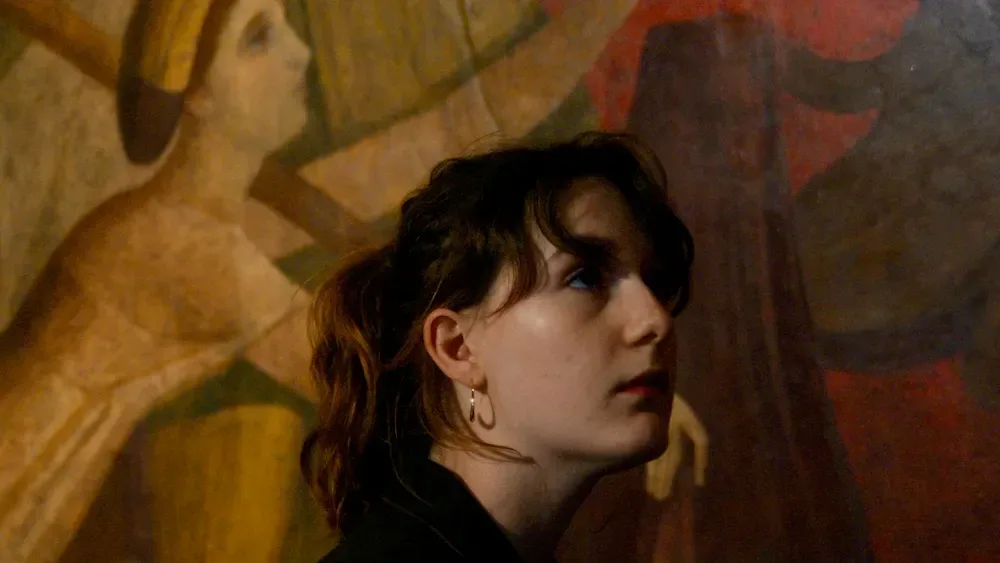
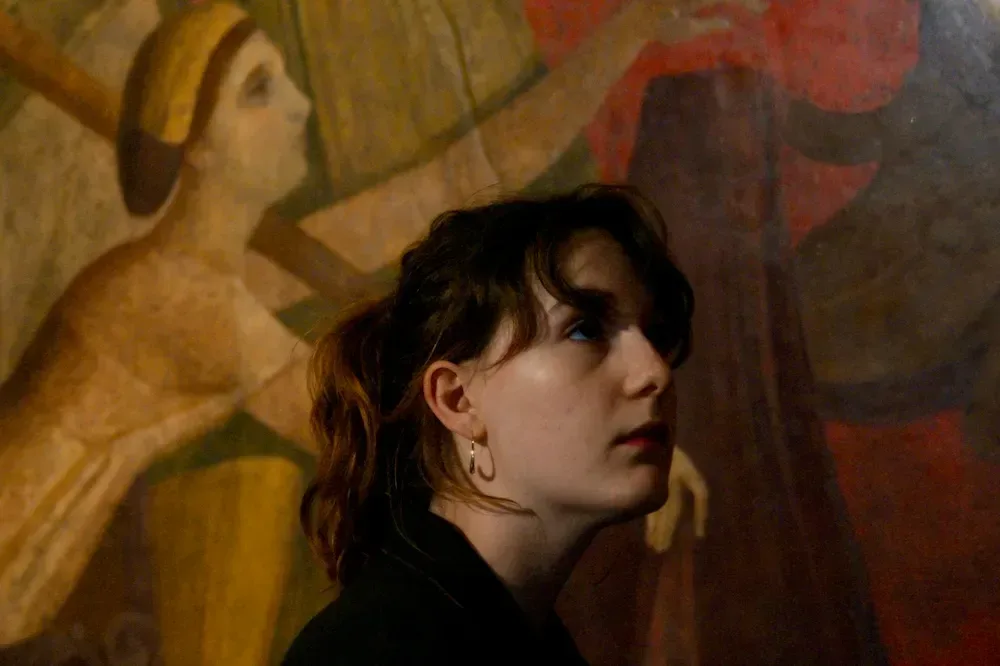
Vesuvius could easily dominate a drama like this. The volcano is such an enormous symbol of buried catastrophe, impermanence and lives stopped in place that a film has to work hard not to let it flatten everything around it. La Gradiva reportedly uses the setting less as an answer than as pressure. The Bay of Naples, Pompeii’s frescoes and statues, and the preserved body casts provide extraordinary visual material, while also sharpening the awareness that history can turn ordinary moments into the last moments anybody remembers.
Atlan and Mazoyer’s camera work is described as attentive to faces as much as landscapes: students drifting between boredom, fascination and resistance. The film also uses a summer Europop soundtrack and demanding group staging to keep its setting lively rather than solemn. Air, sunlight and sea views are not merely pretty backdrops. They create a sense of openness around characters who cannot yet see beyond their immediate humiliations, attractions and grudges.
That tension is central to the film’s emotional design. Viewers can see a broad field of connections and consequences. The teenagers cannot. Each person acts on fragments of knowledge: an overheard exchange, a failed text, an assumption about somebody’s intentions, an incomplete glimpse of a friend’s pain. The looming tragedy is therefore not presented as one villain’s doing. It emerges from a chain of limited perspectives, neglects and mistakes—human failings, but not necessarily cruelly calculated ones.
Why the film’s scale matters
A 145-minute running time gives a school ensemble room to breathe, and that duration seems essential to La Gradiva rather than indulgent. The movie needs space for social alliances to change, for casual scenes to gain a second meaning, and for minor observations to return with heavier force. Its apparent achievement is not only the intensity of the eventual tragedy but the amount of daily life built around it. The characters have to feel noisy, contradictory, flirtatious, boring, funny and alive before any larger meaning can land.
The cast includes Rouge Isaac, Lou-Ann Le Glorennec, Chamathka Warahena, Cherazade Hammedi, Camille Ménard-Harnish, Gustave Tersiguel, Mathéo De Carlo, Alma Polgar, Mariam Bouras, Léonilde Moucheroud, Emmanuelle Lafon, Lila Latronche, Anna Heckel, Romaïssa Taleb, Djimo Salim Nassokho, Kessy Mendy and Youssef Ben Hadj Amor alongside Buresi, Quignard, Gerin, Capellier-Audat and Fofana. That extensive roster reinforces the project’s ambition: this is not a tiny story pretending the rest of the classroom does not exist.
A late voiceover reportedly reaches back from a future point of view, offering a final reframing without erasing what happened. The gesture fits a film preoccupied with the limits of what anyone can know while they are living through it. La Gradiva finds teenage life at its loudest and most isolated, then asks for more patience toward the people trapped inside that contradiction. Pompeii supplies the historical scale, but the movie’s real subject is the moment before a young person understands which passing exchange will stay with them forever.