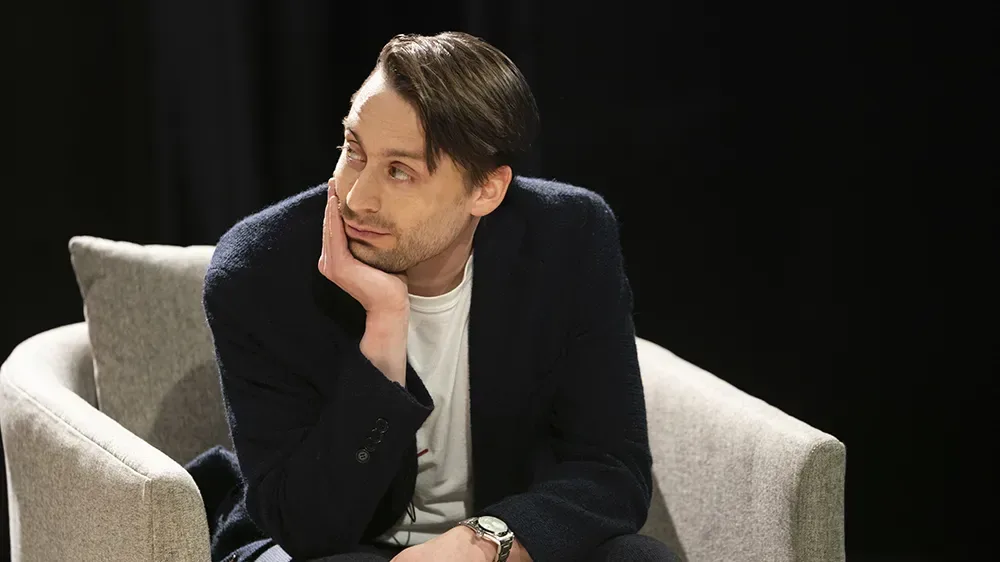
Kieran Culkin has offered a firm personal verdict on the prospect of more Succession: he does not want a spinoff. Speaking while promoting The Hunger Games: Sunrise on the Reaping, in which he plays a young Caesar Flickerman, Culkin dismissed the idea in deliberately comic fashion, floating the hypothetical title Cousin Greg: The Sitcom? before repeating that it would be “a terrible idea.”
That is not the same thing as an official corporate decision about the future of the property. Culkin is speaking as one of the drama’s central performers, rather than announcing a formal production plan. Still, his remarks matter because they pair a blunt rejection of a continuation with new detail about how seriously the creative team considered keeping the original show going.
In Culkin’s account, Succession creator and showrunner Jesse Armstrong spent the final season exploring whether there was a workable path to one more season. Culkin said Armstrong presented him with three potential ideas for a fifth season, and that all of them sounded good. Yet Culkin’s ultimate view is that the fourth season’s ending was the correct stopping point.
It is a useful distinction. A story can have more potential material without needing more episodes. In television, “could continue” and “should continue” are very different claims, especially for a series built around a decisive endgame rather than an open-ended weekly format.
Culkin’s case is for an ending, not an absence of ideas
Culkin played Roman Roy across all four seasons of Succession, part of an ensemble that also included Brian Cox, Sarah Snook, Jeremy Strong, Nicholas Braun, Matthew Macfadyen and Alan Ruck. He said he misses playing Roman and misses the wider experience of making the show. His objection, then, is not framed as dissatisfaction with the character or the work.
Instead, Culkin’s position is rooted in closure. He recalled asking Armstrong what would happen in season four after generally preferring not to know plot developments in advance. When Armstrong laid out the ending, Culkin’s response was that it sounded like the end of the series. Armstrong then shared possible season-five directions, which Culkin found compelling, but that did not change his conclusion: the show had finished in the way it was meant to.
That is a notably more nuanced answer than simply saying there was nowhere left to go. Culkin is not claiming that the writers lacked material. He is arguing that the completed shape of the series took priority over potentially interesting additional material.
What “spinoff” means in this context
A spinoff is a new series derived from an existing one, usually by shifting focus to a supporting character, a different setting, or a connected storyline. It can preserve a familiar world while changing the premise. Culkin’s Cousin Greg joke points directly at the risk he sees: reducing a character who worked in a particular ensemble and tone into the sole engine of a new program.
That does not mean every spinoff must be a comedy or a character showcase. But Culkin’s example captures the creative challenge. Succession was an ensemble drama. Roman, Kendall, Shiv, Logan, Tom and Greg were defined not only by individual traits but by constantly changing power dynamics among them. Pulling one person out of that system would require a new dramatic reason for the series to exist, not merely a recognizable name.
His comments also point to an important difference between revisiting a fictional world and extending its central conflict. A continuation has to justify its own stakes. Familiar characters and audience affection may create interest, but they do not automatically provide a new story with the same focus or finality.
Why a completed ending can be difficult to revisit
For viewers, finishing a beloved series can invite the natural question of what happens next. That feeling is especially understandable when a show leaves behind characters who seem capable of continuing their lives beyond the last episode. But a satisfying ending often works precisely because it chooses a final point of emphasis.
Culkin’s remarks suggest he sees Succession as a series that made that choice. The issue is not whether its characters could theoretically appear again. It is whether returning to them would add something essential rather than soften the impact of where the story stopped.
This is also why the existence of unused season-five ideas should not be read as evidence that a fifth season was inevitable. Development is exploratory. Writers and showrunners can consider multiple directions while deciding whether a series has reached its natural conclusion. Culkin’s description indicates that Armstrong gave the possibility genuine thought during the final season, but the process ultimately led to an ending rather than a renewal.
For audiences, that may be both frustrating and reassuring. It confirms that additional possibilities were contemplated, while also reinforcing that the decision to stop was not necessarily caused by a lack of imagination. From Culkin’s perspective, ending at the right moment was part of the achievement.
A reunion is coming, but not a Roy-family return
There is one forward-looking detail for fans of Culkin and Armstrong’s collaboration: Culkin said he will reunite with the Succession creator on a new film. No further details about that project were provided in the discussion described here.
That future collaboration is significant mainly because it separates two ideas that are often treated as one. A creative partnership can continue without extending a finished franchise. Culkin can work with Armstrong again while leaving Roman Roy and the Roy family story where it ended.
It is also the more concrete takeaway from the conversation. The prospect of a new Armstrong-Culkin film is an actual stated collaboration; a Succession spinoff is something Culkin has argued against. Fans hoping for more work from the pair may have something new to watch for without assuming it will be tied to the earlier drama.
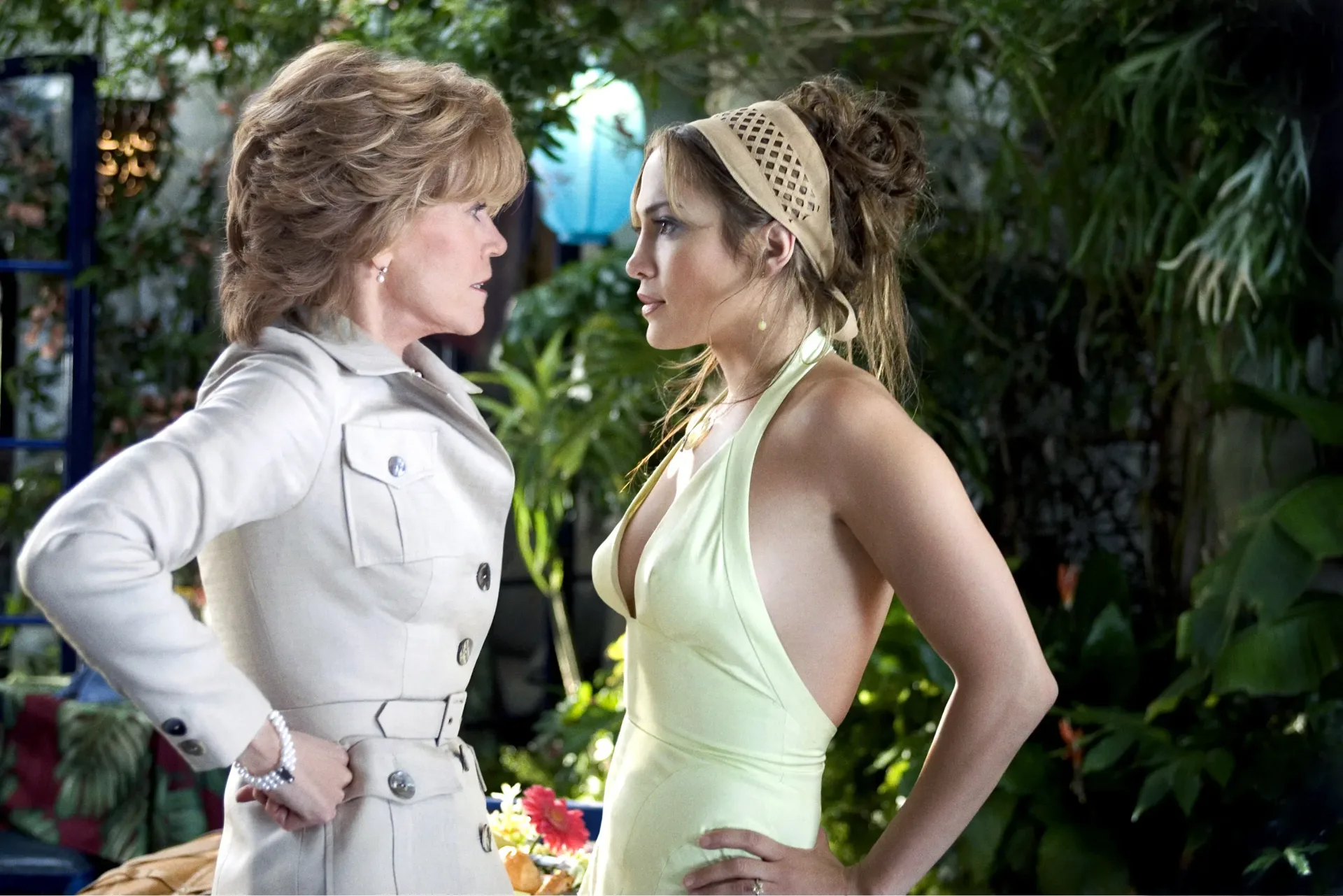
Other legacy properties take a different path when former stars or creators revisit material in a new form. For a separate example of a possible follow-up being discussed, see Jennifer Lopez’s comments on a potential Monster-in-Law follow-up with Jane Fonda. Culkin’s view illustrates the opposite instinct: preserve a conclusion rather than reopen it.
What Culkin is doing now
Culkin’s latest comments arrived as The Hunger Games: Sunrise on the Reaping reached theaters. In the film, he plays a younger version of Caesar Flickerman. The release earned $56 million on its opening day.
That role puts Culkin in another established screen world, but one with a different relationship to continuity and character history. It does not alter his position on Succession. If anything, the contrast makes his answer clearer: participating in a larger franchise is not the same as believing every successful story should keep expanding after its planned ending.
For now, Culkin’s message is straightforward. He remembers Succession fondly, misses Roman Roy, and believes Armstrong had viable ideas beyond season four. But he also believes the series landed where it needed to land. The available indication is not a tease of a Roy-family return, but a defense of leaving a finished story finished.