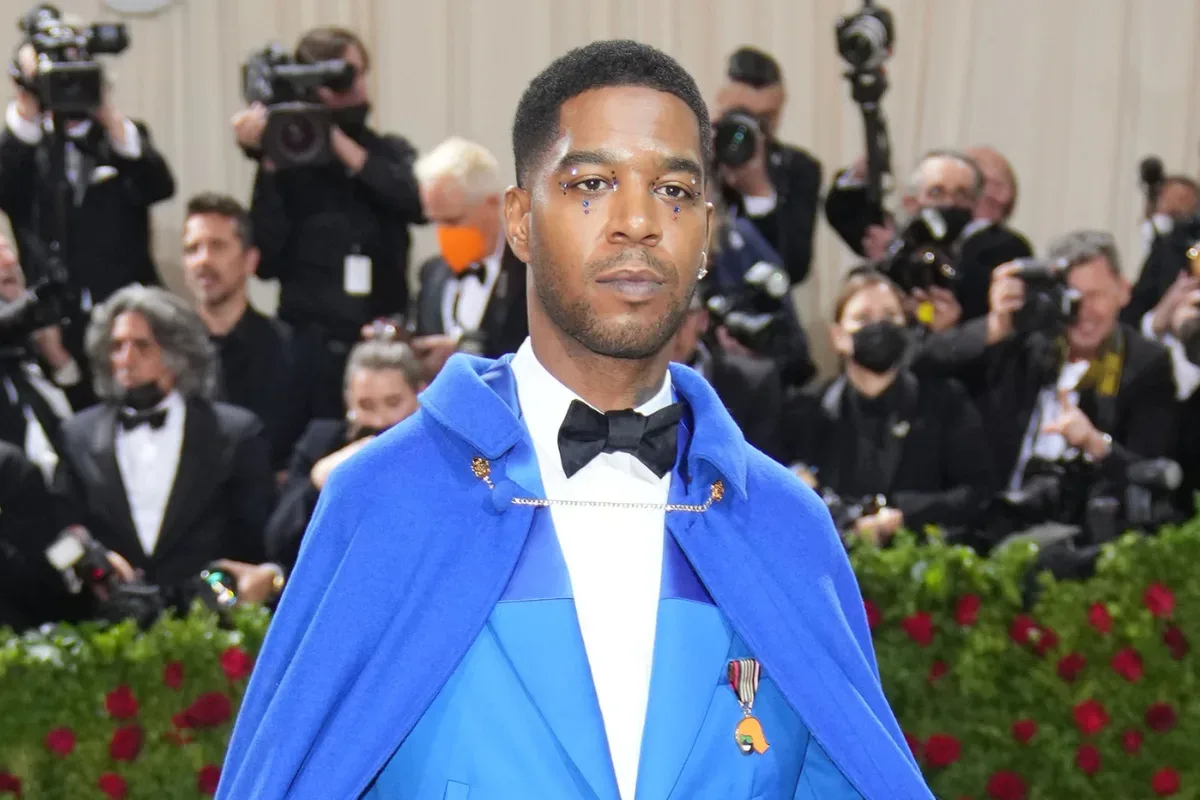
Kid Cudi is planning to bring Jean-Michel Basquiat’s story back to the screen from several positions at once. The musician and actor says he wrote Jean, a film about the New York artist that he intends to direct and star in. He has said filming is planned to begin in 2027.
The project is still at an early stage. Cudi shared the news alongside a wardrobe test and made clear that the wig seen in that image was not the finished design. That is a modest but useful distinction: a wardrobe test is an exploratory step used to assess a character’s visual direction, rather than a promise that every element shown will appear in the completed film.
For Cudi, Jean appears to be a long-gestating ambition finally moving forward on his own terms. He said people had asked him for years about portraying Basquiat, while earlier possibilities never materialized. This time, he wrote the screenplay himself after reading books and speaking to people who knew Basquiat.
“This film will be a love letter to Jean, the 80s and NY city.”
A different kind of creative responsibility
Writing, directing and leading a biographical drama creates an unusually concentrated set of responsibilities. A biopic is a dramatized feature centered on a real person, not a documentary record. The writer must decide which parts of a life belong in a focused narrative; the director then determines how those scenes, performances and locations are expressed onscreen; and the lead actor carries the character before an audience likely to arrive with existing ideas about the subject.
That challenge is particularly pronounced with Basquiat. Cudi is not simply taking on a fictional role or a person unfamiliar to film audiences. Basquiat has already been represented in narrative cinema, appeared onscreen himself, and remains the subject of another documentary project. That existing screen history means Jean will enter a conversation rather than begin one.
What Cudi has described so far points to a personal approach built around Basquiat’s influence on his own work and an affection for the artist’s era and city. The stated emphasis on the 1980s and New York establishes an intention, but it does not yet define the film’s plot, supporting cast, release timetable or final visual approach. Those details have not been provided.
Basquiat’s earlier screen presence
The best-known earlier dramatic feature is Julian Schnabel’s 1996 film Basquiat, which starred Jeffrey Wright in the title role and included David Bowie in its cast. Basquiat’s estate characterized that film as blending factual material with fiction while depicting his rise within New York’s art world.
That framing is worth keeping in mind when considering any forthcoming dramatization of a real life. A feature film can be rooted in research and historical people while still using the compression, construction and interpretation inherent to drama. Cudi’s conversations with people who knew Basquiat and his reading for the script speak to preparation, but audiences should not treat those efforts alone as a guarantee that a film will operate as a comprehensive factual account. The artistic decisions made for Jean remain to be seen.
Basquiat also has a distinctive connection to Downtown 81. In that film, he appeared as himself in a story following a young artist through Lower Manhattan’s art and music scene. Edo Bertoglio directed from a screenplay by Glenn O’Brien. Though filmed in 1981, it was not released until 2000.
That makes Downtown 81 a different kind of reference point from a conventional retrospective portrait. It contains Basquiat’s own appearance and is set amid the environment it depicts. Cudi’s film, by contrast, will be a later interpretation in which one artist portrays another.
Why ‘Jean’ will stand apart from the announced documentary
Jean is separate from the Basquiat documentary announced for Netflix in 2026. Quinn Whitney Wilson and Viridiana Lieberman are directing that project, which is built from rare images, art and recollections from friends and family. Basquiat’s sisters helped tell the story, with the film examining his life through the perspective of people close to him.
The contrast in format matters. Documentary storytelling can assemble testimony, archival images and art to make an argument or trace a life through direct materials. A scripted drama uses actors, recreated settings and scenes shaped for narrative momentum. Neither approach is automatically more meaningful, but they ask viewers to engage differently. The announced documentary’s close-family perspective and Cudi’s authored, acted and directed dramatic interpretation are therefore distinct projects with different tools.
There is also a wider point for audiences who follow cultural figures across music, art and film: the presence of more than one project about the same person does not mean the projects duplicate each other. Their choices of form, point of view and source material can produce very different portraits. Cudi has framed his own purpose in emotional and cultural terms, calling the planned film a tribute to Basquiat, the 1980s and New York City.
Cudi’s move behind the camera
Jean continues Cudi’s run of projects as a filmmaker rather than solely a performer. Earlier this year, he unveiled his directorial debut, Doe, a drama about addiction and survival. Mark Webber, Leah McNamara, Brandon Scott and Brandon Perea were included in that film’s announced cast.
He subsequently followed it with Wrong Number, a horror film from his own script in which he is set to appear opposite Barbie Ferreira. Its premise concerns a self-help author whose new relationship develops into stalking and a sequence of murders.
Those projects place Jean in a developing body of writing-and-directing work, but they do not make it a straightforward continuation of either story. Doe was announced as a drama about addiction and survival; Wrong Number is a horror premise. With Basquiat, Cudi is taking on a real individual whose work and legacy have been discussed, filmed and remembered by people who were there.
That is the practical significance of the research Cudi has described. Books can provide background and chronology, while conversations with people who knew a subject may offer personal insight and help a writer recognize the limits of a simplified public image. Research cannot eliminate the interpretive nature of a screenplay, but it can inform the choices made when shaping one.
What is known—and what is not
At present, the firm details are limited but consequential: Cudi wrote Jean, plans to direct it, plans to star as Basquiat, and has identified 2027 as the intended start of filming. He has shared an early wardrobe test while stressing it is not final, and he has said the project was informed by reading and conversations with people who knew the artist.
There is no supplied information on additional cast members, financing, distribution, a release date, locations, or how much of Basquiat’s life the screenplay will cover. A planned filming year is not the same thing as a confirmed release date, and an early visual test is not a finished production image. Keeping those boundaries clear is especially useful around prominent projects, where a first social post can quickly be mistaken for a completed package.
For now, the central development is Cudi’s decision to make the film himself after prior efforts to see him play Basquiat did not come together. It is a creative swing that joins his filmmaking ambitions to an artist he says has influenced him throughout his career. Discussions of artistic identity and representation have also recently surfaced elsewhere in entertainment, including in questions surrounding an artist’s likeness in AI video; Jean concerns a different medium and situation, but it likewise puts authorship, image and interpretation at the center of the conversation.
Whether Jean ultimately becomes a sweeping life story, a narrower period piece, or something more impressionistic is unknown. Cudi’s stated “love letter” framing suggests that the atmosphere of 1980s New York will be integral to its identity. The next meaningful developments will be production progress and the creative specifics that turn that intention into a film.