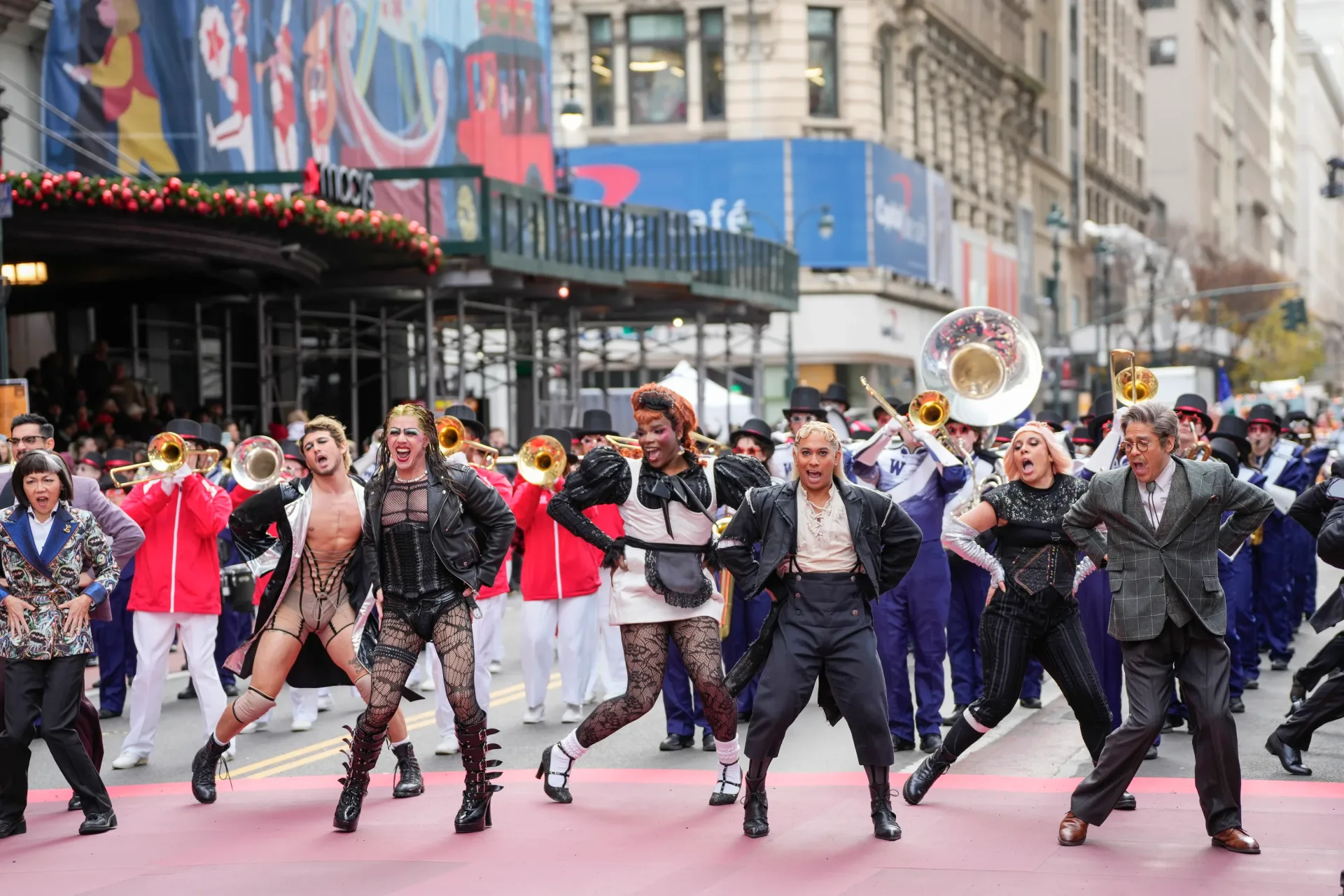
Kevin McHale has answered online criticism of The Rocky Horror Show’s appearance in the Macy’s Thanksgiving Day Parade with the same sort of mischievous, unapologetic energy audiences might expect from a production built around “The Time Warp.”
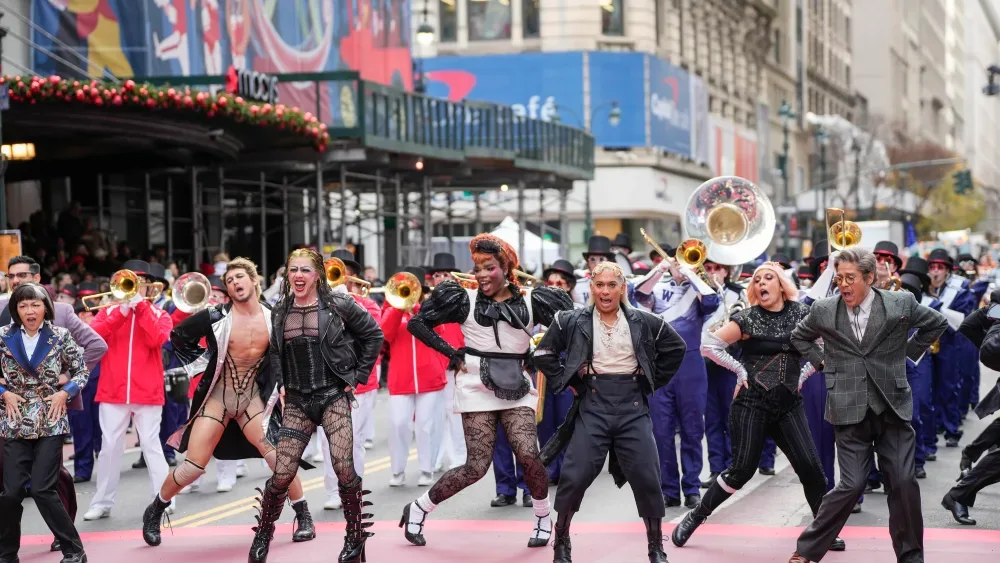
McHale, who plays Brad in the current Broadway revival, appeared with fellow cast members during a 10-minute Broadway medley in the parade telecast. Margaret Cho, who plays the Narrator, was among the performers featured. The segment also brought together casts from productions including Hamilton, Wicked, Rent and Chicago.
Some social-media users objected to the costumes and presentation of the Rocky Horror portion, framing their complaints around whether it belonged in a family-viewing parade broadcast. McHale did not take a conciliatory route. In posts on X, he dismissed the backlash as a “faux outrage spiral,” encouraged people to see the show’s eight weekly performances, and traded replies with individual detractors.
One response captured the practical problem with judging the musical from a shortened daytime segment: “Wait until you see what happens in Act 2!” McHale wrote to a user who characterized the appearance as inappropriate for children.
A Broadway medley meets a famously unruly musical
The tension here is not difficult to identify. A parade telecast is a broad, public-facing entertainment format, designed to move quickly among performances and attractions. The Rocky Horror Show, meanwhile, is an intentionally provocative stage work whose identity is inseparable from exaggerated characters, suggestive costume design and gleefully transgressive humor.
A Broadway medley is necessarily an excerpt rather than a complete representation of any participating production. It condenses a show’s musical and visual language into a few minutes and places it beside unrelated productions with very different tones. That format creates reach for the shows involved, but it can also bring work aimed at theater audiences into contact with viewers unfamiliar with its basic premise or its long-established reputation.
McHale’s replies make clear that he viewed the objections less as good-faith surprise than as culture-war outrage. His approach was not to explain away the show’s aesthetic or insist that it be read as something safer than it is. Instead, he leaned into the premise that Rocky Horror is supposed to be a little too much for viewers who want it to behave like conventional holiday television.
That distinction matters. Criticism of a performance can concern craft, context or suitability; the posts McHale chose to answer focused particularly on costumes and the presence of the show in a broadcast associated with family viewing. His responses were therefore about the attempted policing of the production’s character, not a detailed argument over staging choices.
Why “The Time Warp” is a natural showcase selection
“The Time Warp” is among the most recognizable pieces associated with The Rocky Horror Show. For a parade setting, a recognizable number with a strong visual identity and an ensemble-friendly presentation is an obvious fit. It gives a brief televised segment an immediate hook without asking viewers to follow the full plot.
But recognizability does not make a musical neutral. A popular song can be familiar enough to work as a showcase while retaining the strange, camp-inflected personality of its original show. Camp, in this context, refers to a deliberately stylized and heightened sensibility: bold performances, theatrical excess, artifice and humor often work together rather than striving for realism. That quality is a central part of why Rocky Horror is distinctive—and also why a compact daytime performance may prompt strong reactions from people encountering it outside a theater.
McHale’s joke about Act 2 points back to that contrast. The parade performance was only a carefully limited slice of a full stage production. It could suggest the show’s theatrical attitude, but it was not a substitute for the complete work or its later developments.
The current revival has outgrown its original limited run
The production now playing is directed by Tony Award winner Sam Pinkleton and features Jake Shears as Frank-N-Furter. McHale plays Brad, while Cho takes on the Narrator role.
The revival was initially planned as a limited engagement scheduled to end in June. It has since been extended through May 2027. An extension does not settle every debate around a production, but it is meaningful context for the parade appearance: this is an active Broadway run with a substantially longer lifespan than originally announced, not a one-off reunion performance built solely for television.
McHale used his social-media replies to direct attention toward those continuing performances at Studio 54. That is a familiar dynamic around high-profile broadcast appearances. A television segment can operate as a very public introduction, while the full theatrical experience remains the product being offered to audiences who want more than a few minutes of a musical number.
For readers tracking the broader parade, the broadcast also included a Dolly Parton tribute led by Megan Hilty. The 100th edition of the event aired live on Saturday after weather led to a postponement from Thanksgiving Day, the first such postponement in the parade’s long history. Savannah Guthrie, Hoda Kotb and Al Roker returned as hosts.
The parade’s lineup illustrates the inherent variety of an event designed around many kinds of entertainment at once. A Dolly Parton tribute, mainstream Broadway showcase and the deliberately unruly world of Rocky Horror can all occupy the same broadcast. That range is part of the attraction, but it also ensures that no single segment will land the same way with every viewer.
What the social-media exchange actually changes
McHale’s posts are unlikely to persuade people who objected to the performance in the first place, and they were not written in the language of compromise. They were direct rebuttals, with a promotional nudge for the Broadway production attached. The exchange nevertheless puts a familiar issue into sharper relief: once a piece of theater reaches a major live broadcast, it is discussed not only by theatergoers but by a much larger audience with different expectations.
That does not mean a show must smooth out its identity to be visible in a mass-market setting. In this instance, McHale’s response suggests the opposite. He treated the outrage as evidence that the production’s subversive reputation remains intact, then invited interested viewers to encounter the complete version onstage.
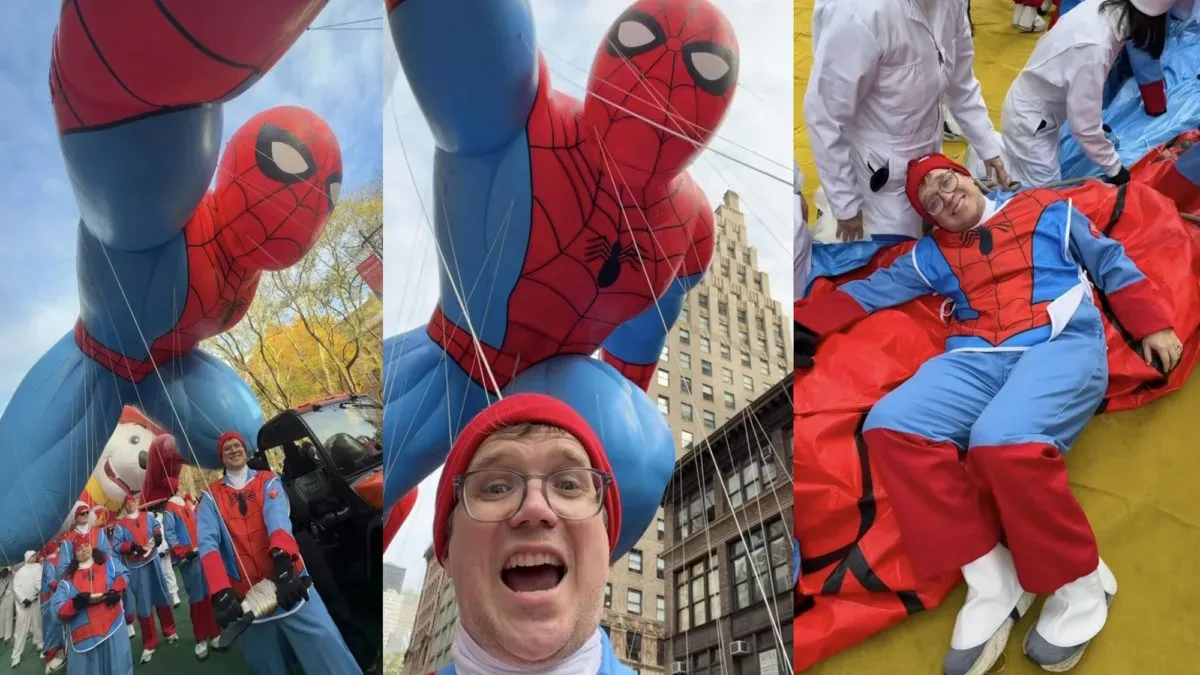
The episode also arrived during a milestone parade edition that paired Broadway excerpts with other entertainment programming. For another angle on the event’s pop-culture footprint, see how Spider-Man editor Nick Lowe helped guide a Macy’s Parade balloon through New York.
For now, the core facts are straightforward: The Rocky Horror Show performed “The Time Warp” in the Broadway medley, some viewers protested online, and McHale answered them with jokes, insults and an invitation to attend the extended Broadway revival. In a dispute over whether the musical should have appeared in such a visible holiday broadcast, he made no effort to pretend that Rocky Horror is interested in being universally comfortable.