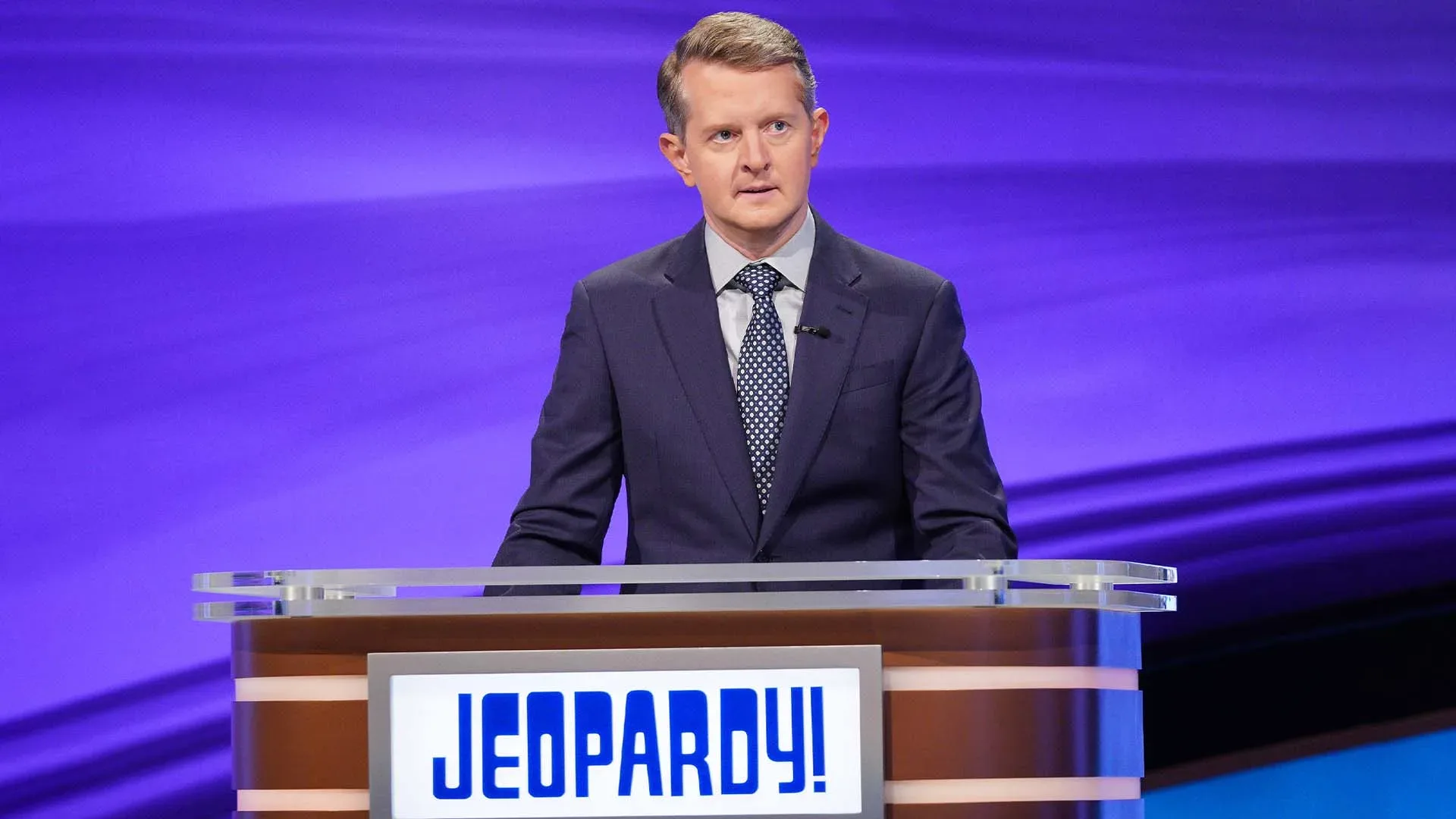
Ken Jennings has turned a niche Bluesky joke into an unusually visible Jeopardy! Easter egg. In a September 19 post, the host shared a photo of a game board featuring the categories False Berlin and Bizarre Little Men. Jennings said he normally does not involve himself in the show’s writing, but described this instance as a favor for viewers on the social platform.
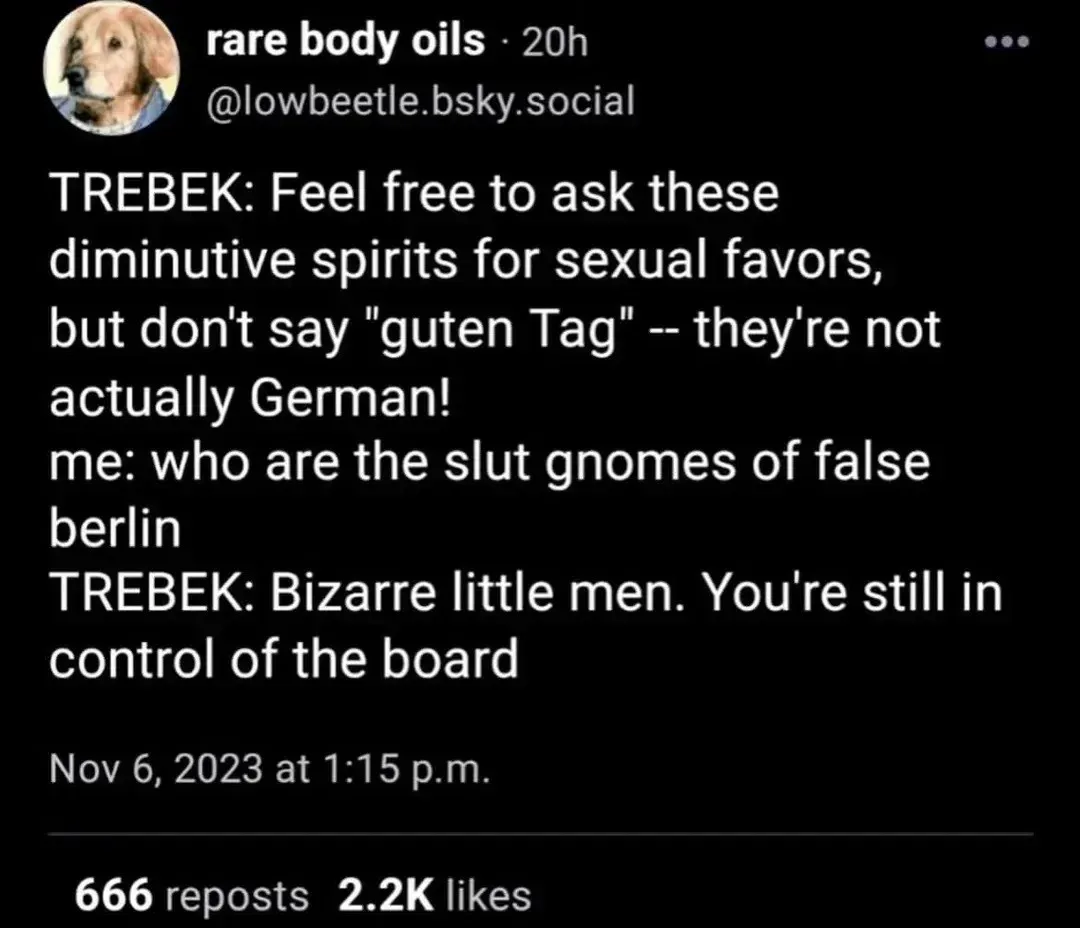
To much of the television audience, those are simply two odd but workable category titles. To a particular corner of Bluesky, though, placing them beside each other is the punchline. The pair references a 2023 post by user @lowbeetle that imagined a deliberately inappropriate contestant response in the tightly formal rhythm of a Jeopardy! clue-and-response exchange.
The original post riffed on a fictional clue involving small, supposedly German supernatural figures and a risqué phrase. Its imagined contestant offered a response that combined the two category-like ideas, only for a version of Alex Trebek to calmly answer, “Bizarre little men,” and return control of the board. Jennings’ board did not use the meme’s explicit wording. Instead, it split its central phrases into two broadcast-safe categories, allowing viewers familiar with the post to reconstruct the joke themselves.
Why two ordinary-looking categories are the whole joke
The humor does not depend on either category being funny in isolation. False Berlin could plausibly suggest questions about locations commonly mistaken for Berlin, historical imitations, or misleading geographical names. Bizarre Little Men is eccentric, but Jeopardy! category names are often designed to establish a theme or invite a little wordplay.
Together, however, the titles function as a call-and-response reference: a compact allusion in which people who know the originating text mentally supply the missing connection. That structure is especially useful for a prime-time game show. The surface-level board remains usable for everyone, while the secondary meaning rewards a smaller audience without disrupting the game.
In internet terms, this is an in-joke, meaning a reference whose fuller meaning is available mainly to people familiar with a shared context. It is also an example of what is often called an Easter egg: a hidden or lightly concealed nod placed in a work for attentive viewers to find. The categories were not hidden from viewers; their significance was. That is precisely why the gag can work in a format built for broad audiences.
The board photograph matters here. Jennings did not merely acknowledge that he had seen a popular post. He showed the two phrases incorporated into the show’s category lineup. The evidence supports a very specific claim: those category names appeared together, and Jennings connected their inclusion to Bluesky viewers. It does not establish what clues sat beneath them, how the contestants reacted, or whether the reference was explained on air.
The meme’s game-show logic
The 2023 post was built to sound like Jeopardy!, even while taking the format somewhere the real program would not. Its imagined host maintained the composed, procedural tone associated with clue adjudication: an answer is evaluated, then play moves on. The contrast between that composure and the crude response is central to the joke.
There is a second layer. The post asks readers to hear the fictional exchange in Trebek’s familiar, even delivery. That imagined vocal performance gives the final correction a peculiar air of authority. The silliness is treated not as an interruption but as a matter of ordinary game administration.
The joke also recalls the Jeopardy! parody sketches featuring Sean Connery, where the clean structure of a quiz show repeatedly collided with rude contestant banter. The Bluesky post is not simply repeating that premise. Rather, it borrows the idea that the game’s decorum becomes funnier when it remains intact while everything around it grows increasingly absurd.
Jennings’ contribution changes the form again. Instead of recreating the fictional exchange or pushing the explicit phrase into an actual broadcast, the reference becomes a pair of category labels. That is a notably restrained adaptation: it retains the recognition value while avoiding the element that would plainly be unsuitable for a standard Jeopardy! board.
A social-media reference made for two audiences
There is a practical reason this kind of joke is more durable than a direct quotation. A category must still make sense as a category. Viewers who have never used Bluesky can read the two labels and continue watching. Viewers who recognize @lowbeetle’s post get an extra joke. Neither group needs the other’s knowledge for the broadcast to function.
That balance is important when online material moves into a long-running television format. Internet jokes often rely on exact phrasing, context, and speed; a meme can become unreadable quickly once removed from the feed where it spread. Jennings’ category pairing relies on a more portable element: the odd juxtaposition of two phrases. It offers a wink rather than demanding that the episode stop and explain a years-old post.
It is also a reminder that internet culture does not only travel through direct reposts or quotations. It can be translated into titles, props, visual arrangements, and other small design choices. Here, the board itself carries the reference. The game format is not altered, but a conventional part of its presentation becomes the vehicle for an online gag.
What “terminally online” means in this context
Calling a public figure “terminally online” is usually a playful exaggeration, not a literal description. The phrase suggests that someone is unusually conversant in the references, habits, and conversational patterns that circulate online. In Jennings’ case, the label comes from his visible Bluesky activity and, now, his willingness to acknowledge a platform-specific meme in a Jeopardy! category lineup.
The phrase can be teasing, but the episode shows a real skill behind it: knowing which details can be adapted for a wider audience. The explicit line that gives the original meme its shock value stayed out of the stated categories. The structural punchline—the pairing of False Berlin with Bizarre Little Men—made it through.
What is confirmed, and what remains audience interpretation
The confirmed elements are relatively straightforward:
- Jennings posted a Jeopardy! board image on September 19.
- The board included categories titled False Berlin and Bizarre Little Men.
- He said he usually does not meddle in the show’s writing and said he had called in a favor for Bluesky viewers.
- The two titles echo a 2023 Bluesky post from @lowbeetle.
The broader cultural reading is interpretation, albeit well-supported interpretation. The categories’ placement together, the wording of Jennings’ post, and the correspondence to the older meme make the allusion clear to people familiar with it. But viewers should not assume details beyond that: there is no basis here to claim that the meme dictated the categories’ clues, that the contestants were briefed on it, or that the reference was intended as a permanent feature of the show.
That distinction is useful because social-media reactions can quickly transform a small, precisely documented moment into a bigger story than the evidence supports. The amusing reality is already enough: an online joke from 2023 received a broadcast-friendly nod through two side-by-side Jeopardy! categories.
A small crossover between platform culture and television
Jennings’ post also demonstrates how a host’s online presence can create a feedback loop with a show. Fans recognize that the host understands a reference; the host then signals that recognition back through an on-screen detail. It is less like an official overhaul of Jeopardy!’s identity than a brief bit of rapport between the production and a digitally fluent slice of its audience.
That kind of crossover increasingly appears across entertainment and games, where audiences frequently move between broadcasts, social apps, and genre communities. The connection does not need to be deep to be meaningful. A board category, a wink in a script, or a visual callback can tell a small group of fans that their shared language has been noticed. For another example of how entertainment properties continue to meet interactive audiences, see the upcoming Sanrio Kawaii Me Live! mobile rhythm game.
In this instance, the nod is particularly neat because the original meme was already about Jeopardy! It imagined the show as a deadpan container for a ridiculous exchange. The real show did not recreate that exchange, and it did not need to. By placing False Berlin beside Bizarre Little Men, Jennings and the writers gave the joke a real board of its own—while leaving everyone else free to play along normally.