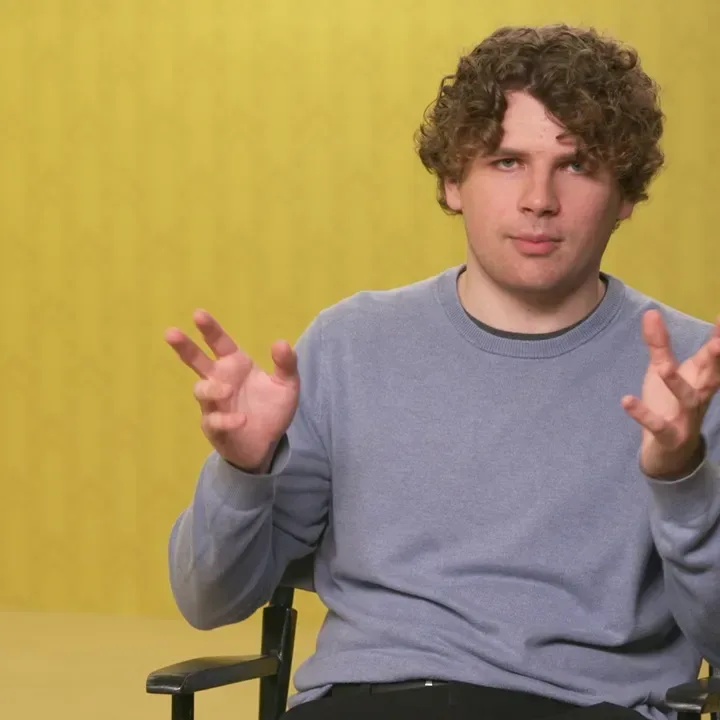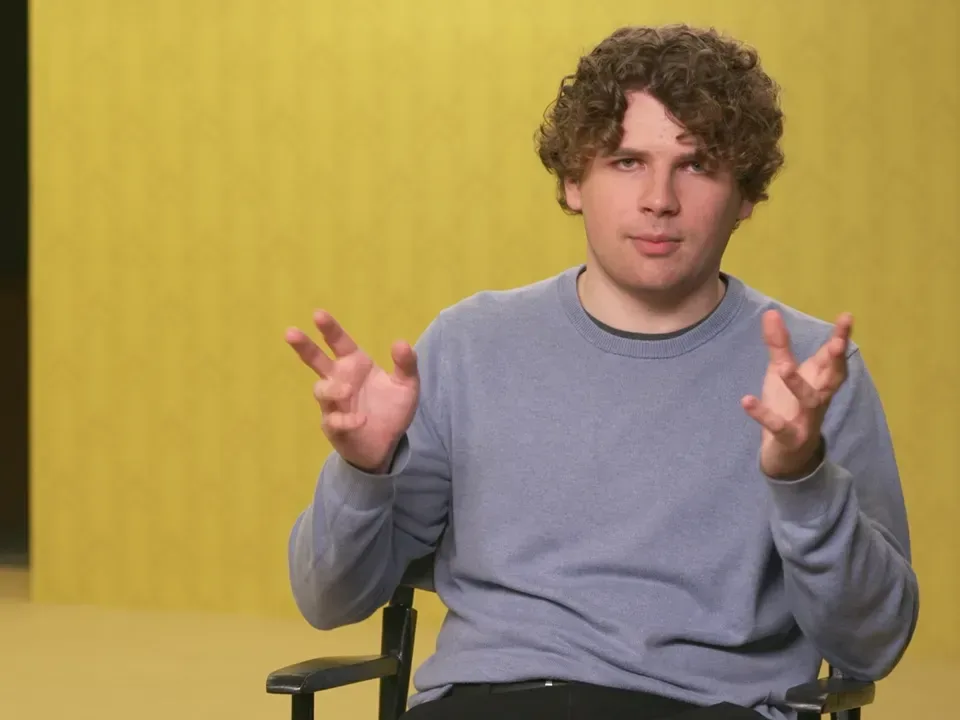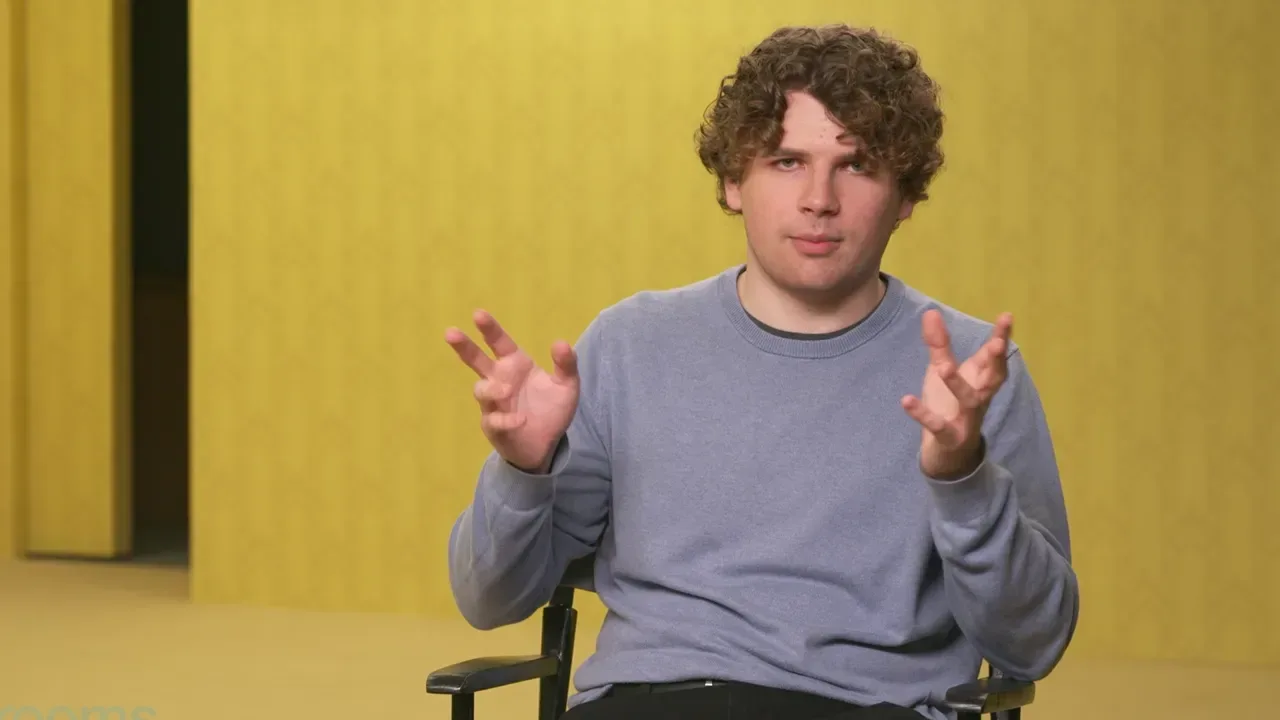
Kane Parsons has indicated that the long-running Backrooms story may ultimately need television-sized breathing room. The filmmaker says he has had a central ending in mind since the earliest days of his work with the liminal-space horror concept, and that his preferred way to reach it would be through a limited series rather than another theatrical route.
That is an important distinction for a project that has expanded from short-form internet horror into a broader screen property. Parsons is not presenting a limited series as confirmed. Instead, he has described it as the “dream scenario” for completing an arc he says has been planned from the beginning. He also stresses that finding the right format for that ending has been difficult.
“There’s been a very set arc to the whole thing from the beginning,” Parsons said, while making clear that he could not share further details.
What Parsons has actually said about Backrooms’ future
The clearest takeaway is both promising and restrained: Parsons says an ending exists in his plans, but no limited-series order, platform, episode count, production timetable, or story details have been announced in the information available.
For viewers, that means it is too early to treat the limited-series idea as a formal confirmation. It is best understood as Parsons’ stated creative preference. His excitement appears to come from the possibility of following the entire intended structure through, rather than simply continuing the property without a destination.
That framing may be particularly reassuring for audiences who value continuity in internet-born horror. The Backrooms concept is built around mystery, disorientation, and fragmented evidence, but Parsons’ comments suggest that his own strand of the material has not been improvised as an endless collection of eerie spaces. He describes a defined arc with a “main ending.”
Why a limited series could fit liminal-space horror
A limited series is a television story designed around a finite run rather than an open-ended, renewable format. The term does not by itself reveal how many episodes a show would have, but it signals an endpoint. In practical storytelling terms, that can give a creator room to establish questions, build tension, develop an escalation, and land a resolution without asking one feature-length film to carry every part of the journey.
That model seems compatible with Backrooms’ particular kind of horror. “Liminal space” generally describes places that feel transitional, familiar, empty, or subtly wrong: corridors, rooms, offices, and other environments that appear to sit between ordinary destinations. The discomfort often comes from duration and uncertainty. The audience has time to notice repeated details, question the geography, and worry about what may be beyond the next threshold.
Related coverage includes Kane Parsons Says a Backrooms Limited Series Could Deliver His Planned Ending.
A series format could therefore support the slow accumulation that makes the premise effective, while a finite structure could guard against a familiar risk for mystery-driven stories: adding questions faster than the narrative can meaningfully answer them. Parsons has not described how his ending works, so this is analysis rather than a plot claim. Still, his emphasis on a pre-existing arc helps explain why he sees a limited run as the most useful container.
From Blender-made videos to a wider screen presence
Parsons became closely associated with Backrooms through a popular YouTube series. Much of that work was created in Blender, a 3D software package. In this context, 3D tools matter because they allow a filmmaker to build and control unsettling environments digitally: lighting, camera movement, spatial scale, textures, and architectural repetition can all be shaped to create the uneasy sensation that defines the project’s visual identity.
The underlying Backrooms idea did not originate with Parsons; it grew from a viral 4Chan greentext post. But his videos became a major creative expression of the premise and attracted the attention of A24. That path also reflects a broader shift in horror culture, where concepts developed and shared online can gain enough audience recognition to become candidates for larger adaptations.
Parsons has characterized that shift as inevitable for creators who grew up with the internet. He pointed to projects including Siren Head, The Mandela Catalogue, and the SCP Foundation as examples of creepypasta-adjacent material drawing major adaptation interest. Creepypasta is a loose label for internet-distributed horror stories, images, characters, or mythologies that circulate and evolve through online communities. Their formats can be radically different, but they often arrive with an existing audience and a built-in sense of participatory folklore.
That does not guarantee every internet horror property will translate cleanly to film or television. A viral premise can be immediately recognizable without automatically possessing a complete dramatic structure. Parsons’ comments stand out because he says his Backrooms work already has a destination in mind. The challenge, by his account, is packaging that plan in the appropriate medium.
HBO Max exposure and the significance of the extra footage
Backrooms has recently reached HBO Max, where it received a custom opening cinematic that placed the HBO logo within the franchise’s recognizable yellow-wallpaper imagery. The presentation is a small but telling example of how thoroughly a visual motif can become identified with an online-born horror property: the environment itself is part of the brand language.
There is also additional material available for people looking for more of this particular version of Backrooms. Fifteen extra minutes of footage from Parsons’ debut movie have been posted free on YouTube. The material was initially included with theatrical screenings under the title Everything Must Go.
The extra footage should not be mistaken for a newly announced series or a substitute for the ending Parsons hopes to make. It is, however, a concrete way for viewers to spend more time with the film’s world while the larger future remains unannounced.
Valve visit sparks speculation, not confirmation
Separate online speculation has followed Parsons’ social-media post about visiting Valve’s offices. Because he is known to be fond of Portal, some observers have wondered whether that could point to a future adaptation involving one of Valve’s games. At this stage, there is no confirmed project described here, and the visit alone does not establish that any adaptation is in development.
That distinction is worth keeping firm. A social-media visit may be interesting, especially given Parsons’ position at the intersection of digital culture, filmmaking, and game-adjacent audiences, but it is not the same thing as an announcement. The verified creative statement remains the Backrooms one: he wants a limited series to carry the planned arc to its principal ending if the opportunity emerges.
What to watch for next
For now, the most useful expectations are modest. Fans should look for a direct confirmation before assuming a Backrooms limited series is happening, and they should avoid reading unannounced Valve work into a single office visit. If a series does move forward, the meaningful details will be its format, its relationship to Parsons’ existing story, and whether it is explicitly positioned as the route to the ending he has described.
The idea is notable because it places closure—not merely expansion—at the center of the discussion. That is a stronger creative proposition than promising more corridors, more strange rooms, or more franchise mythology. Parsons says there has always been a route through the maze. The remaining question is whether a limited series will become the vehicle that lets audiences reach the exit.
For another example of why a finite episodic format can suit a story with more room to cover, see our look at how a limited series can fit a larger narrative better than a single biopic.