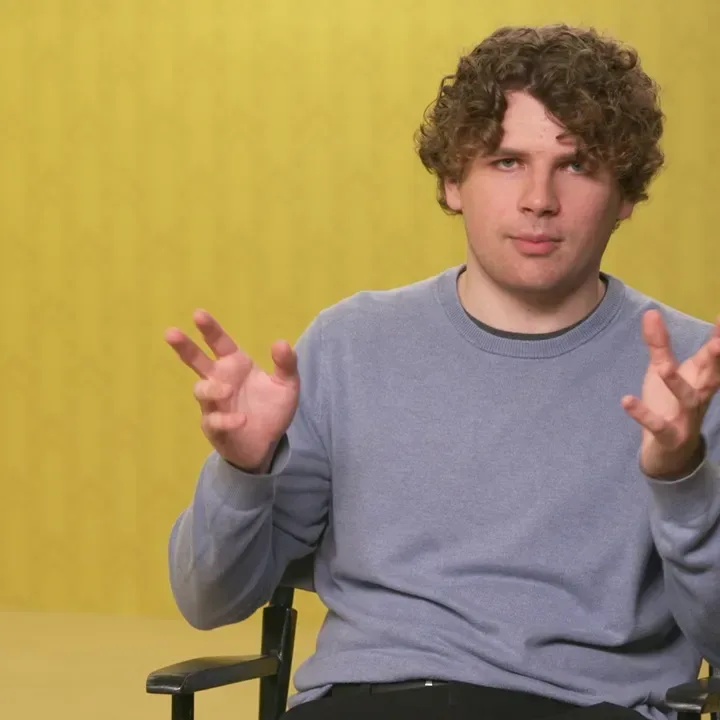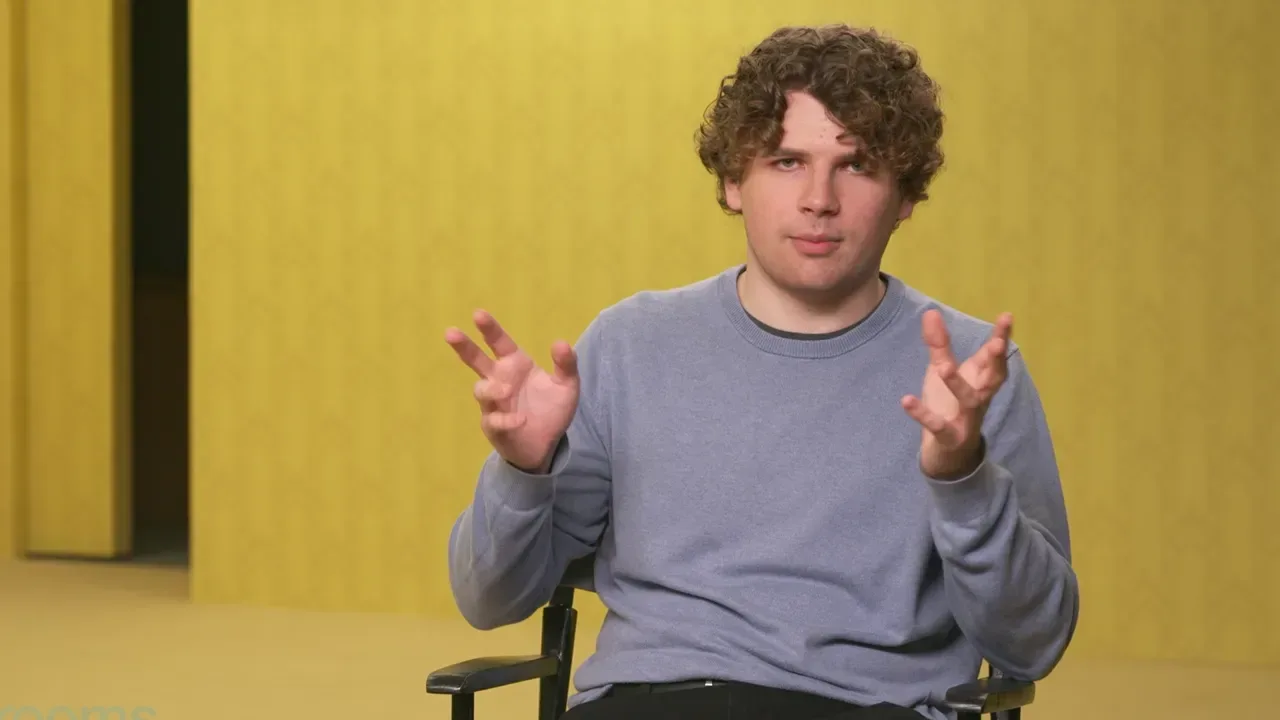
Kane Parsons has once again put Valve-watchers into detective mode after sharing imagery from a visit to the company’s offices. The social-media post, showing a sunset-lit room at Valve headquarters on September 16, has revived speculation that the Backrooms filmmaker could someday be involved with Portal, the Valve puzzle series he has described as a dream project.
The important word is speculation. A photo or video from an office visit does not establish that a film is in development, that Parsons has been hired, or that Valve has changed plans for either Portal or Half-Life. Neither a deal, a production company, a cast, a script, nor a release plan has been publicly established in the information available. Still, the circumstances are notable enough to explain why fans have started connecting dots.
This was not Parsons’ first documented trip to Valve. He also shared images from a visit in June. Two visits in a relatively short span, combined with his stated enthusiasm for Portal and an apparent Half-Life audio nod in Backrooms, give the theory more substance than a completely random social post. They do not turn it into confirmation—but they do make it understandable that the Portal gun has been pulled from the rumor cupboard again.
Why a Valve office visit is getting this much attention
Parsons’ profile changed dramatically after his debut feature, Backrooms, reportedly grossed about $393 million worldwide from a roughly $10 million budget. The film grew out of the online Backrooms phenomenon: a creepypasta premise that expanded through fan fiction, art, videos, and independent horror games. Parsons was already closely associated with that world through his own videos before directing the film adaptation.
That background matters because both the Backrooms concept and Valve’s best-known science-fiction worlds are built around spaces that invite viewers to look closer. Empty rooms, industrial corridors, strange research environments, incomplete explanations, and the suggestion that something has gone wrong beyond the camera frame all encourage an audience to investigate rather than merely observe. Parsons’ work therefore gives fans a readily imaginable route to a Portal or Half-Life screen project, even if no such project exists at present.
His connection to Valve’s work is not just something fans inferred after the office posts. In May, Parsons said he viewed a Portal movie as a dream assignment and identified the game as an influence on his own work. He has also indicated that a sound effect from Half-Life made its way into Backrooms. That is not evidence of a formal partnership by itself, but it establishes genuine creative interest rather than a rumor generated solely by a building in an Instagram story.
There is a practical reason fans are especially alert to this sort of image. Valve is highly associated with franchises whose next moves can be hard to predict. In that environment, even a plainly visible office visit can become a clue board covered in red string. The restrained reading is much simpler: Parsons visited Valve, and he has publicly praised its games. Everything beyond that remains an open question.
Portal is an unusually tricky game to adapt
Portal is a first-person puzzle game, meaning its central experience is built around what the player sees and solves from inside the world. Its signature device is the portal gun, which creates linked openings that let a person or object pass between two locations. The mechanic produces puzzles based on momentum, position, sightlines, timing, and the often funny consequences of physics behaving in unexpected ways.
Related coverage includes Kane Parsons' Valve Visit Sparks Fresh Portal Movie Speculation.
Those mechanics are immediately cinematic in one sense: falling through an opening only to fly out of another is a clear visual idea. But they are difficult in another. In a game, the audience participates in figuring out the route. In a film, the characters and camera must communicate the logic clearly enough that viewers understand the stakes without reducing every puzzle to exposition. A strong adaptation would need to make space, motion, and cause-and-effect legible while still maintaining pace.
Then there is tone. Portal is remembered not only for sterile test chambers and experimental technology, but also for its dark comedy, isolation, and artificial-intelligence antagonist. A movie that emphasized only the clever machinery could feel like a visual-effects demo. One that pursued horror alone could lose the series’ dry, controlled humor. One that leaned too hard on jokes could drain tension from the premise. The appeal is the friction between those elements: an absurdly bureaucratic testing environment, a very personal struggle to escape it, and a setting that hints at a much larger disaster.
That balance is why Parsons has attracted attention as a hypothetical fit. His previous subject matter suggests an interest in unsettling liminal environments—places that feel familiar enough to enter but wrong enough to make leaving urgent. Portal has its own version of that sensation in the laboratories of Aperture Science. But similarity of mood should not be confused with proof of a project, or with proof that a possible project would take the same creative approach.
For players drawn to first-person escape fiction, the appeal of spatial storytelling is still very much alive. The Transference’s first-person escape-mystery premise is another recent example of how games can turn a confined space into the engine of a narrative. Portal, however, brings the additional challenge of translating an iconic movement mechanic into a passive viewing experience without losing the puzzle-solving pleasure that defines it.
The earlier Portal film plan is still a complication
Fan optimism around Parsons also reflects frustration with the long, uncertain history of a previously discussed Portal adaptation. In 2013, J.J. Abrams and his Bad Robot production company were attached to pursue films based on both Portal and Half-Life. Years later, in 2021, Abrams said that the Portal movie remained in development at Warner Bros.
There has been no further publicly noted movement in the intervening five years. That silence does not tell the public what happened to the project. Development can encompass many stages, including rights arrangements, scripts, pitches, budgeting, and decisions about whether to proceed. More importantly, the term does not mean a movie is guaranteed to be made. Projects can remain in development for a long time, change form, change partners, or simply never reach production.
That history creates two opposing possibilities, neither of which can be settled from the Valve visit. It could mean an existing arrangement still affects any new version of a Portal film. Or it could mean that old plans are no longer active in the same way, potentially leaving room for a different creative team. Without a public statement, declaring either outcome would be guesswork.
The same caution applies to the related Half-Life film discussion. The 2013 news linked the franchises as prospective Bad Robot adaptations, and Parsons’ own apparent affection for both worlds has encouraged fans to treat them as a package. Yet they are separate properties with very different storytelling pressures. Half-Life carries a broader science-fiction conflict and a protagonist whose silence is part of the game’s identity. Portal is more confined, more puzzle-led, and more overtly comic. Admiring both does not reveal what, if anything, may have been discussed at Valve.
What the evidence supports—and what it does not
It is easy for entertainment rumors to gain confidence as they pass from one post to another. A useful way to keep this one grounded is to separate observable facts from interpretation.
- Supported: Parsons shared material indicating he visited Valve’s offices on September 16.
- Supported: He had also visited Valve in June.
- Supported: He has publicly identified Portal as a dream project and as an influence.
- Supported: A Portal film was previously discussed with Abrams and Bad Robot, with Abrams saying in 2021 that it remained in development at Warner Bros.
- Not established: Parsons is directing, writing, producing, or negotiating a Portal film.
- Not established: Valve has cancelled, replaced, or revived any earlier adaptation plan.
- Not established: A Portal or Half-Life film is currently in production.
This distinction is not meant to spoil the fun of fan theorizing. It is what lets the interesting part of the story stay interesting: a young filmmaker with a proven affinity for unsettling game-adjacent spaces has visited Valve twice and openly loves one of its most distinctive series. That is a real circumstance worth watching. A confirmed movie is a different kind of fact entirely.
Why fans see a potential match
The excitement is ultimately less about a single sunset video than about creative fit. Parsons rose from internet-native horror material into a successful theatrical debut, while Portal and Half-Life remain games whose worlds have inspired years of community interpretation, artwork, mods, and spin-off conversation. Both sides of that equation have audiences accustomed to examining environments for hidden meaning.
A future adaptation, should one ever be announced, would face substantial expectations. Fans would want the visual language of Aperture Science, the physical clarity of portals, and a tone that recognizes the games’ humor without treating the premise as a joke. They would also reasonably want confirmation before assuming that any creator has the keys to the test chambers.
For now, there is no official Portal movie news to extract from Parsons’ trip. There is only a repeat Valve visit, an existing public admiration for the series, and a dormant-looking history of earlier adaptation talk. That leaves plenty of room for theory, but no room yet for certainty. Until Valve, Parsons, Warner Bros., or another directly involved party announces a project, the most accurate status is simple: fans have a fresh reason to wonder, not a movie to put on the calendar.