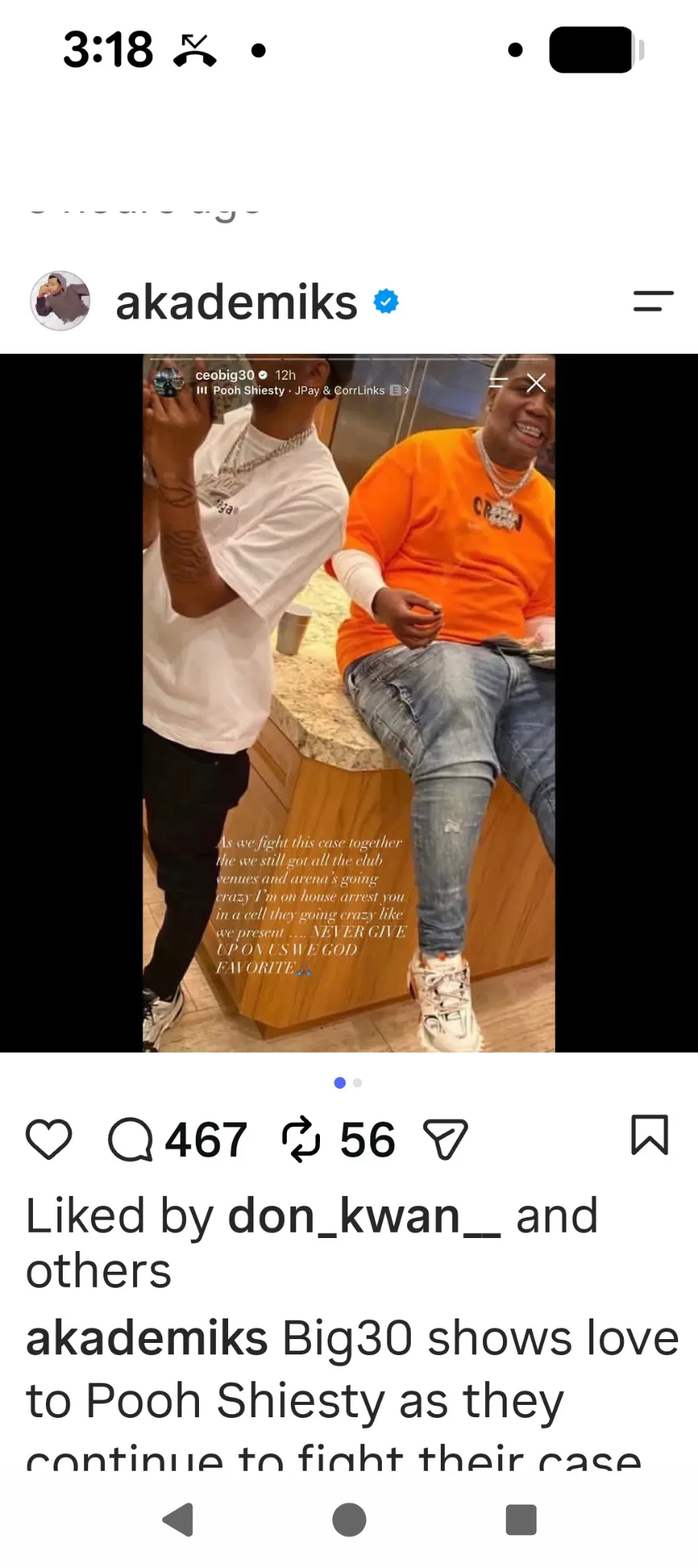

Pooh Shiesty is expected to leave Rolling Plains Regional Jail in Haskell, Texas, after U.S. District Judge David C. Godbey ruled in his favor on November 10. The ruling follows serious allegations from the rapper’s lawyer, Kent Schaffer, concerning the conditions of his confinement.
Schaffer alleges that Pooh Shiesty was held in solitary confinement for 23 hours each day after being transferred to Rolling Plains in July. He further alleges that the rapper lost about 30 pounds, experienced severely disrupted sleep, and had minimal access to human contact beyond brief video visits conducted through an iPad.
Those are allegations presented by Pooh Shiesty’s legal representative, not findings independently established in the material available here. The judge’s decision is significant because it appears to resolve, at least for the moment, the dispute over where and how he was being held. The supplied information does not specify the precise terms of the order, the jail’s response, or the destination of any transfer.
What Schaffer alleges happened at Rolling Plains
According to Schaffer, Pooh Shiesty was transferred to Rolling Plains after an earlier incident involving an iPad. Schaffer says other inmates had attempted to approach the rapper for autographs, and that jail staff subsequently treated an iPad-related matter as misconduct. Rather than simply removing the device, Schaffer alleges, officials moved his client to another facility.
“They transferred him to Rolling Plains back in July. As soon as he arrived in Haskell, they immediately put him in solitary confinement,” Schaffer said.
The lawyer says the stated reason for the isolation was protection. He disputes that rationale, arguing that safety was used as an explanation rather than the genuine basis for the placement. The available account does not include a response from Rolling Plains Regional Jail or additional details about any jail policy used to justify the confinement.
That distinction matters. In correctional settings, a placement can be described as protective custody when officials say separation is necessary to reduce risks from other people in the facility. Solitary confinement, as described in Schaffer’s account, concerns the actual day-to-day reality: a person alone for nearly the entire day, with sharply limited direct interaction. A protective purpose and highly restrictive conditions can be asserted at the same time, but the lawyer’s complaint is that the claimed purpose did not justify the extent of the isolation in this case.
The reported health and visitation concerns
Schaffer says the confinement had visible effects on Pooh Shiesty. He described disrupted sleeping patterns and an approximate 30-pound weight loss. He also said the lack of regular contact was mentally difficult, with interaction largely limited to short video visits using an iPad.
“His sleep patterns were way off. He had lost about 30 pounds,” Schaffer said. “It was just mentally wearing him down because he has no contact with people other than through an iPad in short bursts of video visits.”
The account does not provide medical records, a timeframe for the reported weight change beyond the transfer history, or an independent assessment of the alleged physical and mental impact. Still, the claims put the focus on conditions of confinement rather than on the underlying criminal allegations in his pending case.
That is an important practical separation. A person awaiting trial can face legal proceedings over alleged conduct while also challenging the conditions under which they are detained. A ruling over housing or treatment in custody is not, on its own, a determination of guilt or innocence in the separate criminal matter.
Why the iPad allegation is central to the dispute
Schaffer’s account frames the alleged iPad incident as an example of disproportionate punishment. He says a guard provided the device, after which officials claimed Pooh Shiesty had engaged in misconduct involving it. Schaffer contends that the response went beyond taking the device away: his client was transferred and then placed in isolation upon arrival at Rolling Plains.
The lawyer also alleges that Pooh Shiesty was punished for conduct connected to other inmates, specifically their efforts to seek autographs. That claim is central because it challenges whether the restrictions were tied to the rapper’s own conduct or to the management problems created by his celebrity status inside the facility.
There is no detailed description in the available material of the alleged iPad misconduct, the jail’s evidence, any disciplinary hearing, or rules governing tablet access. Without those details, it would be wrong to characterize the incident as proven. What is clear is that Schaffer considers the transfer and isolation excessive, and Judge Godbey’s ruling gives that challenge immediate consequence.
A pending case remains separate
Pooh Shiesty remains incarcerated while awaiting a 2027 trial over allegations of robbery and kidnapping involving Gucci Mane. If convicted, he faces a maximum possible sentence of life in prison.
The wording around that case is especially important: these are allegations, and a scheduled trial means the accusations have not been resolved by a conviction in the information provided. The jail-conditions ruling does not settle the pending charges, just as the criminal allegations do not erase the question of whether confinement conditions were appropriate.
For readers following music-world developments alongside broader entertainment coverage, the episode is a reminder that legal stories involving artists often contain multiple tracks at once: the status of the underlying prosecution, the custody setting, the arguments made by counsel, and the court’s limited decision on the issue directly before it. The headline-making part may be the reported 30-pound loss or the claim of 23-hour isolation, but the actionable development is the judge ruling in Pooh Shiesty’s favor and his expected departure from the Haskell facility.
What is known — and what is not
- Known from the available report: Judge David C. Godbey ruled in Pooh Shiesty’s favor on November 10.
- Known from the available report: Pooh Shiesty is reportedly expected to leave Rolling Plains Regional Jail in Haskell, Texas.
- Alleged by his attorney: He was confined alone for 23 hours a day, lost about 30 pounds, had disrupted sleep, and received limited visitation.
- Alleged by his attorney: His isolation was described as protective, but Schaffer disputes that safety was the true reason.
- Not detailed in the supplied information: The full text and exact requirements of the judge’s order, the jail’s position, medical documentation, and where Pooh Shiesty will be housed next.
- Separate pending matter: He awaits a 2027 trial on robbery and kidnapping allegations involving Gucci Mane, with a potential maximum life sentence if convicted.
The story also arrives amid continued overlap between rap coverage and wider entertainment reporting. For a separate look at current music-industry speculation, see the unconfirmed report involving Alicia Keys and Jay-Z.
For now, the most concrete update is narrow but consequential: a judge has ruled in Pooh Shiesty’s favor over the disputed jail situation, following his lawyer’s claims about extended isolation and deteriorating well-being. Further details would be needed to establish the terms of the ruling, the facility’s account, and the next stage of his detention.