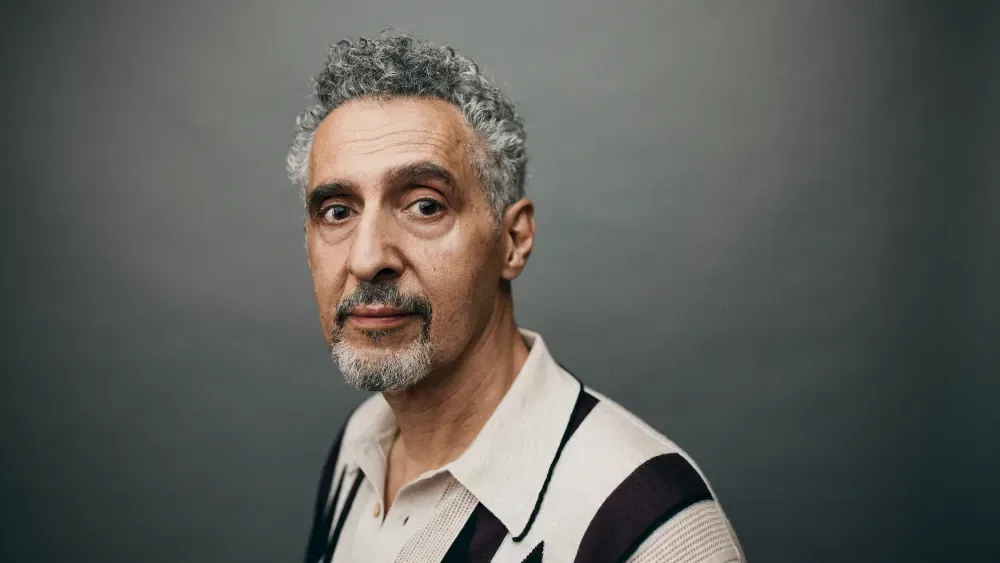

John Turturro has offered a useful, unusually plainspoken way to think about the tension between blockbuster filmmaking and more personal work: neither lane is inherently illegitimate, but staying in one for too long can change the artist doing the work.
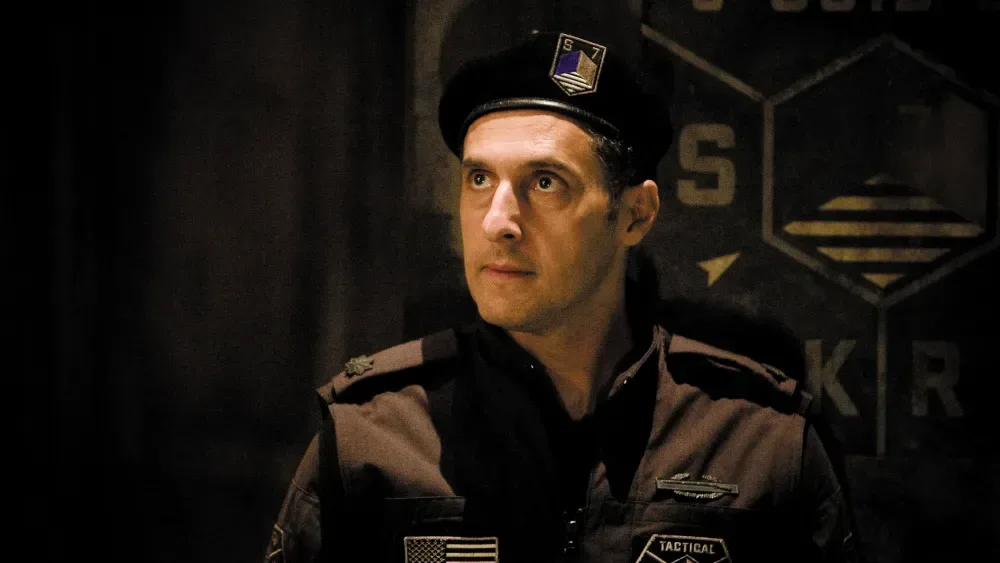
Speaking at the Marrakech International Film Festival, Turturro reflected on appearing as Agent Seymour Simmons in four Transformers films between 2007 and 2017. Those movies were lucrative, high-profile studio productions, a far cry from the intimate dramatic, theatrical and independent material associated with much of his career. His point was not that actors should refuse commercial movies. He said plainly that the larger paychecks make other projects possible. His warning was about creative proportion.
“What happens is you can lose your inner life,” Turturro said. “You want to feed your inner life. That’s like your fireplace. You want to feed that.”
It is an evocative phrase, and not merely an argument about prestige. By “inner life,” Turturro appears to mean the private creative reserves an actor draws from: curiosity, taste, risk, emotional responsiveness and the sense of discovery that makes an interpretation feel lived-in rather than assembled on schedule. Big commercial productions can demand real skill, but their objectives and working rhythms may be different from those of a small drama or a stage production.
“Both sides of the street”
Turturro framed the subject through guidance he received from Robert Redford, who directed him in 1994’s Quiz Show. Redford’s advice was to work “both sides of the street”: take on financially rewarding studio jobs while continuing to pursue projects with a more personal creative pull. The important qualification, Turturro said, was that a performer can return from the commercial side “as long as you don’t do too much of it in a row.”
That distinction matters. It rejects the tidy but unrealistic idea that an actor must choose forever between art and commerce. Films, plays and independent productions require time, and time requires money. A franchise role can bring financial stability that makes lower-paying work viable. Turturro’s formulation is instead about maintaining range. The ability to shift from a large, effects-driven production to a quieter character piece is not simply a career-management trick; it can help preserve a performer’s relationship with the work itself.
There is a practical element, too. Major productions commonly involve vast machinery: established properties, elaborate production demands, marketing imperatives and schedules built around large crews. An actor may still have room for invention within that framework, but the project’s central task is often to serve a large-scale entertainment experience. A smaller film or play may direct attention differently, toward language, character behavior, silence or interpersonal tension. Neither approach is automatically more difficult. They ask for different forms of attention.
How Turturro describes the Transformers challenge
Turturro did not dismiss the work he did in Michael Bay’s Transformers franchise. In fact, his description recognizes a specific kind of creative test. He compared the process not to making a fine painting but to Picasso making a quick sketch, adding that the actor has to approach it with something like the freedom of playing with children. “There’s a challenge to that,” he said. “Can you do that or not?”
That comparison is useful because it avoids treating spontaneity as the opposite of craft. A quick sketch can be deliberate even when it looks loose; similarly, an outsized comic performance can require timing, commitment and an instinct for what a heightened movie needs in a particular moment. Turturro’s Agent Seymour Simmons was an eccentric presence within a series built on giant mechanical action and heightened spectacle. The role called for broad energy rather than the kind of detailed naturalism audiences might expect from a restrained drama.
His observation that Bay liked working with him because he “basically play[s] a version of him in some ways” also suggests the collaborative logic of the part. A performer in a commercial franchise is not necessarily bringing an unrelated, isolated creation to screen. They may be amplifying a film’s existing rhythm and sensibility. That can be playful work, but it is still work shaped by the overall machine around it.
For viewers, the takeaway is not that broad performances are less valuable than subtle ones. It is that the scale and tone of a project can define what counts as a successful performance. Turturro’s argument is more personal: an actor who only works in one mode may eventually find that mode taking up too much space.
Money as a tool, not a verdict
Turturro was equally direct about the economic equation. “They pay me a lot more money, so then I can do all these other projects,” he said. That is not a cynical admission so much as a clear account of how a varied career can function.
Creative choices are frequently discussed as if financial concerns somehow contaminate them. Turturro’s comments suggest a more grounded model. Payment from a large studio project can provide room to accept work that offers greater artistic interest but far less immediate compensation. In that model, blockbuster work does not need to replace personal work; it can subsidize it. The risk emerges when the commercial work becomes so continuous that it stops functioning as support and starts becoming the entire structure.
His final analogy makes that division especially clear: he considers himself “a plumber” in his real work, while commercial films are “sort of my electrical job.” It is a characteristically concrete distinction. Both are skilled trades; both can be necessary; but they are not identical activities. Turturro is not denying the labor involved in commercial filmmaking. He is identifying where he feels his artistic center lies.
A family script test and a choice for Beckett
Turturro also recalled an earlier decision that illustrates the same values. He had turned down big-budget offers for years, and he described being offered an enormous payday for the 1999 superhero comedy Mystery Men. When he gave the script to his daughter, her verdict was blunt: “garbage.”
At the same time, Turturro was considering a stage production of Samuel Beckett’s Waiting for Godot. After they read the first eight pages together, his daughter’s reaction changed completely: “This is good. This is very good.” Turturro chose the Beckett play, despite earning $300 a week.
The anecdote is not evidence that family script coverage should replace an actor’s judgment. It is meaningful because it captures how differently he evaluated the opportunities in front of him. The commercial offer carried money; the play supplied material that resonated more deeply. He chose the latter. It also makes his later Transformers decision easier to understand: his career has not followed a rigid anti-studio rule. Rather, he has tried to make room for work of different kinds without losing sight of what he wants to nourish creatively.
That kind of balance is relevant beyond acting. In game development, film production, writing and other creative fields, paid work can be artistically satisfying, financially necessary or both. But creators can still ask whether a job develops a skill, supports later choices, or gradually narrows the kinds of work they feel able to make. Turturro’s “inner life” is not a measurable career metric, but it describes a real concern: the need to retain an active response to material rather than operating only through professional habit.
The next role: an aging pickpocket in changing New York
Turturro’s latest project, The Only Living Pickpocket in New York, screened at Marrakech after he received the festival’s Golden Star tribute. Directed by Noah Segan and produced by Rian Johnson and Ram Bergman’s T-Street, the independent crime drama casts Turturro as an aging pickpocket trying to make ends meet in a rapidly changing New York City.
The film also features Steve Buscemi, Giancarlo Esposito and Tatiana Maslany. It premiered at Sundance earlier in the year and was acquired by Sony Pictures Classics.
On the limited details available, the project sounds aligned with the kind of character-focused material that Turturro describes as feeding his creative life: a smaller-scale premise built around an older man under economic pressure and a city in transition. That is an interpretation of the premise, not a judgment on the finished film. Still, its presence alongside his comments at Marrakech gives his broader point a timely context. His career continues to move between dramatically different kinds of projects.
That movement may be the real lesson in Turturro’s remarks. The blockbuster is not cast as an enemy, nor is independent work treated as a moral badge. The better question is whether the work leaves room for the next kind of work—and whether the performer can still recognize the part of themselves that made them want to create in the first place.
For another screen-industry update, see the news on Timothée Chalamet and Robert De Niro joining the final 2026 episodes of Saturday Night Live.