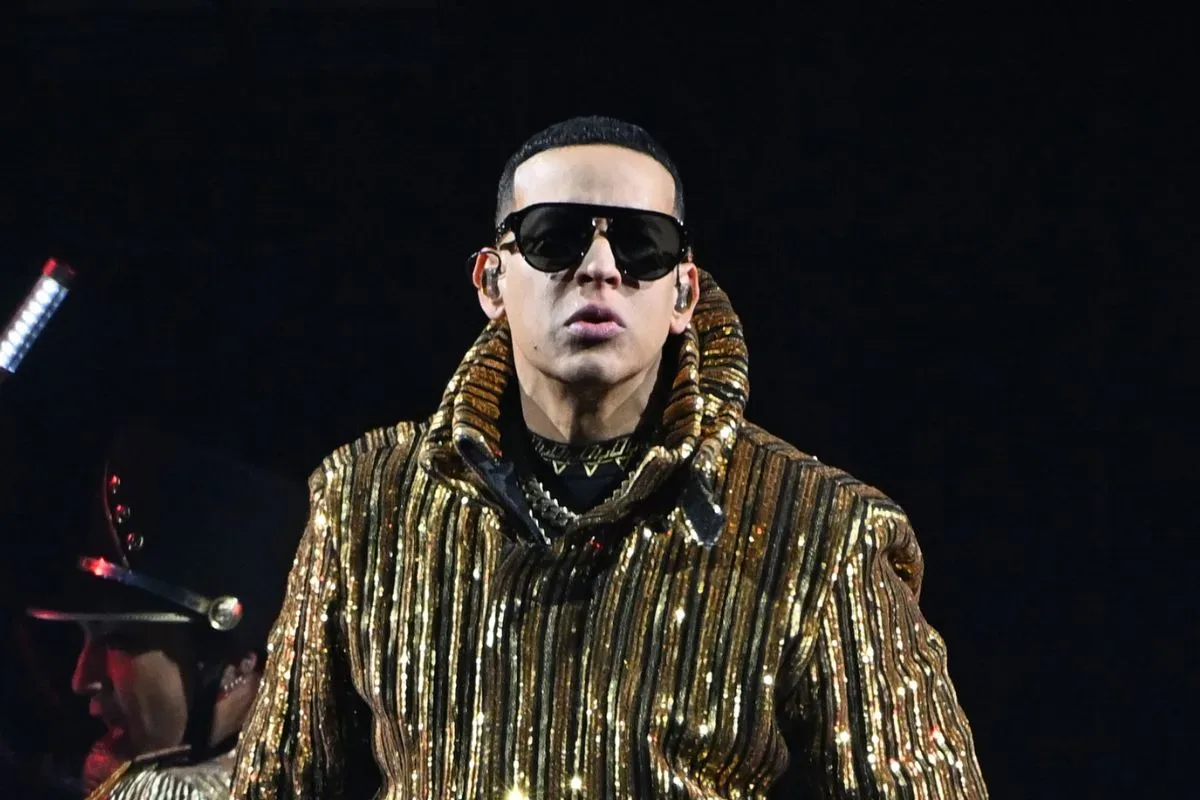
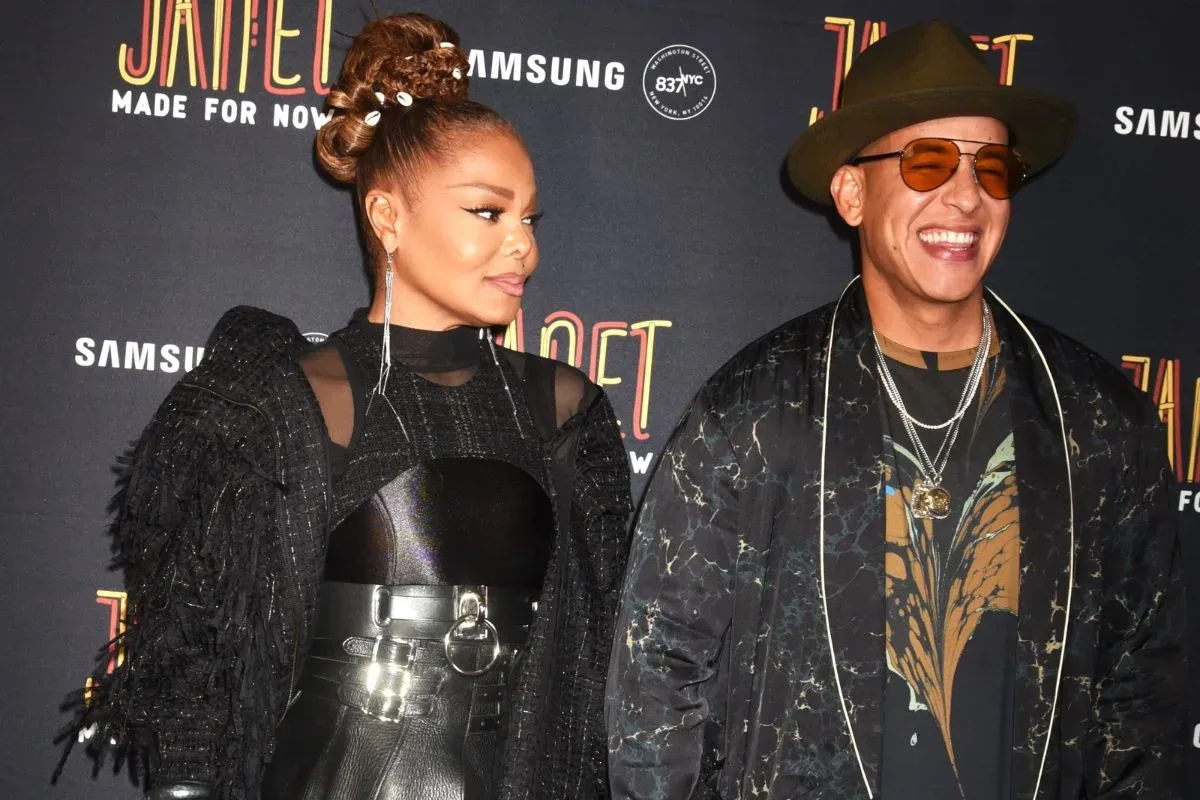
Janet Jackson and Daddy Yankee shared a notably full-circle moment at the Latin Grammys in Las Vegas, where Jackson presented the Puerto Rican star with the Latin Recording Academy’s Person of the Year honor. The recognition carries a particular distinction: Daddy Yankee is the first Latin urbano artist to receive it.
The presentation at MGM Grand Garden Arena reunited the pair eight years after their single “Made for Now.” But the occasion was bigger than a reunion between collaborators. Jackson’s tribute positioned Daddy Yankee’s work as an important bridge between reggaeton’s local foundations and the worldwide audience it now commands.
“His artistry helps bring reggaeton to audiences around the world and open doors for generations of Latin urban artists,” Jackson said.
Daddy Yankee returned the appreciation, praising Jackson’s legacy and calling their collaboration one of his favorite songs. The exchange gave the award-show moment an unusual sense of continuity: an internationally established pop artist acknowledging a figure whose career helped make Latin urban music impossible to treat as a niche category.
For more context, explore Brock Purdy Cards Become the Midseason Pivot in a Fantasy Football Card League.
A landmark honor for Latin urbano
Latin urbano is a broad term commonly used around Latin music shaped by urban styles, including reggaeton. In this setting, the phrase matters because the Person of the Year recognition is not solely a measure of individual hits. It is an acknowledgement of career impact and the influence an artist has exercised on music and its surrounding culture.
Daddy Yankee’s selection as the first honoree from Latin urbano makes the award a marker for the genre as well as the performer. Jackson’s remarks emphasized that point by focusing on opportunity: not simply the scale of his catalog, but the access his success helped create for later Latin urban performers.
That distinction is worth keeping clear. A crossover hit can temporarily carry a sound to new listeners. A career that changes the terms on which artists in that sound are received is a larger achievement. The celebration around Daddy Yankee argued for the latter, placing his work in a lineage that includes artists now able to reach international audiences from within reggaeton and related scenes.
The Academy’s official video listing documents Jackson’s onstage presentation. It followed a separate Person of the Year gala the previous evening, where LL Cool J and J Balvin introduced Daddy Yankee. The two events were related but distinct: the gala honored the recipient in one setting, while the televised Latin Grammys brought a separate set of guests, performances and the Jackson reunion into view.
A catalog built for a major-stage medley
The televised celebration did not try to reduce Daddy Yankee’s career to one era or one audience. A performance moved through his catalog with Bizarrap, Bad Gyal, Feid and French Montana, with LL Cool J also taking part. The medley included “Despacito,” “Rompe” and “Gasolina.”
That song selection works as a compact illustration of why the tribute could accommodate such a varied group of performers. The tracks are tied to different moments and scales of reach, but together they show how Daddy Yankee’s music could travel across Spanish-language pop, rap-adjacent spaces and global crossover contexts. Bringing LL Cool J and French Montana into the program also reflected the rap connections Daddy Yankee himself has discussed, while the presence of Bizarrap, Bad Gyal and Feid represented artists working in a much later Latin urban landscape.
There is a temptation at career-honor ceremonies to treat guest appearances as proof that every participant comes from the same musical lane. That is not what this lineup necessarily means. Its more useful significance is the contrast between generations and styles. Daddy Yankee’s influence is being recognized in a field broad enough to include collaborators and admirers with different approaches to Latin urban music, rap and pop.
“Gasolina” gives the tribute an especially concrete historical anchor. The recording entered the Library of Congress’ National Recording Registry in 2023. Inclusion in that registry identifies recordings considered worthy of preservation for their cultural, historical or aesthetic significance. In practical terms, it situates the song beyond the life cycle of a hit: it is also being treated as part of the recorded cultural record.
From cassette circulation to international recognition
Daddy Yankee used his acceptance speech to recall the scene that existed before international recognition arrived. Early reggaeton recordings circulated through street-level cassette sales, while DJs such as Playero helped provide young rappers room to develop music outside the radio and television outlets that later embraced it.
That background is central to understanding why the Person of the Year moment is more than a celebration of established success. The earlier distribution system described here was informal and community-driven. Cassette circulation allowed music to move between listeners without relying on conventional broadcast or industry channels. It is a reminder that an eventual global genre can begin in spaces that powerful media gatekeepers initially ignore or reject.
Playero’s mention similarly points to the importance of DJs and producers in building scenes. A DJ in this kind of setting is not only someone selecting music for an audience; the role can include assembling recordings, creating a platform for vocalists and helping a developing sound find its shape. The story of reggaeton’s growth cannot be told only through the names that later became internationally famous, because those early networks helped make the later breakthroughs possible.
Daddy Yankee’s remarks held onto that pre-commercial history. Jackson’s tribute, by contrast, concentrated on what followed: the doors opened once the music reached the world. Neither view cancels the other. Together, they outline a more complete arc—from a scene facing resistance, through a period of expanding visibility, to an award that recognizes a Latin urbano pioneer at one of the field’s major institutions.
This is also why broad language about “global reach” needs specificity. It is not merely a claim that a song became popular in many places. In the context of the honor, it refers to reggaeton becoming visible enough that subsequent Latin urban artists could enter larger music conversations with a clearer path already established. That path was not created by a single artist alone, but Daddy Yankee’s role in it is what the event was recognizing.
Caribbean and rap influences in the sound
Daddy Yankee has described Biggie and Jamaican dancehall artists as influences in a recent Track Star appearance. Those references connect his Puerto Rican sound to two traditions that help clarify reggaeton’s musical and cultural positioning: rap and Caribbean music.
Influence should not be confused with sameness. Saying that rap and dancehall informed an artist’s work does not flatten reggaeton into either genre. Instead, it recognizes that musical scenes develop through exchange—through rhythms, vocal approaches, performance ideas and local adaptation. Daddy Yankee’s cited influences point toward that exchange while keeping Puerto Rico at the center of his own artistic context.
That history also explains why the Latin Grammys tribute could place a performer such as LL Cool J alongside newer Latin urban acts. The connection is not a retroactive attempt to declare all music part of one category. It is a recognition that rap has been among the traditions Daddy Yankee has openly identified as meaningful to his work, and that reggaeton’s ascent has unfolded alongside wider conversations between Caribbean and hip-hop cultures.
The most valuable part of a major televised tribute can be the invitation to revisit those links with more care. The songs may be familiar, but their success can obscure the infrastructure and influences behind them. Daddy Yankee’s acceptance speech brought back the story of cassettes, DJs and rejection; Jackson’s presentation named the effect of the breakthrough on newer artists. The performance then made the argument audible through a cross-generational set of guests.
What comes next for Daddy Yankee
The ceremony was retrospective, but it did not present Daddy Yankee as a figure whose story is finished. His newly released La Postal features Cardi B, Myke Towers and Danny Ocean, placing him alongside artists from distinct corners of contemporary popular music. He is also scheduled to perform at Coachella in 2027.
Those forthcoming and recent developments reinforce the tension at the center of any career award: it honors a legacy while the recipient remains active enough to add to it. For listeners, the useful takeaway is not that a single ceremony defines reggaeton’s history. Rather, the event offers a concentrated snapshot of one artist’s place within it—his crossover records, his stated influences, the grassroots conditions surrounding the early scene, and the creative space later performers now occupy.
Jackson’s surprise appearance gave that snapshot emotional weight. Their connection through “Made for Now” made the presentation personal, but her words directed attention outward, toward generations of Latin urban artists and the doors she believes Daddy Yankee helped open. The performances, the archival recognition for “Gasolina,” and Daddy Yankee’s own recollection of reggaeton’s early resistance all supported the same larger idea: a sound once circulated outside major media has become central enough to receive one of the Academy’s most prominent career honors.