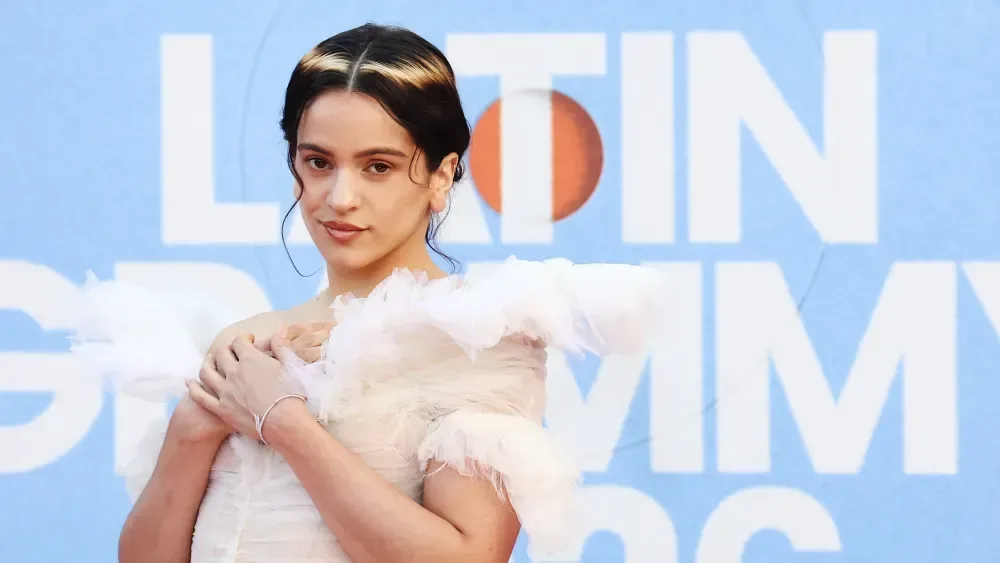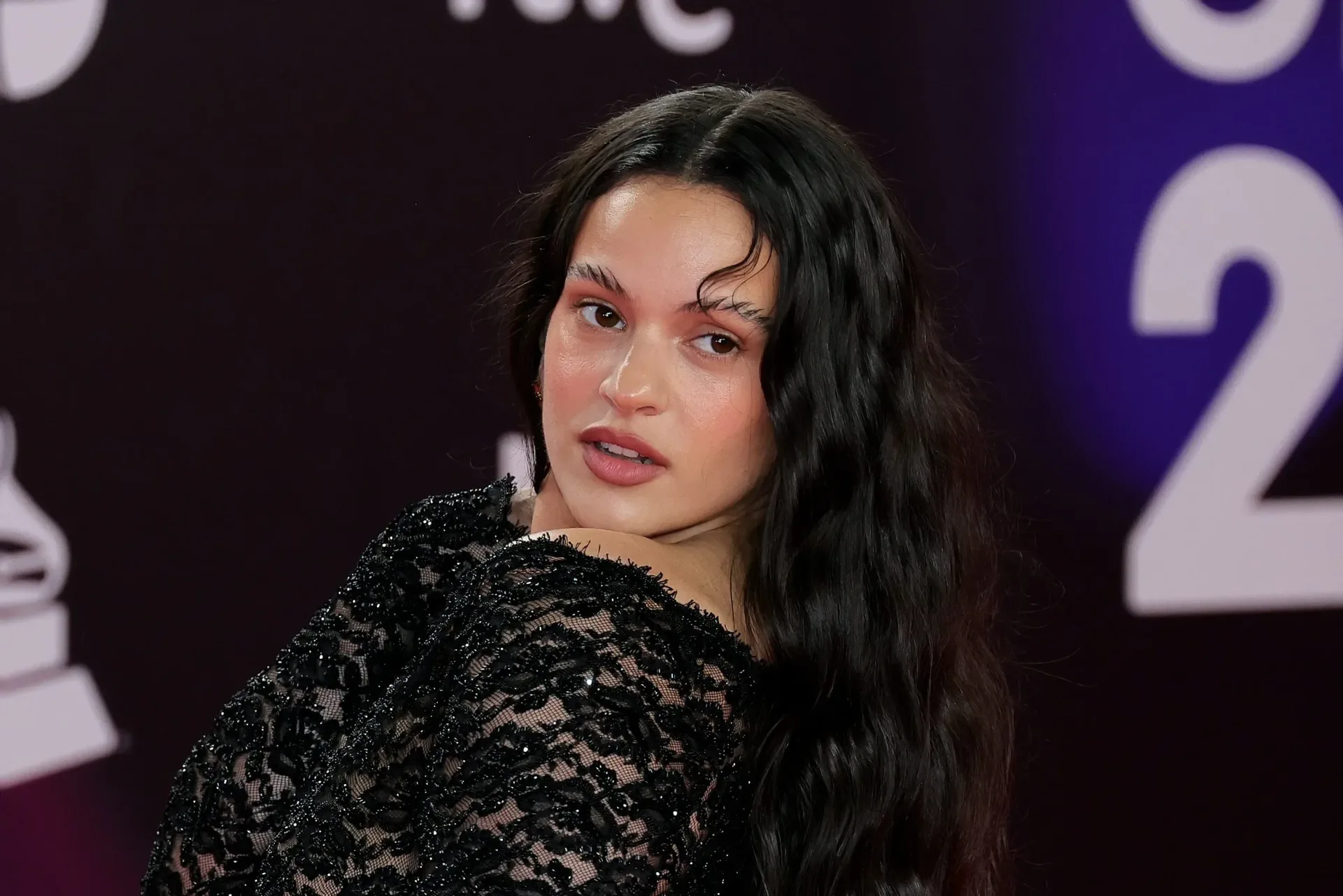
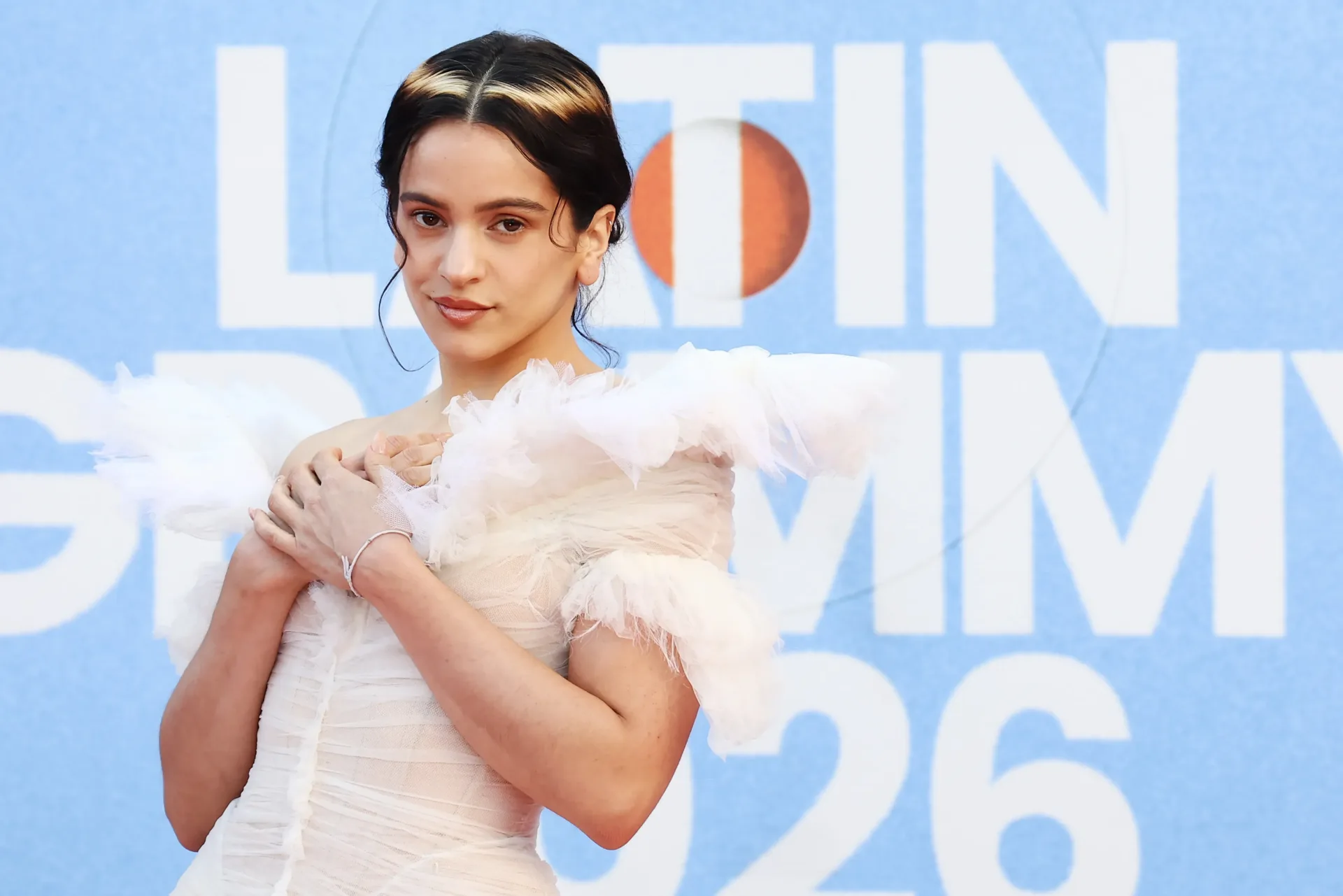
Rosalía emerged as one of the defining winners of the 2026 Latin Grammys, taking Album of the Year for Lux (Complete Works) and sharing in the songwriting honor for Song of the Year with “La Perla.” The ceremony was held November 12 at the MGM Grand Garden Arena in Las Vegas.
“La Perla,” performed by Rosalía featuring Yahritza y Su Esencia, won in both the Song of the Year and Best Pop Song categories. Its Song of the Year prize was awarded to its credited songwriters: Noah Goldstein, David Rodríguez, Rosalía, Ryan Tedder and Dylan Wiggins. Rosalía’s wins extended beyond the top album and songwriting prizes: Lux also received Best Alternative Album, while “Sauvignon Blanc” earned Best Short Form Music Video.
Those results made Rosalía a clear center of the awards list, but the evening’s honors were spread across a wide range of musical styles. Milo J claimed Record of the Year for “Niño,” plus Best Folk Music Album for La Vida Es Más Corta, Best Urban/Urban Fusion Performance for “Gil” featuring Trueno, and Best Recording Package. Karol G’s Tropicoqueta won Best Urban Music Album, while her collaboration with Feid, “Verano Rosa,” was named Best Reggaeton Performance.
Rosalía’s major wins, explained
The two top awards attached to Rosalía’s work recognize different parts of making a song. Album of the Year honors the album release, here Lux (Complete Works). Song of the Year, by contrast, is a songwriter-focused prize. That distinction is why “La Perla” lists its credited writers in the award result, rather than being credited solely to its performer.
Record of the Year is another separate category, won by Milo J’s “Niño.” In practical terms, the three awards point at three different units of recognition: the album as a project, the song as composition and songwriting, and the recorded track. A listener may experience all three as simply music they enjoy, but awards categories divide the work in ways that acknowledge different creative contributions.
Rosalía’s additional awards show the range covered by Lux and its related releases. Best Alternative Album recognizes Lux in a genre-specific field; Best Pop Song puts “La Perla” in a song-performance category; and Best Short Form Music Video recognizes “Sauvignon Blanc” in the visual format category. Together, those wins gave Rosalía awards for an album, a song and a video.
Milo J’s broad showing includes Record of the Year
Milo J was another major name on the winners list. “Niño” received Record of the Year, while La Vida Es Más Corta won Best Folk Music Album. “Gil,” featuring Trueno, took Best Urban/Urban Fusion Performance, and Milo J was also recognized for Best Recording Package.
That spread matters because the categories are not confined to one musical lane. The folk album award identifies one album classification, while the urban/urban fusion performance recognizes a collaborative track and its performance category. Best Recording Package is a separate design-oriented honor. The result is a compact illustration of how an awards ballot can recognize recorded sound, genre placement, collaboration and presentation independently.
Related coverage includes 2026 Latin Grammys: Rosalía, Milo J and Karol G Lead Winners.
Before the ceremony, Edgar Barrera had led all nominees with 10 nominations. Rosalía, Karol G, Jorge Drexler and Ca7riel & Paco Amoroso followed with seven nominations each. The winners list ultimately gave several of those most-nominated artists substantial results, while also making room for names across contemporary Mexican, tropical, jazz, Christian, singer-songwriter and regional categories.
Karol G, Ca7riel & Paco Amoroso and Jorge Drexler add genre wins
Karol G won Best Urban Music Album for Tropicoqueta. “Verano Rosa,” her collaboration with Feid, added Best Reggaeton Performance. The two honors distinguish between an album award for a body of work and a performance award for a particular recording.
Ca7riel & Paco Amoroso earned three awards across sharply different formats. “Beto’s Horns – Fred Remix,” with Fred Again.., was named Best Electronic Music Performance. “Hasta Jesús Tuvo Un Mal Día,” with Sting, won Best Pop/Rock Song. Their FREE SPIRITS (The Film) received Best Long Form Music Video.
Remix, song and long-form video categories involve different creative frameworks. A remix reworks or recontextualizes an existing musical recording; a song category focuses on the track itself within a genre field; and a long-form music video recognizes an extended screen project rather than a conventional short video. Ca7riel & Paco Amoroso’s results therefore reflect recognition across audio and visual work, as well as collaborations with Fred Again.. and Sting.
Jorge Drexler’s awards included Best Alternative Song for “Ante la Duda, Baila,” Best Singer-Songwriter Album for Taracá, and Best Roots Song for “El tambor chico,” shared with Facundo Balta. The Roots Song award credits Balta and Drexler as songwriters, another reminder that songwriter categories are credited differently from awards primarily centered on a recording or album artist.
Winners across pop, urban, regional and tropical music
The rest of the winners list demonstrates the breadth of fields represented at the ceremony. Juanes won Best Pop/Rock Album for JuanEsteban. Alejandro Sanz’s ¿Y Ahora Qué +? won Best Contemporary Pop Album, while Laura Pausini took Best Traditional Pop Album for Yo Canto 2. In the singer-songwriter song field, Silvana Estrada won for “Dime.”
In urban and rap categories beyond Karol G and Milo J, Bizarrap and Daddy Yankee won Best Urban Song for “Daddy Yankee: Bzrp Music Sessions, Vol. 0/66.” J Noa and Trooko took Best Rap/Hip Hop Song for “Antisistema.”
Regional and Mexican music winners included Xavi, whose Dosis won Best Contemporary Mexican Album; Camila Fernández, whose La Fernández won Best Ranchero/Mariachi Album; and Edén Muñoz, whose Piedras a la Luna took Best Banda Album. Bobby Pulido & Friends won Best Tejano Album for Una Tuya y Una Mía (Vol. 2/En Vivo).
Tropical music also had a substantial presence. Fonseca won Best Contemporary Tropical Album for Antes Que El Tiempo Se Vaya. Luis Enrique’s El Alma en Clave was named Best Salsa Album, Carlos Vives’ El Último Disco Vol. 1 won Best Cumbia/Vallenato Album, and Techy received Best Merengue/Bachata Album for Chula. Gilberto Santa Rosa won Best Traditional Tropical Album for Íntimo (En Vivo), while Grupo Niche’s “Nombre y Apellido” took Best Tropical Song.
Additional winners from the 2026 Latin Grammys
- Best Latin Jazz/Jazz Album: Gonzalo Plays Pino — Gonzalo Rubalcaba
- Best Christian Album (Spanish Language): Inquebrantable — Marcos Witt, Marco Barrientos & Marcos Vidal
- Best New Artist: Aria Vega
- Best Contemporary Mexican Album: Dosis — Xavi
- Best Traditional Pop Album: Yo Canto 2 — Laura Pausini
- Best Salsa Album: El Alma en Clave — Luis Enrique
- Best Merengue/Bachata Album: Chula — Techy
- Best Ranchero/Mariachi Album: La Fernández — Camila Fernández
- Best Banda Album: Piedras a la Luna — Edén Muñoz
For readers following the wider overlap between Latin music, hip-hop and entertainment news, recent developments around major rap figures can be found in this update on Offset and Quavo’s private reconnection.
The 2026 results ultimately place Rosalía at the top of a winners list that extends from pop and alternative music to rap, jazz, Christian music, regional Mexican styles and multiple tropical traditions. Milo J’s Record of the Year win and multi-category showing, Karol G’s urban and reggaeton honors, and Ca7riel & Paco Amoroso’s cross-format awards ensure the story is bigger than a single sweep: it is a set of results distributed across albums, compositions, recordings, performances, packages and music films.