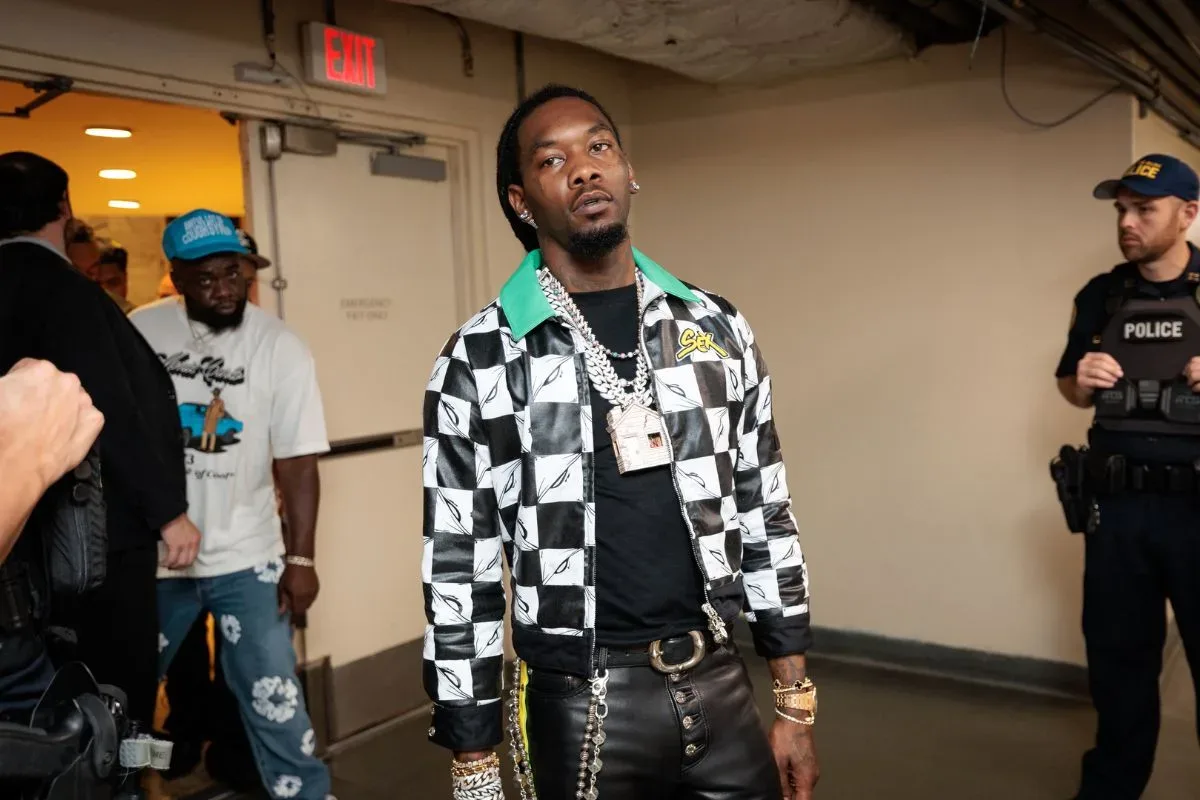
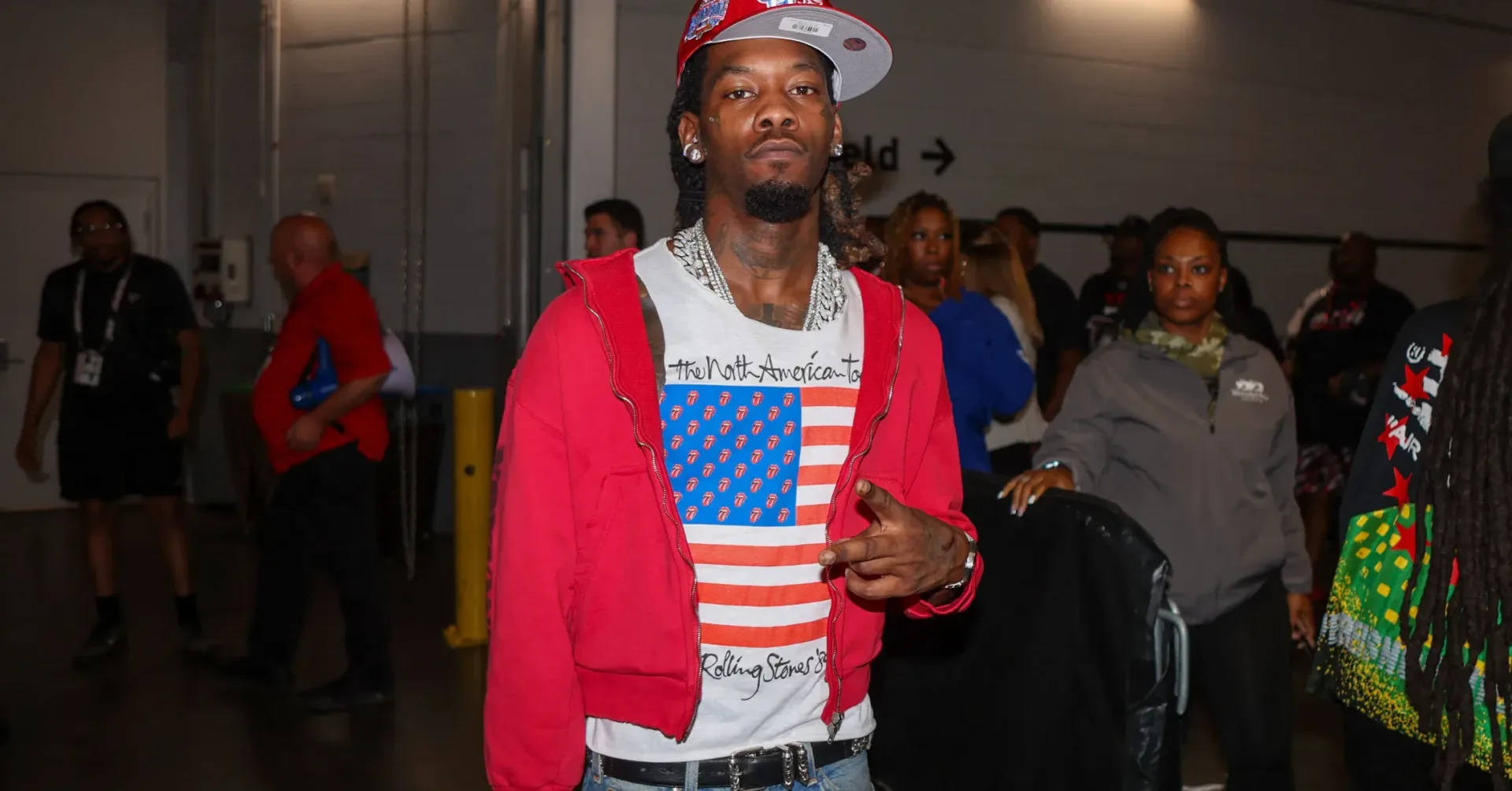
Offset has offered a clearer picture of where things stand between himself and Quavo: the pair’s reconnection was not a sudden public-facing moment, but a private process that had already been underway for some time.
Speaking with DJ Whoo Kid on SiriusXM’s Shade 45, Offset described the relationship in family terms, emphasizing support, patience and the need to handle difficult matters away from public scrutiny. His comments arrive as Quavo is set to appear on Offset’s GMFU, and as the two prepare for a new Migos album expected next year.
For listeners, that makes the immediate collaboration more than a routine guest verse. It is the first newly highlighted musical meeting point in a larger rebuilding process—one that Offset says remains incomplete.
Offset frames the reunion as support, not spectacle
Offset’s explanation was concise but candid. “Blessings, the rebuild is always the best build,” he said. “I was there to support my brother. S–t’s hard. It’s a time and a place for everything and so we just clicking.”
The key word is rebuild. It suggests the relationship has not simply resumed at the point where it stopped. Instead, Offset is describing a connection being constructed again after hardship, with an acceptance that the work is difficult and cannot be rushed.
That framing matters because public reunions can easily be treated as a finished story: two artists share a stage, appear on a song or announce a project, and audiences assume every personal issue has been resolved. Offset’s remarks push against that interpretation. The musical partnership may be moving forward, but he does not present it as proof that every wound has disappeared.
He also makes clear that support was central to the process. Rather than offering a detailed public account of what happened between them, Offset focuses on being present for Quavo. It is a restrained approach to a subject that attracts intense fan attention precisely because of their shared history.
“We been talking for a long time”
Offset said the visible reconciliation did not mark the beginning of communication. “We been talking for a long time. Ya’ll just ain’t know,” he explained. “It just wasn’t for the world to know.”
Related coverage includes Offset Says Reconnection With Quavo Took Place Privately.
In practical terms, that means the public timeline and the personal timeline are different. Fans may have only recently seen signs that Offset and Quavo were back on good terms, but Offset says conversations had been happening much earlier, without being turned into a running public update.
He went further, calling the work “heal[ing] behind the scenes,” while adding an important qualification: “which we still ain’t heal.” That distinction is significant. Healing, in this context, is not being used as a clean endpoint or a declaration that everything is settled. Offset describes it as a continuing process.
His broader point is about boundaries. “It’s building with your family,” he said. “Some stuff don’t go out the house.” The line explains why there may be limited detail around the reconciliation. It is not merely a refusal to answer curiosity; it is a statement that some personal conversations need to remain personal, even when the people involved are globally recognized artists.
That approach also leaves room for the music to speak without forcing it to carry the full burden of explanation. A collaboration can document that artists are willing to work together again, but it does not need to become a public transcript of private grief, conflict or repair.
What the Quavo feature on GMFU represents
Quavo’s appearance on GMFU gives listeners a concrete outcome of the renewed connection. A feature is a guest performance by another artist on a track, and it can be a relatively simple creative decision. In this case, however, the inclusion has additional emotional and cultural weight because it follows a period when the state of the relationship was widely watched.
The available information confirms Quavo’s involvement with Offset’s album, but it does not establish the song’s title, sound, lyrical subject or the extent of either artist’s role beyond the feature. Those details should not be assumed in advance. What can be said is that the collaboration offers an opportunity to hear them together again in 2026.
For audiences, it may be tempting to search every bar for an explicit statement about reconciliation. That is possible, but not guaranteed. Offset’s own comments point to a more measured reading: the artists have reconnected, they are making music, and their personal healing continues privately. The song may reflect that reality directly, indirectly, or simply operate as a performance between longtime collaborators.
The distinction is worthwhile. Artists’ work can carry personal meaning without functioning as a press release. Listeners can recognize the significance of the pairing while allowing the record to be the record.
A Migos album raises the stakes—and expectations
Offset and Quavo are also set to make a new Migos album next year. That is a larger commitment than a single feature. An album requires an extended creative process: recording, selecting material, shaping a shared direction and presenting a project as a cohesive release rather than a one-off reunion.
Still, the reported plan should be understood for what it is: a future-facing project, not a completed album with publicly detailed tracks, release timing or format. There is no need to fill those gaps with assumptions. The most meaningful confirmed detail is that Offset and Quavo are looking beyond one appearance on GMFU.
That prospect places renewed attention on Migos’ legacy and on how the group name will be approached in this next chapter. Yet Offset’s interview offers a useful reminder that the personal side should not be reduced to rollout language. He presents the rebuilding as family work first, with music emerging alongside it—not as a substitute for it.
The wider pop-culture conversation often rewards instant clarity: a feud, then a reconciliation, then a triumphant return. Offset’s account is less tidy and more believable. People can reconnect before the public knows. They can make plans together while still acknowledging unresolved pain. They can protect the most difficult parts of the story from becoming entertainment.
Why privacy is the central message
Offset did not use the interview to map out every stage of the relationship or to turn reconciliation into a victory lap. Instead, he stressed that he and Quavo had chosen to heal outside the spotlight. That decision is the center of what he shared.
It also sets a reasonable expectation for what may come next. Fans can anticipate hearing Quavo on GMFU and can watch for progress on the planned Migos album. But Offset’s comments indicate that the pair may continue to reveal only what they decide belongs in public.
For now, the strongest signal is simple: Offset and Quavo have been communicating, they are collaborating again, and they are approaching the relationship as an ongoing rebuild. That is more meaningful than a headline-friendly declaration of perfection—and it gives their next music together a context that does not depend on oversharing.
For another recent look at how artists weigh collaboration rumors against confirmed plans, see this report on Lil Baby and a possible Playboi Carti collaboration album.