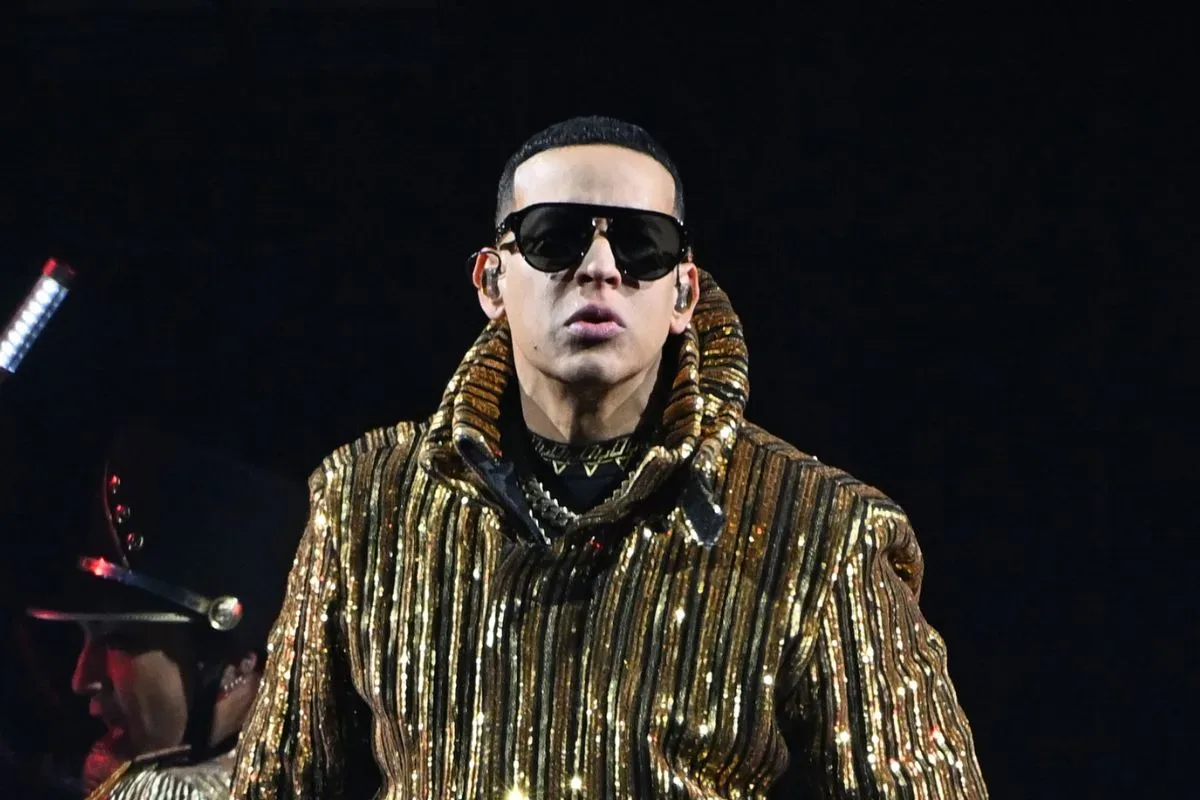
Daddy Yankee’s latest discussion of reggaeton’s roots puts a deserved spotlight on the artists, DJs and communities behind a genre that was never the product of one influence or one cleanly scheduled origin point. Speaking on Track Star, the Puerto Rican star named The Notorious B.I.G. as a major personal inspiration and connected his musical formation to Jamaican dancehall figures including Shabba Ranks, Super Cat, Buju Banton and Beenie Man.
“He’s a great legend and he inspired me a lot,” Yankee said of Biggie. He also described New York as “the biggest bridge to reggaeton,” while highlighting the enduring pull of salsa through Héctor Lavoe’s “El Cantante.” “I’m a salsa boy, man, from the heart,” he said.
Those credits matter because they resist an overly simple story about reggaeton. Yankee did make a claim about coining the term in 1992, but the available history presented around that claim gives a fuller answer: the word’s early use and the sound’s development took place amid a wider Puerto Rican underground movement, shaped by hip-hop, dancehall, Panamanian reggae en español, DJs, rappers and local cassette circulation.
A name can emerge before a genre becomes an institution
Yankee’s point concerns the name reggaeton, not a claim that he individually created all of the music and culture now associated with it. That distinction is crucial.
A 2023 account of the era placed Yankee’s use of the word on a DJ Playero recording around 1991 or 1992. Playero recalled it less as the launch of a consciously branded new genre than a spontaneous moment during the making of a song. When asked why Yankee used the term, Playero said neither of them really knew, calling it “a pure coincidence.”
That does not make the term unimportant. Genre names can begin casually, especially in scenes operating outside formal music-industry systems. But a word gaining traction is different from a single person designing a whole movement. Reggaeton’s early foundations were collective: a network of creators making, recording, selling and sharing music before mainstream media or retail infrastructure embraced it.
In this context, “underground” is more than a vague label for something edgy or unknown. It describes a practical way music moved. DJ Adam Avilés recalled that the music was called underground in the period when it had no place on radio, television or store shelves. Cassettes sold on Puerto Rican streets provided a distribution route, while DJs recorded young rappers over beats and helped the music reach listeners beyond traditional industry gatekeepers.
That cassette-driven circulation explains why precise origin stories can be difficult. A scene does not necessarily leave behind the tidy paper trail of a label campaign, a launch event or a clearly defined release strategy. Its history is often embedded in recordings, recollections, collaborations and the people who made music move person to person.
Related coverage includes Daddy Yankee Traces Reggaeton’s Roots to Biggie, Dancehall and Puerto Rico’s Underground.
The musical bridge was built from several directions
Yankee’s list of influences is a concise guide to the musical crossings that informed reggaeton. Biggie represents a hip-hop lineage that Yankee has long acknowledged. Jamaican dancehall artists represent another central current. Salsa, in Yankee’s own description, remains part of his cultural and musical identity. New York sits in the middle as a bridge connecting Puerto Rican experience, U.S. hip-hop and wider Caribbean sounds.
Scholar Petra Rivera-Rideau traced Puerto Rico’s underground development to DJs in the early 1990s. In her account, figures including DJ Negro and Playero combined U.S. hip-hop, Jamaican dancehall and Panamanian reggae en español with their own ideas. That framing is valuable because it identifies both the ingredients and the local creativity involved. The early artists were not simply reproducing styles from elsewhere; they were working with sounds that traveled across communities and building something distinctive in Puerto Rico.
Dancehall, in this discussion, refers to a Jamaican music tradition that was one of the essential influences on the early sound. Reggae en español refers to Spanish-language reggae associated here with Panama. Latin hip-hop captures the rap-centered side of Yankee’s early identity. These are related lanes, but they are not interchangeable terms. The point of tracing them separately is to recognize the many creative traditions that converged in reggaeton.
Yankee himself made that overlap explicit in a 2007 interview, when he was asked whether he saw himself as a reggaeton artist or a hip-hop artist. “Both. Both of them,” he answered. He said he started in the Latin world as a hip-hop artist and credited Playero, whom he called the “reggaeton godfather,” with introducing him to reggae and dancehall. Yankee’s self-description was not a choice between two identities; it was an acknowledgment that both were central to his work.
Why Biggie belongs in Yankee’s account
Giving Biggie credit does not mean placing The Notorious B.I.G. inside reggaeton’s Puerto Rican origin story as a direct architect. Instead, Yankee is describing artistic influence: the impact a revered rapper had on the way he understood his own musical path. That is a different, and still meaningful, kind of lineage.
For listeners, it is a reminder that genre boundaries are often more porous in practice than they are in catalog labels. A performer can be deeply rooted in one local scene while absorbing the presence, technique or creative authority of an artist working in another tradition. Yankee’s acknowledgment of Biggie fits alongside his longstanding description of himself as both a Latin hip-hop artist and a reggaeton artist.
It also makes his recognition of Jamaican performers more significant, not less. The point is not to select a single outside influence as the “real” source. The point is that Puerto Rico’s underground scene processed multiple influences through its own artists, DJs and methods of distribution. That collective process is where the history becomes richer than an argument over one name or one date.
From street cassettes to “Gasolina”
Yankee’s own career later became part of reggaeton’s institutional history. “Gasolina,” from his 2004 album Barrio Fino, entered the Library of Congress’ National Recording Registry in 2023. Rivera-Rideau described the song’s reach across American rap and pop radio, MTV and BET, a path that carried reggaeton far beyond the local underground conditions from which the genre developed.
The contrast is striking without requiring a simplistic “overnight success” narrative. Early underground music circulated through street-sold cassettes because it lacked conventional outlets. Years later, “Gasolina” reached large U.S. media platforms and ultimately joined the National Recording Registry. That arc shows how much the audience and infrastructure around reggaeton changed, while also underlining why the early DJs, rappers and listeners deserve sustained recognition.
Registry inclusion is not merely a career accolade in this context. It places a recording associated with reggaeton’s major crossover within a national preservation framework. For a style that began outside radio, television and store shelves in Puerto Rico, the contrast carries obvious historical weight.
Analysis: the most useful takeaway is shared credit
The temptation in music history is to turn every complicated development into a neat first-person claim: one inventor, one song, one decisive year. Yankee’s comments are more productive when read alongside the details surrounding them. His stated connection to the term reggaeton belongs in the record. So does Playero’s recollection that the word emerged casually while they were making music. So does the documented role of early underground DJs, Caribbean musical exchange and cassette networks.
None of these points cancels the others. They describe different layers of history:
- Personal influence: Biggie, salsa and Jamaican performers helped shape Yankee’s artistic perspective.
- Terminology: Yankee’s early use of “reggaeton” is placed around 1991 or 1992, with Playero recalling an unplanned origin for the word.
- Scene-building: DJs such as Playero and DJ Negro, along with young rappers and local audiences, formed the early underground ecosystem.
- Musical construction: U.S. hip-hop, Jamaican dancehall and Panamanian reggae en español were combined with new ideas in Puerto Rico.
- Mainstream expansion: “Gasolina” became a major crossover point after reggaeton had already developed through that underground culture.
That layered view is also a practical antidote to flattened discussions online. Calling Yankee an important pioneer does not require erasing the DJs and communities around him. Recognizing dancehall and reggae en español does not minimize Puerto Rican innovation. Noting hip-hop’s importance does not turn reggaeton into a mere offshoot of U.S. rap. Each connection helps explain the genre’s reach and character.
Yankee’s remarks arrive as another reminder that the genre’s biggest stars can use their platforms to point backward as well as celebrate personal milestones. His references name artists who shaped him and connect a global sound to a local underground culture that initially operated without the conventional visibility now associated with reggaeton. For more music-and-pop-culture coverage, see our look at Quavo’s “SATCHAMO” trailer.
Most importantly, the conversation around the word reggaeton should not crowd out the people and practices that gave the sound life. A term may begin as coincidence. A movement does not. It is made through collaboration, circulation and influence—and Yankee’s own account, from Biggie to Shabba Ranks to Playero and the Puerto Rican underground, points directly to that larger story.