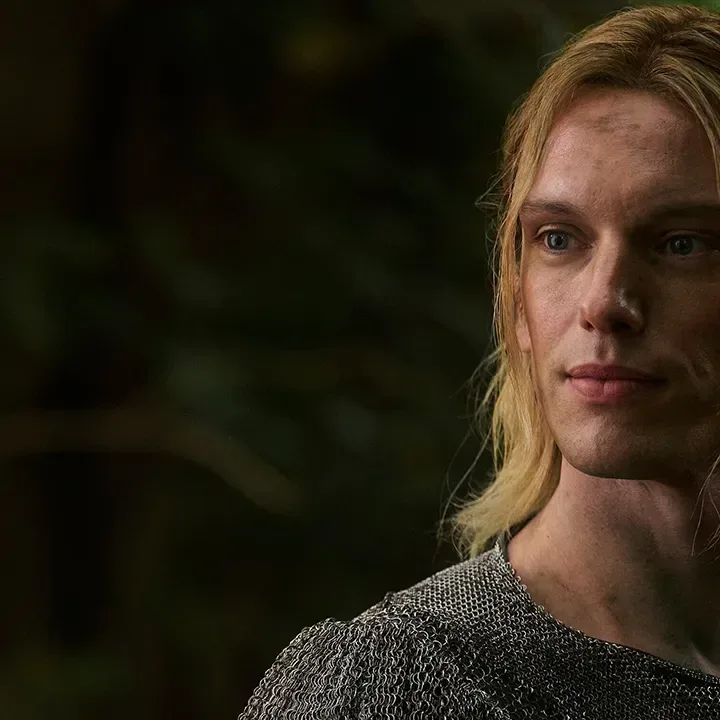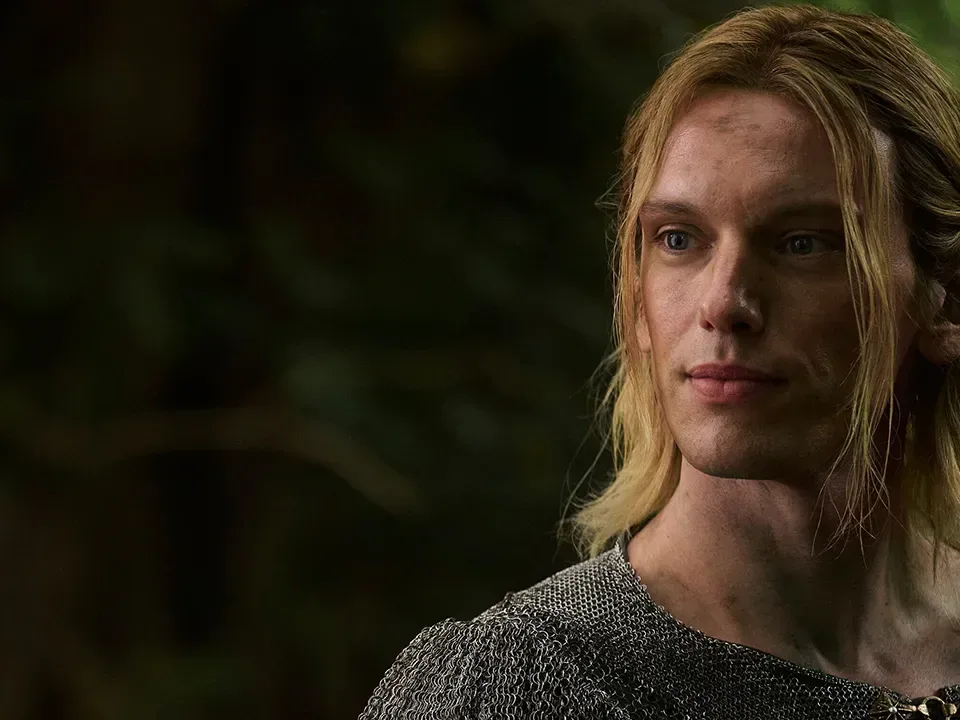
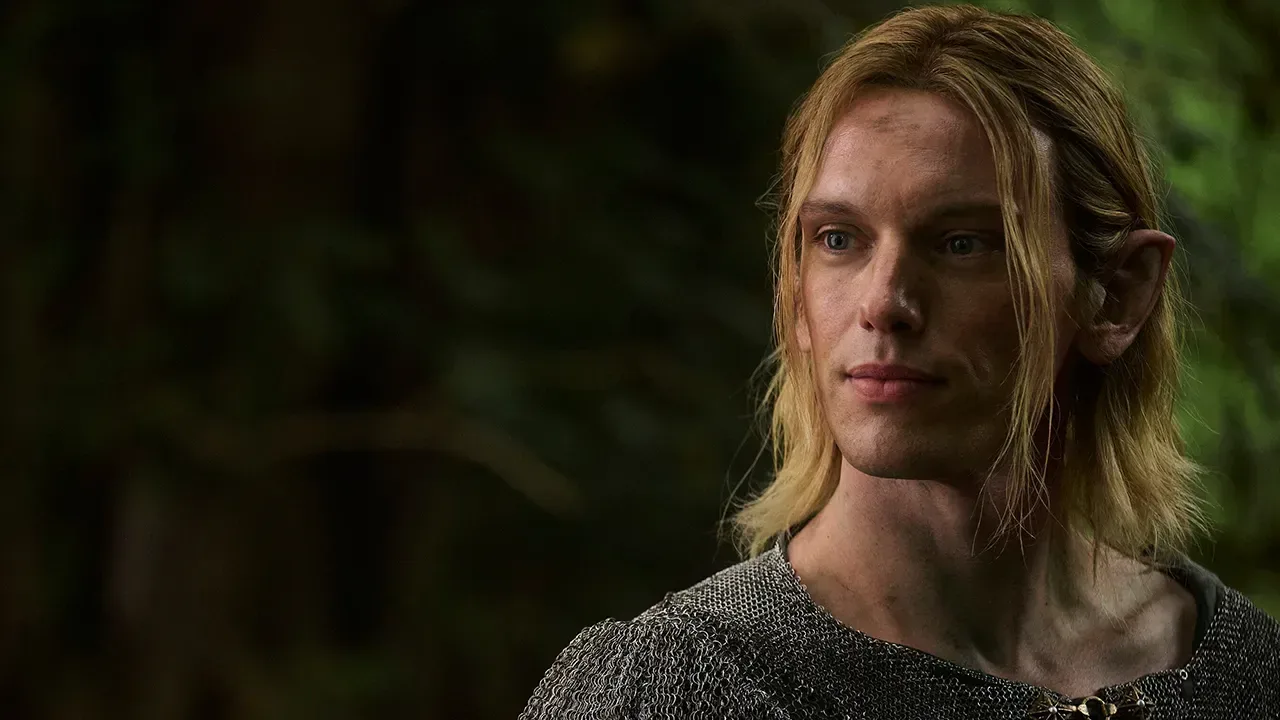
Jamie Campbell Bower’s move from Stranger Things to The Rings of Power is not simply a change of franchise. In his own description, it is an antidote.
After portraying Vecna across the final two seasons of Stranger Things, Bower has joined the third season of Prime Video’s Middle-earth drama as Celeborn, Galadriel’s long-absent husband. The role brings him into a story already deep in its conflict with Sauron, but Bower has framed the experience in notably gentler terms than the psychological darkness associated with Vecna.
“I’ve been describing it as the perfect kind of antidote,” Bower said. “It is so different to what I was doing before.”
That contrast matters because Bower has previously been candid about the personal intensity of preparing for Vecna. At MegaCon in early 2025, he said that he used isolating and intense preparation for the villain, and told his therapist he did not intend to take another bad-guy role for a while. His comments did not present acting as interchangeable work: the emotional posture required by a character can shape what an actor wants to do next.
Celeborn, at least in the material currently available from Season 3, offers a sharply different creative problem. Rather than embodying an overt supernatural antagonist, Bower is playing an elf whose history is incomplete, whose relationship with Galadriel is complicated, and whose precise place in the wider story is still being revealed.
A reunion built around absence
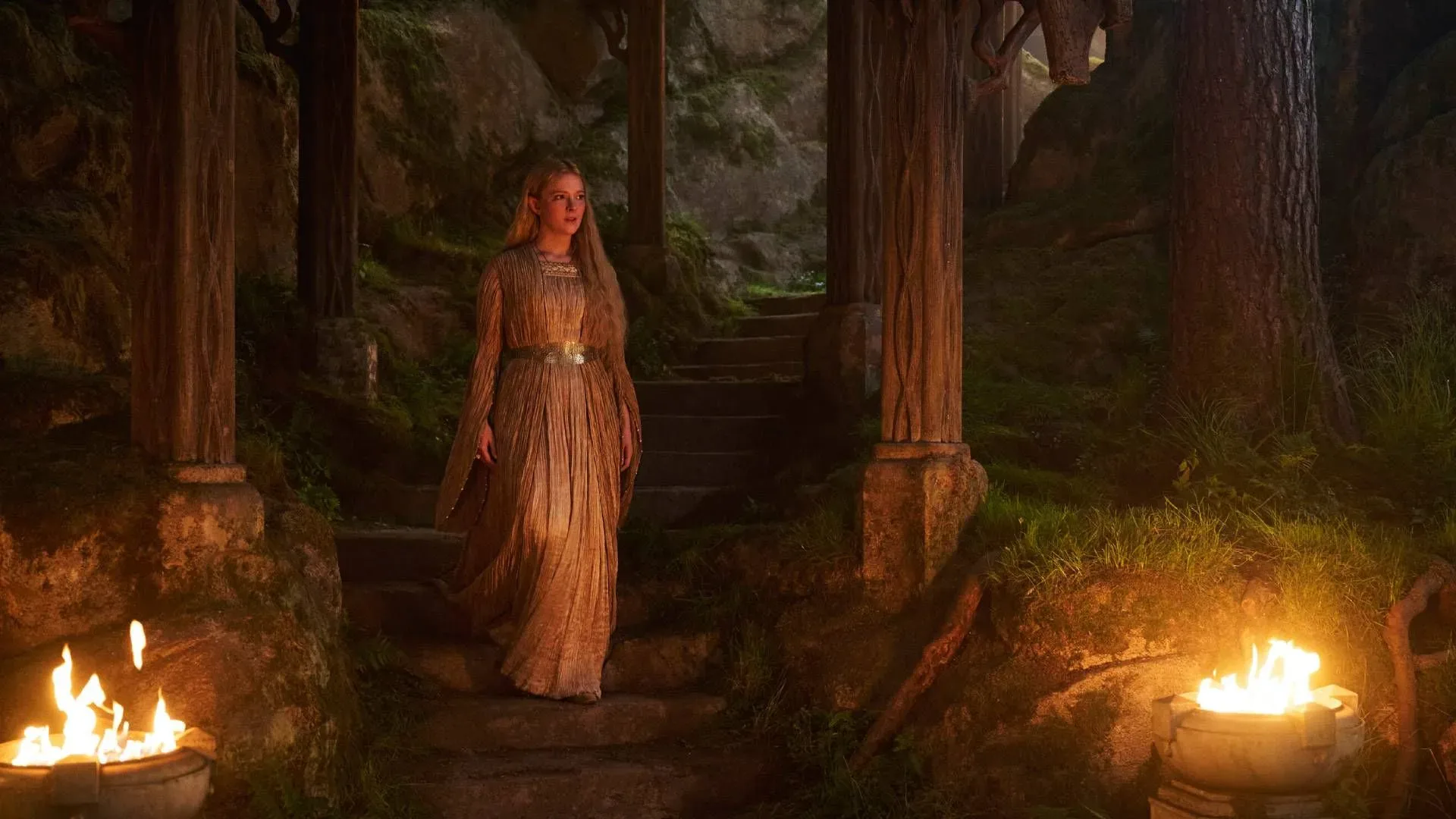
Season 3 begins five years after the second season and takes place well into the battle with Sauron. Galadriel, played by Morfydd Clark, had already spoken in Season 1 about Celeborn not returning from a battle with Morgoth. The new season reunites the pair, though the relationship is described as semi-estranged rather than instantly restored.
That history gives Celeborn more than a simple “long-lost spouse returns” function. A reunion can resolve an absence, but it can also make the absence newly consequential. The show has room to explore what it means for two people to encounter each other again after long separation, against the pressure of a larger war.
Viewers have seen only a limited amount of Celeborn so far. He appears in Episode 1 during a flashback set 1,000 years earlier, when he meets Galadriel, and returns in Episode 4. That restrained introduction means the performance is currently defined less by exposition than by suggestion: a figure from Galadriel’s past has become present again, while the full weight of his return remains to be developed.
Why Tolkien’s unfinished variations matter
Bower’s approach is also shaped by a useful complication: Tolkien explored Celeborn’s origins in multiple versions without definitively settling on one. For an adaptation, that does not mean there is no material to work from. It means there is a wider and less fixed field of interpretation.
The term legendarium is commonly used for Tolkien’s interconnected body of Middle-earth stories, histories and related writings. In this case, its relevance is practical. When a character’s background has been revisited across different texts and versions, an actor and a television production must decide which qualities are essential for their telling of the story.
Bower said he studied what was available, identified what spoke to him and what felt evident in the character, then built outward from there. His stated aim was to approach Celeborn with sensitivity and vulnerability.
“There has been sort of... not conflicting, but different information that’s available on him,” Bower said of Celeborn. “My intention was really to come into it with sensitivity and a vulnerability for him.”
That distinction between “conflicting” and “different” is important. It recognizes that variation in a long-developed fictional history is not necessarily a problem to be erased. It can instead become an opening for a performance that feels emotionally specific without claiming that one brief screen portrayal can exhaust every version of the character.
From a villain’s burden to a character with ambiguity
Bower’s comments make a clear separation between dark material and ambiguity. Celeborn is not being presented as uncomplicated; the actor specifically described him as interesting because the available material permits interpretation. But ambiguity is not the same thing as villainy.
Vecna demanded the construction of a central antagonist across several iterations of one character. By contrast, Celeborn’s uncertainty is rooted in fragmented history, a relationship with Galadriel, and the chance to establish a version of the character with emotional openness. One part is about entering the perspective of a principal evil; the other is about finding humanity, or elven emotional truth, inside a figure whose past is not fully settled.
There is a visible practical difference as well. Bower’s early Celeborn scenes arrive without the prosthetic transformation associated with his Stranger Things work. That alone does not determine the difficulty of a role, but it changes the relationship between an actor’s face and a character’s expression. For a performance built around sensitivity and vulnerability, direct access to facial detail can be particularly valuable.
It also helps explain why “antidote” is a more precise word than a simple declaration that one job was easier than another. Bower did not suggest that joining a massive fantasy production removes the demands of performance. He described a creative reset: a different world, a different cast and crew, and a different kind of character.
Season 3 narrows its central conflict
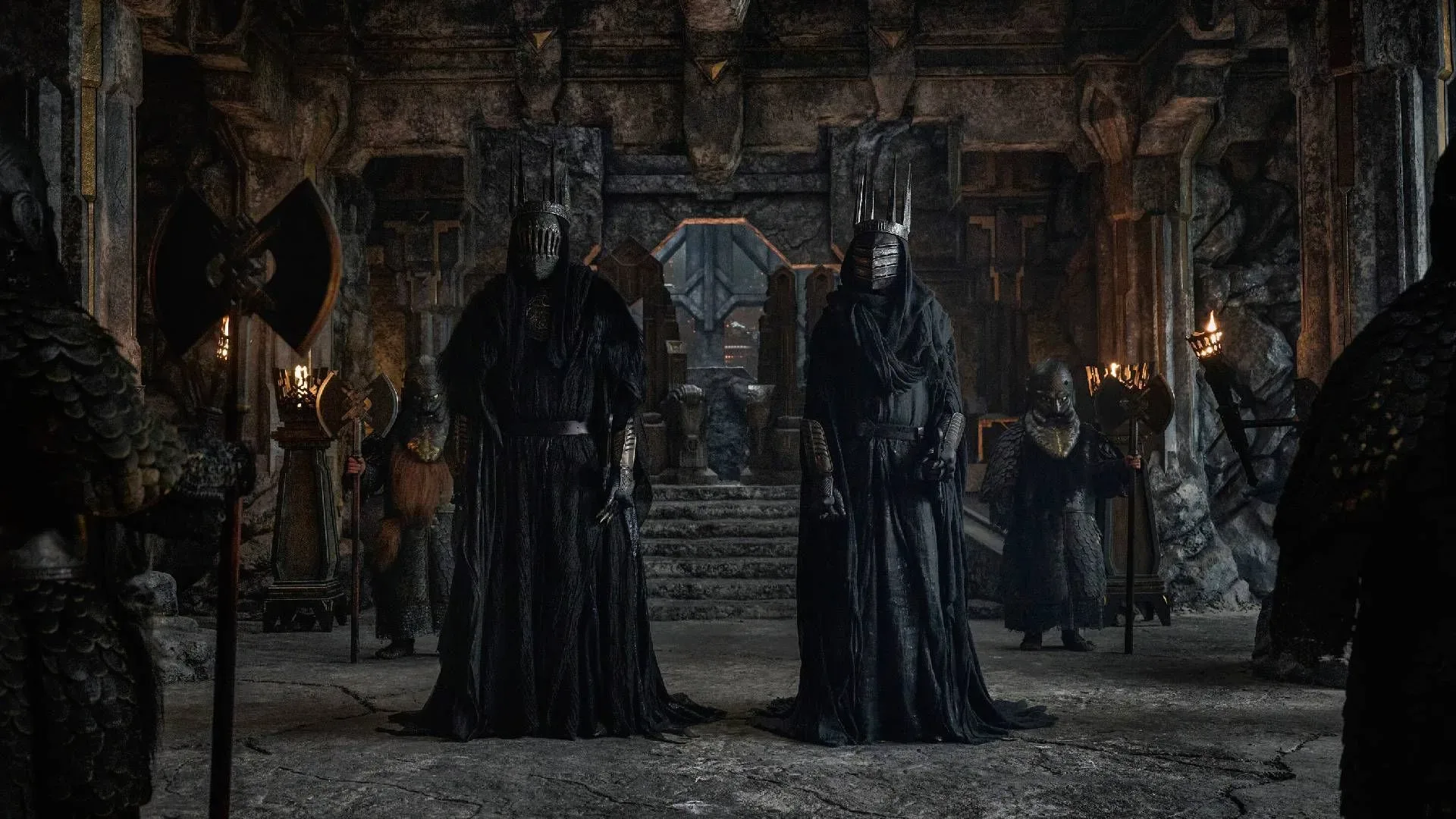
The first four episodes have been characterized as a new beginning for The Rings of Power, with the overall narrative streamlined into a more cohesive war story. The underlying conflict is now especially direct: characters are aligned around resisting Sauron or serving him.
That clearer good-versus-evil framework could make Celeborn’s arrival especially useful. Galadriel’s personal past is now intersecting with a story moving toward open conflict, and Celeborn gives the series another way to examine her beyond battlefield decisions and her opposition to Sauron. The significance is not necessarily that he changes the premise; it is that a major absence in Galadriel’s life is no longer absent.
For Bower, the role joins a familiar broader pattern in genre casting: performers can become closely identified with a monumental character, then seek material that showcases a different register. The continuing discussion around actors and their defining franchise roles often focuses on whether they return, but the roles chosen in between can be just as revealing. Here, Bower’s first major post-Vecna part appears to be a deliberate departure in tone.
What remains to come
Episodes 1 through 4 of The Rings of Power Season 3 are available now on Prime Video. Episodes 5 and 6 arrive November 18, followed by Episodes 7 and 8 on November 25.
With only two appearances so far, it would be premature to treat Celeborn’s complete role in the season as known. What is clear is the interpretive direction Bower has described: he is approaching the character through vulnerability, sensitivity and the productive uncertainty left by Tolkien’s varying accounts. For an actor coming directly from the emotional demands of Vecna, that is not merely a new costume or a new mythology. It is a different way into a character.