
DC Studios has undergone another major leadership change, with James Gunn and Peter Safran stepping down as co-presidents after four years overseeing the company’s new shared superhero-film universe. Jeremy Latcham, a former Marvel producer, has replaced the pair. The immediate question is not simply who takes the job, but why the studio’s leadership changed after only three films in the rebooted universe.
A new account of the transition describes a clash over corporate structure, access to plans and footage, and how much control DC Studios should retain following the Skydance merger earlier this year. Those claims are attributed to unnamed people familiar with the situation, so the precise internal conversations and motivations remain unconfirmed. Still, the broad picture is one of a studio reorganization arriving just as Gunn and Safran’s creative mandate met a new management structure.
A leadership deal that reportedly changed course
Gunn and Safran were reportedly told on Friday, November 6, by Skydance co-CEOs David Ellison and Ynon Kreiz that plans for their continued roles had changed. The leadership shake-up had allegedly been developing since early fall, and Latcham had reportedly already been approached by Skydance Motion Picture Group co-chair John Greenstein about the possibility of taking charge at DC Studios.
That timeline matters because it suggests the decision was not presented as a quick reaction to one recent release. It instead appears tied to what happens when a major entertainment company changes hands: existing executives, contractual reporting lines and creative divisions all have to fit into a new chain of command. A merger can be financially and operationally transformative even when the public-facing slate of films initially looks unchanged.
In this case, Gunn and Safran had initially reported directly to Warner Bros. CEO David Zaslav. Their contracts reportedly preserved a comparable direct-reporting arrangement even if leadership changed, meaning they would have reported to Ellison after the merger. At the same time, Greenstein and fellow Motion Picture Group co-chair Dana Goldberg were reportedly working to bring film production under their leadership.
That is not merely an org-chart dispute. Reporting lines determine who receives information first, who signs off on major choices, and how quickly a division can move. For a superhero universe designed around interconnected films, a studio chief’s authority can shape everything from release timing to which characters are prioritized. The reported friction therefore appears to have concerned the practical boundaries of the DC Studios brand as much as the personal relationships among executives.
Control and visibility were reportedly central issues
The account describes Gunn and Safran as having become used to substantial control over projects carrying the DC Studios banner. It also says Skydance leadership felt the pair were slow to provide plans and footage. Neither description, on its own, settles who was right. A creator-led division may see secrecy and careful timing as essential to protecting works in progress; a corporate parent may see early visibility as necessary oversight of expensive productions.
“Footage” in this context means material from films before it reaches audiences, which can range from rough assemblies and visual-effects work to more polished sequences. Sharing it internally may help executives assess a project, marketing direction or production risk. But early material is unfinished by definition, making it a limited indicator of a final movie. Likewise, a long-range plan for a shared universe can be more useful when it remains flexible, but executives overseeing budgets and release calendars may ask for detail well before a filmmaker considers it ready.
The reported dispute exposes the uncomfortable balancing act behind franchise filmmaking. Companies want dependable planning for brands intended to operate across many films. Filmmakers need room to change course as scripts, casts and productions evolve. When the same leaders are responsible for both creative cohesion and business accountability, their jobs can become especially vulnerable after a corporate restructuring.
Gunn’s case is distinctive because he was both a studio co-president and a filmmaker with a personal creative identity. His projects have often used offbeat characters and a more profane tone than the broadest family-oriented superhero fare. People familiar with the change characterized Latcham as a more middle-of-the-road executive focused on widely accessible hits. That does not establish the creative direction of every future DC release, but it does signal a reported contrast in priorities: a director-driven universe with unusual edges versus a management approach more directly centered on mass-market performance.
Why Superman’s $618 million was reportedly not enough
Box office results are part of the reported rationale, but they are not presented as the whole story. Supergirl is described as a commercial disappointment, a result that inevitably drew attention in a young cinematic universe. Yet the account says Skydance leadership also found Superman wanting despite it being DC’s biggest success under Gunn and Safran.
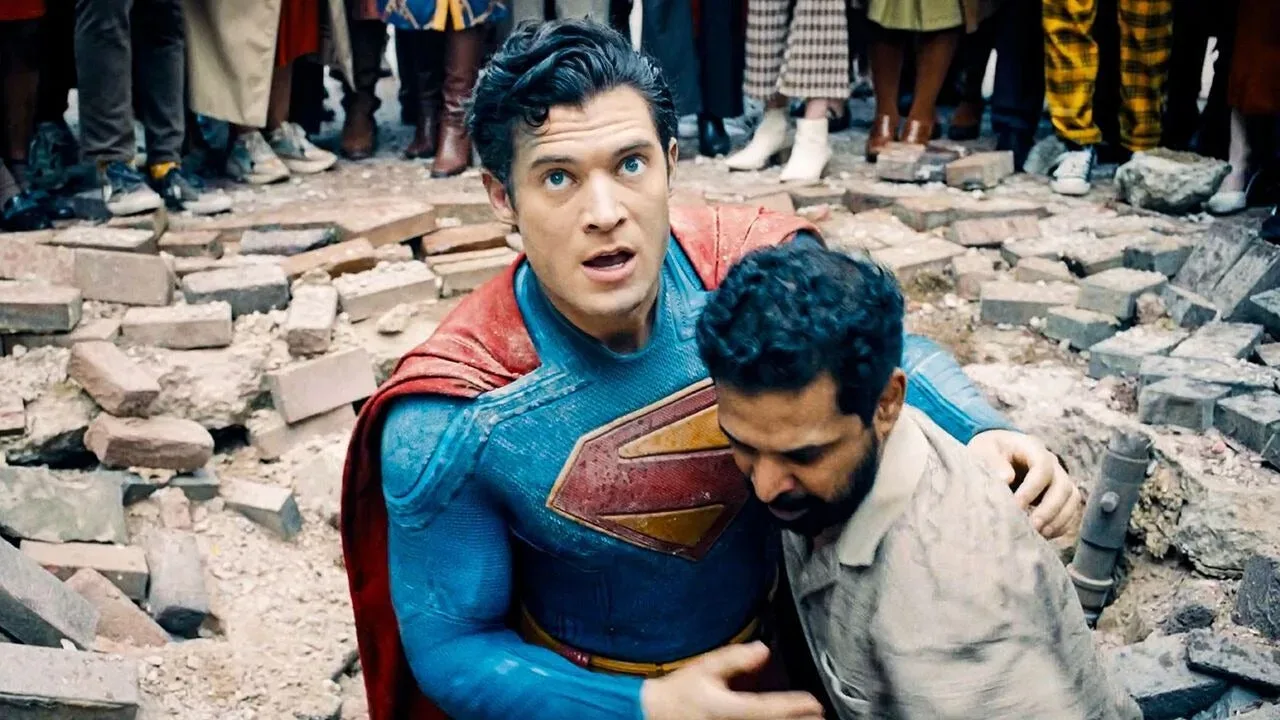
Superman reportedly grossed $618 million worldwide against a $225 million production budget. Those two figures do not by themselves reveal a movie’s profitability. A production budget is the cost of making the film; it is separate from marketing, distribution and other expenses. Gross is the money collected at the box office before theaters and other parties take their shares. “Net out,” the phrase used in the reported assessment, refers to whether a project ultimately produces enough returns after the relevant costs and revenue splits are accounted for.
The reported corporate view was that the film did not net out as expected and lacked the level of pop-culture impact expected for a movie of its scale. That is a high bar, and it combines two different tests. Financial expectations concern returns and projected franchise value. Cultural impact is harder to measure: it can mean public conversation, recognizable moments, audience enthusiasm, or the perceived ability of a film to sustain a larger slate. The available information does not provide a detailed financial breakdown or a defined measurement for that cultural judgment, so it should be treated as an internal assessment rather than a definitive verdict on audience response.
It is also important not to simplify the exit into a “one bad movie” narrative. The reported tensions predate the final decision and involve authority, transparency and post-merger consolidation. Commercial performance may have sharpened scrutiny, particularly around Supergirl and the expectations placed on Superman, but it sits alongside a reported power struggle over who directs the studio’s film operations.
What changes, and what does not, for DC’s immediate slate
For viewers, the clearest near-term point is that DC projects already made under Gunn and Safran’s leadership are not instantly erased by an executive change. Clayface, identified as the final DC Studios project produced while the two were co-presidents, is currently in theaters. Gunn’s next DC film, Man of Tomorrow, remains set to premiere next year.
The latter is particularly notable because Gunn is reportedly relieved to be moving away from the business side and concentrating on filmmaking. Running a studio entails personnel management, budgets, strategy meetings and negotiations that can pull attention away from writing and directing. A transition from executive-filmmaker to filmmaker is therefore not necessarily a retreat from DC itself. It can mean a narrower job with a different measure of influence.
That said, executive turnover can create uncertainty around projects further out than the next release. A connected universe benefits from continuity in casting, release planning and story development, but a new leadership team may re-evaluate which projects receive resources and how prominently they are positioned. The report provides no specific evidence that any future title has been delayed, canceled or creatively overhauled. Those would be separate developments, not automatic consequences of the leadership news.
Fans following the wider implications can also read our coverage of the reported Superman-to-Justice League plan and the uncertainty surrounding it. For now, the firmest facts are the change at the top, Latcham’s appointment, Clayface’s theatrical run and Man of Tomorrow’s currently stated release window.
Latcham inherits the difficult part of a reboot
Latcham takes over at a point when DC has begun building a new universe but has not yet amassed a long track record. That gives a new executive room to shape strategy, while also making every early choice unusually visible. The expectation described by people familiar with the transition is for a leadership approach that aims for hits with wide appeal. Whether that changes the kinds of characters, tones or stories DC makes cannot be determined from the available information.
There has also been concern among some fans about Latcham’s evangelical history. The supplied reporting offers no further detail about that history or any indication that it has shaped DC’s creative plans. It is therefore more accurate to describe it as a point of fan concern than as evidence of a coming policy or storytelling shift.
The larger lesson is that creative leadership and corporate control are rarely separable in a franchise operation. Gunn and Safran’s departure may be remembered alongside the performance of individual films, but the reported story is broader: a merger produced new decision-makers, competing expectations of oversight, and a reassessment of what success should look like for a superhero studio. DC’s next releases will show whether the leadership change results in visible creative change, or chiefly a different structure behind the cape.