Jeremy Latcham’s approach to big franchise filmmaking can be reduced to a question that is both disarmingly simple and rather difficult to answer: would his grandmother enjoy the movie?
Latcham, who is set to lead the DC universe at Skydance following the departure of co-CEOs James Gunn and Peter Safran, has described that personal benchmark as a guiding principle from his time on early Marvel productions. It was not meant as a call to flatten every story into the safest possible version of itself. Rather, it was a practical check on whether a film made inside the intensely specialised world of studio production could still communicate with people outside it.
“Is this going to work for regular people outside the bubble of Hollywood?” was the broader question Latcham attached to the test. For a company built around characters with decades of comic-book continuity, alternate versions, famous story arcs and passionate fan communities, that question could be highly relevant.
The ‘grandma test’ is really a clarity test
It is easy to mistake Latcham’s anecdote for a narrowly family-friendly rule. His comments suggest something more useful: a test of accessibility. In this context, accessibility does not mean assuming audiences need a lesson in every piece of lore. It means making sure the emotional stakes, character motivations and core plot are understandable without a viewer arriving with extensive homework.
Latcham explained that, during the early Marvel era, he would raise the concern that his grandmother might not like a particular choice. That concern became a stand-in for assessing whether a scene or idea would connect beyond the entertainment industry’s own assumptions. Later, while discussing Dungeons & Dragons: Honor Among Thieves, he recalled that his Oklahoma grandparents—his “Meemaw and Peepaw”—became a recurring editing-room joke because the team imagined it was making the film for them.
“If they weren't gonna understand it, [it was] never going to work for anybody,” Latcham said of that standard.
The wording matters. Understanding does not necessarily mean recognising every reference, predicting every twist or knowing a character’s publishing history. It means the movie itself supplies what viewers need to follow the journey. A newcomer should be able to grasp who wants what, why it matters and how the central relationships are changing, even when the setting contains super-powers, alien worlds or magic.
That kind of storytelling can serve longtime readers and casual viewers at once. Fans may enjoy the extra layer provided by a costume detail, a deep-cut character or a familiar comic concept. But the scene should still work if the viewer simply sees it as part of the drama unfolding onscreen.
What Latcham’s background actually indicates
Before the DC role, Latcham was a senior vice president of production and development at Marvel Studios and worked extensively under Kevin Feige. His producing credits include The Avengers and Spider-Man: Homecoming. Those films represent different points in a shared-universe model: one assembled major heroes in a crossover event, while the other told a more contained Spider-Man story that still existed within a broader Marvel setting.
That experience does not, by itself, reveal exactly what a Latcham-led DC slate will look like. There is no basis here to promise a particular tone, announce a creative team, or assume that every future DC project will follow a Marvel template. DC’s characters, filmmakers and existing plans have their own identity, and a producer’s old philosophy is not a published roadmap.
It does, however, give audiences a reasonable lens for interpreting the kind of creative concern Latcham has articulated publicly. He has repeatedly framed adaptation as a balancing act: being true to established fans while ultimately making the work for everybody.
That distinction is especially useful when discussing adaptations. “True to the fans” need not require reproducing every story beat from a comic. Nor does “for everybody” require removing all of the traits that make a property distinctive. The difficult work lies in identifying the essential character, conflict and appeal of the material, then presenting it in a form that plays cleanly to a broad audience.
Why this could matter for DC
DC is entering a period of transition. Gunn said in a social-media statement after his departure that he was relieved to return to filmmaking and that he disliked the job’s sometimes corporate nature. Latcham is now arriving to head the DC universe at Skydance, so viewers will naturally look for early indications of what remains stable, what changes and how forthcoming releases are positioned.
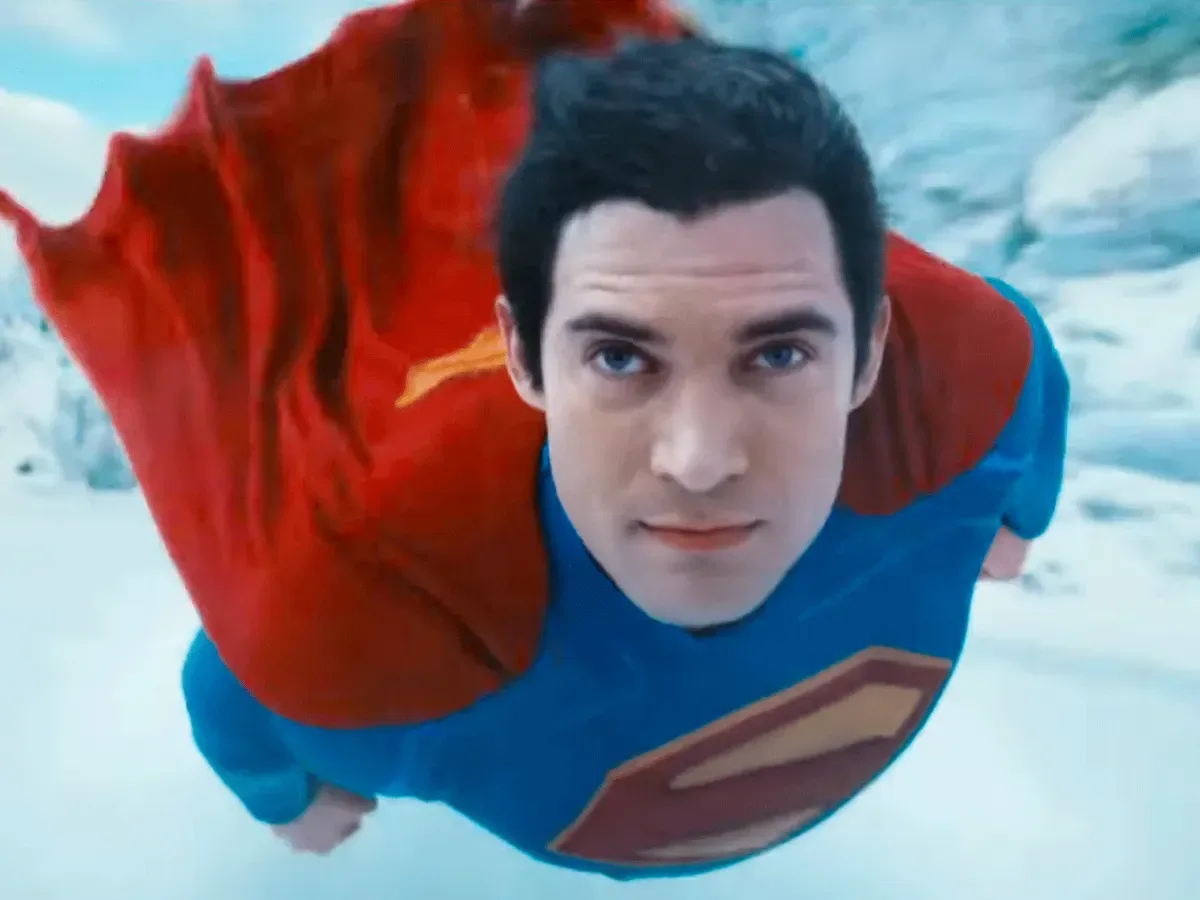
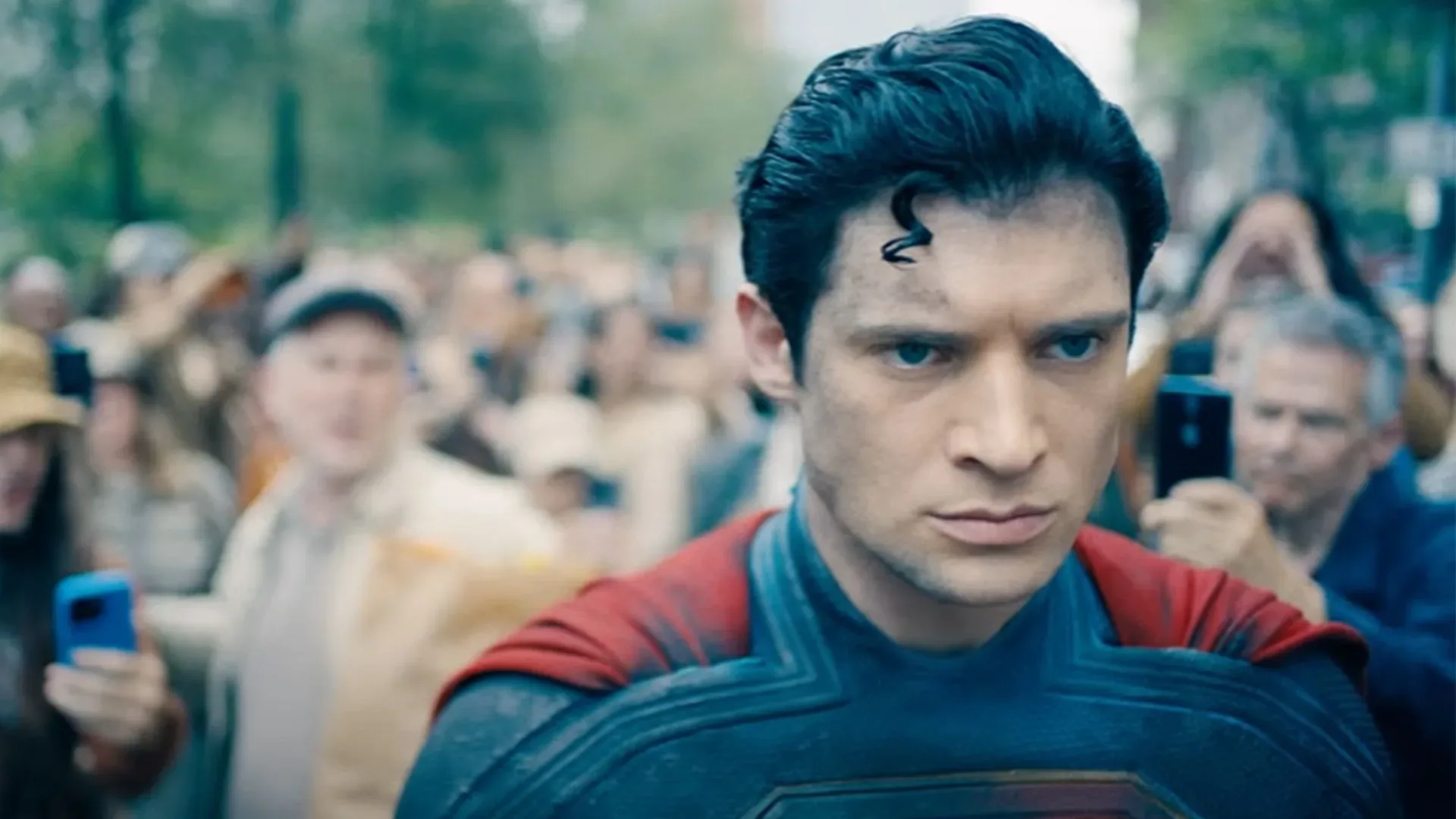
The confirmed point in the current discussion is Man of Tomorrow, the Superman sequel. Beyond that, caution is warranted. Transition periods invite speculation about which characters, plot plans or stylistic priorities might be retained, altered or dropped, but speculation should not be confused with a formal plan. Claims around the wider future of Gunn’s DCU have already become a major topic, including discussion of a report that Skydance could reconsider substantial parts of the plan after Man of Tomorrow. That possibility remains distinct from a confirmed slate.
What the “grandma” principle offers is not an answer to every corporate or creative question. It is a stated measure for decision-making at the level of the individual movie. Can someone without a continuity spreadsheet understand the character? Are the stakes human enough to land? Does the story invite an audience in rather than rewarding only people who already know the rules?
For superhero franchises, these are not small concerns. Shared universes can make an audience feel as if every entry is part of an ongoing conversation. That continuity can be rewarding, particularly for viewers who have invested time across several titles. Yet it can also create a perceived entry barrier: the fear that one must see everything first, or know which version of a character belongs to which timeline, in order to follow a new release.
A clear standalone emotional story is one way to reduce that barrier. It does not reject continuity; it ensures continuity is additive rather than mandatory. The best-case version is a movie that gives dedicated fans more to unpack while ensuring a first-time viewer is never excluded from the main experience.
Broad appeal is not the same as playing it bland
There is a predictable risk in any discussion of a “general audience” approach: the assumption that it must mean sanding away personality. Latcham’s remarks do not require that reading. His point was about finding a way to adapt material for everyone while retaining a duty to fans. In practice, those goals can complement each other.
A film can be eccentric, intense, emotionally complex or visually bold and still be legible. A story can feature unfamiliar fictional terminology and still explain its consequences through character action. A hero can have decades of backstory without the film treating a newcomer’s lack of prior knowledge as a failure.
In other words, the useful version of the grandma test is not “would every audience member like every element?” No creative project can meet that standard. It is closer to: “has the film done its job of communicating why this moment matters?” If the answer is no, the issue may be exposition, structure, pacing, character perspective or an overreliance on assumed knowledge—not necessarily the premise itself.
That makes the test a useful editorial tool as much as a marketing slogan. In an editing room, it can prompt specific questions. Does a major choice make sense from the character’s point of view? Has the story established the rule that makes an action possible? Is a joke funny even if the viewer misses the reference? Is a dramatic reveal meaningful before the audience starts cataloguing its continuity implications?
Those are questions with relevance far beyond superhero cinema. They are particularly important for franchises, where familiarity can be a strength but can also cause creators to overlook what has not been clearly put on the screen.
A philosophy, not yet a DC blueprint
Latcham’s past statements are compelling because they are concrete. Instead of a vague promise to “serve the fans,” he has described an image of real people—his grandparents in Oklahoma—as an imagined audience for the work. It is an unusually grounded way of talking about blockbuster development.
Still, it should be treated as a philosophy rather than evidence of finished DC decisions. There are no supplied details establishing how Latcham will apply it to individual heroes, which projects will be made, or what creative choices will define the next phase. His earlier experience at Marvel and work on Dungeons & Dragons: Honor Among Thieves provide context, not a binding template.
For now, the meaningful takeaway is straightforward. The executive coming into DC has consistently argued that adaptations have to respect their devoted audience without becoming closed systems. His personal shorthand is the grandmother test. Its underlying challenge is tougher: make the world expansive enough for fans, but clear and emotionally direct enough that anyone can walk in and care.